
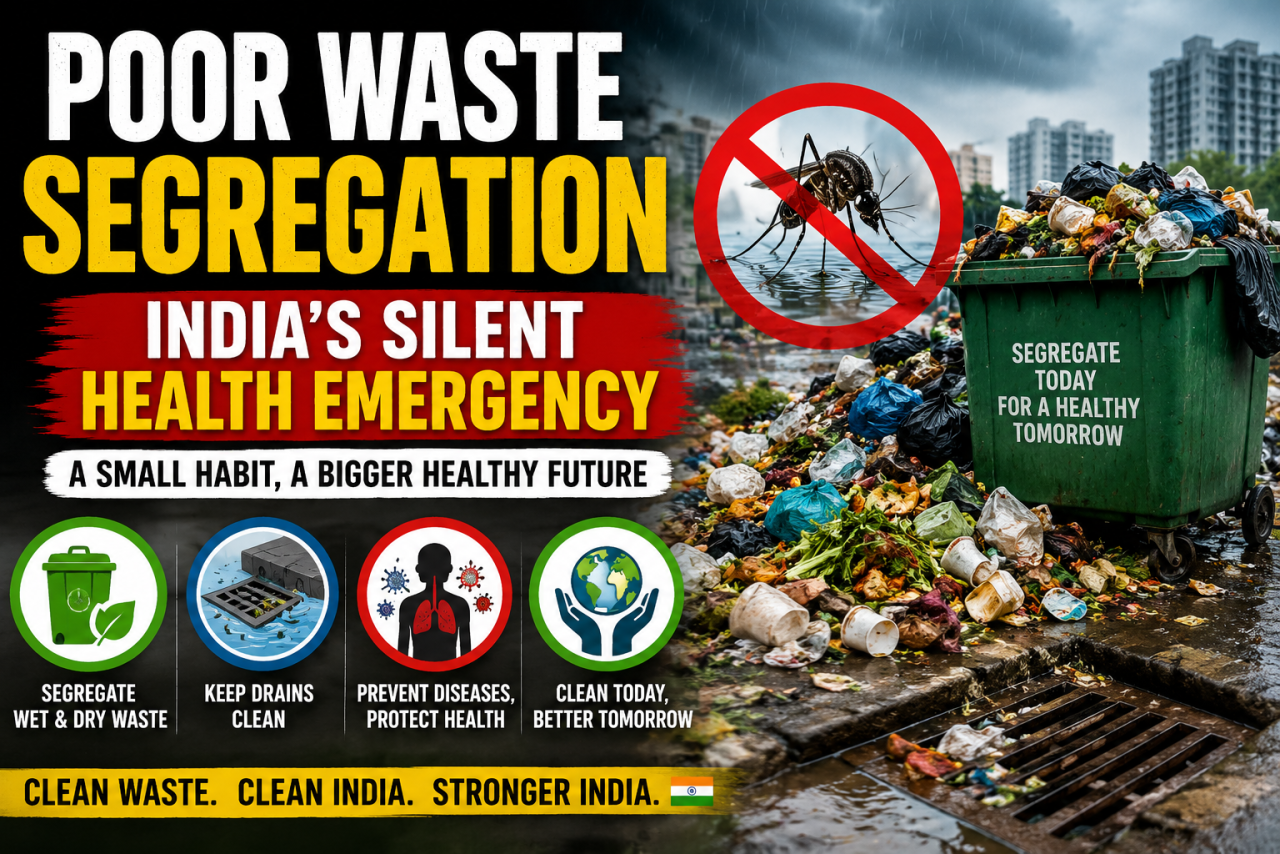
India’s biggest health crisis may not begin in hospitals — it begins in overflowing garbage bins, clogged drains, and unsegregated waste piling up across cities.
As India’s cities expand upward with high-rise apartments and gated societies, another reality is growing quietly beneath them — mountains of unsegregated waste. What appears to be a simple civic inconvenience has now become one of the country’s biggest public health threats. From mosquito-borne diseases to polluted groundwater and toxic air, poor waste management is increasingly affecting the daily lives of millions of Indians.
A recent report from Greater Noida highlighted concerns over improper garbage segregation in residential societies, especially ahead of the monsoon season. Health officials warned that mixed waste, clogged drains, and unhygienic surroundings could lead to mosquito breeding and disease outbreaks. But the issue is not limited to one city. It reflects a nationwide urban crisis.
India generates more than 1.5 lakh tonnes of solid waste every day, according to government estimates. A large part of this waste remains untreated or is dumped in open landfills. In many cities, wet and dry waste are still thrown together despite years of awareness campaigns and legal rules under the Solid Waste Management Rules.
The consequences are severe.
When biodegradable waste such as leftover food is mixed with plastic, glass, and chemical waste, it begins to rot rapidly, especially during humid weather. This creates foul smells and becomes a breeding ground for mosquitoes, flies, and rats. Diseases such as dengue, malaria, chikungunya, and stomach infections rise sharply during monsoon months because stagnant water and garbage together create ideal conditions for infections to spread.
At the same time, unsegregated plastic waste blocks drainage systems. Every year during heavy rains, Indian cities witness waterlogging not only because of poor infrastructure but also because drains are choked with plastic packets, bottles, and household waste. Flooded streets then become contaminated with sewage and bacteria, increasing the risk of skin infections, respiratory illnesses, and waterborne diseases.
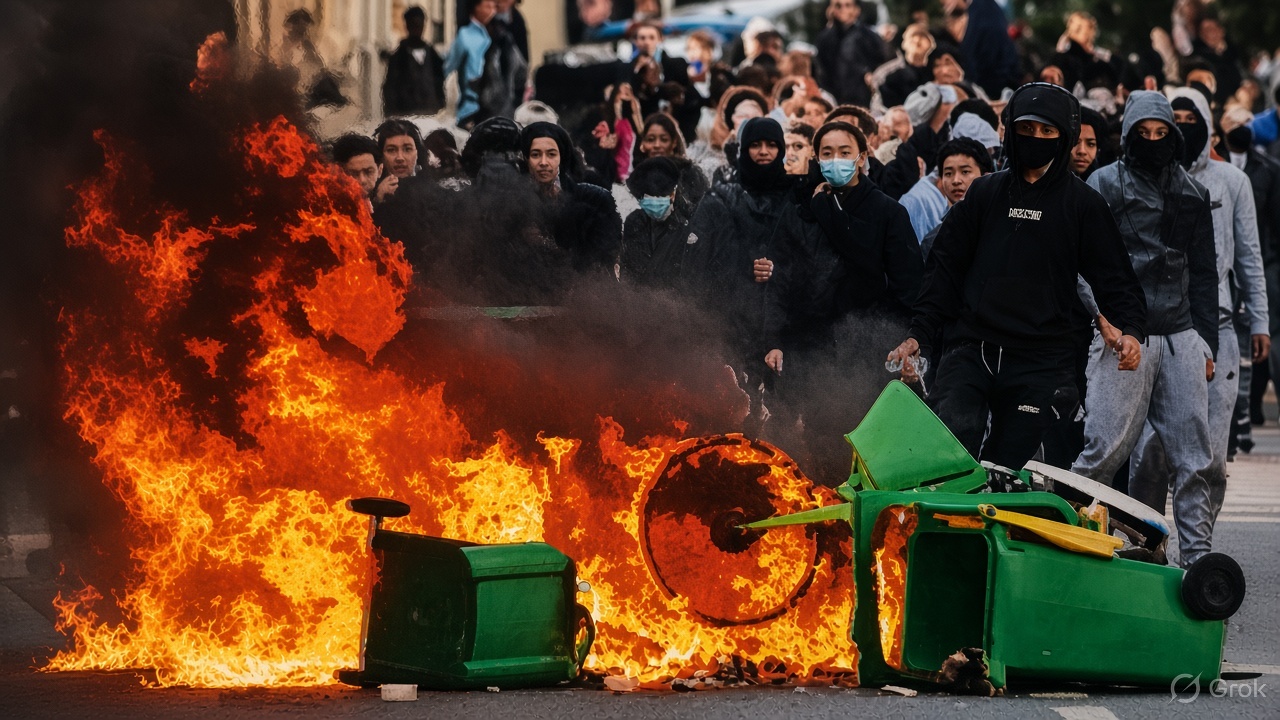
The health impact extends beyond visible dirt. Burning mixed garbage in open areas releases toxic gases into the air. Many localities still witness piles of waste being set on fire to reduce volume. This releases harmful pollutants such as carbon monoxide, dioxins, and particulate matter, which directly affect the lungs. Children, elderly citizens, and sanitation workers are the most vulnerable.
India’s waste problem is also deeply linked to social inequality. Sanitation workers often handle mixed waste manually without proper safety equipment. Informal waste pickers, who play a major role in recycling, work in hazardous conditions surrounded by medical waste, broken glass, and toxic material. Thus, poor waste management becomes both a public health issue and a question of human dignity.
One major reason behind the crisis is the lack of segregation at the household level. Many residents still assume that waste management is solely the responsibility of municipal authorities. However, experts repeatedly stress that segregation must begin inside homes. Wet waste, dry recyclable waste, sanitary waste, and hazardous waste must be separated before disposal. Without segregation, even advanced recycling systems fail.
Another challenge is urban behaviour. Indian cities are modernising rapidly, but civic habits are not evolving at the same pace. High consumption lifestyles have increased the use of disposable plastics, online delivery packaging, and electronic waste. Yet awareness about scientific disposal remains limited. In many societies, common garbage areas are poorly maintained, and residents often ignore rules meant for collective hygiene.
The solution requires both policy enforcement and public participation. Municipal bodies must ensure door-to-door segregated collection, regular drain cleaning, and strict penalties for littering or illegal dumping. Residential societies should conduct awareness drives and install proper waste processing systems such as composting units. Schools must include practical environmental education so that waste segregation becomes a social habit rather than a forced rule.
Technology can also help. Smart bins, decentralised composting, recycling centres, and waste-to-energy systems can reduce landfill pressure if implemented honestly and efficiently. However, no technology can succeed without citizen responsibility.
India often debates healthcare in terms of hospitals, medicines, and insurance. But true public health begins with sanitation, cleanliness, and preventive systems. Waste segregation may seem like a small household activity, yet its absence contributes directly to disease outbreaks, pollution, and declining urban quality of life.
The monsoon does not create India’s waste crisis. It simply exposes it. Unless cities and citizens act together, garbage will continue to become one of the country’s most dangerous and neglected health emergencies.
As India’s cities expand upward with high-rise apartments and gated societies, another reality is growing quietly beneath them — mountains of unsegregated waste. What appears to be a simple civic inconvenience has now become one of the country’s biggest public health threats. From mosquito-borne diseases to polluted groundwater and toxic air, poor waste management is increasingly affecting the daily lives of millions of Indians.
A recent report from Greater Noida highlighted concerns over improper garbage segregation in residential societies, especially ahead of the monsoon season. Health officials warned that mixed waste, clogged drains, and unhygienic surroundings could lead to mosquito breeding and disease outbreaks. But the issue is not limited to one city. It reflects a nationwide urban crisis.
India generates more than 1.5 lakh tonnes of solid waste every day, according to government estimates. A large part of this waste remains untreated or is dumped in open landfills. In many cities, wet and dry waste are still thrown together despite years of awareness campaigns and legal rules under the Solid Waste Management Rules.
The consequences are severe.
When biodegradable waste such as leftover food is mixed with plastic, glass, and chemical waste, it begins to rot rapidly, especially during humid weather. This creates foul smells and becomes a breeding ground for mosquitoes, flies, and rats. Diseases such as dengue, malaria, chikungunya, and stomach infections rise sharply during monsoon months because stagnant water and garbage together create ideal conditions for infections to spread.
At the same time, unsegregated plastic waste blocks drainage systems. Every year during heavy rains, Indian cities witness waterlogging not only because of poor infrastructure but also because drains are choked with plastic packets, bottles, and household waste. Flooded streets then become contaminated with sewage and bacteria, increasing the risk of skin infections, respiratory illnesses, and waterborne diseases.
The health impact extends beyond visible dirt. Burning mixed garbage in open areas releases toxic gases into the air. Many localities still witness piles of waste being set on fire to reduce volume. This releases harmful pollutants such as carbon monoxide, dioxins, and particulate matter, which directly affect the lungs. Children, elderly citizens, and sanitation workers are the most vulnerable.
India’s waste problem is also deeply linked to social inequality. Sanitation workers often handle mixed waste manually without proper safety equipment. Informal waste pickers, who play a major role in recycling, work in hazardous conditions surrounded by medical waste, broken glass, and toxic material. Thus, poor waste management becomes both a public health issue and a question of human dignity.
One major reason behind the crisis is the lack of segregation at the household level. Many residents still assume that waste management is solely the responsibility of municipal authorities. However, experts repeatedly stress that segregation must begin inside homes. Wet waste, dry recyclable waste, sanitary waste, and hazardous waste must be separated before disposal. Without segregation, even advanced recycling systems fail.
Another challenge is urban behaviour. Indian cities are modernising rapidly, but civic habits are not evolving at the same pace. High consumption lifestyles have increased the use of disposable plastics, online delivery packaging, and electronic waste. Yet awareness about scientific disposal remains limited. In many societies, common garbage areas are poorly maintained, and residents often ignore rules meant for collective hygiene.
The solution requires both policy enforcement and public participation. Municipal bodies must ensure door-to-door segregated collection, regular drain cleaning, and strict penalties for littering or illegal dumping. Residential societies should conduct awareness drives and install proper waste processing systems such as composting units. Schools must include practical environmental education so that waste segregation becomes a social habit rather than a forced rule.
Technology can also help. Smart bins, decentralised composting, recycling centres, and waste-to-energy systems can reduce landfill pressure if implemented honestly and efficiently. However, no technology can succeed without citizen responsibility.
India often debates healthcare in terms of hospitals, medicines, and insurance. But true public health begins with sanitation, cleanliness, and preventive systems. Waste segregation may seem like a small household activity, yet its absence contributes directly to disease outbreaks, pollution, and declining urban quality of life.
The monsoon does not create India’s waste crisis. It simply exposes it. Unless cities and citizens act together, garbage will continue to become one of the country’s most dangerous and neglected health emergencies.





















Leave a Comment