
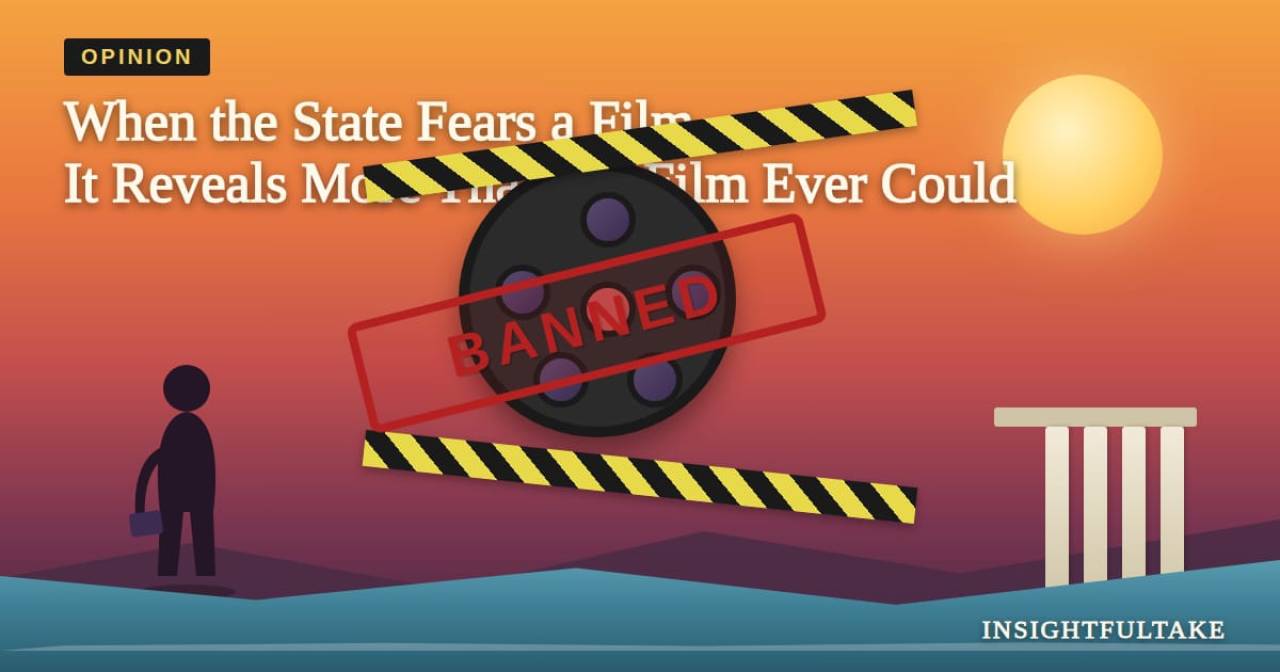
A film completed years ago disappeared from streaming in just 48 hours. The real story is not what Satluj shows, but why a democracy feared audiences watching it.
Diljit Dosanjh had already sensed how this story would end. In a video message to his fans, he said he suspected by Friday that his film would not survive the weekend. He was wrong only about the timing. Satluj disappeared from ZEE5 on Sunday evening, barely two days after it reached Indian audiences on July 3, and nearly four years after it was completed.
A film that took a decade to reach viewers vanished in less than forty-eight hours.
This is not merely the story of one film. It is a story about what a democracy chooses to fear.
A Decade-Long Journey to the Screen
Satluj was never an ordinary production. It began as Ghallughara, a word that evokes one of the darkest chapters in Punjabi history. The Central Board of Film Certification rejected the title. The filmmakers returned with Punjab '95, only to be handed 127 cuts, an extraordinary number that would have stripped the film of its narrative and purpose. The board argued that the film could disturb law and order in Punjab.
The filmmakers challenged the decision before the Bombay High Court. The film was later withdrawn from its scheduled premiere at the Toronto International Film Festival in 2023, reportedly following political pressure. Eventually, it re-emerged under a third title, Satluj, named after the river that has shaped Punjab's history, prosperity and pain.
When theatrical release became impossible, the makers turned to streaming platforms. The Information Technology Rules, 2021 appeared to offer a path that bypassed conventional film certification. For two days, that path existed. Then a government directive issued under the very same rules removed the film from ZEE5.
The framework that promised greater digital freedom became the mechanism for restricting it.
The Man the Film Refuses to Forget
Satluj chronicles the life of Jaswant Singh Khalra, a bank manager who chose truth over comfort.
During Punjab's insurgency in the 1980s and 1990s, Khalra investigated allegations that thousands of people had disappeared after being taken into police custody, only to be secretly cremated without records or notification to their families. He documented his findings and presented them before the Punjab and Haryana High Court while also drawing international attention to the issue.
In September 1995, Khalra himself was abducted. Investigations later confirmed that he had been murdered. Several police personnel were eventually convicted for their roles in the crime.
Three decades later, a film based on his life could not remain available on a streaming platform for even one weekend.
Why This Matters Beyond Cinema
Supporters of such restrictions often argue that governments must occasionally limit artistic expression to preserve public order. Given Punjab's violent past, this argument deserves consideration rather than dismissal.
The insurgency claimed thousands of innocent lives. The state had a legitimate responsibility to combat terrorism.
But Satluj does not question that responsibility.
Instead, it asks whether every action taken in the name of security remained within the boundaries of law. Khalra's investigations, supported by subsequent judicial findings and criminal convictions, established that at least some actions crossed those boundaries through enforced disappearances, fake encounters and illegal cremations.
A democracy should be able to confront such truths without fear.
The deeper concern is that Satluj was not removed because it promoted falsehoods. Its central narrative rests on matters already examined by courts and reflected in judicial findings. If a fact-based film can be suppressed because it raises uncomfortable questions, the issue extends far beyond cinema.
When laws designed to regulate digital platforms are used to silence artistic works grounded in documented history, citizens have every reason to examine how those laws are being applied.
A Ban That Cannot Truly Ban
The takedown also highlights the limits of censorship in the digital age.
Within hours of the film's removal, Dosanjh encouraged viewers who had already downloaded it to share copies. Outside India, Satluj continues to stream on ZEE5 Global. Screen recordings, VPNs and digital sharing ensure that a removal order rarely erases a film.
Instead, censorship often produces the opposite effect.
It signals that the story is considered too dangerous to be freely viewed, making audiences even more curious about what they are being prevented from seeing.
History repeatedly demonstrates that governments rarely succeed in banning ideas. More often, they succeed in amplifying them.
What a Confident Democracy Owes Its History
India's courts have already performed the difficult task of examining evidence, separating allegation from fact and delivering judgments in the Khalra case.
What remains is allowing citizens to engage with that history through art.
Films do more than entertain. They preserve memory, provoke debate and encourage societies to reflect on uncomfortable truths. Shielding citizens from difficult history does not strengthen democracy. It weakens public confidence in its institutions.
A nation secure in its democratic values does not fear a film about a man who trusted those very institutions enough to risk, and ultimately lose, his life in pursuit of justice.
His story deserves to be seen by families still seeking answers, by students encountering this history for the first time and by every citizen who believes accountability is not a threat to democracy but one of its foundations.
Satluj was never asking India to relive its trauma.
It was asking India to trust itself enough to face it.
Diljit Dosanjh had already sensed how this story would end. In a video message to his fans, he said he suspected by Friday that his film would not survive the weekend. He was wrong only about the timing. Satluj disappeared from ZEE5 on Sunday evening, barely two days after it reached Indian audiences on July 3, and nearly four years after it was completed.
A film that took a decade to reach viewers vanished in less than forty-eight hours.
This is not merely the story of one film. It is a story about what a democracy chooses to fear.
A Decade-Long Journey to the Screen
Satluj was never an ordinary production. It began as Ghallughara, a word that evokes one of the darkest chapters in Punjabi history. The Central Board of Film Certification rejected the title. The filmmakers returned with Punjab '95, only to be handed 127 cuts, an extraordinary number that would have stripped the film of its narrative and purpose. The board argued that the film could disturb law and order in Punjab.
The filmmakers challenged the decision before the Bombay High Court. The film was later withdrawn from its scheduled premiere at the Toronto International Film Festival in 2023, reportedly following political pressure. Eventually, it re-emerged under a third title, Satluj, named after the river that has shaped Punjab's history, prosperity and pain.
When theatrical release became impossible, the makers turned to streaming platforms. The Information Technology Rules, 2021 appeared to offer a path that bypassed conventional film certification. For two days, that path existed. Then a government directive issued under the very same rules removed the film from ZEE5.
The framework that promised greater digital freedom became the mechanism for restricting it.
The Man the Film Refuses to Forget
Satluj chronicles the life of Jaswant Singh Khalra, a bank manager who chose truth over comfort.
During Punjab's insurgency in the 1980s and 1990s, Khalra investigated allegations that thousands of people had disappeared after being taken into police custody, only to be secretly cremated without records or notification to their families. He documented his findings and presented them before the Punjab and Haryana High Court while also drawing international attention to the issue.
In September 1995, Khalra himself was abducted. Investigations later confirmed that he had been murdered. Several police personnel were eventually convicted for their roles in the crime.
Three decades later, a film based on his life could not remain available on a streaming platform for even one weekend.
Why This Matters Beyond Cinema
Supporters of such restrictions often argue that governments must occasionally limit artistic expression to preserve public order. Given Punjab's violent past, this argument deserves consideration rather than dismissal.
The insurgency claimed thousands of innocent lives. The state had a legitimate responsibility to combat terrorism.
But Satluj does not question that responsibility.
Instead, it asks whether every action taken in the name of security remained within the boundaries of law. Khalra's investigations, supported by subsequent judicial findings and criminal convictions, established that at least some actions crossed those boundaries through enforced disappearances, fake encounters and illegal cremations.
A democracy should be able to confront such truths without fear.
The deeper concern is that Satluj was not removed because it promoted falsehoods. Its central narrative rests on matters already examined by courts and reflected in judicial findings. If a fact-based film can be suppressed because it raises uncomfortable questions, the issue extends far beyond cinema.
When laws designed to regulate digital platforms are used to silence artistic works grounded in documented history, citizens have every reason to examine how those laws are being applied.
A Ban That Cannot Truly Ban
The takedown also highlights the limits of censorship in the digital age.
Within hours of the film's removal, Dosanjh encouraged viewers who had already downloaded it to share copies. Outside India, Satluj continues to stream on ZEE5 Global. Screen recordings, VPNs and digital sharing ensure that a removal order rarely erases a film.
Instead, censorship often produces the opposite effect.
It signals that the story is considered too dangerous to be freely viewed, making audiences even more curious about what they are being prevented from seeing.
History repeatedly demonstrates that governments rarely succeed in banning ideas. More often, they succeed in amplifying them.
What a Confident Democracy Owes Its History
India's courts have already performed the difficult task of examining evidence, separating allegation from fact and delivering judgments in the Khalra case.
What remains is allowing citizens to engage with that history through art.
Films do more than entertain. They preserve memory, provoke debate and encourage societies to reflect on uncomfortable truths. Shielding citizens from difficult history does not strengthen democracy. It weakens public confidence in its institutions.
A nation secure in its democratic values does not fear a film about a man who trusted those very institutions enough to risk, and ultimately lose, his life in pursuit of justice.
His story deserves to be seen by families still seeking answers, by students encountering this history for the first time and by every citizen who believes accountability is not a threat to democracy but one of its foundations.
Satluj was never asking India to relive its trauma.
It was asking India to trust itself enough to face it.





















Leave a Comment