
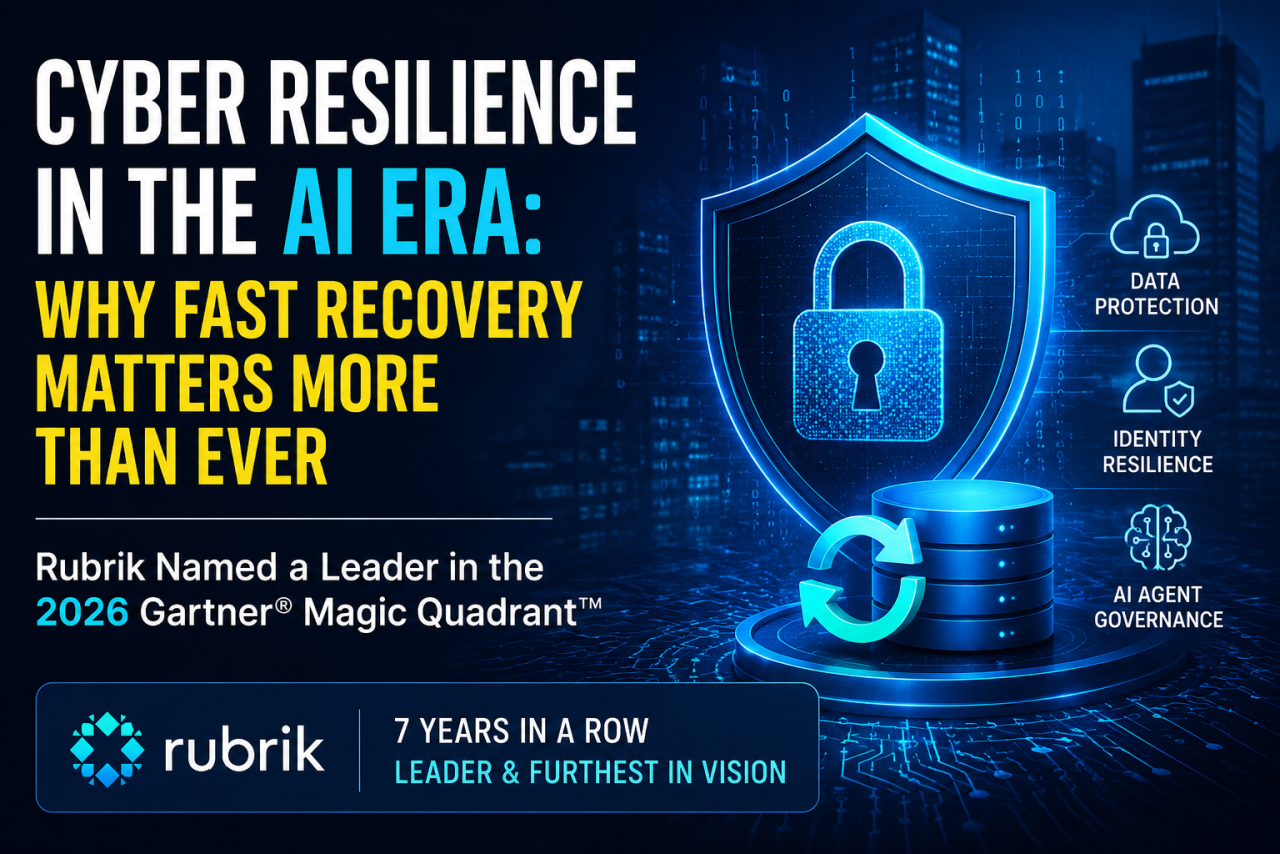
AI-powered cyberattacks happen within seconds. Businesses now realise that fast recovery is as important as preventing digital breaches.
Artificial intelligence has transformed the way organisations operate. Businesses now depend on AI to analyse data, automate routine work, improve customer service and support faster decision-making. Governments, hospitals, banks and educational institutions are also embracing digital technologies at an unprecedented pace. While this transformation has improved efficiency, it has also created a new challenge. The same technologies that make organisations smarter are also making cybercriminals more capable.
Cybersecurity experts have repeatedly warned that the nature of cyberattacks is changing. Earlier, hackers largely relied on manual methods to steal information or disrupt computer systems. Today, artificial intelligence enables attackers to identify weaknesses, automate phishing campaigns and spread ransomware at remarkable speed. The result is a threat landscape where organisations have much less time to respond than ever before.
This growing concern explains why discussions around cybersecurity are no longer limited to preventing attacks. Increasingly, experts believe that no organisation can guarantee complete protection from cyber threats. Instead, the real measure of preparedness lies in how quickly systems can be restored after an attack. The idea of cyber resilience has therefore emerged as one of the most important priorities for modern enterprises.
This changing outlook is reflected in the latest 2026 Gartner Magic Quadrant for Backup and Data Protection Platforms, where cybersecurity company Rubrik has once again been recognised as a Leader for the seventh consecutive year. While such industry recognition primarily reflects Gartner's assessment of technology providers, it also points towards a broader trend in enterprise security. Organisations are now looking beyond conventional backup systems and investing in technologies that can ensure business continuity even after sophisticated cyberattacks.
The reason for this shift is easy to understand. Modern cyberattacks unfold at extraordinary speed. According to figures cited by Rubrik, organisations often spend more than twenty days recovering from major cyber incidents, while cybercriminals may establish control over vulnerable systems in less than a minute. Such a mismatch leaves businesses exposed to prolonged operational disruptions, financial losses and reputational damage.
The traditional approach to cybersecurity has focused largely on building stronger digital defences. Firewalls, antivirus software, endpoint protection and intrusion detection systems remain essential tools. However, experience over the past decade has shown that even the strongest preventive measures cannot stop every attack. Ransomware groups continue to exploit stolen passwords, software vulnerabilities and human error to gain access to critical systems.
Consequently, cybersecurity strategies are evolving. Instead of assuming that attacks can always be prevented, organisations are preparing for the possibility that attackers may eventually succeed. The objective is to minimise disruption by restoring clean data, identifying compromised systems and resuming normal operations as quickly as possible.
Another important aspect of this evolving security landscape is identity protection. Many modern cyberattacks no longer begin with malicious software alone. Instead, attackers first target digital identities by stealing login credentials or compromising privileged accounts. Once inside an organisation's identity management system, they can move across networks with little resistance, access sensitive information and disable security controls.
Recognising this challenge, cybersecurity companies are integrating identity protection with data recovery. Rubrik, for example, says its platform continuously monitors identity services such as Active Directory, Microsoft Entra ID and Okta so that compromised accounts can be isolated while legitimate business operations continue. Rather than rebuilding entire systems from scratch, organisations can recover verified identities and trusted data together.
Artificial intelligence is also influencing how organisations defend themselves. While AI enables cybercriminals to automate attacks, it can equally help security teams analyse enormous volumes of data, identify unusual behaviour and accelerate recovery. This has encouraged many cybersecurity companies to integrate AI directly into their platforms, allowing businesses to respond to threats with greater speed and accuracy.
However, the rapid growth of AI also raises new questions. As autonomous AI agents become capable of performing increasingly complex tasks with limited human supervision, organisations must ensure that these systems remain accountable and secure. A compromised AI agent could potentially make incorrect decisions, expose confidential information or unintentionally amplify the effects of a cyberattack. This emerging challenge is prompting technology companies to develop stronger governance mechanisms for AI-based operations.
The importance of cyber resilience extends well beyond large technology firms. Banks rely on uninterrupted digital services to process financial transactions. Hospitals require secure access to patient records at all times. Educational institutions manage millions of student records, while government departments increasingly deliver public services through digital platforms. For all these sectors, prolonged downtime can have serious economic and social consequences.
Industry assessments such as Gartner's Magic Quadrant have therefore gained significance because they help organisations evaluate how different technology providers are responding to these emerging challenges. Gartner itself makes it clear that its reports do not endorse any specific vendor. Rather, they represent the independent opinions of its research analysts based on defined evaluation criteria.
The latest recognition for Rubrik should therefore be viewed not merely as an achievement for one company but as evidence of a larger shift taking place across the cybersecurity industry. Data protection is no longer about creating backup copies of information and storing them in another location. It is becoming part of a comprehensive strategy that combines secure recovery, identity protection, cloud security and responsible use of artificial intelligence.
As digital transformation continues across industries, cyber resilience is likely to become as essential as cybersecurity itself. Organisations that invest only in preventing attacks may continue to face significant operational risks. Those that prepare equally for rapid recovery are likely to be better positioned to protect their customers, maintain public trust and ensure uninterrupted services in an increasingly uncertain digital environment.
Artificial intelligence has transformed the way organisations operate. Businesses now depend on AI to analyse data, automate routine work, improve customer service and support faster decision-making. Governments, hospitals, banks and educational institutions are also embracing digital technologies at an unprecedented pace. While this transformation has improved efficiency, it has also created a new challenge. The same technologies that make organisations smarter are also making cybercriminals more capable.
Cybersecurity experts have repeatedly warned that the nature of cyberattacks is changing. Earlier, hackers largely relied on manual methods to steal information or disrupt computer systems. Today, artificial intelligence enables attackers to identify weaknesses, automate phishing campaigns and spread ransomware at remarkable speed. The result is a threat landscape where organisations have much less time to respond than ever before.
This growing concern explains why discussions around cybersecurity are no longer limited to preventing attacks. Increasingly, experts believe that no organisation can guarantee complete protection from cyber threats. Instead, the real measure of preparedness lies in how quickly systems can be restored after an attack. The idea of cyber resilience has therefore emerged as one of the most important priorities for modern enterprises.
This changing outlook is reflected in the latest 2026 Gartner Magic Quadrant for Backup and Data Protection Platforms, where cybersecurity company Rubrik has once again been recognised as a Leader for the seventh consecutive year. While such industry recognition primarily reflects Gartner's assessment of technology providers, it also points towards a broader trend in enterprise security. Organisations are now looking beyond conventional backup systems and investing in technologies that can ensure business continuity even after sophisticated cyberattacks.
The reason for this shift is easy to understand. Modern cyberattacks unfold at extraordinary speed. According to figures cited by Rubrik, organisations often spend more than twenty days recovering from major cyber incidents, while cybercriminals may establish control over vulnerable systems in less than a minute. Such a mismatch leaves businesses exposed to prolonged operational disruptions, financial losses and reputational damage.
The traditional approach to cybersecurity has focused largely on building stronger digital defences. Firewalls, antivirus software, endpoint protection and intrusion detection systems remain essential tools. However, experience over the past decade has shown that even the strongest preventive measures cannot stop every attack. Ransomware groups continue to exploit stolen passwords, software vulnerabilities and human error to gain access to critical systems.
Consequently, cybersecurity strategies are evolving. Instead of assuming that attacks can always be prevented, organisations are preparing for the possibility that attackers may eventually succeed. The objective is to minimise disruption by restoring clean data, identifying compromised systems and resuming normal operations as quickly as possible.
Another important aspect of this evolving security landscape is identity protection. Many modern cyberattacks no longer begin with malicious software alone. Instead, attackers first target digital identities by stealing login credentials or compromising privileged accounts. Once inside an organisation's identity management system, they can move across networks with little resistance, access sensitive information and disable security controls.
Recognising this challenge, cybersecurity companies are integrating identity protection with data recovery. Rubrik, for example, says its platform continuously monitors identity services such as Active Directory, Microsoft Entra ID and Okta so that compromised accounts can be isolated while legitimate business operations continue. Rather than rebuilding entire systems from scratch, organisations can recover verified identities and trusted data together.
Artificial intelligence is also influencing how organisations defend themselves. While AI enables cybercriminals to automate attacks, it can equally help security teams analyse enormous volumes of data, identify unusual behaviour and accelerate recovery. This has encouraged many cybersecurity companies to integrate AI directly into their platforms, allowing businesses to respond to threats with greater speed and accuracy.
However, the rapid growth of AI also raises new questions. As autonomous AI agents become capable of performing increasingly complex tasks with limited human supervision, organisations must ensure that these systems remain accountable and secure. A compromised AI agent could potentially make incorrect decisions, expose confidential information or unintentionally amplify the effects of a cyberattack. This emerging challenge is prompting technology companies to develop stronger governance mechanisms for AI-based operations.
The importance of cyber resilience extends well beyond large technology firms. Banks rely on uninterrupted digital services to process financial transactions. Hospitals require secure access to patient records at all times. Educational institutions manage millions of student records, while government departments increasingly deliver public services through digital platforms. For all these sectors, prolonged downtime can have serious economic and social consequences.
Industry assessments such as Gartner's Magic Quadrant have therefore gained significance because they help organisations evaluate how different technology providers are responding to these emerging challenges. Gartner itself makes it clear that its reports do not endorse any specific vendor. Rather, they represent the independent opinions of its research analysts based on defined evaluation criteria.
The latest recognition for Rubrik should therefore be viewed not merely as an achievement for one company but as evidence of a larger shift taking place across the cybersecurity industry. Data protection is no longer about creating backup copies of information and storing them in another location. It is becoming part of a comprehensive strategy that combines secure recovery, identity protection, cloud security and responsible use of artificial intelligence.
As digital transformation continues across industries, cyber resilience is likely to become as essential as cybersecurity itself. Organisations that invest only in preventing attacks may continue to face significant operational risks. Those that prepare equally for rapid recovery are likely to be better positioned to protect their customers, maintain public trust and ensure uninterrupted services in an increasingly uncertain digital environment.



























Leave a Comment