
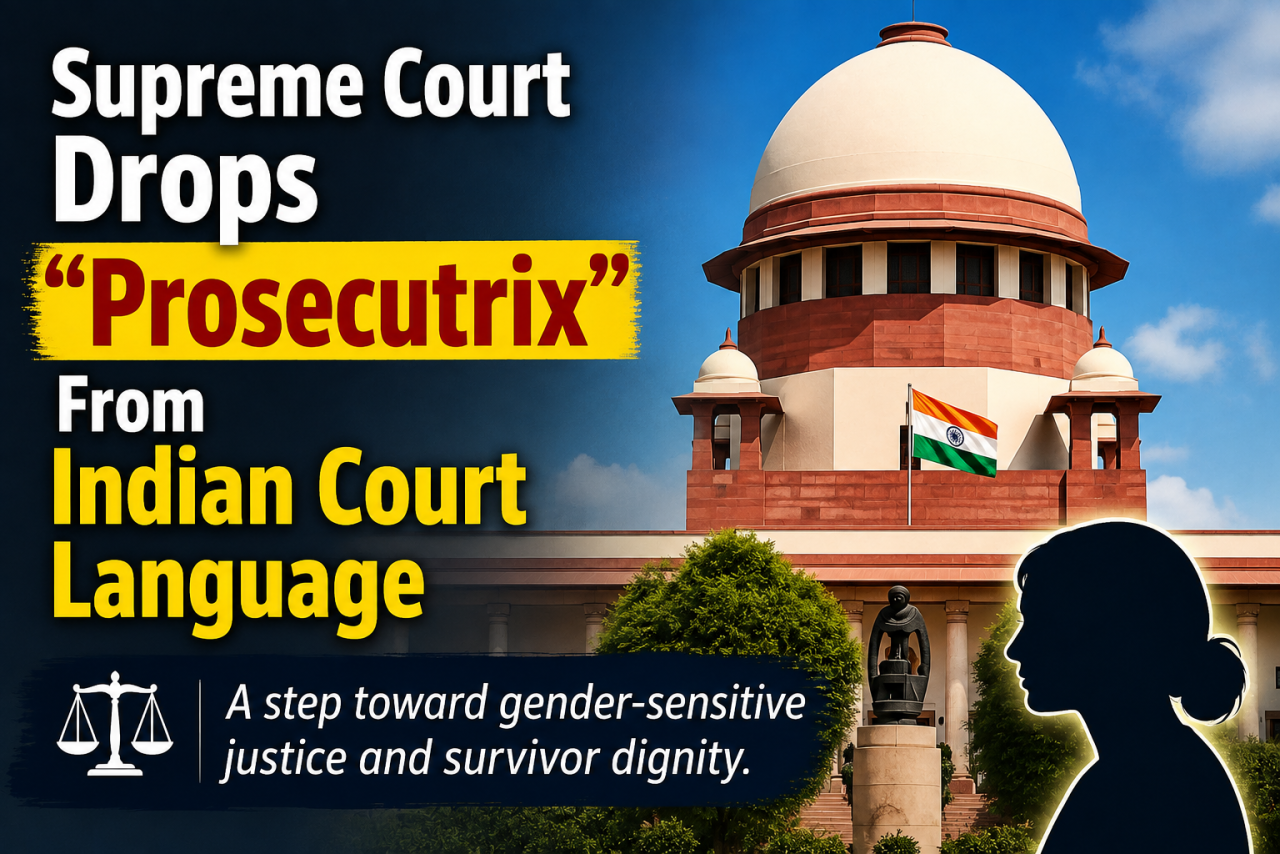
The Supreme Court’s new judicial guidelines change more than courtroom vocabulary. They raise a bigger question: can changing the language of justice also change how survivors are treated?
For decades, Indian courtrooms have used legal language that often sounded neutral but carried assumptions about women, morality and victimhood. A new Supreme Court-approved framework now seeks to change that language and, more importantly, the way courts respond to survivors of sexual offences.
The need for such a change became painfully clear in March 2025, when the Allahabad High Court dealt with the case of a 14-year-old girl who had allegedly been lured onto a motorcycle and sexually assaulted. The accused had reportedly broken the string of her clothing in an attempt to pull it down before groping her. The High Court treated the conduct as “mere preparation” for rape rather than an attempt to commit rape.
The Supreme Court subsequently set aside the order. Justice B.R. Gavai described the reasoning as an example of “total insensitivity” by the judge.
The episode highlighted a problem that goes beyond one judgment. The words used by courts can shape how survivors are perceived, how crimes are understood and, ultimately, how justice is delivered.
From “Prosecutrix” to “Survivor”
In 2023, during the tenure of then Chief Justice D.Y. Chandrachud, the Supreme Court had issued a handbook aimed at eliminating gender stereotypes from judicial language.
But Chief Justice Surya Kant, who assumed office later, reportedly felt that the earlier handbook was too academic and disconnected from the realities of ordinary courtrooms. He is reported to have described it as “too Harvard-oriented”, raising concerns about whether its language could be understood by a rape survivor, her family or an ordinary litigant.
In February 2026, he directed the National Judicial Academy to prepare a more practical framework.
The result was “Judgments and Gender: Sensitivity and Compassion in Writing Judgments.” Prepared by a committee headed by Justice Aniruddha Bose, the document was approved by the Chief Justice's bench on July 14, 2026.
It is now meant to be followed across the judiciary in cases involving sexual offences and other vulnerable litigants. Courts have been directed to publish it on their websites, while police departments have also been asked to apply its principles while preparing FIRs and chargesheets.
One of its clearest messages is linguistic.
Words such as “helpless female”, “lost her chastity” and “outraging modesty” are being pushed out of judicial vocabulary because they can reinforce ideas about female virtue, honour and morality.
The term “prosecutrix” is also being retired in favour of terms such as “survivor” or “complainant.”
That may appear to be a small change. It is not.
Language determines how institutions frame the person standing before them. A survivor is not merely an instrument through which a prosecution proceeds. She is a person whose dignity and rights remain central to the proceedings.
The Bigger Change Is Not About Words
The most significant part of the new framework, however, may have little to do with vocabulary.
The document draws upon an empirical study of trial court judgments and interviews with stakeholders. One finding is particularly revealing. Four out of five stakeholders surveyed were unaware that a Witness Protection Scheme existed.
That exposes a larger problem in the Indian justice system.
A legal right that exists only on paper is of limited value if the person who needs it does not know that the right exists.
The new guidelines therefore seek to shift responsibility from the survivor to the institution.
Judges are expected to ask about a survivor's safety and legal representation at the first hearing instead of waiting for her to make a request. Courts are also required to confirm in writing, within 48 hours, that legal aid has actually been arranged.
That changes legal aid from a distant entitlement into a procedural responsibility.
The framework also introduces the idea of treating a “witness as a guest.”
The principle sounds simple but could be transformative. Courts should minimise unnecessary waiting, avoid needless adjournments and prevent an atmosphere that can intimidate or retraumatise witnesses.
Cross-examination directed at a survivor's character or morality rather than the facts relevant to the case should also be actively controlled by the presiding judge.
India Has Seen This Cycle Before
The need for such guidelines cannot be separated from India's long history of institutional responses to sexual violence.
The custodial assault of Bhanwari Devi in Rajasthan in 1992 eventually contributed to the Vishakha Guidelines of 1997, which became a landmark framework against workplace sexual harassment.
The 2012 Delhi gang rape and murder led to major changes in criminal law during the Nirbhaya era.
Cases such as Unnao, Kathua, Hathras and the more recent Kolkata case have repeatedly triggered public outrage and demands for institutional reform.
The pattern is familiar.
A horrific incident shocks the country. Institutions promise change. New laws, guidelines or judicial directions follow. And years later, another case reveals that the distance between reform on paper and justice on the ground remains considerable.
That history makes the new Supreme Court framework both important and worthy of scrutiny.
The “Language-Justice Gap”
The document itself recognises this danger through the idea of a “Language-Justice Gap.”
Changing words does not automatically change attitudes.
A judge may stop using the word “prosecutrix” and begin using “survivor” while continuing to harbour assumptions about how a genuine victim should behave.
Should she have reported the crime immediately?
Should she have visible injuries?
Should she appear emotionally devastated while giving evidence?
Should her conduct after the alleged offence conform to society's expectations of a “real” victim?
These assumptions are deeply rooted. A glossary cannot eliminate them.
That is why the real test of the new framework will not be whether judges use more sensitive vocabulary. It will be whether judicial reasoning itself becomes more sensitive to the realities of sexual violence.
A Necessary Beginning, Not the Final Answer
The Supreme Court has effectively removed one possible excuse from the system.
Judges can no longer say that there was no guidance on gender-sensitive judicial language. Courts now have clearly articulated principles. The responsibilities relating to survivor safety, legal representation and courtroom treatment are more explicit.
But rules cannot manufacture empathy.
They can create institutional obligations. They can change procedures. They can discourage harmful terminology. They can make courts more accountable.
What they cannot do by themselves is change what a judge believes about a survivor.
That is where the real test begins.
The removal of the word “prosecutrix” is therefore more than a linguistic correction. It is an invitation to reconsider the assumptions behind the word and the system surrounding it.
Indian courts have often demonstrated that judicial language can shape public understanding of justice. The challenge now is to ensure that sensitive language is accompanied by sensitive reasoning.
A new glossary may be the easiest part of reform.
The harder task is changing the courtroom culture that made such a glossary necessary in the first place.
For decades, Indian courtrooms have used legal language that often sounded neutral but carried assumptions about women, morality and victimhood. A new Supreme Court-approved framework now seeks to change that language and, more importantly, the way courts respond to survivors of sexual offences.
The need for such a change became painfully clear in March 2025, when the Allahabad High Court dealt with the case of a 14-year-old girl who had allegedly been lured onto a motorcycle and sexually assaulted. The accused had reportedly broken the string of her clothing in an attempt to pull it down before groping her. The High Court treated the conduct as “mere preparation” for rape rather than an attempt to commit rape.
The Supreme Court subsequently set aside the order. Justice B.R. Gavai described the reasoning as an example of “total insensitivity” by the judge.
The episode highlighted a problem that goes beyond one judgment. The words used by courts can shape how survivors are perceived, how crimes are understood and, ultimately, how justice is delivered.
From “Prosecutrix” to “Survivor”
In 2023, during the tenure of then Chief Justice D.Y. Chandrachud, the Supreme Court had issued a handbook aimed at eliminating gender stereotypes from judicial language.
But Chief Justice Surya Kant, who assumed office later, reportedly felt that the earlier handbook was too academic and disconnected from the realities of ordinary courtrooms. He is reported to have described it as “too Harvard-oriented”, raising concerns about whether its language could be understood by a rape survivor, her family or an ordinary litigant.
In February 2026, he directed the National Judicial Academy to prepare a more practical framework.
The result was “Judgments and Gender: Sensitivity and Compassion in Writing Judgments.” Prepared by a committee headed by Justice Aniruddha Bose, the document was approved by the Chief Justice's bench on July 14, 2026.
It is now meant to be followed across the judiciary in cases involving sexual offences and other vulnerable litigants. Courts have been directed to publish it on their websites, while police departments have also been asked to apply its principles while preparing FIRs and chargesheets.
One of its clearest messages is linguistic.
Words such as “helpless female”, “lost her chastity” and “outraging modesty” are being pushed out of judicial vocabulary because they can reinforce ideas about female virtue, honour and morality.
The term “prosecutrix” is also being retired in favour of terms such as “survivor” or “complainant.”
That may appear to be a small change. It is not.
Language determines how institutions frame the person standing before them. A survivor is not merely an instrument through which a prosecution proceeds. She is a person whose dignity and rights remain central to the proceedings.
The Bigger Change Is Not About Words
The most significant part of the new framework, however, may have little to do with vocabulary.
The document draws upon an empirical study of trial court judgments and interviews with stakeholders. One finding is particularly revealing. Four out of five stakeholders surveyed were unaware that a Witness Protection Scheme existed.
That exposes a larger problem in the Indian justice system.
A legal right that exists only on paper is of limited value if the person who needs it does not know that the right exists.
The new guidelines therefore seek to shift responsibility from the survivor to the institution.
Judges are expected to ask about a survivor's safety and legal representation at the first hearing instead of waiting for her to make a request. Courts are also required to confirm in writing, within 48 hours, that legal aid has actually been arranged.
That changes legal aid from a distant entitlement into a procedural responsibility.
The framework also introduces the idea of treating a “witness as a guest.”
The principle sounds simple but could be transformative. Courts should minimise unnecessary waiting, avoid needless adjournments and prevent an atmosphere that can intimidate or retraumatise witnesses.
Cross-examination directed at a survivor's character or morality rather than the facts relevant to the case should also be actively controlled by the presiding judge.
India Has Seen This Cycle Before
The need for such guidelines cannot be separated from India's long history of institutional responses to sexual violence.
The custodial assault of Bhanwari Devi in Rajasthan in 1992 eventually contributed to the Vishakha Guidelines of 1997, which became a landmark framework against workplace sexual harassment.
The 2012 Delhi gang rape and murder led to major changes in criminal law during the Nirbhaya era.
Cases such as Unnao, Kathua, Hathras and the more recent Kolkata case have repeatedly triggered public outrage and demands for institutional reform.
The pattern is familiar.
A horrific incident shocks the country. Institutions promise change. New laws, guidelines or judicial directions follow. And years later, another case reveals that the distance between reform on paper and justice on the ground remains considerable.
That history makes the new Supreme Court framework both important and worthy of scrutiny.
The “Language-Justice Gap”
The document itself recognises this danger through the idea of a “Language-Justice Gap.”
Changing words does not automatically change attitudes.
A judge may stop using the word “prosecutrix” and begin using “survivor” while continuing to harbour assumptions about how a genuine victim should behave.
Should she have reported the crime immediately?
Should she have visible injuries?
Should she appear emotionally devastated while giving evidence?
Should her conduct after the alleged offence conform to society's expectations of a “real” victim?
These assumptions are deeply rooted. A glossary cannot eliminate them.
That is why the real test of the new framework will not be whether judges use more sensitive vocabulary. It will be whether judicial reasoning itself becomes more sensitive to the realities of sexual violence.
A Necessary Beginning, Not the Final Answer
The Supreme Court has effectively removed one possible excuse from the system.
Judges can no longer say that there was no guidance on gender-sensitive judicial language. Courts now have clearly articulated principles. The responsibilities relating to survivor safety, legal representation and courtroom treatment are more explicit.
But rules cannot manufacture empathy.
They can create institutional obligations. They can change procedures. They can discourage harmful terminology. They can make courts more accountable.
What they cannot do by themselves is change what a judge believes about a survivor.
That is where the real test begins.
The removal of the word “prosecutrix” is therefore more than a linguistic correction. It is an invitation to reconsider the assumptions behind the word and the system surrounding it.
Indian courts have often demonstrated that judicial language can shape public understanding of justice. The challenge now is to ensure that sensitive language is accompanied by sensitive reasoning.
A new glossary may be the easiest part of reform.
The harder task is changing the courtroom culture that made such a glossary necessary in the first place.
























Leave a Comment