
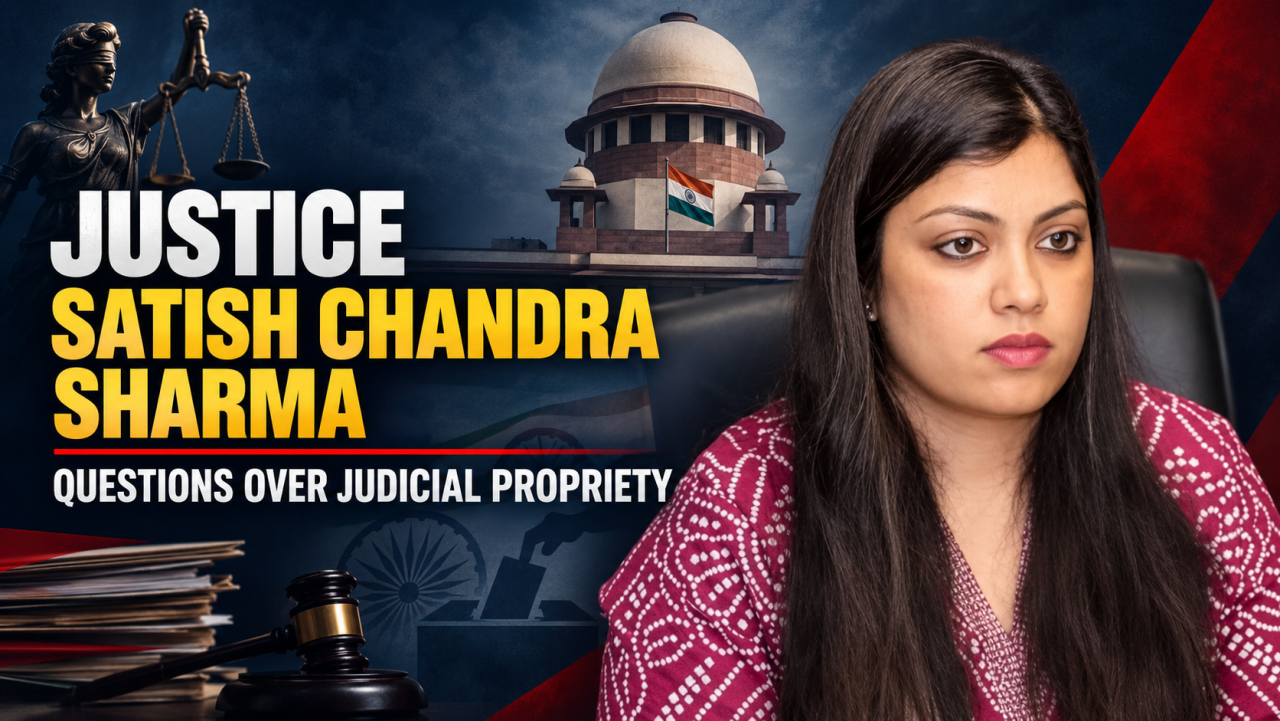
Questions around case listing, judicial transparency and family links have put the spotlight on Justice Satish Chandra Sharma and the wider issue of judicial independence.
The Supreme Court is expected to be one of the strongest safeguards of constitutional rights. So, whenever questions are raised about how cases are listed, how hearings are conducted or whether there could be a conflict of interest, they deserve a closer look.
Recent proceedings involving Justice Satish Chandra Sharma have brought several such questions into public discussion. The issues are sensitive, and some of the claims circulating about the judge and his family require documentary verification. What can be established from court records and reporting, however, is already significant enough to merit scrutiny.
Justice Sharma is currently a judge of the Supreme Court and is due to retire on November 29, 2026.
The Noida DM Case
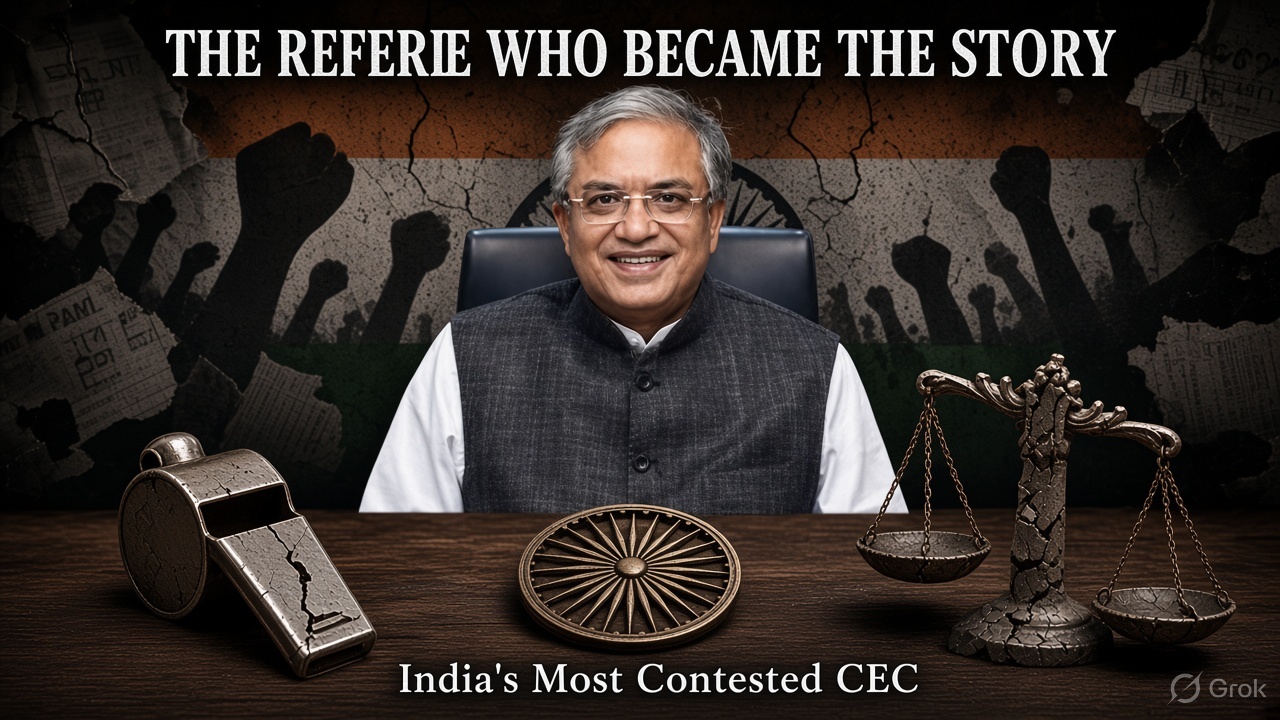
The first issue concerns Medha Roopam, the District Magistrate of Gautam Buddh Nagar, who is the daughter of Chief Election Commissioner Gyanesh Kumar.
The Allahabad High Court had quashed the detention under the National Security Act of Akriti Chaudhary, a Delhi University student and activist arrested in connection with the Noida workers' protest. The High Court strongly criticised the manner in which the detention order had been passed and directed that ₹5 lakh be recovered from the salaries of the officials responsible, including the District Magistrate.
Medha Roopam subsequently approached the Supreme Court.
On September 23, a bench comprising Justice Satish Chandra Sharma and Justice N.K. Singh heard the matter. During the proceedings, the audio of the virtual hearing was muted and media access was blocked. LiveLaw reported that the bench did not have the roster for habeas corpus and preventive detention matters under the roster then in force, while other matters arising from the same detention episode were pending before a bench led by Justice B.V. Nagarathna.
The Supreme Court initially passed an order staying the operation of the High Court judgment. That order was subsequently revised.
The revised order is important. It clarified that the stay applied to the High Court's adverse comments against the District Magistrate and its direction for payment of compensation. The High Court's decision quashing the student's NSA detention itself was not stayed.
That distinction matters and should not be lost in the political noise surrounding the case.
At the same time, the unusual listing of the matter and the decision to mute the audio have naturally raised questions about transparency. Those questions are matters for institutional explanation rather than conclusions about motive.
Another Case Involving the Election Commission
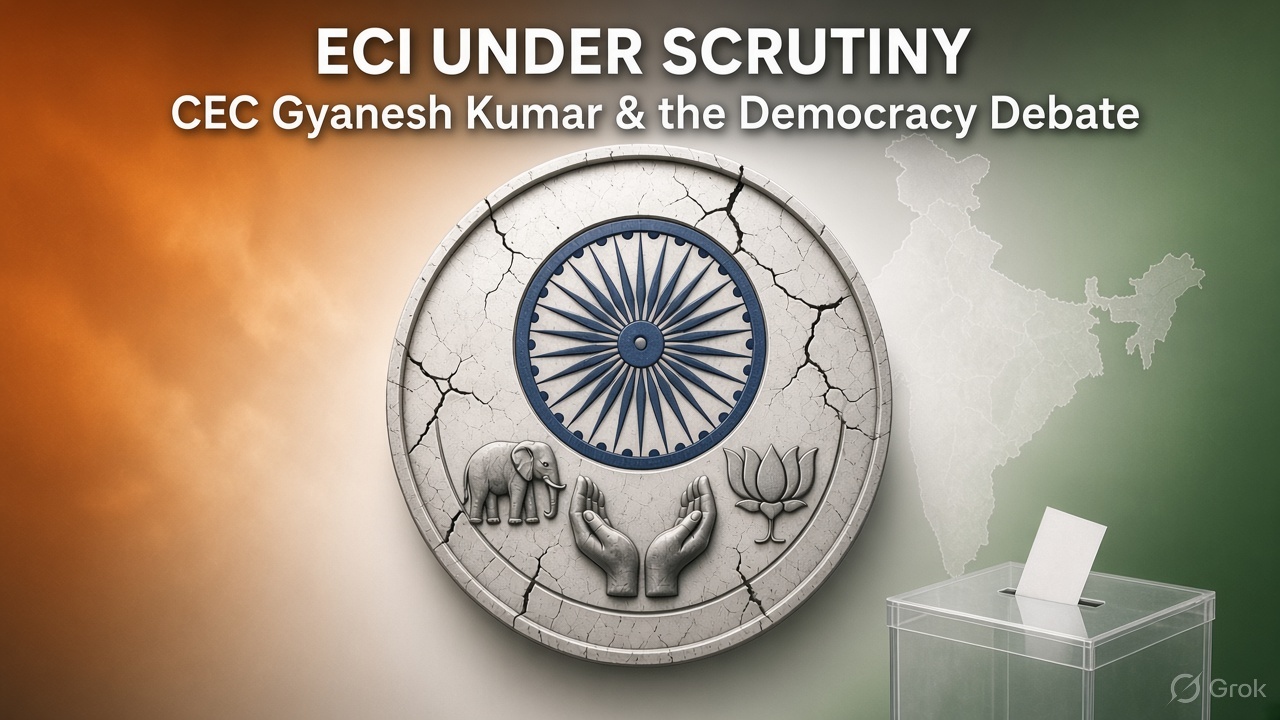
On the same broad timeline, Justice Sharma was part of the two-judge bench hearing challenges to the Chief Election Commissioner and Other Election Commissioners (Appointment, Conditions of Service and Term of Office) Act, 2023.
The law changed the composition of the selection committee for Election Commissioners. It consists of the Prime Minister, a Union Cabinet Minister nominated by the Prime Minister and the Leader of the Opposition in the Lok Sabha.
Petitioners have argued that this structure gives the executive a dominant position and can affect the institutional independence of the Election Commission. The Union government, however, has argued that the Court should not assume that an elected government will act against democratic principles.
The Supreme Court eventually referred the matter to a larger bench after Justice Dipankar Datta and Justice Satish Chandra Sharma differed on the question of whether such a reference was necessary. The matter has therefore moved to the Chief Justice of India for constitution of a Constitution Bench.
This is not a finding against Justice Sharma. A judicial disagreement is a normal part of constitutional adjudication. But the delay involved in moving important constitutional questions from one bench to another is a genuine institutional issue.
The same bench itself noted that long delays in references to larger benches are a serious concern and said that such delays cause institutional embarrassment.
The Bigger Question Is Conflict of Interest
The most serious allegation concerns the professional work of Justice Sharma's son.
There have been claims that his son holds several government legal panels, including assignments connected with the Income Tax Department, GST, Customs and Excise and the Madhya Pradesh government.
However, I could not independently verify these specific claims from reliable public records during reporting for this article. They should therefore not be presented as established fact without documentary evidence.
That caution is important because the issue is not simply whether a judge's relative is a government lawyer.
Government lawyers and judges can have family members who work in the legal profession. The real question is whether a particular professional relationship creates an actual conflict, or even a reasonable appearance of one, in a particular case.
A similar issue was publicly debated this year in relation to Delhi High Court Justice Swarna Kanta Sharma. Arvind Kejriwal alleged that her children were Central government panel counsel and sought her recusal. The Delhi High Court took his affidavit on record. The CBI disputed the conflict allegation and said that neither of the judge's children had any role in the particular liquor-policy case.
That episode shows why disclosure and transparency matter. It also shows why allegations of conflict cannot automatically be treated as proof of judicial bias.
Independence Is About Perception Too
Judicial independence is not limited to the final judgment.
It also involves how cases are assigned, how hearings are conducted, whether proceedings remain accessible, whether parties receive equal treatment and whether circumstances surrounding a case create a reasonable appearance of conflict.
The Supreme Court's own institutional standing depends heavily on public confidence.
That does not mean judges must withdraw from every case involving the government simply because a relative works as a government lawyer. Such a rule would be difficult to apply in a country where the government is involved in a very large share of litigation.
But sensitive cases require especially careful attention to transparency.
The questions surrounding the Noida DM matter therefore deserve clear answers: Why was the case heard by that particular bench? Why was the audio muted? What were the reasons for the listing? And what safeguards exist when a case involves a senior constitutional functionary's family member?
These are institutional questions, not accusations of guilt.
Justice Sharma's official profile records a long judicial career, including service in the Madhya Pradesh, Karnataka, Telangana and Delhi High Courts before his elevation to the Supreme Court in November 2023.
The credibility of that institution is larger than any individual judge.
The Election Commission, the executive and the judiciary all occupy different constitutional spaces. When cases involving these institutions overlap with questions about family relationships, government appointments or unusual court procedures, transparency becomes especially important.
India does not need people to distrust every institution. It needs institutions strong enough to answer legitimate questions openly.
The Supreme Court is expected to be one of the strongest safeguards of constitutional rights. So, whenever questions are raised about how cases are listed, how hearings are conducted or whether there could be a conflict of interest, they deserve a closer look.
Recent proceedings involving Justice Satish Chandra Sharma have brought several such questions into public discussion. The issues are sensitive, and some of the claims circulating about the judge and his family require documentary verification. What can be established from court records and reporting, however, is already significant enough to merit scrutiny.
Justice Sharma is currently a judge of the Supreme Court and is due to retire on November 29, 2026.
The Noida DM Case
The first issue concerns Medha Roopam, the District Magistrate of Gautam Buddh Nagar, who is the daughter of Chief Election Commissioner Gyanesh Kumar.
The Allahabad High Court had quashed the detention under the National Security Act of Akriti Chaudhary, a Delhi University student and activist arrested in connection with the Noida workers' protest. The High Court strongly criticised the manner in which the detention order had been passed and directed that ₹5 lakh be recovered from the salaries of the officials responsible, including the District Magistrate.
Medha Roopam subsequently approached the Supreme Court.
On September 23, a bench comprising Justice Satish Chandra Sharma and Justice N.K. Singh heard the matter. During the proceedings, the audio of the virtual hearing was muted and media access was blocked. LiveLaw reported that the bench did not have the roster for habeas corpus and preventive detention matters under the roster then in force, while other matters arising from the same detention episode were pending before a bench led by Justice B.V. Nagarathna.
The Supreme Court initially passed an order staying the operation of the High Court judgment. That order was subsequently revised.
The revised order is important. It clarified that the stay applied to the High Court's adverse comments against the District Magistrate and its direction for payment of compensation. The High Court's decision quashing the student's NSA detention itself was not stayed.
That distinction matters and should not be lost in the political noise surrounding the case.
At the same time, the unusual listing of the matter and the decision to mute the audio have naturally raised questions about transparency. Those questions are matters for institutional explanation rather than conclusions about motive.
Another Case Involving the Election Commission
On the same broad timeline, Justice Sharma was part of the two-judge bench hearing challenges to the Chief Election Commissioner and Other Election Commissioners (Appointment, Conditions of Service and Term of Office) Act, 2023.
The law changed the composition of the selection committee for Election Commissioners. It consists of the Prime Minister, a Union Cabinet Minister nominated by the Prime Minister and the Leader of the Opposition in the Lok Sabha.
Petitioners have argued that this structure gives the executive a dominant position and can affect the institutional independence of the Election Commission. The Union government, however, has argued that the Court should not assume that an elected government will act against democratic principles.
The Supreme Court eventually referred the matter to a larger bench after Justice Dipankar Datta and Justice Satish Chandra Sharma differed on the question of whether such a reference was necessary. The matter has therefore moved to the Chief Justice of India for constitution of a Constitution Bench.
This is not a finding against Justice Sharma. A judicial disagreement is a normal part of constitutional adjudication. But the delay involved in moving important constitutional questions from one bench to another is a genuine institutional issue.
The same bench itself noted that long delays in references to larger benches are a serious concern and said that such delays cause institutional embarrassment.
The Bigger Question Is Conflict of Interest
The most serious allegation concerns the professional work of Justice Sharma's son.
There have been claims that his son holds several government legal panels, including assignments connected with the Income Tax Department, GST, Customs and Excise and the Madhya Pradesh government.
However, I could not independently verify these specific claims from reliable public records during reporting for this article. They should therefore not be presented as established fact without documentary evidence.
That caution is important because the issue is not simply whether a judge's relative is a government lawyer.
Government lawyers and judges can have family members who work in the legal profession. The real question is whether a particular professional relationship creates an actual conflict, or even a reasonable appearance of one, in a particular case.
A similar issue was publicly debated this year in relation to Delhi High Court Justice Swarna Kanta Sharma. Arvind Kejriwal alleged that her children were Central government panel counsel and sought her recusal. The Delhi High Court took his affidavit on record. The CBI disputed the conflict allegation and said that neither of the judge's children had any role in the particular liquor-policy case.
That episode shows why disclosure and transparency matter. It also shows why allegations of conflict cannot automatically be treated as proof of judicial bias.
Independence Is About Perception Too
Judicial independence is not limited to the final judgment.
It also involves how cases are assigned, how hearings are conducted, whether proceedings remain accessible, whether parties receive equal treatment and whether circumstances surrounding a case create a reasonable appearance of conflict.
The Supreme Court's own institutional standing depends heavily on public confidence.
That does not mean judges must withdraw from every case involving the government simply because a relative works as a government lawyer. Such a rule would be difficult to apply in a country where the government is involved in a very large share of litigation.
But sensitive cases require especially careful attention to transparency.
The questions surrounding the Noida DM matter therefore deserve clear answers: Why was the case heard by that particular bench? Why was the audio muted? What were the reasons for the listing? And what safeguards exist when a case involves a senior constitutional functionary's family member?
These are institutional questions, not accusations of guilt.
Justice Sharma's official profile records a long judicial career, including service in the Madhya Pradesh, Karnataka, Telangana and Delhi High Courts before his elevation to the Supreme Court in November 2023.
The credibility of that institution is larger than any individual judge.
The Election Commission, the executive and the judiciary all occupy different constitutional spaces. When cases involving these institutions overlap with questions about family relationships, government appointments or unusual court procedures, transparency becomes especially important.
India does not need people to distrust every institution. It needs institutions strong enough to answer legitimate questions openly.


















Leave a Comment