
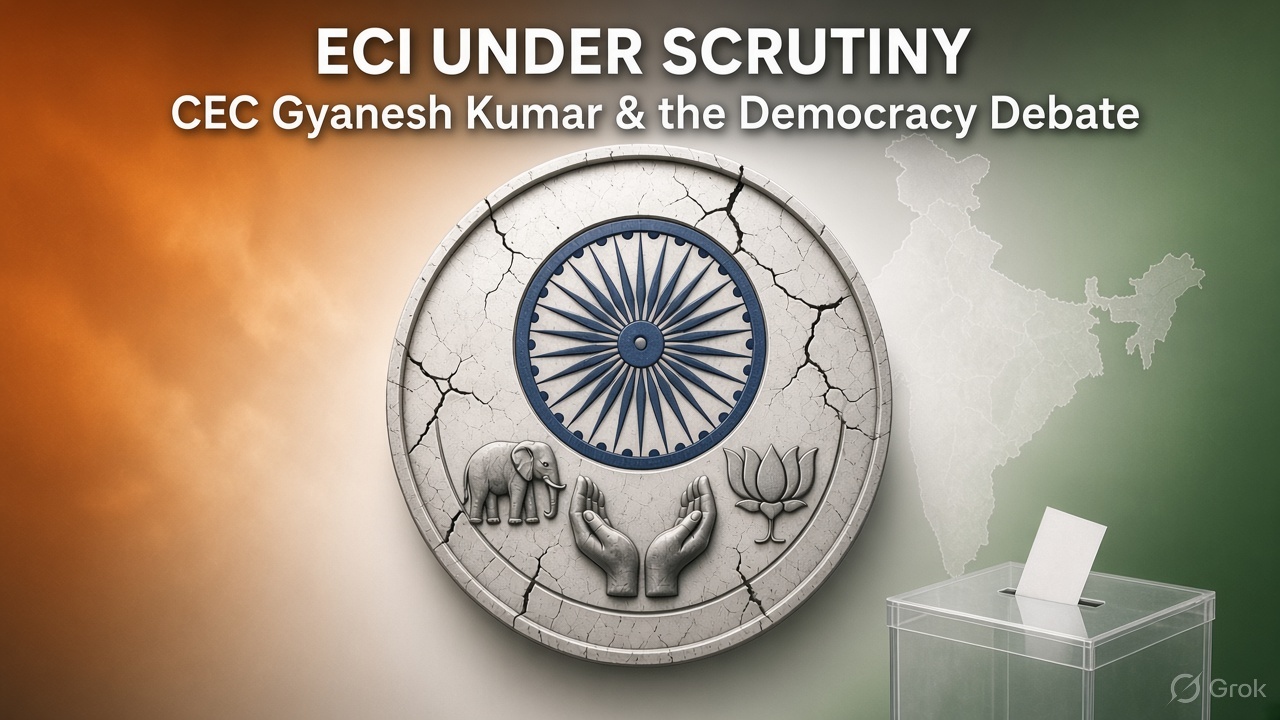
Repeated objections by two Election Commissioners have put the ECI’s internal decision-making and transparency under fresh public scrutiny.
India’s Election Commission of India (ECI), one of the central institutions responsible for safeguarding the electoral process, is facing renewed scrutiny over its internal functioning. At the centre of the controversy is Chief Election Commissioner Gyanesh Kumar and the Election Commission’s handling of the Special Intensive Revision (SIR) of electoral rolls.
The controversy intensified after an investigation by The Indian Express reported that Election Commissioners Sukhbir Singh Sandhu and Vivek Joshi had formally raised objections at least 14 times over a 10-month period to decisions and orders that they said had been taken without their knowledge. The objections reportedly covered voter registration, deletion and restoration of names, access to electoral databases and the functioning of the Commission’s technology systems.
Who Is Gyanesh Kumar?
Gyanesh Kumar, a 1988-batch Kerala cadre IAS officer, became the 26th Chief Election Commissioner on February 19, 2025. He had joined the Election Commission as an Election Commissioner in March 2024.
His tenure has coincided with the nationwide expansion of the SIR exercise, which began in Bihar in June 2025 before being extended to other states and Union Territories. The ECI has described SIR as an exercise to update electoral rolls by identifying deceased, shifted, duplicate or otherwise ineligible entries while ensuring that eligible citizens are included.
The exercise has become one of the most consequential electoral-roll revisions in recent years, with more than 13 crore names struck off draft rolls across states and Union Territories during its various phases, according to The Indian Express.
The Internal Objections
The most significant issue raised by the latest investigation is not simply that disagreements existed inside the Commission, but the frequency and nature of the objections recorded by two of its three members.
According to The Indian Express, Sandhu and Joshi objected on record at least 14 times between roughly November 2025 and August 2026. On some occasions, they alleged that decisions had been taken without their knowledge. The concerns included changes to Form 6, deletion and restoration procedures, access to electoral databases and the custody and security of voter data.
In one instance, the two Commissioners separately wrote to the Cabinet Secretary over changes in work allocation that they believed could reduce oversight of the technological infrastructure supporting electoral rolls.
The report also highlighted concerns about the increasing centralisation of electoral-roll databases and whether statutory officers at the state and constituency levels retained adequate access to the systems they are legally responsible for managing.
The Form 6 Controversy
One of the clearest disputes concerned Form 6, the application used by citizens seeking inclusion in the electoral roll.
According to the investigation, a new section linked applicants to previous SIR electoral rolls and required them to provide information concerning themselves or their parents or grandparents. The report said Joshi and Sandhu had objected to the change, arguing that such a modification could not be made without an amendment to the relevant rules. Sandhu subsequently described the change as “unauthorised and illegal” in a note dated August 13.
The dispute raises a broader question about the limits of administrative changes to electoral procedures and the role of the full Commission in approving them.
Questions Over Centralised Voter Data
Another area of concern involves the management of electoral-roll databases.
The ECI has traditionally emphasised the decentralised nature of electoral-roll preparation, with Electoral Registration Officers playing a statutory role at the constituency level. The two Commissioners reportedly questioned whether changes to access arrangements were gradually shifting control towards the central level.
Joshi reportedly called for an audit to establish that only authorised statutory officials could make changes to voter databases. Sandhu later raised concerns about state-level officials having incomplete access to the relevant software systems.
This issue matters because the integrity of an electoral roll depends not only on the software itself but also on clearly defined responsibility for who can add, delete or modify voter records.
The West Bengal and Goa Questions
The internal objections also reportedly extended to the handling of SIR-related cases in West Bengal.
Sandhu questioned the authorisation and process behind appeals filed against voters whom judicial officers had included in the rolls. According to the investigation, he asked who had authorised the appeals and who had filed them on behalf of the ECI.
In Goa, the investigation reported another problem involving the electoral software. Electoral Registration Officers reportedly found 97 voters eligible after considering documents submitted in response to discrepancies, but the software did not provide a mechanism to record the restoration in time for publication of the final roll.
While the number was small compared with the overall electorate, the episode highlighted a larger institutional question: whether technology should support statutory decision-making or inadvertently prevent officials from implementing decisions that the law requires them to make.
What the Law Says About the Commission
The Election Commission is a three-member constitutional body under Article 324 of the Constitution. The Chief Election Commissioner and the two Election Commissioners are equal members of the Commission, with the CEC functioning as first among equals.
The 2023 law governing the appointment, conditions of service and tenure of the CEC and Election Commissioners provides that the Commission’s business should, as far as possible, be conducted unanimously. Where members differ, decisions are taken according to the majority view.
The distinction is important. A disagreement between Commissioners is not, by itself, evidence that the institution has acted unlawfully. The more significant question is whether statutory procedures were followed and whether decisions were properly authorised by the Commission.
The ECI’s Defence
The Election Commission has not disputed the existence of the notes highlighted in the investigation. Its response, however, has been that written observations, technical suggestions and differing views are a normal part of deliberation within a multi-member constitutional body.
The Commission has maintained that decisions taken during the past year, including those concerning SIR and other electoral reforms, were ultimately decisions of the full Commission and that its final actions were taken through the prescribed procedures. It has also argued that focusing on individual internal notes without considering the final decisions presents only part of the institutional picture.
This distinction lies at the heart of the controversy. The existence of internal objections is documented in the reporting, but their institutional meaning remains disputed.
Political Opposition Intensifies
Opposition parties have used the revelations to renew their criticism of the ECI and the SIR process.
Congress leader Rahul Gandhi accused the BJP, RSS and the Election Commission of “vote chori” and called the matter an “act of treason”. Other opposition leaders have demanded Kumar’s resignation, parliamentary or judicial scrutiny and changes to the SIR process.
The BJP, meanwhile, has defended the CEC and the Commission, portraying the reported exchanges as part of normal institutional deliberation and pointing to the Commission’s position that final decisions were unanimous.
The political claims surrounding the controversy should therefore be distinguished from the underlying institutional questions raised by the documented correspondence.
The Larger Question of Institutional Trust
The dispute comes against a wider debate over the independence and accountability of the Election Commission.
The 2023 legislation governing the appointment of Election Commissioners changed the composition of the selection process, giving the government a central role. The appointment mechanism has itself become the subject of political and legal debate.
Against this background, repeated written objections by two members of a three-member constitutional body naturally attract public attention. At the same time, disagreement within an institution does not automatically establish that its final decisions were unlawful or improperly taken.
The crucial issue is therefore not simply whether Commissioners disagreed. It is whether the decision-making process remained transparent, properly authorised and consistent with the law.
Why Transparency Matters
The controversy ultimately comes down to public confidence.
Electoral rolls determine who can participate in an election. Their accuracy is therefore fundamental to representative democracy. But confidence in the electoral process also depends on citizens knowing that decisions affecting their voting rights are made through transparent and accountable procedures.
The latest controversy has consequently generated calls for greater disclosure of relevant correspondence, clearer explanations of how objections were considered and greater transparency about the functioning of the Commission’s digital systems.
The ECI has maintained that its final decisions were unanimous. The reported correspondence, meanwhile, shows that two Commissioners repeatedly raised concerns about how certain decisions were being processed.
Both facts can exist at the same time.
The coming debate will therefore be less about whether disagreement existed and more about whether the institutional mechanisms of the Election Commission were sufficient to address those disagreements before decisions affecting millions of voters were implemented.
For a constitutional body entrusted with conducting elections, credibility depends not only on the final electoral roll. It also depends on the transparency, legality and collective accountability of the process through which that roll is created.
India’s Election Commission of India (ECI), one of the central institutions responsible for safeguarding the electoral process, is facing renewed scrutiny over its internal functioning. At the centre of the controversy is Chief Election Commissioner Gyanesh Kumar and the Election Commission’s handling of the Special Intensive Revision (SIR) of electoral rolls.
The controversy intensified after an investigation by The Indian Express reported that Election Commissioners Sukhbir Singh Sandhu and Vivek Joshi had formally raised objections at least 14 times over a 10-month period to decisions and orders that they said had been taken without their knowledge. The objections reportedly covered voter registration, deletion and restoration of names, access to electoral databases and the functioning of the Commission’s technology systems.
Who Is Gyanesh Kumar?
Gyanesh Kumar, a 1988-batch Kerala cadre IAS officer, became the 26th Chief Election Commissioner on February 19, 2025. He had joined the Election Commission as an Election Commissioner in March 2024.
His tenure has coincided with the nationwide expansion of the SIR exercise, which began in Bihar in June 2025 before being extended to other states and Union Territories. The ECI has described SIR as an exercise to update electoral rolls by identifying deceased, shifted, duplicate or otherwise ineligible entries while ensuring that eligible citizens are included.
The exercise has become one of the most consequential electoral-roll revisions in recent years, with more than 13 crore names struck off draft rolls across states and Union Territories during its various phases, according to The Indian Express.
The Internal Objections
The most significant issue raised by the latest investigation is not simply that disagreements existed inside the Commission, but the frequency and nature of the objections recorded by two of its three members.
According to The Indian Express, Sandhu and Joshi objected on record at least 14 times between roughly November 2025 and August 2026. On some occasions, they alleged that decisions had been taken without their knowledge. The concerns included changes to Form 6, deletion and restoration procedures, access to electoral databases and the custody and security of voter data.
In one instance, the two Commissioners separately wrote to the Cabinet Secretary over changes in work allocation that they believed could reduce oversight of the technological infrastructure supporting electoral rolls.
The report also highlighted concerns about the increasing centralisation of electoral-roll databases and whether statutory officers at the state and constituency levels retained adequate access to the systems they are legally responsible for managing.
The Form 6 Controversy
One of the clearest disputes concerned Form 6, the application used by citizens seeking inclusion in the electoral roll.
According to the investigation, a new section linked applicants to previous SIR electoral rolls and required them to provide information concerning themselves or their parents or grandparents. The report said Joshi and Sandhu had objected to the change, arguing that such a modification could not be made without an amendment to the relevant rules. Sandhu subsequently described the change as “unauthorised and illegal” in a note dated August 13.
The dispute raises a broader question about the limits of administrative changes to electoral procedures and the role of the full Commission in approving them.
Questions Over Centralised Voter Data
Another area of concern involves the management of electoral-roll databases.
The ECI has traditionally emphasised the decentralised nature of electoral-roll preparation, with Electoral Registration Officers playing a statutory role at the constituency level. The two Commissioners reportedly questioned whether changes to access arrangements were gradually shifting control towards the central level.
Joshi reportedly called for an audit to establish that only authorised statutory officials could make changes to voter databases. Sandhu later raised concerns about state-level officials having incomplete access to the relevant software systems.
This issue matters because the integrity of an electoral roll depends not only on the software itself but also on clearly defined responsibility for who can add, delete or modify voter records.
The West Bengal and Goa Questions
The internal objections also reportedly extended to the handling of SIR-related cases in West Bengal.
Sandhu questioned the authorisation and process behind appeals filed against voters whom judicial officers had included in the rolls. According to the investigation, he asked who had authorised the appeals and who had filed them on behalf of the ECI.
In Goa, the investigation reported another problem involving the electoral software. Electoral Registration Officers reportedly found 97 voters eligible after considering documents submitted in response to discrepancies, but the software did not provide a mechanism to record the restoration in time for publication of the final roll.
While the number was small compared with the overall electorate, the episode highlighted a larger institutional question: whether technology should support statutory decision-making or inadvertently prevent officials from implementing decisions that the law requires them to make.
What the Law Says About the Commission
The Election Commission is a three-member constitutional body under Article 324 of the Constitution. The Chief Election Commissioner and the two Election Commissioners are equal members of the Commission, with the CEC functioning as first among equals.
The 2023 law governing the appointment, conditions of service and tenure of the CEC and Election Commissioners provides that the Commission’s business should, as far as possible, be conducted unanimously. Where members differ, decisions are taken according to the majority view.
The distinction is important. A disagreement between Commissioners is not, by itself, evidence that the institution has acted unlawfully. The more significant question is whether statutory procedures were followed and whether decisions were properly authorised by the Commission.
The ECI’s Defence
The Election Commission has not disputed the existence of the notes highlighted in the investigation. Its response, however, has been that written observations, technical suggestions and differing views are a normal part of deliberation within a multi-member constitutional body.
The Commission has maintained that decisions taken during the past year, including those concerning SIR and other electoral reforms, were ultimately decisions of the full Commission and that its final actions were taken through the prescribed procedures. It has also argued that focusing on individual internal notes without considering the final decisions presents only part of the institutional picture.
This distinction lies at the heart of the controversy. The existence of internal objections is documented in the reporting, but their institutional meaning remains disputed.
Political Opposition Intensifies
Opposition parties have used the revelations to renew their criticism of the ECI and the SIR process.
Congress leader Rahul Gandhi accused the BJP, RSS and the Election Commission of “vote chori” and called the matter an “act of treason”. Other opposition leaders have demanded Kumar’s resignation, parliamentary or judicial scrutiny and changes to the SIR process.
The BJP, meanwhile, has defended the CEC and the Commission, portraying the reported exchanges as part of normal institutional deliberation and pointing to the Commission’s position that final decisions were unanimous.
The political claims surrounding the controversy should therefore be distinguished from the underlying institutional questions raised by the documented correspondence.
The Larger Question of Institutional Trust
The dispute comes against a wider debate over the independence and accountability of the Election Commission.
The 2023 legislation governing the appointment of Election Commissioners changed the composition of the selection process, giving the government a central role. The appointment mechanism has itself become the subject of political and legal debate.
Against this background, repeated written objections by two members of a three-member constitutional body naturally attract public attention. At the same time, disagreement within an institution does not automatically establish that its final decisions were unlawful or improperly taken.
The crucial issue is therefore not simply whether Commissioners disagreed. It is whether the decision-making process remained transparent, properly authorised and consistent with the law.
Why Transparency Matters
The controversy ultimately comes down to public confidence.
Electoral rolls determine who can participate in an election. Their accuracy is therefore fundamental to representative democracy. But confidence in the electoral process also depends on citizens knowing that decisions affecting their voting rights are made through transparent and accountable procedures.
The latest controversy has consequently generated calls for greater disclosure of relevant correspondence, clearer explanations of how objections were considered and greater transparency about the functioning of the Commission’s digital systems.
The ECI has maintained that its final decisions were unanimous. The reported correspondence, meanwhile, shows that two Commissioners repeatedly raised concerns about how certain decisions were being processed.
Both facts can exist at the same time.
The coming debate will therefore be less about whether disagreement existed and more about whether the institutional mechanisms of the Election Commission were sufficient to address those disagreements before decisions affecting millions of voters were implemented.
For a constitutional body entrusted with conducting elections, credibility depends not only on the final electoral roll. It also depends on the transparency, legality and collective accountability of the process through which that roll is created.























Leave a Comment