

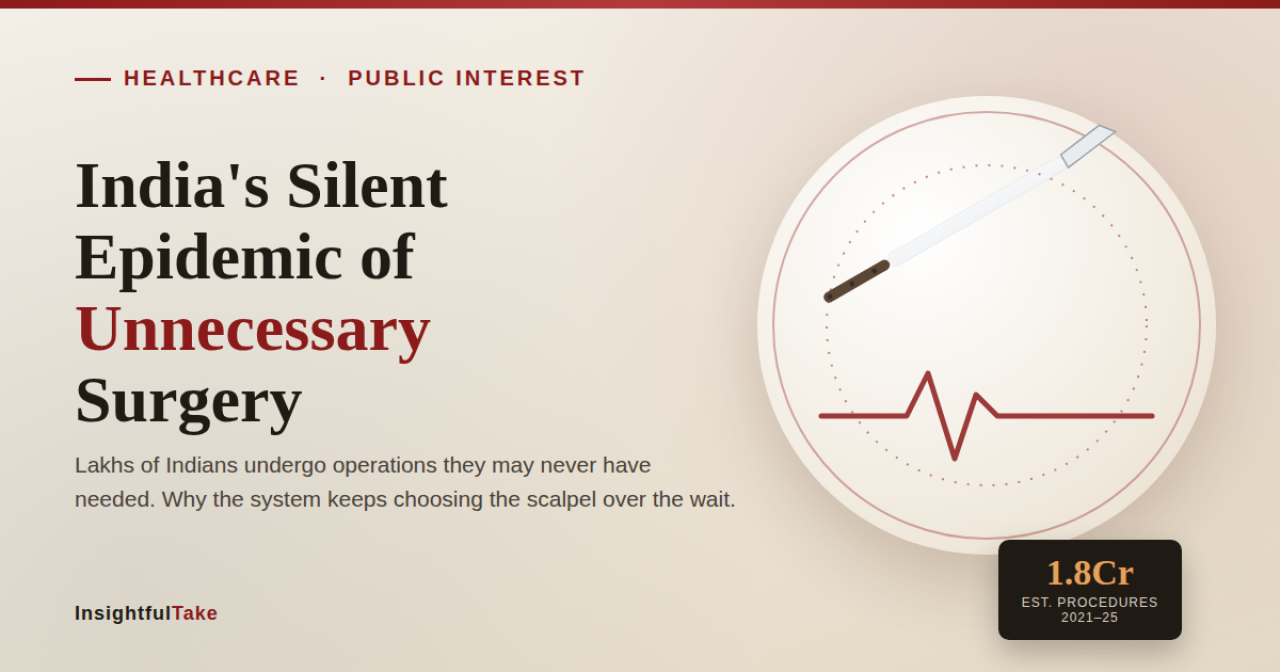
India’s private hospitals are expanding fast, but rising C-section rates, surgery costs and treatment packages are putting affordability and medical necessity under scrutiny.
India's healthcare system has expanded rapidly. Private hospitals now offer advanced surgery, robotic procedures, fertility treatment, cancer care, cardiac operations and specialised medical services in cities across the country. This growth has improved access to treatments that were once available only in a few centres.
At the same time, healthcare has become a major commercial industry. For many families, a hospital visit can now involve expensive tests, procedures and packages. The financial burden becomes especially serious when patients have little information about whether a procedure is essential or whether a less expensive treatment is possible.
Childbirth provides one of the clearest examples.
A Caesarean section can save the life of a mother or baby when complications occur. It is an important medical procedure and should not be treated as something undesirable by itself. The concern arises from the large difference between Caesarean rates in public and private hospitals.
NFHS-5, which covered 2019-21, recorded a C-section rate of 21.5% among births in India. The difference between sectors was striking. Nearly half, 49.7%, of births in private facilities were through Caesarean section, compared with 14.7% in public facilities.
The figures do not establish that every private C-section is unnecessary. Private hospitals may treat different kinds of patients, including women referred there because of complications. However, the gap is large enough to require closer examination.
Research based on national survey data has also found higher odds of C-section delivery among women using private facilities even after taking several medical and demographic factors into account. One study estimated that a part of the additional C-sections in private facilities could be linked to avoidable procedures and financial incentives.
The financial side of childbirth makes the issue more serious.
A study using NFHS-5 data found that families paid much more for Caesarean deliveries in private facilities than in public facilities. Around 27% of women who underwent C-sections in private facilities were found to experience distress financing. This includes situations in which families borrow money or sell assets to meet medical expenses.
Government data from the National Health Accounts and health expenditure surveys also show the large difference in childbirth costs across sectors. Recent figures for institutional deliveries put average out-of-pocket spending at around ₹2,299 in government hospitals and ₹37,630 in private hospitals. The median expenditure was about ₹32,000 in private hospitals compared with ₹801 in government hospitals.
Such differences matter in a country where a large number of households still have limited financial protection against medical expenses.
When delivery becomes a package
Private hospitals often advertise maternity packages. The package may include the doctor's fee, room, medicines, nursing care and delivery-related services. Package pricing can make costs easier for families to understand.
The problem begins when commercial arrangements influence clinical decisions.
Studies from India have found evidence that payment systems can affect the use of Caesarean sections. Research involving private obstetricians has reported commercial pressure, workload, patient expectations and institutional practices as factors that may influence decisions around childbirth.
Another study examined a payment programme in Madhya Pradesh in which private obstetricians received different payments depending on the type of delivery. Among participating providers, the C-section rate increased from 26.6% to 40.7% after the payment structure was introduced.
This does not mean that doctors routinely perform surgery for money. Doctors also work under difficult conditions and often make decisions during complicated deliveries where delay can be dangerous.
But financial incentives deserve attention because the medical decision and the financial interest can sometimes point in the same direction.
Surgery is no longer limited to major illness
The commercialisation of healthcare is not restricted to maternity care.
India has developed a large market for orthopaedic surgery, cardiac procedures, fertility treatment, diagnostic investigations, cosmetic procedures and other specialised services. Medical technology has made many operations safer and more accessible. Hospitals have invested heavily in equipment, specialist doctors and modern facilities.
For patients, however, more treatment options can also mean more difficult choices.
A patient entering a private hospital may not always know whether a particular test or procedure is essential, whether it can be postponed, or whether another treatment would produce a similar result at lower cost.
This creates an information imbalance. The doctor has medical knowledge. The patient usually does not.
That imbalance makes independent regulation important.
Insurance does not remove the problem
Government health insurance programmes have expanded access to private hospitals for people who could previously not afford specialised treatment. Ayushman Bharat PM-JAY, for example, allows eligible beneficiaries to receive hospital treatment through a large network of public and private hospitals.
Insurance can protect families from direct medical bills. But it does not automatically guarantee that every procedure is necessary.
The payer may change, while the incentives within the healthcare system remain.
For this reason, insurance schemes need strong auditing. Unusual patterns in surgeries, investigations, hospital stays and billing should be examined. Hospitals with unusually high rates of particular procedures should face scrutiny rather than simply receiving more business.
Poor families face the greatest risk
Medical expenses can affect wealthy and poor families differently.
A high hospital bill may reduce savings for a financially secure household. For a poor household, the same bill can mean borrowing from relatives, taking loans, selling land or reducing spending on food and education.
The consequences can continue long after the patient leaves the hospital.
This is why the debate about healthcare cannot focus only on the number of hospitals or the availability of advanced surgery. Affordability and medical necessity matter just as much.
India needs strong private hospitals. They provide specialised treatment, create employment and invest in medical technology. At the same time, public hospitals remain essential because they provide care to millions who cannot afford private treatment.
The answer is therefore not to treat private healthcare as the enemy.
The need is for greater transparency.
Hospitals should publish their rates of C-sections and other major procedures. Patients should receive a clear explanation of why a major procedure is being recommended, except in genuine emergencies. A second medical opinion should be easy to obtain before non-emergency surgery. Bills should clearly separate medical charges, room charges, tests, medicines and other expenses.
Medical insurance and government health schemes should also monitor hospitals for unusual procedure patterns.
India has made considerable progress in institutional healthcare. NFHS-6 reported that 90.6% of births now take place in institutions, compared with 88.6% in NFHS-5. That is an important achievement.
But taking a patient into a hospital is only part of healthcare.
The system must also protect the patient once treatment begins.
Surgery is one of the greatest achievements of modern medicine. A Caesarean section can save two lives. A heart operation can prevent death. A cancer surgery can give a patient many more years of life.
The problem is not surgery itself.
The concern is a healthcare system in which the patient's medical need can become mixed with the hospital's financial interest.
India's healthcare sector will continue to grow. The challenge is to ensure that this growth does not turn patients into customers and medical procedures into products.
A hospital should earn because it provides necessary and effective care. A patient should never have to wonder whether an expensive procedure was recommended because it was medically required or because it was financially attractive.
India's healthcare system has expanded rapidly. Private hospitals now offer advanced surgery, robotic procedures, fertility treatment, cancer care, cardiac operations and specialised medical services in cities across the country. This growth has improved access to treatments that were once available only in a few centres.
At the same time, healthcare has become a major commercial industry. For many families, a hospital visit can now involve expensive tests, procedures and packages. The financial burden becomes especially serious when patients have little information about whether a procedure is essential or whether a less expensive treatment is possible.
Childbirth provides one of the clearest examples.
A Caesarean section can save the life of a mother or baby when complications occur. It is an important medical procedure and should not be treated as something undesirable by itself. The concern arises from the large difference between Caesarean rates in public and private hospitals.
NFHS-5, which covered 2019-21, recorded a C-section rate of 21.5% among births in India. The difference between sectors was striking. Nearly half, 49.7%, of births in private facilities were through Caesarean section, compared with 14.7% in public facilities.
The figures do not establish that every private C-section is unnecessary. Private hospitals may treat different kinds of patients, including women referred there because of complications. However, the gap is large enough to require closer examination.
Research based on national survey data has also found higher odds of C-section delivery among women using private facilities even after taking several medical and demographic factors into account. One study estimated that a part of the additional C-sections in private facilities could be linked to avoidable procedures and financial incentives.
The financial side of childbirth makes the issue more serious.
A study using NFHS-5 data found that families paid much more for Caesarean deliveries in private facilities than in public facilities. Around 27% of women who underwent C-sections in private facilities were found to experience distress financing. This includes situations in which families borrow money or sell assets to meet medical expenses.
Government data from the National Health Accounts and health expenditure surveys also show the large difference in childbirth costs across sectors. Recent figures for institutional deliveries put average out-of-pocket spending at around ₹2,299 in government hospitals and ₹37,630 in private hospitals. The median expenditure was about ₹32,000 in private hospitals compared with ₹801 in government hospitals.
Such differences matter in a country where a large number of households still have limited financial protection against medical expenses.
When delivery becomes a package
Private hospitals often advertise maternity packages. The package may include the doctor's fee, room, medicines, nursing care and delivery-related services. Package pricing can make costs easier for families to understand.
The problem begins when commercial arrangements influence clinical decisions.
Studies from India have found evidence that payment systems can affect the use of Caesarean sections. Research involving private obstetricians has reported commercial pressure, workload, patient expectations and institutional practices as factors that may influence decisions around childbirth.
Another study examined a payment programme in Madhya Pradesh in which private obstetricians received different payments depending on the type of delivery. Among participating providers, the C-section rate increased from 26.6% to 40.7% after the payment structure was introduced.
This does not mean that doctors routinely perform surgery for money. Doctors also work under difficult conditions and often make decisions during complicated deliveries where delay can be dangerous.
But financial incentives deserve attention because the medical decision and the financial interest can sometimes point in the same direction.
Surgery is no longer limited to major illness
The commercialisation of healthcare is not restricted to maternity care.
India has developed a large market for orthopaedic surgery, cardiac procedures, fertility treatment, diagnostic investigations, cosmetic procedures and other specialised services. Medical technology has made many operations safer and more accessible. Hospitals have invested heavily in equipment, specialist doctors and modern facilities.
For patients, however, more treatment options can also mean more difficult choices.
A patient entering a private hospital may not always know whether a particular test or procedure is essential, whether it can be postponed, or whether another treatment would produce a similar result at lower cost.
This creates an information imbalance. The doctor has medical knowledge. The patient usually does not.
That imbalance makes independent regulation important.
Insurance does not remove the problem
Government health insurance programmes have expanded access to private hospitals for people who could previously not afford specialised treatment. Ayushman Bharat PM-JAY, for example, allows eligible beneficiaries to receive hospital treatment through a large network of public and private hospitals.
Insurance can protect families from direct medical bills. But it does not automatically guarantee that every procedure is necessary.
The payer may change, while the incentives within the healthcare system remain.
For this reason, insurance schemes need strong auditing. Unusual patterns in surgeries, investigations, hospital stays and billing should be examined. Hospitals with unusually high rates of particular procedures should face scrutiny rather than simply receiving more business.
Poor families face the greatest risk
Medical expenses can affect wealthy and poor families differently.
A high hospital bill may reduce savings for a financially secure household. For a poor household, the same bill can mean borrowing from relatives, taking loans, selling land or reducing spending on food and education.
The consequences can continue long after the patient leaves the hospital.
This is why the debate about healthcare cannot focus only on the number of hospitals or the availability of advanced surgery. Affordability and medical necessity matter just as much.
India needs strong private hospitals. They provide specialised treatment, create employment and invest in medical technology. At the same time, public hospitals remain essential because they provide care to millions who cannot afford private treatment.
The answer is therefore not to treat private healthcare as the enemy.
The need is for greater transparency.
Hospitals should publish their rates of C-sections and other major procedures. Patients should receive a clear explanation of why a major procedure is being recommended, except in genuine emergencies. A second medical opinion should be easy to obtain before non-emergency surgery. Bills should clearly separate medical charges, room charges, tests, medicines and other expenses.
Medical insurance and government health schemes should also monitor hospitals for unusual procedure patterns.
India has made considerable progress in institutional healthcare. NFHS-6 reported that 90.6% of births now take place in institutions, compared with 88.6% in NFHS-5. That is an important achievement.
But taking a patient into a hospital is only part of healthcare.
The system must also protect the patient once treatment begins.
Surgery is one of the greatest achievements of modern medicine. A Caesarean section can save two lives. A heart operation can prevent death. A cancer surgery can give a patient many more years of life.
The problem is not surgery itself.
The concern is a healthcare system in which the patient's medical need can become mixed with the hospital's financial interest.
India's healthcare sector will continue to grow. The challenge is to ensure that this growth does not turn patients into customers and medical procedures into products.
A hospital should earn because it provides necessary and effective care. A patient should never have to wonder whether an expensive procedure was recommended because it was medically required or because it was financially attractive.























Leave a Comment