
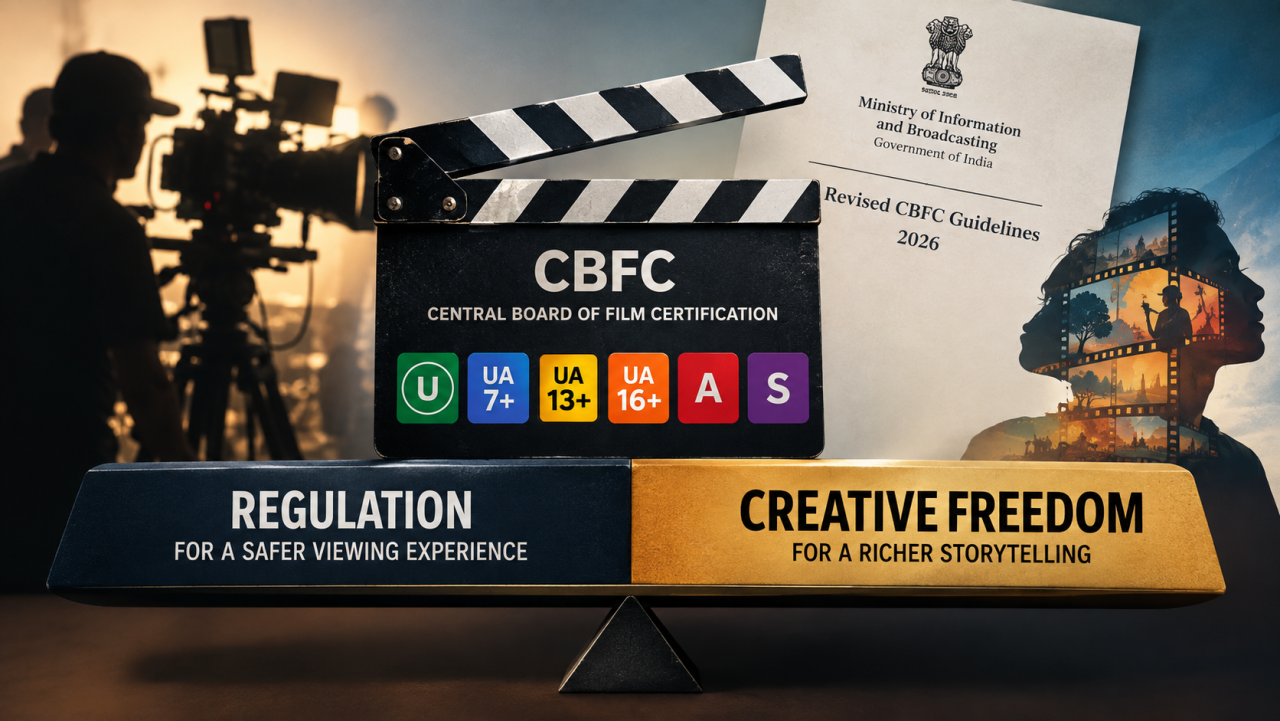
India has changed its film certification rules. The bigger question is whether clearer ratings can protect audiences without narrowing the space for difficult stories and creative dissent.
India has changed the rules that guide how films are certified for public exhibition, bringing age-based classifications and new content requirements into sharper focus.
The revised guidelines, notified by the Ministry of Information and Broadcasting in September 2026, retain much of the framework that has governed film certification since 1991. But they introduce some important changes, including more specific age categories for films meant for children and teenagers and a mandatory warning for scenes showing the consumption or trafficking of narcotic or psychotropic substances.
The new certification categories are U, UA 7+, UA 13+, UA 16+, A and S. The guidelines also reiterate restrictions relating to violence, communal or anti-national attitudes, social values and content that could affect India's friendly relations with foreign states.
At the same time, the government has reconstituted the CBFC with an 18-member board that includes actors, filmmakers, musicians and other public figures. The new board has been given a three-year term or until further orders.
The real debate begins here. How far should certification go before it starts influencing the stories filmmakers are willing to tell?
Certification Is Not the Same as Censorship
The government's position is that film certification must operate within the law and protect wider public interests. The CBFC works under the Cinematograph Act, 1952, the Cinematograph (Certification) Rules, 2024 and government guidelines. The statutory framework covers concerns such as public order, decency, morality, national security, friendly relations with foreign states, defamation and incitement to offences.
The distinction matters.
A certification system can tell viewers what age group a film is suitable for. It can also require warnings about potentially harmful content. But when certification begins to determine what filmmakers may or may not say, the debate moves closer to censorship.
That is where the revised guidelines will face their biggest test.
The Age Rating Change
The introduction of UA 7+, UA 13+ and UA 16+ gives parents more information about the suitability of films for younger viewers.
This is a practical change in an industry where audiences consume content across theatres, television and digital platforms. A broad UA category does not always tell parents enough about the maturity level required to understand or handle particular scenes.
The new age markers attempt to address that gap.
The challenge, however, is ensuring that age classification does not become a substitute for editorial judgment. A film dealing with violence, sexuality, addiction, politics or religion may require context rather than simply a label.
The Question of Social Responsibility
The revised guidelines place considerable emphasis on the social impact of cinema.
That concern is not new. The CBFC's own stated objectives include protecting creative freedom while ensuring that cinema remains responsible and sensitive to social values.
Filmmaker Raja Krishna Menon has argued that cinema has a strong influence on society and that filmmakers should remain conscious of that influence. At the same time, he has defended the importance of portraying society with its strengths and problems, including subjects that may be uncomfortable or controversial.
This is an important distinction. A film can depict harmful behaviour without celebrating it. It can portray social problems without endorsing them.
The meaning of a scene often depends on the larger story.
Where Subjectivity Becomes a Problem
This is also why some filmmakers remain uncomfortable with detailed regulatory rules.
Milan Luthria has raised concerns about the difficulty of defining limits such as "excessive violence", arguing that audiences have different thresholds and that additional rules could restrict artistic expression. Amit Rai has similarly questioned whether filmmakers can create freely if they begin writing stories with a fixed list of what is allowed and what is not.
Rai's concerns are especially relevant because his own experience with certification has involved both difficulty and compromise. His 2026 film Ohh My Dog received certification after the CBFC sought seven modifications, including muted brand references, changes to a scene and additional disclaimers.
The larger issue is not whether every modification is justified. It is whether filmmakers can understand the standards clearly enough to anticipate how their work will be assessed.
The "Anti-National" Question
One of the more sensitive areas is the language surrounding content described as "anti-national".
Filmmaker Onir has questioned how such broad terms should be interpreted. His concern is that cinema is not limited to entertainment. Films can question governments, social practices, political ideas and established beliefs.
That concern goes to the heart of democratic expression.
Criticism of a government is not automatically the same thing as hostility towards the country. Questioning a political decision is not necessarily an attack on national interests. Similarly, examining religion or social customs can be part of legitimate artistic and public debate.
The precise application of the rules will therefore matter as much as the wording itself.
The Real Test Will Be Implementation
The revised guidelines are an attempt to bring greater clarity to a certification system that operates in a rapidly changing media environment.
The new age categories could help parents make better viewing choices. Health warnings can provide useful information. Rules concerning harmful or illegal activity can also serve a legitimate public purpose.
But the same framework can create problems if broad terms are interpreted inconsistently or if filmmakers begin avoiding difficult subjects simply because they fear regulatory objections.
That is why the real test will not be the wording of the guidelines alone. It will be how consistently, transparently and proportionately they are applied.
Cinema has always carried social influence. It has also been one of the spaces where India has argued with itself about politics, religion, morality, identity and change.
A certification system has a role in protecting audiences, particularly children. But creative freedom requires room for disagreement, discomfort and difficult questions.
The balance between the two will determine whether the new framework becomes a clearer system of certification or another layer of restraint on Indian storytelling.
India has changed the rules that guide how films are certified for public exhibition, bringing age-based classifications and new content requirements into sharper focus.
The revised guidelines, notified by the Ministry of Information and Broadcasting in September 2026, retain much of the framework that has governed film certification since 1991. But they introduce some important changes, including more specific age categories for films meant for children and teenagers and a mandatory warning for scenes showing the consumption or trafficking of narcotic or psychotropic substances.
The new certification categories are U, UA 7+, UA 13+, UA 16+, A and S. The guidelines also reiterate restrictions relating to violence, communal or anti-national attitudes, social values and content that could affect India's friendly relations with foreign states.
At the same time, the government has reconstituted the CBFC with an 18-member board that includes actors, filmmakers, musicians and other public figures. The new board has been given a three-year term or until further orders.
The real debate begins here. How far should certification go before it starts influencing the stories filmmakers are willing to tell?
Certification Is Not the Same as Censorship
The government's position is that film certification must operate within the law and protect wider public interests. The CBFC works under the Cinematograph Act, 1952, the Cinematograph (Certification) Rules, 2024 and government guidelines. The statutory framework covers concerns such as public order, decency, morality, national security, friendly relations with foreign states, defamation and incitement to offences.
The distinction matters.
A certification system can tell viewers what age group a film is suitable for. It can also require warnings about potentially harmful content. But when certification begins to determine what filmmakers may or may not say, the debate moves closer to censorship.
That is where the revised guidelines will face their biggest test.
The Age Rating Change
The introduction of UA 7+, UA 13+ and UA 16+ gives parents more information about the suitability of films for younger viewers.
This is a practical change in an industry where audiences consume content across theatres, television and digital platforms. A broad UA category does not always tell parents enough about the maturity level required to understand or handle particular scenes.
The new age markers attempt to address that gap.
The challenge, however, is ensuring that age classification does not become a substitute for editorial judgment. A film dealing with violence, sexuality, addiction, politics or religion may require context rather than simply a label.
The Question of Social Responsibility
The revised guidelines place considerable emphasis on the social impact of cinema.
That concern is not new. The CBFC's own stated objectives include protecting creative freedom while ensuring that cinema remains responsible and sensitive to social values.
Filmmaker Raja Krishna Menon has argued that cinema has a strong influence on society and that filmmakers should remain conscious of that influence. At the same time, he has defended the importance of portraying society with its strengths and problems, including subjects that may be uncomfortable or controversial.
This is an important distinction. A film can depict harmful behaviour without celebrating it. It can portray social problems without endorsing them.
The meaning of a scene often depends on the larger story.
Where Subjectivity Becomes a Problem
This is also why some filmmakers remain uncomfortable with detailed regulatory rules.
Milan Luthria has raised concerns about the difficulty of defining limits such as "excessive violence", arguing that audiences have different thresholds and that additional rules could restrict artistic expression. Amit Rai has similarly questioned whether filmmakers can create freely if they begin writing stories with a fixed list of what is allowed and what is not.
Rai's concerns are especially relevant because his own experience with certification has involved both difficulty and compromise. His 2026 film Ohh My Dog received certification after the CBFC sought seven modifications, including muted brand references, changes to a scene and additional disclaimers.
The larger issue is not whether every modification is justified. It is whether filmmakers can understand the standards clearly enough to anticipate how their work will be assessed.
The "Anti-National" Question
One of the more sensitive areas is the language surrounding content described as "anti-national".
Filmmaker Onir has questioned how such broad terms should be interpreted. His concern is that cinema is not limited to entertainment. Films can question governments, social practices, political ideas and established beliefs.
That concern goes to the heart of democratic expression.
Criticism of a government is not automatically the same thing as hostility towards the country. Questioning a political decision is not necessarily an attack on national interests. Similarly, examining religion or social customs can be part of legitimate artistic and public debate.
The precise application of the rules will therefore matter as much as the wording itself.
The Real Test Will Be Implementation
The revised guidelines are an attempt to bring greater clarity to a certification system that operates in a rapidly changing media environment.
The new age categories could help parents make better viewing choices. Health warnings can provide useful information. Rules concerning harmful or illegal activity can also serve a legitimate public purpose.
But the same framework can create problems if broad terms are interpreted inconsistently or if filmmakers begin avoiding difficult subjects simply because they fear regulatory objections.
That is why the real test will not be the wording of the guidelines alone. It will be how consistently, transparently and proportionately they are applied.
Cinema has always carried social influence. It has also been one of the spaces where India has argued with itself about politics, religion, morality, identity and change.
A certification system has a role in protecting audiences, particularly children. But creative freedom requires room for disagreement, discomfort and difficult questions.
The balance between the two will determine whether the new framework becomes a clearer system of certification or another layer of restraint on Indian storytelling.






















Leave a Comment