
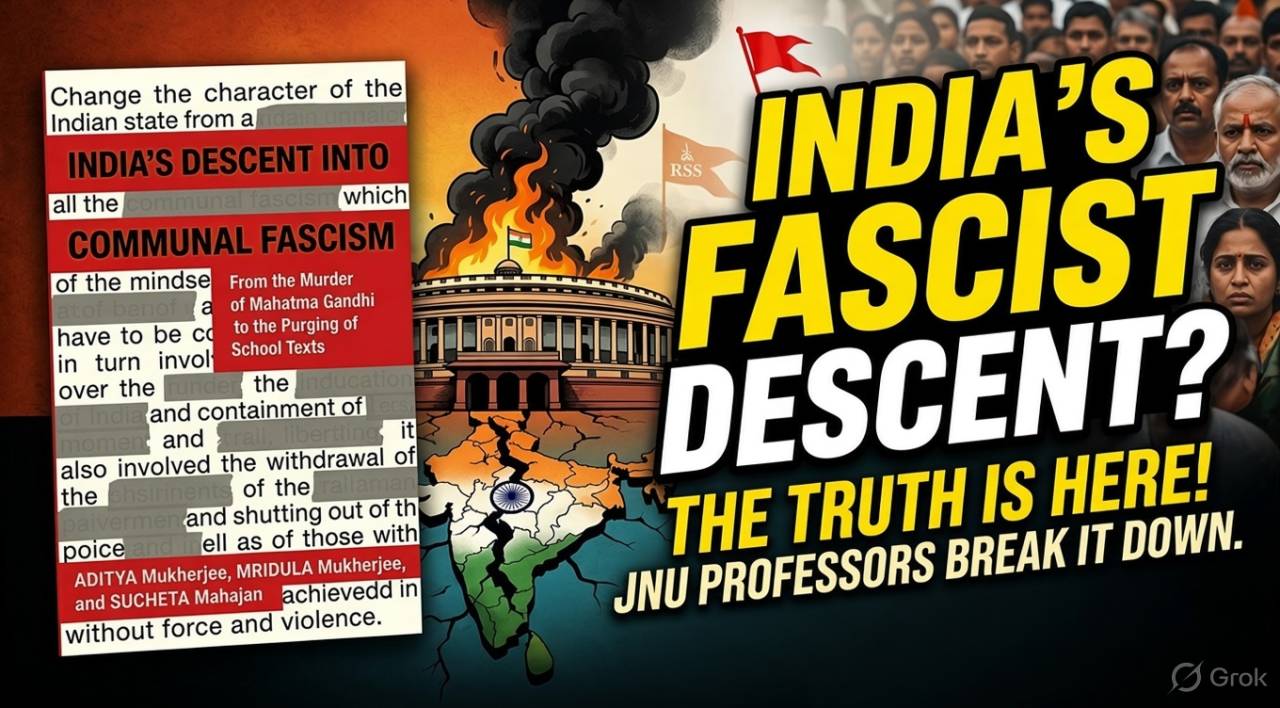
How does the rewriting of history shape national identity, deepen communal divisions and influence the future of Indian democracy?
History is not simply about what happened in the past. It is also about how a society remembers those events, interprets them and passes that understanding to the next generation. When historical accounts become instruments of political mobilisation, the consequences extend well beyond classrooms and textbooks. They begin to shape how people understand their country, its citizens and its constitutional values.
This is the central concern of India’s Descent into Communal Fascism, written by historians Aditya Mukherjee, Mridula Mukherjee and Sucheta Mahajan. Published by Speaking Tiger Books in 2026, the 256-page book examines the growth of Hindutva politics and its implications for India's secular and democratic framework.
For readers familiar with the work of the three authors at Jawaharlal Nehru University’s Centre for Historical Studies, the subject is closely connected with their longstanding academic engagement with modern Indian history, nationalism and communal politics. Their approach rests on the argument that communalism cannot be understood merely as a series of religious tensions or isolated political incidents. It has to be examined through its historical roots, ideological foundations and influence on public institutions.
The politics of remembering and forgetting
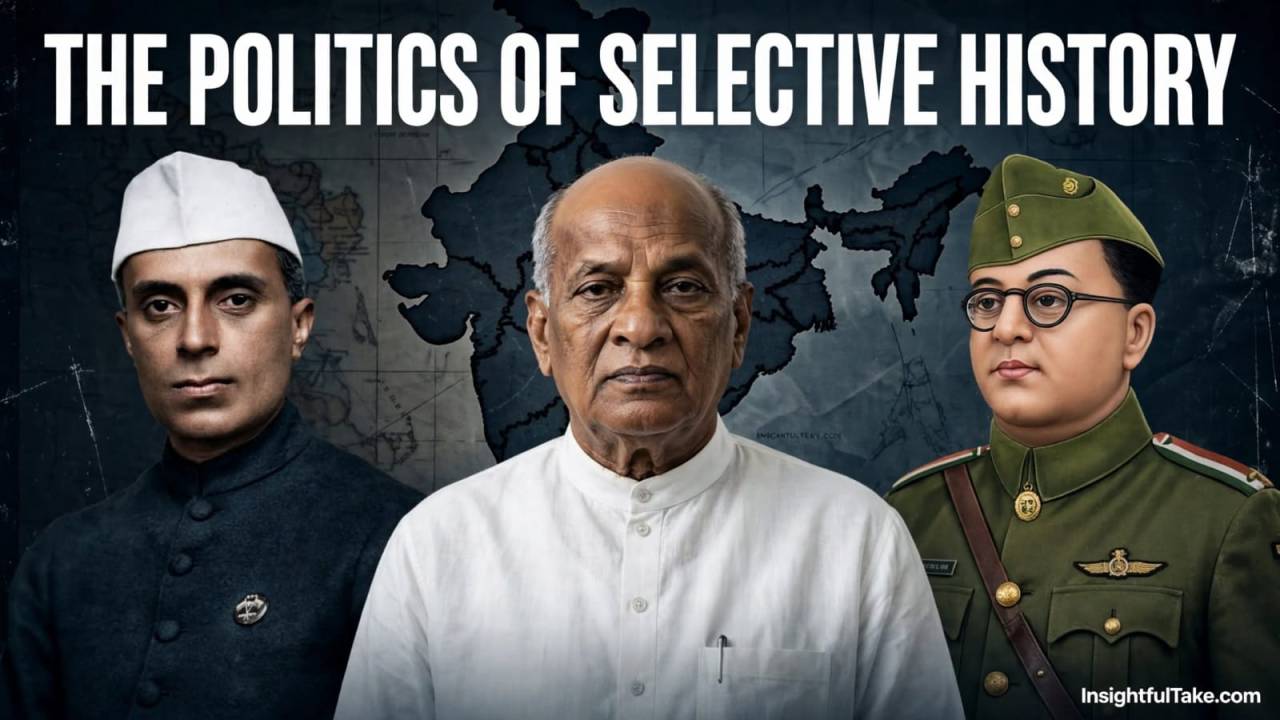
One of the book's important areas of discussion is the use of history in shaping political identity. The authors examine how historical narratives can be selectively presented to create divisions between communities and establish one particular understanding of national identity.
This raises an important question: what happens when history is taught less as an exercise in understanding the past and more as a means of establishing political loyalty?
The authors direct attention towards the ideological influence of the Rashtriya Swayamsevak Sangh (RSS) and organisations associated with it. They argue that the effort to reshape historical understanding is part of a wider project to redefine Indian nationalism along religious lines.
The treatment of Muslim communities in such narratives receives particular attention. When a community is repeatedly portrayed as an outsider or as belonging outside the national mainstream, the consequences are not confined to historical interpretation. Such representations can influence public attitudes, political debate and the way citizens view one another.
The book therefore places the debate over history textbooks within a larger discussion about the kind of society India wants to become.
Gandhi's assassination and the roots of communal politics
The authors also revisit the assassination of Mahatma Gandhi, an event that remains central to understanding the ideological conflicts surrounding Indian nationalism.
Gandhi's commitment to Hindu-Muslim unity stood in direct opposition to the politics of religious division. His assassination was not simply the death of a national leader; it exposed the depth of the ideological hostility directed against his vision of an inclusive India.
By returning to this historical moment, the authors seek to establish a connection between the communal politics of the pre-independence period and developments in contemporary India.
The historical perspective is important because present-day political developments rarely emerge without a background. Ideologies evolve, organisations expand their influence, and political ideas acquire new forms over time. Understanding those connections is essential to examining the present.
Institutions, education and democratic values
Another significant concern is the relationship between political ideology and public institutions.
Education is particularly important in this debate. School textbooks do more than provide information about historical events. They influence how young people understand their society, its diversity and the struggles that shaped the republic.
Changes in historical accounts, the removal of certain references and the greater emphasis on particular interpretations deserve public scrutiny. The question is not whether textbooks should ever be revised. Historical research is constantly evolving, and textbooks must reflect credible scholarship. The real issue is whether such revisions are guided by academic evidence or by an ideological preference.
The book also examines concerns surrounding civil liberties, dissent and the treatment of minority communities. These issues bring the discussion beyond historical scholarship and into the functioning of democratic institutions.
A democracy depends not only on elections but also on constitutional safeguards, freedom of expression, institutional independence and equal citizenship. Any discussion about the future of Indian democracy must take these elements into account.
Why this book deserves attention
In its 256 pages, India’s Descent into Communal Fascism examines a subject that remains deeply connected to contemporary Indian politics. Its greatest relevance lies in encouraging readers to look beyond daily political controversies and examine the historical and ideological developments behind them.
The book will naturally appeal to students of history, political science and public policy. It should also interest journalists, teachers and general readers who want to understand the relationship between nationalism, communal politics and democratic institutions.
Readers should approach it as an argument developed by three historians, engage with the evidence they present and examine their interpretations critically. A subject of this importance deserves informed debate rather than unquestioning acceptance or outright dismissal.
India's history has been shaped by many communities, languages, traditions and political movements. Its constitutional identity emerged from the difficult task of accommodating this diversity within a common democratic framework.
The question raised by this book is ultimately about how that history is remembered and what kind of national identity future generations will inherit. It is a debate that cannot be confined to university departments or political platforms. It concerns every citizen who has a stake in India's democratic future.




















Leave a Comment