
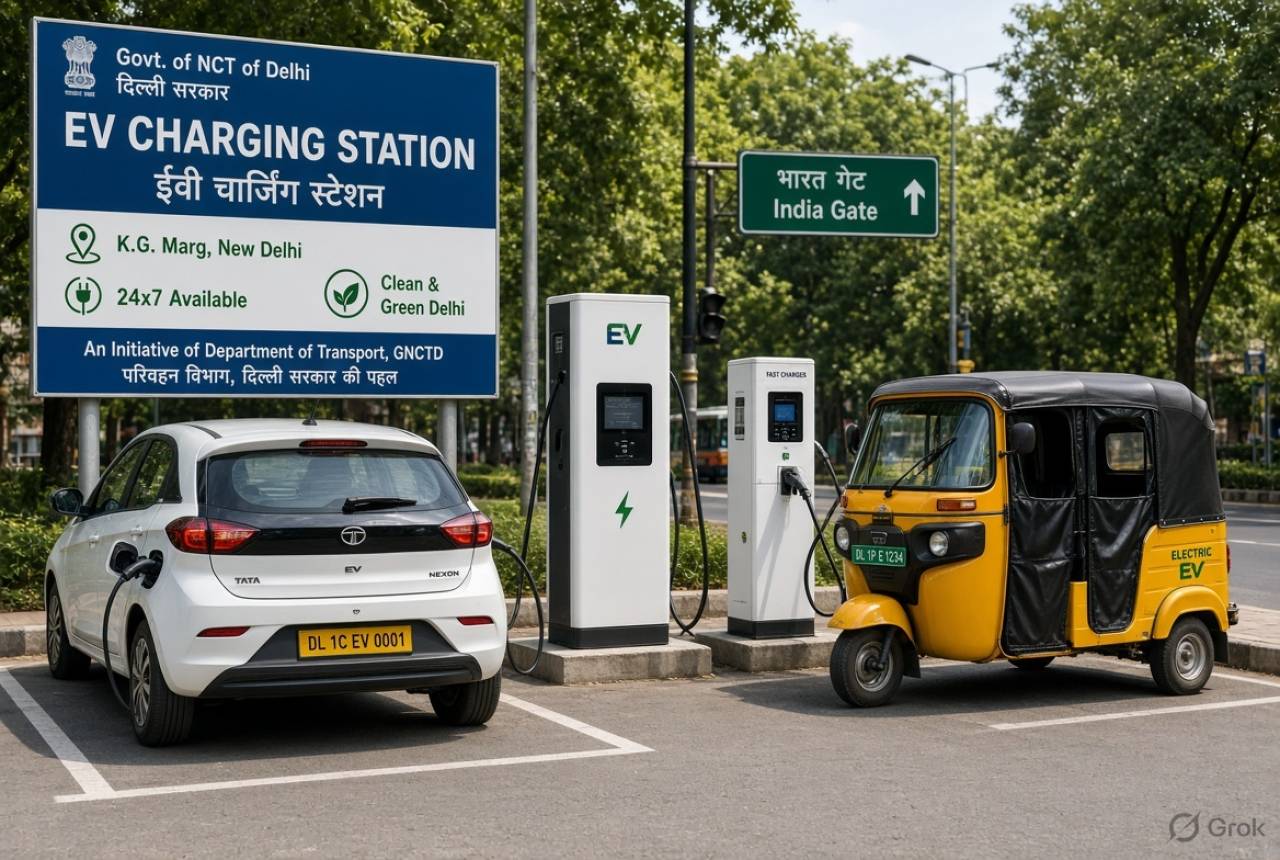
Delhi has beaten its 2026 EV charging target three months early. The bigger challenge now is building a network that can power the city's electric future.
Delhi has installed 14,225 electric vehicle charging points by September 2026, surpassing its annual target ahead of schedule. The government now aims to more than double the network by December 2029.
Delhi has exceeded its electric vehicle (EV) charging infrastructure target for 2026, installing 14,225 charging points across the city by September 30. The achievement comes three months ahead of the December deadline set by the Commission for Air Quality Management (CAQM), which had fixed an annual target of 13,913 charging points.
The city added 5,312 charging points between January and September, taking the total network beyond the prescribed target. The Delhi government has now set its sights on expanding the network to 32,062 charging points by December 2029.
The expansion is a key part of the Delhi Electric Vehicle Policy 2026, notified on June 30, which aims to accelerate the transition from petrol and diesel vehicles to electric mobility.
Delhi Sets New EV Registration Deadlines
The EV policy introduces a phased transition for different vehicle categories, with specific registration deadlines.
Under the policy:
- From January 1, 2027, only electric three-wheelers and N1-category goods carriers will be registered in Delhi.
- From April 1, 2028, the electric vehicle registration requirement will extend to two-wheelers.
- School bus fleets are expected to achieve 30 per cent electrification by 2030.
Government departments, public transport operators and commercial delivery companies are also being encouraged to shift towards electric vehicles.
However, these targets will depend heavily on the availability of reliable charging infrastructure. Without sufficient charging facilities, vehicle owners and commercial operators may hesitate to make the switch.
₹8.9 Crore Subsidy for Heavy-Duty EV Charging Stations
Recognising the requirements of commercial transport, the Union Ministry of Heavy Industries sanctioned a subsidy of ₹8.9 crore on October 23 for setting up 10 public charging stations.
Each station will have 20 high-capacity chargers rated at 360 kW, using the CCS-II charging standard.
These facilities are designed primarily for heavy-duty electric vehicles, including electric trucks. High-capacity chargers can help reduce charging time and vehicle downtime, an important consideration for logistics companies operating on tight schedules.
The initiative is particularly relevant as the electrification of commercial transport requires a different level of infrastructure compared with private electric cars and two-wheelers.
PM E-DRIVE Scheme Brings ₹127.16 Crore for Delhi
Delhi is also receiving support under the Centre's PM E-DRIVE scheme.
The Ministry of Heavy Industries has sanctioned ₹127.16 crore for 382 charging sites in the national capital. Of these, 180 locations have been reassessed and found suitable for composite chargers with capacities of 12 kW, 60 kW and 120 kW.
The Delhi government shared details of these 180 locations with the ministry on October 8.
The tendering and approval processes are now being handled through Delhi Transco Limited, which is coordinating the next stage of implementation.
The funding is expected to strengthen the charging network across different parts of the city and support the growing number of electric vehicles.
Government Offices, Metro Stations to Get Charging Facilities
Delhi Power Minister Ashish Sood, who chaired the Group of Ministers on the EV policy, said expanding charging infrastructure was essential to support the transition to electric mobility.
He stated that the government was working towards the 2029 target while identifying locations such as government offices, public parking spaces and Metro stations for charging facilities.
Sood also highlighted air pollution as a continuing challenge for Delhi, emphasising the need for practical measures to reduce vehicular emissions.
Placing charging facilities at frequently visited public locations could make electric vehicles more convenient for commuters and encourage wider adoption.
Charging Stations and Charging Points Are Not the Same
One important distinction in understanding Delhi's EV infrastructure figures is the difference between a charging station and a charging point.
A charging station refers to a physical location where charging facilities are installed. A charging point is an individual connector that can charge one vehicle at a time.
A single station may therefore have multiple charging points, allowing several vehicles to charge simultaneously.
Expanding the network also requires adequate electricity supply, transformers and supporting electrical infrastructure. Without these arrangements, even newly installed chargers may not function reliably, particularly during periods of high demand.
Can EV Expansion Help Delhi Fight Air Pollution?
Delhi's charging infrastructure expansion is closely linked to its broader efforts to improve air quality.
Road transport contributes to the city's pollution burden, and reducing dependence on petrol and diesel vehicles is an important part of the long-term response.
The proposed electrification of school buses, government vehicles and commercial delivery fleets could help reduce emissions from these categories.
However, the overall impact will depend on how quickly conventional vehicles are replaced, how effectively charging facilities are used and how clean the electricity supply becomes.
The shift also needs to address practical concerns, including charging costs, accessibility, electricity supply and the availability of suitable charging facilities in residential areas.
Final Take
Crossing the 2026 target ahead of schedule gives Delhi a stronger starting point for its next phase of electric mobility expansion. The proposed increase from 14,225 charging points to 32,062 by December 2029 represents a substantial infrastructure commitment.
The immediate priorities include completing tenders, preparing electricity infrastructure, installing high-capacity chargers and ensuring that public charging facilities are accessible across the city.
The registration deadlines beginning in 2027 and 2028 will put additional pressure on the government to deliver these facilities on time.
Delhi has crossed its first major charging infrastructure milestone. The larger test will be whether the network grows fast enough to support the coming wave of electric vehicles and makes the transition practical for ordinary commuters, businesses and public transport operators.

























Leave a Comment