
As Cyclone Arnab barrels towards Andhra Pradesh, nearly 1.5 lakh people flee their homes, leaving coastal communities bracing for destructive winds, torrential rain and an uncertain dawn.
With powerful winds, torrential rain and widespread disruption feared, authorities in Andhra Pradesh and Odisha have stepped up evacuations as the cyclone approaches India's eastern coastline.
As Cyclone Arnab gathered strength over the Bay of Bengal on Tuesday evening, coastal districts of Andhra Pradesh and Odisha were preparing for a difficult night. Nearly 1.5 lakh people had already been evacuated from vulnerable areas, while disaster response teams remained on high alert. The approaching storm brought fears of destructive winds, torrential rainfall and coastal flooding. For thousands of families, the immediate concern was not the intensity of the cyclone but the safety of their homes and livelihoods. Authorities raced against time to move residents into shelters before conditions deteriorated. With the India Meteorological Department (IMD) advancing its projected landfall timeline, the urgency of evacuation operations increased considerably.
Cyclone Intensifies as Landfall Approaches
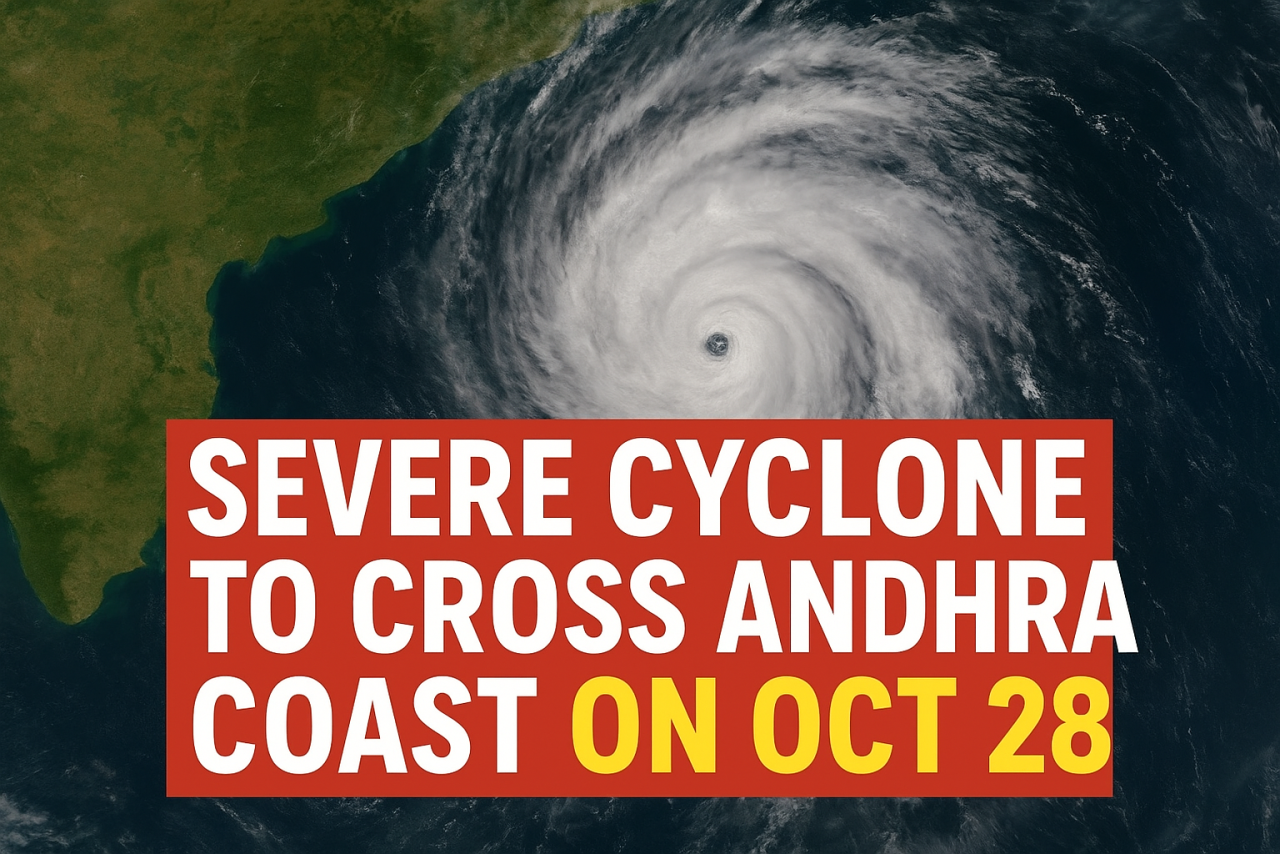
Cyclone Arnab developed over the west-central Bay of Bengal and intensified rapidly as it moved towards the Andhra Pradesh coast. According to the IMD forecast cited in the initial reports, the weather system strengthened into a very severe cyclonic storm.
The cyclone was expected to cross the coast between Bapatla and Visakhapatnam, affecting the adjoining Yanam region. Landfall was projected between 2 am and 4 am on Wednesday, earlier than initially anticipated.
The change in timing reflected the cyclone's increasing forward speed. Weather officials had earlier expected landfall during Wednesday forenoon.
The storm's development was equally striking. Beginning as a depression on October 24, the system strengthened into a deep depression within a day. By October 26, it had developed into a severe cyclonic storm.
Forecast projections indicated peak winds of approximately 157 kmph before landfall. The cyclone was subsequently expected to weaken while moving inland towards Chhattisgarh, eventually becoming a low-pressure area by October 30.
Nearly 1.5 Lakh People Shifted to Safety
Evacuation remained the centrepiece of the government's disaster preparedness strategy.
According to figures provided by the state authorities, Andhra Pradesh had evacuated approximately 90,000 residents by Tuesday evening. Odisha reported moving another 48,000 people from vulnerable locations.
The combined evacuation figure stood at around 1.38 lakh, with further relocations planned.
Residents of low-lying villages, coastal settlements and areas vulnerable to flooding were given priority. Temporary shelters were prepared to accommodate displaced families.
Andhra Pradesh Chief Minister N. Chandrababu Naidu emphasised that preventing loss of life remained the government's foremost responsibility.
He appealed to residents not to panic and urged them to follow official safety instructions.
Meanwhile, disaster management officials continued monitoring the cyclone's movement. Prakhar Jain, managing director of the State Disaster Management Authority, reportedly said the storm had maintained a forward speed of approximately 25 kmph over six hours.
The accelerating system left authorities with a shrinking window to complete evacuation operations.
Strong Winds and Heavy Rain Threaten Coastal Districts
Even before the expected landfall, several coastal districts of Andhra Pradesh had begun experiencing gusty winds.
The weather department warned that conditions could deteriorate significantly as the cyclone approached the shoreline.
Wind speeds along the coast were projected to reach 90–100 kmph initially. During landfall, sustained winds could increase to 115–125 kmph, with gusts reaching 140 kmph.
Such conditions could uproot trees, damage electricity infrastructure and destroy poorly constructed houses.
Heavy rainfall could also inundate roads, agricultural fields and residential neighbourhoods.
Coastal flooding posed an additional concern, particularly for fishing communities and residents living close to the shoreline.
Authorities advised fishermen against venturing into the sea and urged coastal residents to remain indoors during the most dangerous phase of the storm.
Six States Face the Threat of Heavy Rainfall
Although Andhra Pradesh was expected to bear the immediate impact, the cyclone's influence could extend far beyond the coastline.
Weather alerts mentioned in the reports covered Andhra Pradesh, Odisha, Telangana, Chhattisgarh, Uttar Pradesh and Bihar.
The possibility of heavy rainfall in inland states highlighted a frequently overlooked aspect of tropical cyclones.
A cyclone may weaken after crossing land, but its moisture-laden circulation can continue producing substantial rainfall hundreds of kilometres from the coast.
For agricultural communities, such rainfall can be particularly damaging when crops are approaching harvest.
Waterlogging, overflowing drainage systems and disruptions to transport networks could further complicate conditions in affected districts.
Residents were advised to monitor local weather bulletins rather than assume that distance from the sea guaranteed safety.
India's Disaster Preparedness Faces Another Test
India's eastern coastline has experienced several devastating cyclones over the decades. These disasters have gradually transformed the country's approach to cyclone management.
Earlier warning systems, improved forecasting and large-scale evacuations have become central to disaster preparedness.
Odisha, in particular, has demonstrated how coordinated evacuation and community-level planning can substantially reduce cyclone-related fatalities.
The response to Cyclone Arnab reflected a similar emphasis on preventive action.
However, moving people into shelters represents only the first stage of disaster management.
Once the cyclone passes, authorities must assess damaged infrastructure, restore electricity and drinking water, reopen roads and provide assistance to displaced families.
Farmers and fishing communities may require additional support if crops, boats or equipment are damaged.
The economic consequences of a cyclone often persist long after the winds have subsided.
The Real Challenge Begins After Landfall
As coastal communities waited for the storm, the immediate priority remained protecting human lives.
Residents were urged to avoid unnecessary travel, keep emergency supplies ready and follow verified advisories issued by local authorities.
Flooded roads, damaged electrical installations and rough seas could remain dangerous even after the cyclone weakened.
Cyclones are natural phenomena, but the scale of human suffering they cause depends significantly on preparedness, infrastructure and timely government intervention.
























Leave a Comment