
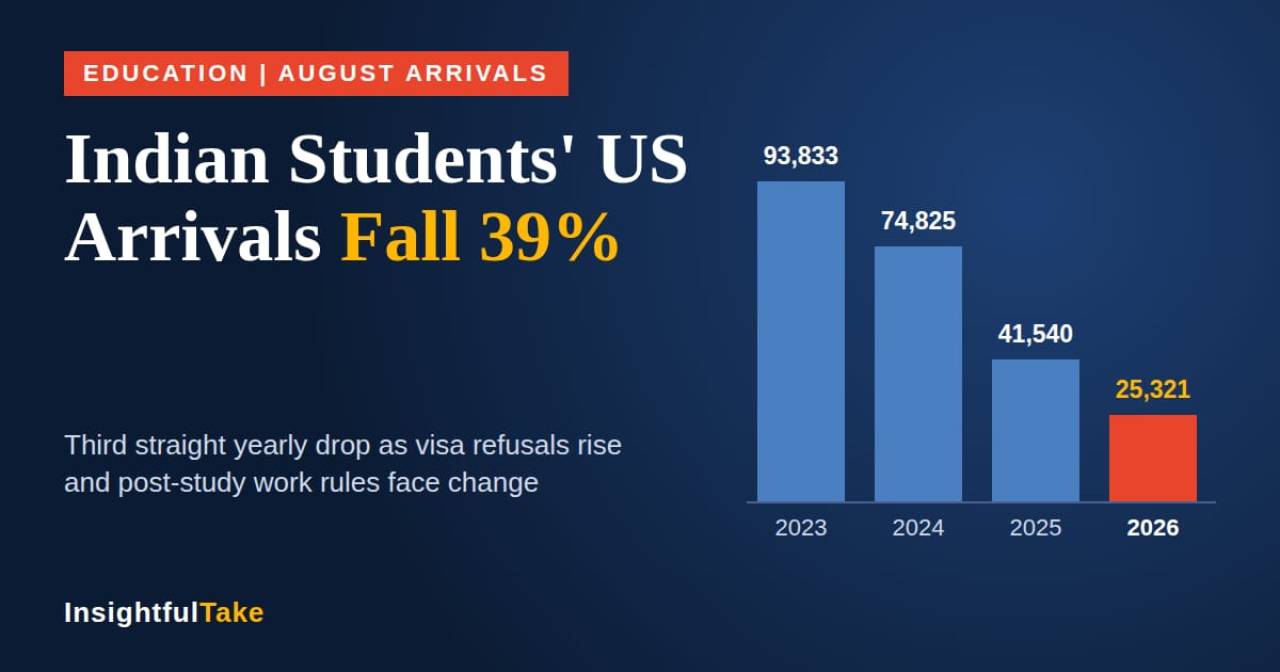
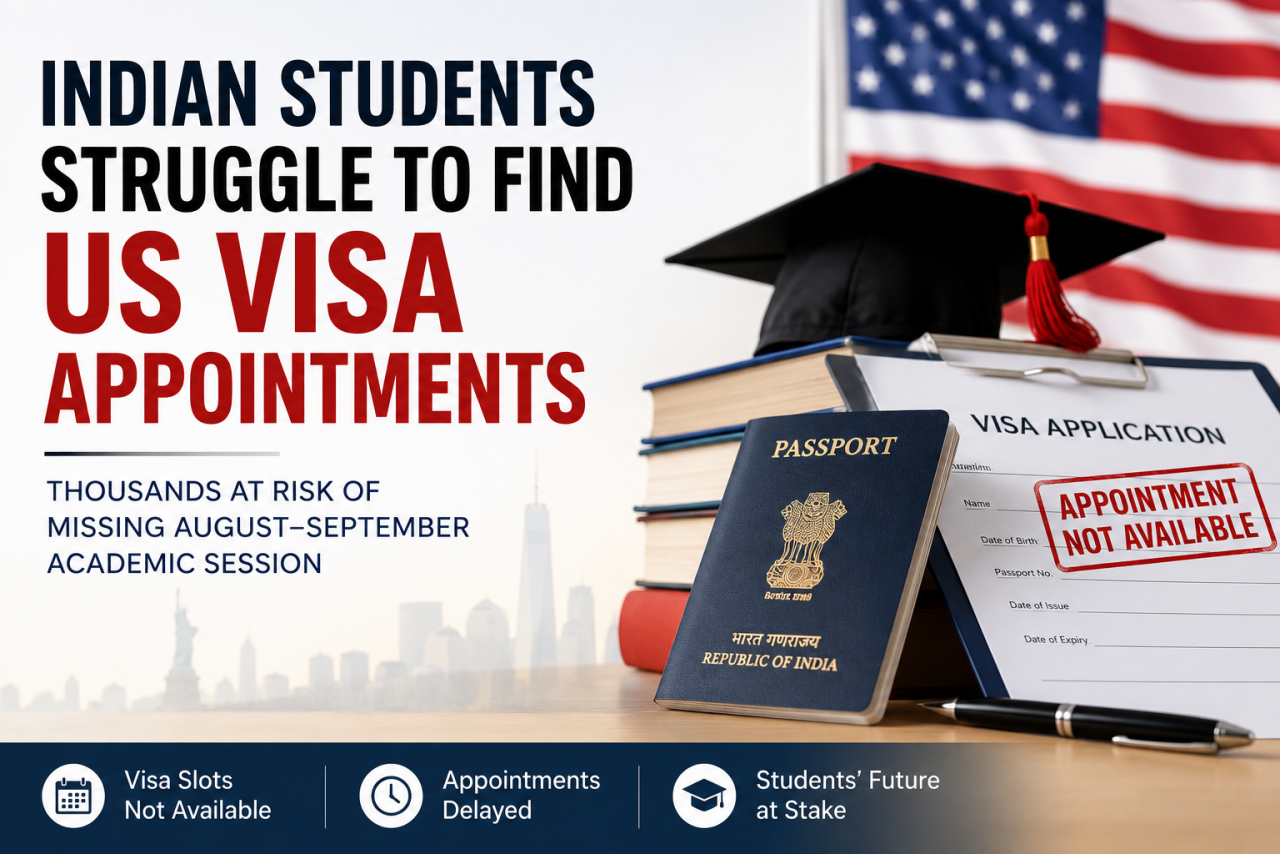
August arrivals of Indian students on US visas fell 39% year-on-year, marking another annual decline as visa refusals, processing delays and uncertainty over post-study employment affect overseas education plans.
Every August traditionally brings thousands of international students to American campuses ahead of the fall semester. This year, however, the number arriving from India declined sharply, continuing a trend that has raised concerns among students, families and education consultants.
According to the US Commerce Department's International Trade Administration (ITA), 25,321 arrivals from India on F and M category visas were recorded in August 2026, compared with 41,540 in August 2025.
The latest figure represents a 39% decline and is the lowest August total since 2020, when pandemic restrictions reduced arrivals to just 2,908.
Compared with the August 2023 peak of 93,833, arrivals have fallen by approximately 73%.
A Decline Three Years in the Making
The downward trend began before the current US administration took office.
In August 2024, arrivals declined 20.3% to 74,825. The fall accelerated in 2025, when numbers dropped 44.5%, followed by another 39% reduction in August 2026.
Together, these figures indicate a substantial contraction in student-related travel from India to the United States.
Other months show a similar pattern.
Arrivals declined 17.3% in June and 30.6% in July. September recorded a modest 5% increase to 12,285, but the additional 585 arrivals were far below August's shortfall of 16,219.
September's figure also remained 37.5% below the corresponding month in 2024.
Between June and September 2026, total arrivals stood at 53,714, representing a decline of 28.2% from 2025 and 59.7% from 2024.
However, the ITA data require careful interpretation. They count entries rather than individual students and include dependants travelling on F-2 and M-2 visas.
The August and September figures are also preliminary. They do not establish how many visas were issued, how many students enrolled or the precise reasons behind the decline.
Visa Delays and Rising Refusal Rates
Education consultants identify visa processing difficulties as a major concern for Indian applicants.
India's Ministry of External Affairs informed the Rajya Sabha in April that 12,776 F-1 visas were issued to Indian nationals during June and July 2025, compared with 41,336 during the same period in 2024.
This represented a decline of 69.1%.
The ministry attributed the reduction partly to expanded US screening and compliance requirements.
Meanwhile, an April analysis by education company Shorelight, based on government records obtained through the Freedom of Information Act, found that the F-1 visa refusal rate for Indian applicants increased considerably.
The refusal rate rose from 36% in fiscal year 2023 to 53% in 2024 and 61% in 2025.
Applicants have also faced additional screening requirements.
Under guidance issued by the US State Department on June 18, 2025, student and exchange visitor visa applicants must make their social media profiles public for review.
Education advisers say limited visa-stamping appointments have forced some students to postpone their travel plans or consider admission in later semesters.
Comparable US visa issuance figures for the summer of 2026 were not available in the cited reporting because the State Department had published monthly data only through February 2026.
Uncertainty Over Post-Study Employment
For many Indian families, studying in the United States is closely linked to future employment opportunities.
The Optional Practical Training (OPT) programme allows eligible F-1 students to gain work experience related to their academic field during or after their studies.
However, proposed changes to immigration and employment rules have created uncertainty.
On October 8, the US Department of Homeland Security (DHS) proposed requiring institutions to pay $70,000 per student for an initial OPT period and $30,000 for each subsequent period.
Another DHS rule, finalised on July 17, sought to replace the existing Duration of Status system with fixed admission periods of up to four years.
Under the existing arrangement, eligible international students can generally remain in the country while maintaining their authorised academic status.
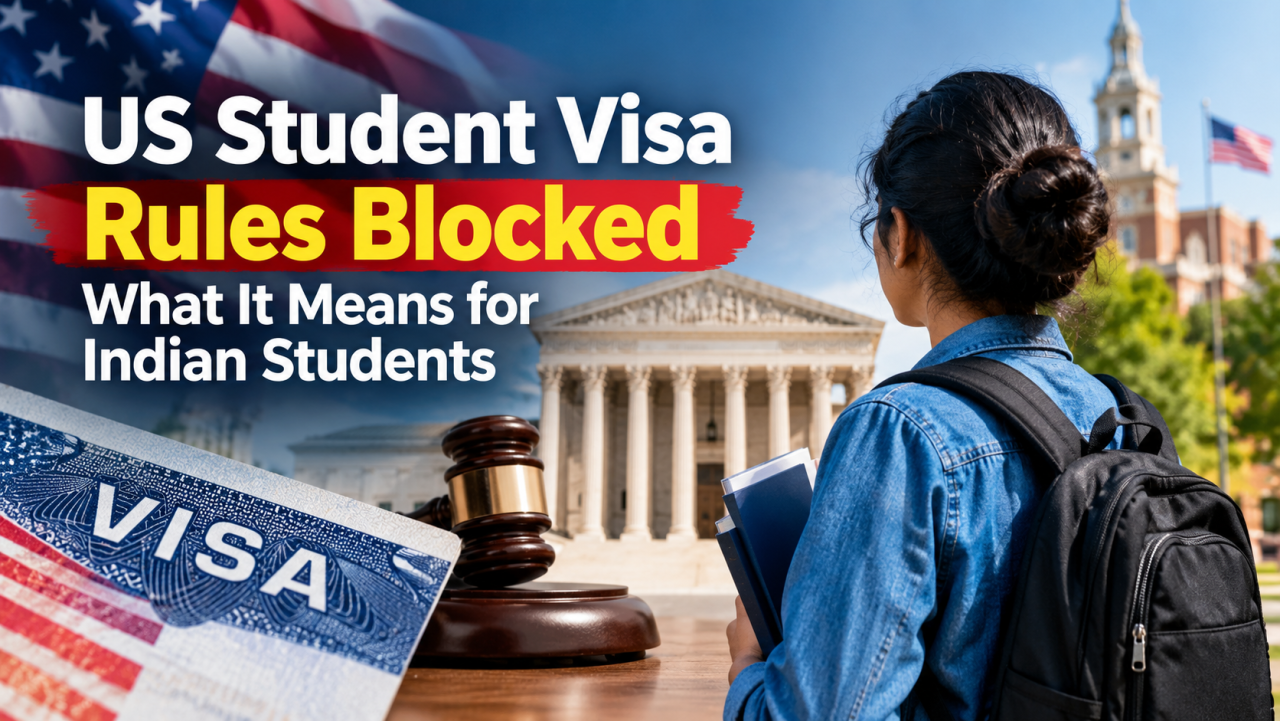
A federal court in Massachusetts blocked the new rule on September 14, one day before its scheduled implementation. The US government subsequently appealed.
These developments have added to concerns among students who consider post-graduation employment an important part of their educational investment.
Rising Costs Add to Students' Concerns
Visa difficulties are not the only factor influencing decisions.
The rising cost of international education, currency fluctuations and uncertainty over employment opportunities are also affecting families.
An IDP Education spokesperson said appointment shortages, higher rejection rates and proposed policy changes were prompting students and parents to reconsider the financial implications of studying in the United States.
The cost of tuition, accommodation, insurance and everyday expenses can represent a substantial commitment for Indian households.
When future employment opportunities become less predictable, families may find it harder to assess whether that investment is financially practical.
Vinu Warrier, managing partner and founder of eduVelocity Global, said inconsistent policies concerning academic visas, temporary employment visas and permanent residency were weakening confidence in the United States as an education destination.
He emphasised that students needed stability and certainty when making decisions involving several years of study and significant financial commitments.
Warrier also noted that American universities had largely maintained their usual admission schedules, with no significant delays reported.
This suggests that visa procedures and immigration policies, rather than university admissions, are creating much of the uncertainty.
Indian Students Explore Alternative Destinations
The changing environment has encouraged some prospective students to consider other countries.
Education consultants report growing interest in Germany, the Netherlands, France, Spain, Singapore, Hong Kong and Japan.
These destinations offer different combinations of academic programmes, tuition costs, scholarships and employment opportunities.
Some students are also considering private universities in India, while others are postponing their overseas education plans until visa and employment policies become clearer.
However, the shift does not necessarily indicate that Indian students have permanently lost interest in American universities.
The United States continues to offer established research institutions, specialised academic programmes and opportunities for international exposure.
The concern increasingly centres on whether students can secure visas on time and make realistic plans for their lives after graduation.
What Lies Ahead for Indian Students
The latest arrival figures reveal a sustained decline, but they do not establish whether the trend will become permanent.
Visa refusals, processing delays, higher educational expenses and uncertainty over employment rules have complicated decisions for prospective students.
For Indian applicants, early visa preparation, careful financial planning and a clear understanding of post-study employment regulations have become increasingly important.
Keeping alternative universities and destinations under consideration may also help students manage unexpected delays.
For American universities, the challenge extends beyond securing international admissions. Students and their families need confidence that immigration procedures will allow them to pursue the education for which they have prepared and paid.
The coming admission cycles will help determine whether Indian student arrivals recover or whether the decline signals a longer-term change in international education choices.















Leave a Comment