
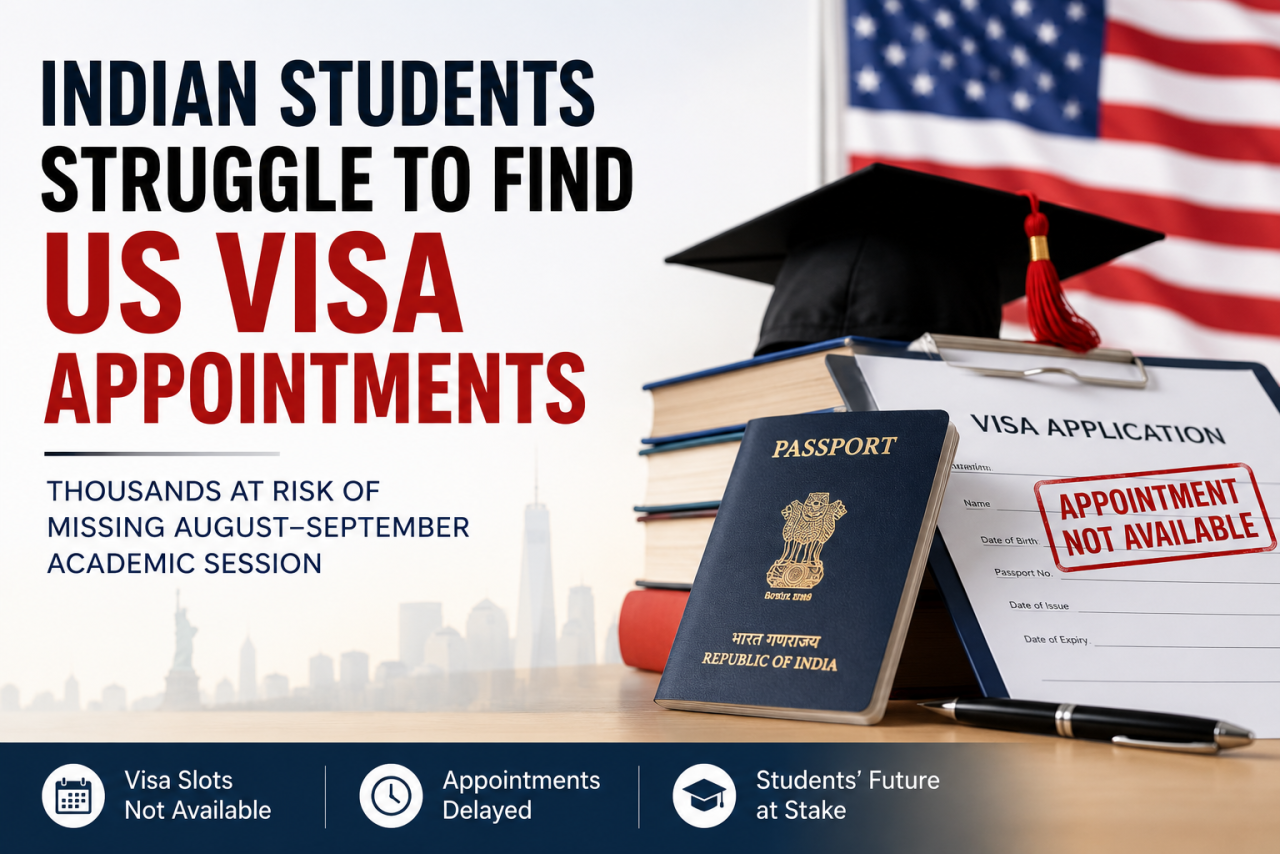
Thousands Face Uncertainty as Visa Interview Slots Remain Unavailable
Thousands of Indian students who have secured admission to American universities are struggling to book US student visa interview appointments just weeks before the August and September academic sessions begin. Education consultants say the shortage of visa slots this year is more severe than in previous years, leaving many students and their families uncertain about whether they will be able to start their courses on time.
Students Unable to Secure Visa Appointments
Students who began applying for visa interview appointments after April have faced the greatest difficulty. Many say no interview slots are available, even through authorised visa agents.
Mrinalini Batra, head of education consultancy International Education Exchange, described the situation as unprecedented. She said that in previous years, the US Embassy had released additional or emergency appointments to meet rising demand. This year, however, no such relief has been announced.
The issue gained national attention after a law student from Kerala shared on social media that she was unable to secure a visa appointment despite receiving a 90 percent scholarship to Harvard Law School.
Parents of other admitted students have reported similar experiences. One parent said their son, who has been admitted to the University of Illinois Urbana-Champaign, received his I-20 document on time and completed all the required formalities. However, the earliest available visa interview dates are now in September and October, well after classes are scheduled to begin in mid-August.
Why the Delay Is a Major Concern
To apply for an F-1 student visa, applicants must first obtain an I-20 form from their university after accepting an admission offer. Since universities often continue issuing admission decisions until March or April, many students are left with only a short window to complete the visa process before classes begin.
Education consultants believe the current shortage is linked to the backlog created during the Covid-19 pandemic, which left a large number of visa applications pending. In earlier years, the US Embassy in New Delhi released additional appointment slots to help clear the backlog. According to Batra, that has not happened this year.
Consultants warn that students who fail to secure visa appointments by the end of July may be forced to postpone their plans or consider alternative study destinations such as Singapore and the United Kingdom.
Policy Changes Add to Uncertainty
The shortage of visa appointments comes at a time when Indian families are also weighing broader concerns about studying in the United States. These include reports of rising anti-immigrant sentiment, incidents of racism, and changes to immigration policies.
Recent policy changes have further increased uncertainty. These include replacing the earlier "duration of status" system with fixed four-year student visas and introducing mandatory social media background checks for visa applicants.
Some American universities have responded by allowing affected students to defer their admission to the spring semester beginning in January, giving them additional time to complete the visa process.
The US Embassy in New Delhi has not yet responded to media queries regarding the shortage of student visa appointment slots.
Thousands of Indian students who have secured admission to American universities are struggling to book US student visa interview appointments just weeks before the August and September academic sessions begin. Education consultants say the shortage of visa slots this year is more severe than in previous years, leaving many students and their families uncertain about whether they will be able to start their courses on time.
Students Unable to Secure Visa Appointments
Students who began applying for visa interview appointments after April have faced the greatest difficulty. Many say no interview slots are available, even through authorised visa agents.
Mrinalini Batra, head of education consultancy International Education Exchange, described the situation as unprecedented. She said that in previous years, the US Embassy had released additional or emergency appointments to meet rising demand. This year, however, no such relief has been announced.
The issue gained national attention after a law student from Kerala shared on social media that she was unable to secure a visa appointment despite receiving a 90 percent scholarship to Harvard Law School.
Parents of other admitted students have reported similar experiences. One parent said their son, who has been admitted to the University of Illinois Urbana-Champaign, received his I-20 document on time and completed all the required formalities. However, the earliest available visa interview dates are now in September and October, well after classes are scheduled to begin in mid-August.
Why the Delay Is a Major Concern
To apply for an F-1 student visa, applicants must first obtain an I-20 form from their university after accepting an admission offer. Since universities often continue issuing admission decisions until March or April, many students are left with only a short window to complete the visa process before classes begin.
Education consultants believe the current shortage is linked to the backlog created during the Covid-19 pandemic, which left a large number of visa applications pending. In earlier years, the US Embassy in New Delhi released additional appointment slots to help clear the backlog. According to Batra, that has not happened this year.
Consultants warn that students who fail to secure visa appointments by the end of July may be forced to postpone their plans or consider alternative study destinations such as Singapore and the United Kingdom.
Policy Changes Add to Uncertainty
The shortage of visa appointments comes at a time when Indian families are also weighing broader concerns about studying in the United States. These include reports of rising anti-immigrant sentiment, incidents of racism, and changes to immigration policies.
Recent policy changes have further increased uncertainty. These include replacing the earlier "duration of status" system with fixed four-year student visas and introducing mandatory social media background checks for visa applicants.
Some American universities have responded by allowing affected students to defer their admission to the spring semester beginning in January, giving them additional time to complete the visa process.
The US Embassy in New Delhi has not yet responded to media queries regarding the shortage of student visa appointment slots.










Leave a Comment