
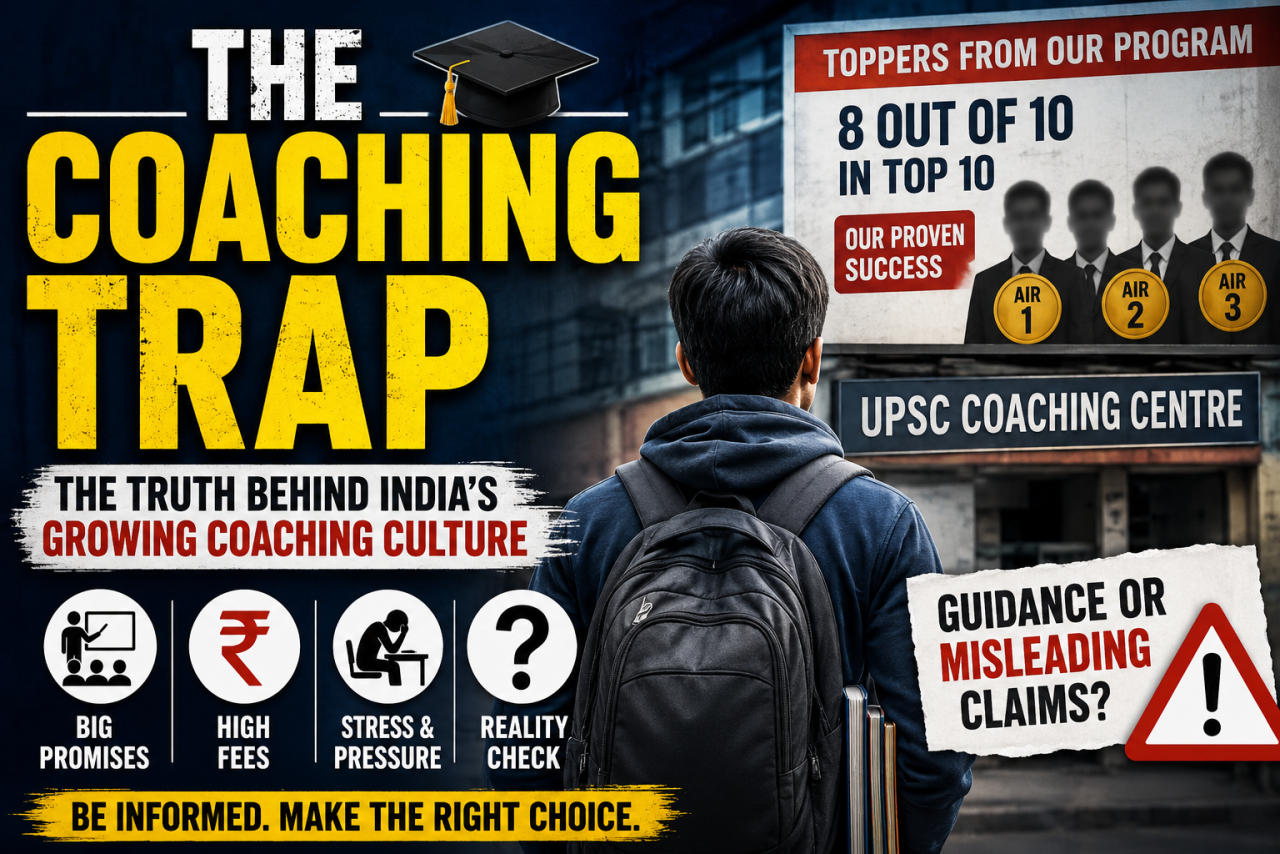
A recent penalty on a leading UPSC coaching institute has renewed questions about India's booming coaching culture and the gap between advertising claims and educational reality.
For millions of Indian students, success in examinations like UPSC, JEE, NEET, CAT, and SSC has become closely linked with joining a coaching institute. In many cities, coaching centres have transformed into a parallel education system, promising ranks, selections, and bright futures. Yet a recent action by the Central Consumer Protection Authority (CCPA) highlights a growing concern about how some institutes market themselves.
According to reports, a prominent UPSC coaching institute was fined for advertisements that created the impression that several top-ranking candidates were products of its full coaching programmes. However, authorities found that many of those candidates had only attended limited services such as interview guidance sessions rather than complete classroom courses. The issue was not about whether the candidates were associated with the institute, but whether the advertisements provided the full picture.
This incident offers an important lesson for students across the country.
The Rise of Coaching Culture
India’s competitive examination system has created enormous demand for coaching. Every year, millions of students compete for a limited number of seats in universities, government jobs, and professional courses. This intense competition has encouraged the growth of a coaching industry worth thousands of crores.
Cities such as Kota, Delhi, Hyderabad, Prayagraj, and Patna have become educational hubs where students relocate in search of better preparation. Coaching institutes often promise expert faculty, proven strategies, and successful results. For many students, joining a reputed institute feels like a necessary step toward success.
However, coaching is only a support system. It cannot replace individual effort, discipline, and understanding.
The Power of Advertising
Most coaching institutes promote their success stories using photographs of toppers and rank holders. While there is nothing wrong with celebrating successful students, problems arise when advertisements blur the distinction between a student who completed a full course and one who merely attended a short workshop or interview session.
When students and parents see claims such as “8 out of 10 toppers studied with us,” they may assume that these results were entirely due to the institute’s classroom programmes. Such impressions can influence admission decisions and lead families to spend significant amounts of money.
In reality, every successful candidate follows a unique journey. Some rely heavily on coaching, while others use self-study, online resources, peer groups, or free educational material.
The Financial and Emotional Cost
The coaching culture has also increased financial pressure on families. Many parents invest large portions of their savings in coaching fees, accommodation, books, and travel expenses. Students often feel immense pressure to justify these investments through success.
Unfortunately, not every student can secure a top rank. When expectations become unrealistic, disappointment and stress can follow. The belief that admission into a particular coaching institute guarantees success can create unnecessary anxiety.
What Students Should Remember
Students should approach coaching advertisements with caution and critical thinking.
Before enrolling, they should ask important questions:
- What exactly is being offered?
- How many students actually completed the full programme?
- What is the teaching methodology?
- Are there genuine student reviews?
- Can the institute provide transparent data about its results?
Most importantly, students must understand that no coaching centre can guarantee success.
Final Take
Coaching institutes can play a valuable role by providing structure, guidance, and mentorship. Many have helped students achieve remarkable results. However, success ultimately depends on consistent effort, curiosity, and perseverance.
The recent controversy should not be seen as a rejection of coaching itself. Instead, it serves as a reminder that transparency and honesty are essential in education. Students deserve accurate information so they can make informed choices about their future.
As India’s coaching culture continues to grow, the focus should shift from marketing claims to genuine learning. After all, no advertisement can replace hard work, and no institute can become a substitute for a student’s own determination.
For millions of Indian students, success in examinations like UPSC, JEE, NEET, CAT, and SSC has become closely linked with joining a coaching institute. In many cities, coaching centres have transformed into a parallel education system, promising ranks, selections, and bright futures. Yet a recent action by the Central Consumer Protection Authority (CCPA) highlights a growing concern about how some institutes market themselves.
According to reports, a prominent UPSC coaching institute was fined for advertisements that created the impression that several top-ranking candidates were products of its full coaching programmes. However, authorities found that many of those candidates had only attended limited services such as interview guidance sessions rather than complete classroom courses. The issue was not about whether the candidates were associated with the institute, but whether the advertisements provided the full picture.
This incident offers an important lesson for students across the country.
The Rise of Coaching Culture
India’s competitive examination system has created enormous demand for coaching. Every year, millions of students compete for a limited number of seats in universities, government jobs, and professional courses. This intense competition has encouraged the growth of a coaching industry worth thousands of crores.
Cities such as Kota, Delhi, Hyderabad, Prayagraj, and Patna have become educational hubs where students relocate in search of better preparation. Coaching institutes often promise expert faculty, proven strategies, and successful results. For many students, joining a reputed institute feels like a necessary step toward success.
However, coaching is only a support system. It cannot replace individual effort, discipline, and understanding.
The Power of Advertising
Most coaching institutes promote their success stories using photographs of toppers and rank holders. While there is nothing wrong with celebrating successful students, problems arise when advertisements blur the distinction between a student who completed a full course and one who merely attended a short workshop or interview session.
When students and parents see claims such as “8 out of 10 toppers studied with us,” they may assume that these results were entirely due to the institute’s classroom programmes. Such impressions can influence admission decisions and lead families to spend significant amounts of money.
In reality, every successful candidate follows a unique journey. Some rely heavily on coaching, while others use self-study, online resources, peer groups, or free educational material.
The Financial and Emotional Cost
The coaching culture has also increased financial pressure on families. Many parents invest large portions of their savings in coaching fees, accommodation, books, and travel expenses. Students often feel immense pressure to justify these investments through success.
Unfortunately, not every student can secure a top rank. When expectations become unrealistic, disappointment and stress can follow. The belief that admission into a particular coaching institute guarantees success can create unnecessary anxiety.
What Students Should Remember
Students should approach coaching advertisements with caution and critical thinking.
Before enrolling, they should ask important questions:
- What exactly is being offered?
- How many students actually completed the full programme?
- What is the teaching methodology?
- Are there genuine student reviews?
- Can the institute provide transparent data about its results?
Most importantly, students must understand that no coaching centre can guarantee success.
Final Take
Coaching institutes can play a valuable role by providing structure, guidance, and mentorship. Many have helped students achieve remarkable results. However, success ultimately depends on consistent effort, curiosity, and perseverance.
The recent controversy should not be seen as a rejection of coaching itself. Instead, it serves as a reminder that transparency and honesty are essential in education. Students deserve accurate information so they can make informed choices about their future.
As India’s coaching culture continues to grow, the focus should shift from marketing claims to genuine learning. After all, no advertisement can replace hard work, and no institute can become a substitute for a student’s own determination.
























Leave a Comment