
India has the world's largest young workforce, yet millions remain without quality jobs. Is the country's greatest economic advantage quietly turning into its biggest long-term challenge?
For more than a decade, India's demographic dividend has been celebrated as the country's greatest economic advantage. With one of the world's youngest populations and nearly two-thirds of its citizens in the working-age group, economists predicted that India would replicate the growth stories of countries like South Korea, China, and Vietnam. Instead, the promise of a youthful nation has increasingly become a source of anxiety.
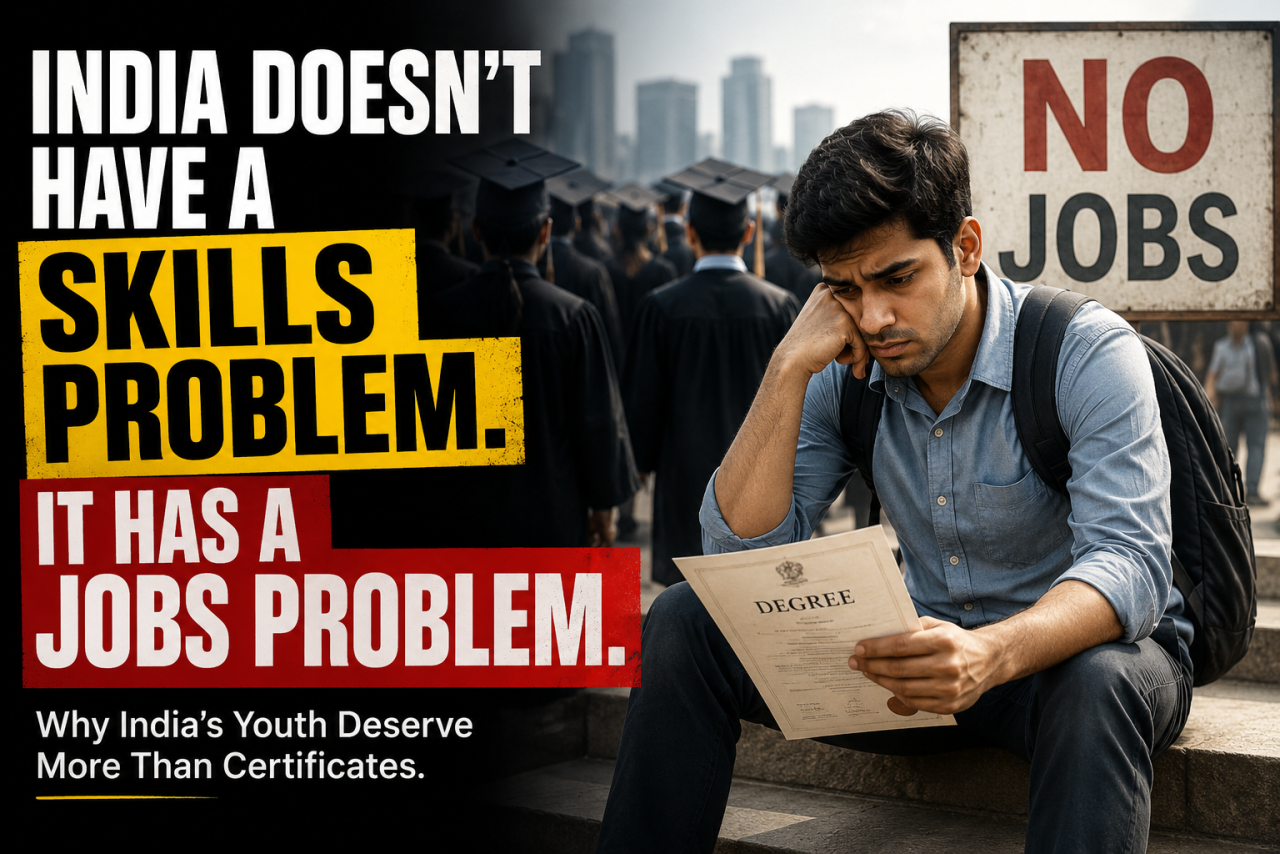
The problem is not that India has too many young people. The problem is that the economy has failed to create enough productive opportunities for them.
A demographic dividend is not an automatic reward for having a young population. It materialises only when education, healthcare, skills, and employment work together. Without quality jobs, a demographic dividend gradually transforms into a demographic burden. Over the past 12 years, India has moved dangerously close to that reality.
The warning signs are difficult to ignore.
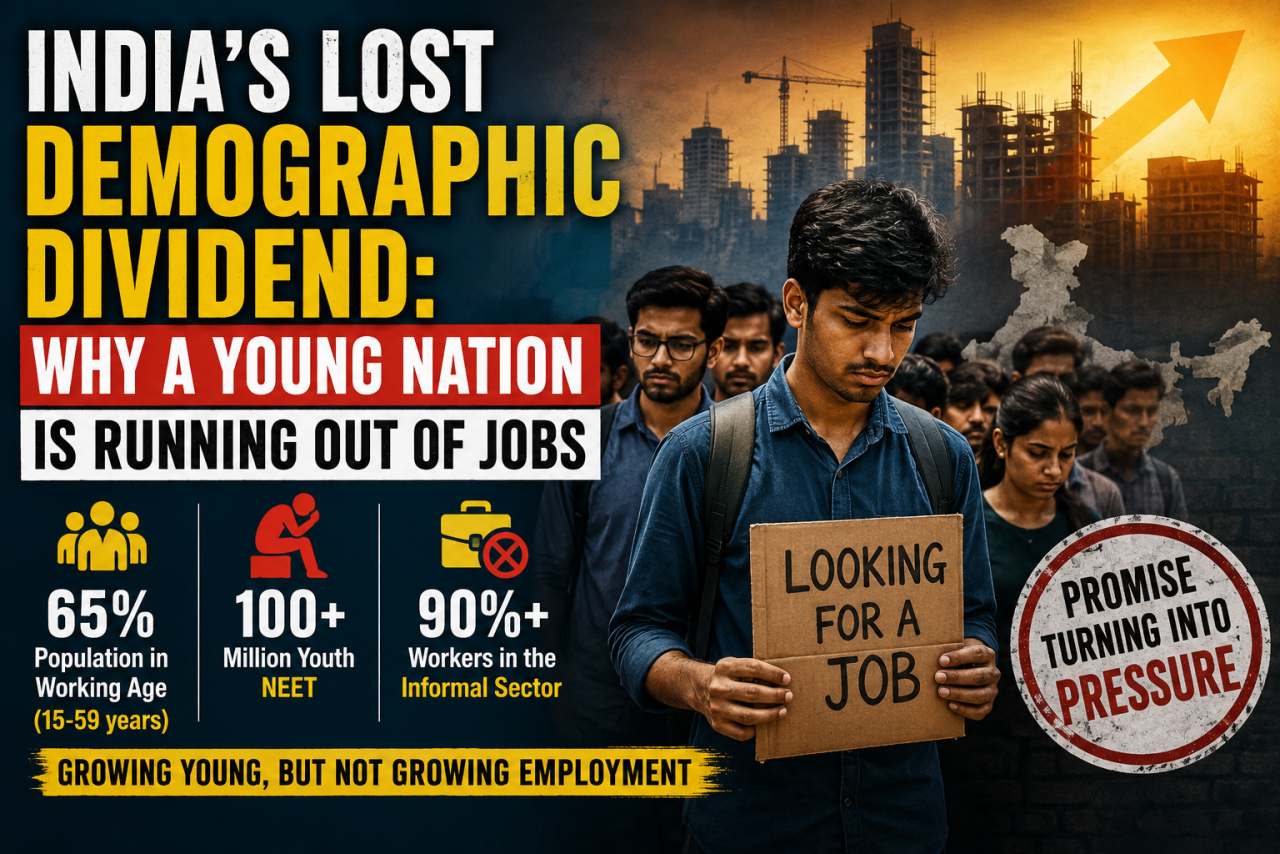
India is expected to reach the peak of its demographic dividend around 2030, when nearly 65 percent of its population will be in the working-age group. After that, the country will begin ageing, making the current decade the most critical period for creating productive employment.
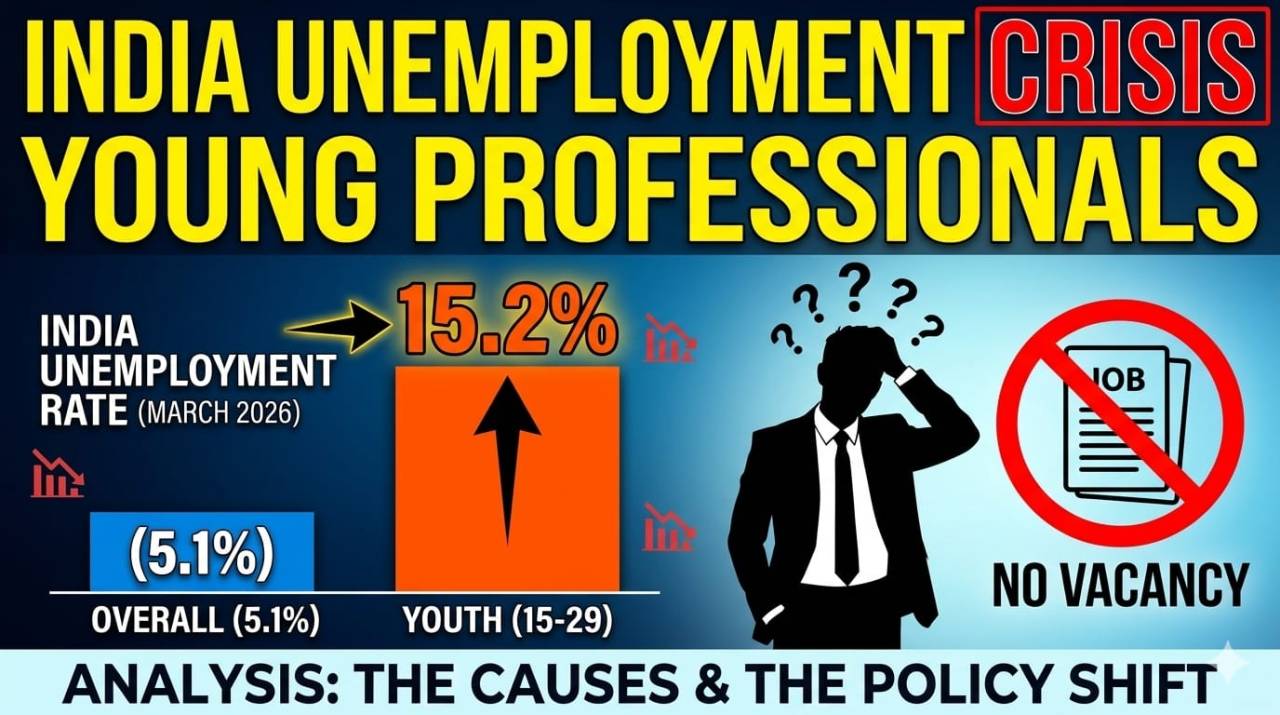
Every year, an estimated 10 to 12 million young Indians enter the labour market. Yet the economy has consistently struggled to generate enough formal, secure, and productive jobs. While India's GDP has expanded significantly over the past decade, employment growth has been concentrated in self-employment, informal work, and unpaid family labour rather than quality jobs that offer stability and social security.
The manufacturing sector, which powered the economic rise of East Asian economies, has failed to become India's employment engine. Instead of drawing workers out of agriculture into higher-productivity industries, India has witnessed an alarming reversal.
According to labour market analysis highlighted in India Out of Work, nearly 80 million people returned to agriculture between 2020 and 2024. This was not a sign of agricultural prosperity but of economic distress. With limited opportunities elsewhere, millions of workers had little choice but to return to low-income farming or unpaid family work.
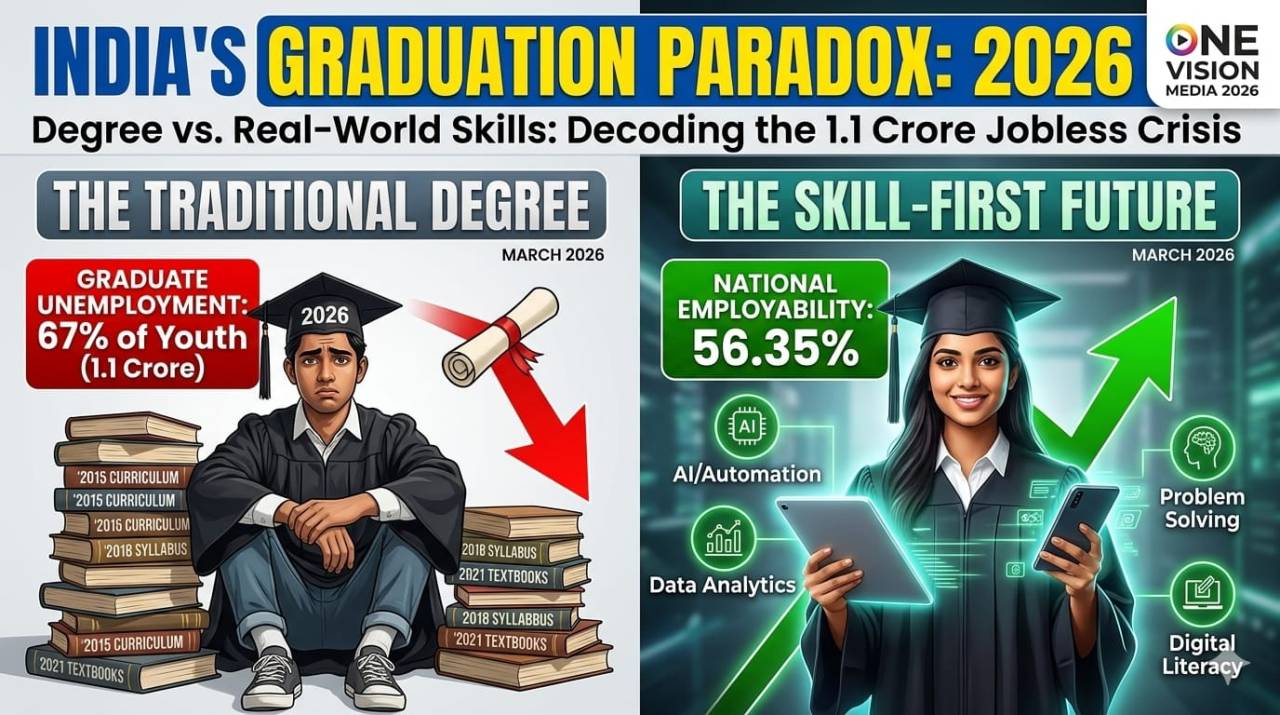
Another worrying indicator is the growing number of NEETs, young people who are Not in Education, Employment, or Training. Estimates suggest that more than 100 million Indian youth fell into this category around 2020. This represents one of the world's largest pools of untapped human capital and raises serious concerns about the country's long-term economic competitiveness.
Women remain another missing pillar of India's demographic story.
Although female labour force participation has improved in recent years, it remains significantly lower than that of men. Millions of educated women remain outside the workforce due to limited employment opportunities, unpaid care responsibilities, safety concerns, and social barriers. No nation can fully benefit from its demographic dividend while nearly half of its potential workforce remains underutilised.
Equally concerning is the nature of employment itself.
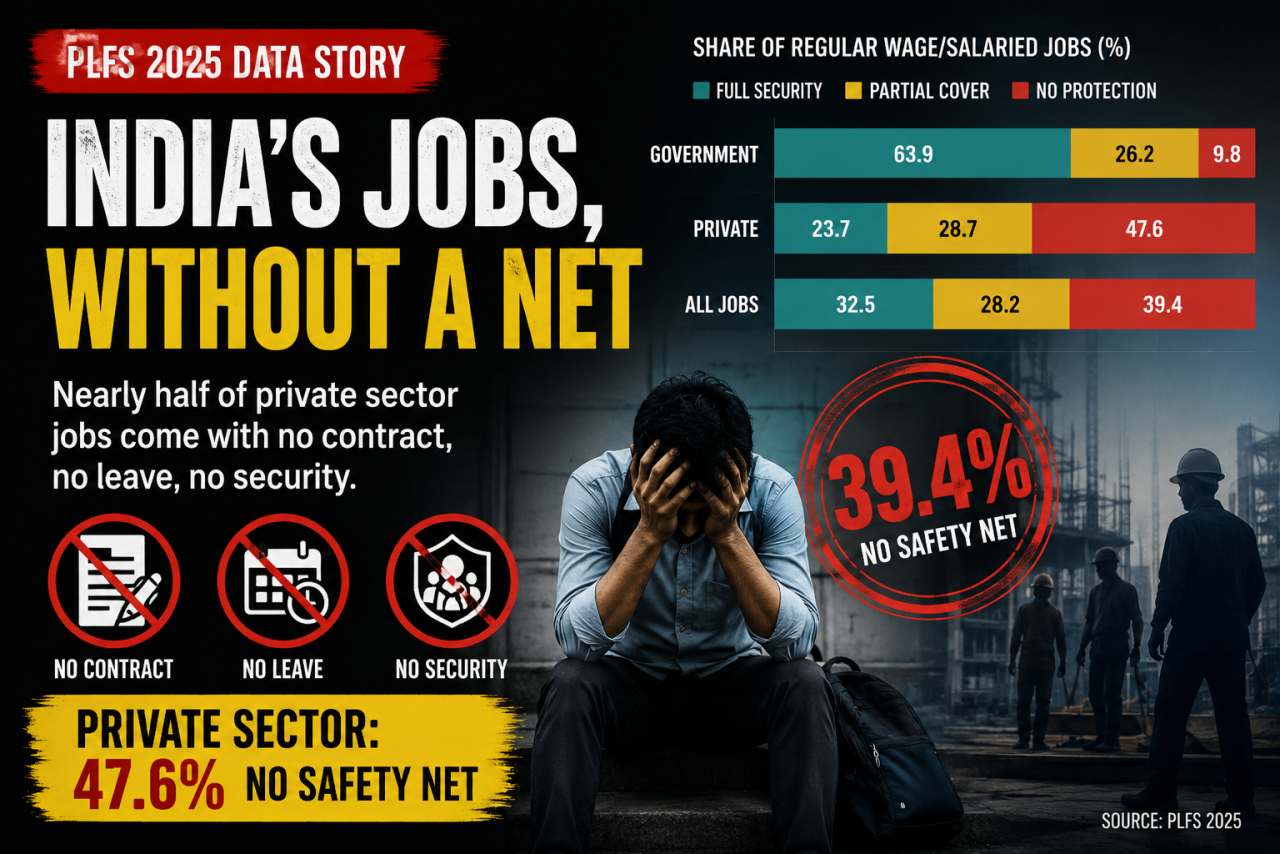
More than 90 percent of Indian workers continue to earn their livelihoods in the informal sector, where employment is often characterised by low wages, little job security, and limited access to pensions, healthcare, or other social protections. Economic growth without formalisation may create livelihoods, but it rarely creates lasting prosperity.
The demographic window is also closing faster than many realise.
India's demographic transition has contributed significantly to economic growth over the past four decades. However, this advantage is temporary. As fertility rates decline and life expectancy rises, the share of elderly citizens will increase steadily after 2030. If today's young workforce remains underemployed, tomorrow's ageing population will place even greater pressure on public finances, healthcare systems, and social security.
The consequences extend well beyond unemployment statistics.
Young people without stable employment delay marriage, postpone home ownership, spend less, save less, and invest less. Weak job creation suppresses domestic demand, widens inequality, and limits the country's ability to sustain long-term economic growth. A demographic dividend that fails to generate productive employment eventually becomes a demographic liability.
India still has an opportunity to change course, but the window is narrowing.
The country must prioritise labour-intensive manufacturing, strengthen micro, small and medium enterprises, invest in high-quality vocational education, expand industry-linked skill development, and encourage greater private investment in employment-generating sectors. Economic success should be measured not only by GDP growth but also by the number of dignified, productive jobs created each year.
India's demographic dividend remains one of its greatest opportunities, but opportunities do not last forever.
The real measure of India's economic success will not be the size of its economy or the performance of its stock markets. It will be whether the nation succeeds in transforming its millions of young people into a skilled, productive, and empowered workforce. If that opportunity is lost, India may well become old before it becomes truly prosperous.
For more than a decade, India's demographic dividend has been celebrated as the country's greatest economic advantage. With one of the world's youngest populations and nearly two-thirds of its citizens in the working-age group, economists predicted that India would replicate the growth stories of countries like South Korea, China, and Vietnam. Instead, the promise of a youthful nation has increasingly become a source of anxiety.
The problem is not that India has too many young people. The problem is that the economy has failed to create enough productive opportunities for them.
A demographic dividend is not an automatic reward for having a young population. It materialises only when education, healthcare, skills, and employment work together. Without quality jobs, a demographic dividend gradually transforms into a demographic burden. Over the past 12 years, India has moved dangerously close to that reality.
The warning signs are difficult to ignore.
India is expected to reach the peak of its demographic dividend around 2030, when nearly 65 percent of its population will be in the working-age group. After that, the country will begin ageing, making the current decade the most critical period for creating productive employment.
Every year, an estimated 10 to 12 million young Indians enter the labour market. Yet the economy has consistently struggled to generate enough formal, secure, and productive jobs. While India's GDP has expanded significantly over the past decade, employment growth has been concentrated in self-employment, informal work, and unpaid family labour rather than quality jobs that offer stability and social security.
The manufacturing sector, which powered the economic rise of East Asian economies, has failed to become India's employment engine. Instead of drawing workers out of agriculture into higher-productivity industries, India has witnessed an alarming reversal.
According to labour market analysis highlighted in India Out of Work, nearly 80 million people returned to agriculture between 2020 and 2024. This was not a sign of agricultural prosperity but of economic distress. With limited opportunities elsewhere, millions of workers had little choice but to return to low-income farming or unpaid family work.
Another worrying indicator is the growing number of NEETs, young people who are Not in Education, Employment, or Training. Estimates suggest that more than 100 million Indian youth fell into this category around 2020. This represents one of the world's largest pools of untapped human capital and raises serious concerns about the country's long-term economic competitiveness.
Women remain another missing pillar of India's demographic story.
Although female labour force participation has improved in recent years, it remains significantly lower than that of men. Millions of educated women remain outside the workforce due to limited employment opportunities, unpaid care responsibilities, safety concerns, and social barriers. No nation can fully benefit from its demographic dividend while nearly half of its potential workforce remains underutilised.
Equally concerning is the nature of employment itself.
More than 90 percent of Indian workers continue to earn their livelihoods in the informal sector, where employment is often characterised by low wages, little job security, and limited access to pensions, healthcare, or other social protections. Economic growth without formalisation may create livelihoods, but it rarely creates lasting prosperity.
The demographic window is also closing faster than many realise.
India's demographic transition has contributed significantly to economic growth over the past four decades. However, this advantage is temporary. As fertility rates decline and life expectancy rises, the share of elderly citizens will increase steadily after 2030. If today's young workforce remains underemployed, tomorrow's ageing population will place even greater pressure on public finances, healthcare systems, and social security.
The consequences extend well beyond unemployment statistics.
Young people without stable employment delay marriage, postpone home ownership, spend less, save less, and invest less. Weak job creation suppresses domestic demand, widens inequality, and limits the country's ability to sustain long-term economic growth. A demographic dividend that fails to generate productive employment eventually becomes a demographic liability.
India still has an opportunity to change course, but the window is narrowing.
The country must prioritise labour-intensive manufacturing, strengthen micro, small and medium enterprises, invest in high-quality vocational education, expand industry-linked skill development, and encourage greater private investment in employment-generating sectors. Economic success should be measured not only by GDP growth but also by the number of dignified, productive jobs created each year.
India's demographic dividend remains one of its greatest opportunities, but opportunities do not last forever.
The real measure of India's economic success will not be the size of its economy or the performance of its stock markets. It will be whether the nation succeeds in transforming its millions of young people into a skilled, productive, and empowered workforce. If that opportunity is lost, India may well become old before it becomes truly prosperous.






















Leave a Comment