
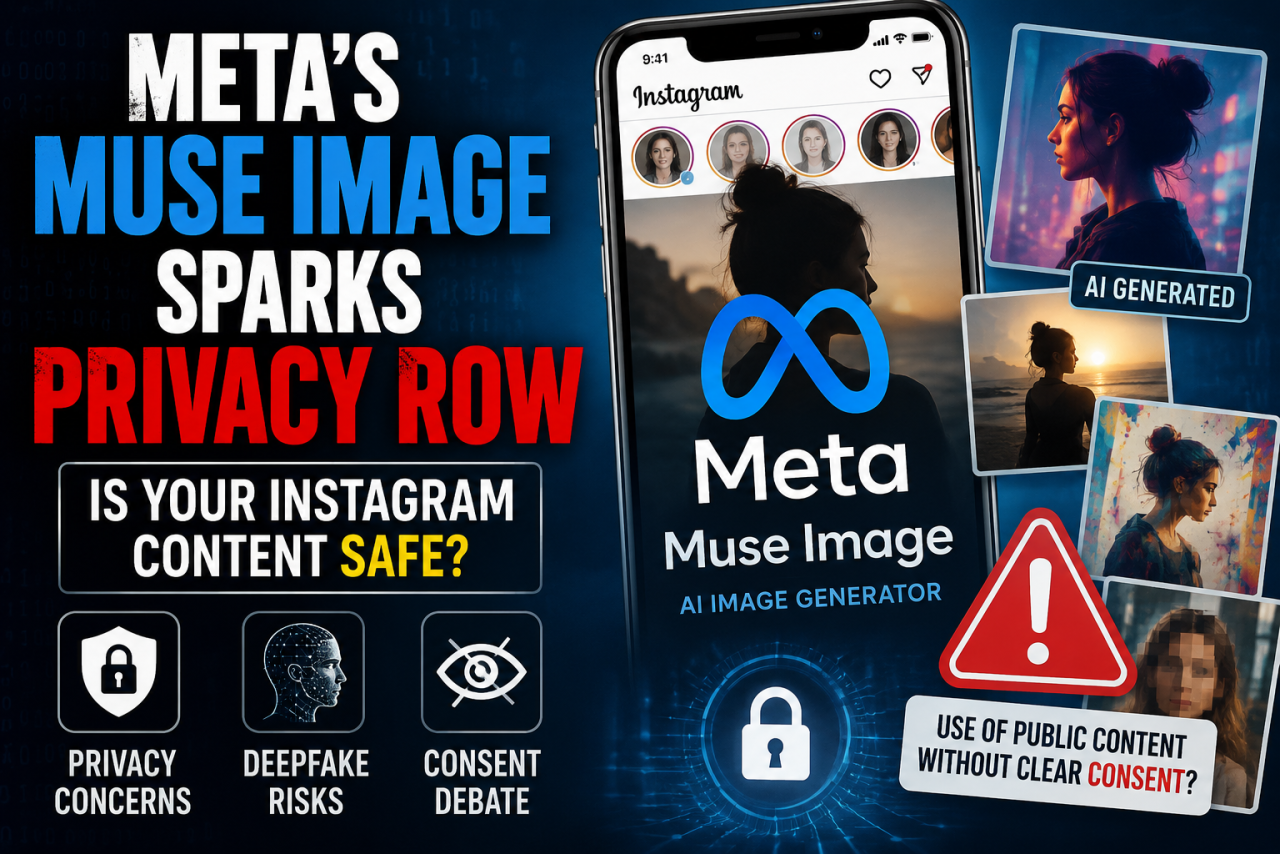
Your public Instagram photos could now help AI create new images. Meta's Muse Image has ignited a global debate over privacy, consent, and the future of digital identity.
Meta's latest artificial intelligence announcement has triggered a fresh debate over digital privacy, consent, and the future of AI-generated content. The company has unveiled Muse Image, its most advanced AI image generator developed by Meta Superintelligence Labs. While the technology promises to make image creation easier than ever, privacy experts warn that it may come at a significant cost.
What is Meta's Muse Image?
Muse Image is Meta's newest AI-powered image generation model. Unlike traditional AI image generators that require users to upload their own images, Muse Image can reportedly create AI-generated visuals by drawing inspiration from photos available on public Instagram accounts.
Users simply need to mention a public account in their prompt, and the AI can generate new images based on that person's publicly shared content.
Meta says the feature is designed to enhance creativity while giving users greater control over AI-assisted content creation.
Why Are Privacy Experts Concerned?
The biggest concern revolves around consent.
According to reports, the feature has been enabled by default for many public Instagram accounts. This means users may unknowingly become part of AI-generated creations without actively agreeing to participate.
Privacy advocates argue that many people choose public accounts to share photographs with friends, followers, or customers—not to become training material or visual references for AI systems.
Experts also warn that people may suddenly discover AI-generated images that closely resemble them without ever granting explicit permission.
Deepfake Risks Could Rise
The launch has also renewed concerns over deepfakes.
As AI image generators become increasingly accessible, creating realistic but fake images requires little technical knowledge. Cybersecurity analysts fear that such tools could make online impersonation easier and blur the line between authentic and fabricated visuals.
Although Meta says it applies watermarks and AI labels to generated content, critics argue that these safeguards may not be enough. Many users already struggle to distinguish genuine images from AI-generated ones, especially when visuals circulate outside Meta's platforms.
Meta Says Users Remain in Control
Meta has responded to the criticism by emphasizing that users can control how their public content is used.
The company has updated Instagram settings to explain that allowing others to reuse content through features such as Remix may also permit AI-assisted creation using that content. Users can reportedly disable the setting whenever they choose.
Meta maintains that transparency tools and labeling will help users understand when AI has been involved in creating an image.
The Larger Ethical Question
The controversy surrounding Muse Image reflects a broader challenge facing the AI industry.
Publicly available information has long existed on the internet, but AI now enables that information to be transformed into entirely new content within seconds. This raises difficult questions about ownership, artistic rights, digital identity, and informed consent.
Technology companies argue that AI creativity depends on access to public data. Privacy advocates counter that public availability should not automatically imply permission for AI reuse.
What Users Should Do
If you maintain a public Instagram account, it may be worth reviewing your privacy and AI-related settings. Understanding how your content can be reused is becoming increasingly important as AI tools evolve.
Creators, influencers, photographers, and businesses should also stay informed about platform policies to ensure their digital content is used in ways they are comfortable with.
Final Take
Meta's Muse Image showcases the remarkable progress of artificial intelligence, but it also highlights the growing tension between innovation and privacy. As AI becomes embedded in everyday social media experiences, platforms will face increasing pressure to balance technological advancement with transparency, user consent, and ethical responsibility.
The debate surrounding Muse Image is unlikely to end soon. Instead, it may become one of the defining conversations about how AI should interact with the billions of personal images shared online every day.
Meta's latest artificial intelligence announcement has triggered a fresh debate over digital privacy, consent, and the future of AI-generated content. The company has unveiled Muse Image, its most advanced AI image generator developed by Meta Superintelligence Labs. While the technology promises to make image creation easier than ever, privacy experts warn that it may come at a significant cost.
What is Meta's Muse Image?
Muse Image is Meta's newest AI-powered image generation model. Unlike traditional AI image generators that require users to upload their own images, Muse Image can reportedly create AI-generated visuals by drawing inspiration from photos available on public Instagram accounts.
Users simply need to mention a public account in their prompt, and the AI can generate new images based on that person's publicly shared content.
Meta says the feature is designed to enhance creativity while giving users greater control over AI-assisted content creation.
Why Are Privacy Experts Concerned?
The biggest concern revolves around consent.
According to reports, the feature has been enabled by default for many public Instagram accounts. This means users may unknowingly become part of AI-generated creations without actively agreeing to participate.
Privacy advocates argue that many people choose public accounts to share photographs with friends, followers, or customers—not to become training material or visual references for AI systems.
Experts also warn that people may suddenly discover AI-generated images that closely resemble them without ever granting explicit permission.
Deepfake Risks Could Rise
The launch has also renewed concerns over deepfakes.
As AI image generators become increasingly accessible, creating realistic but fake images requires little technical knowledge. Cybersecurity analysts fear that such tools could make online impersonation easier and blur the line between authentic and fabricated visuals.
Although Meta says it applies watermarks and AI labels to generated content, critics argue that these safeguards may not be enough. Many users already struggle to distinguish genuine images from AI-generated ones, especially when visuals circulate outside Meta's platforms.
Meta Says Users Remain in Control
Meta has responded to the criticism by emphasizing that users can control how their public content is used.
The company has updated Instagram settings to explain that allowing others to reuse content through features such as Remix may also permit AI-assisted creation using that content. Users can reportedly disable the setting whenever they choose.
Meta maintains that transparency tools and labeling will help users understand when AI has been involved in creating an image.
The Larger Ethical Question
The controversy surrounding Muse Image reflects a broader challenge facing the AI industry.
Publicly available information has long existed on the internet, but AI now enables that information to be transformed into entirely new content within seconds. This raises difficult questions about ownership, artistic rights, digital identity, and informed consent.
Technology companies argue that AI creativity depends on access to public data. Privacy advocates counter that public availability should not automatically imply permission for AI reuse.
What Users Should Do
If you maintain a public Instagram account, it may be worth reviewing your privacy and AI-related settings. Understanding how your content can be reused is becoming increasingly important as AI tools evolve.
Creators, influencers, photographers, and businesses should also stay informed about platform policies to ensure their digital content is used in ways they are comfortable with.
Final Take
Meta's Muse Image showcases the remarkable progress of artificial intelligence, but it also highlights the growing tension between innovation and privacy. As AI becomes embedded in everyday social media experiences, platforms will face increasing pressure to balance technological advancement with transparency, user consent, and ethical responsibility.
The debate surrounding Muse Image is unlikely to end soon. Instead, it may become one of the defining conversations about how AI should interact with the billions of personal images shared online every day.


















Leave a Comment