
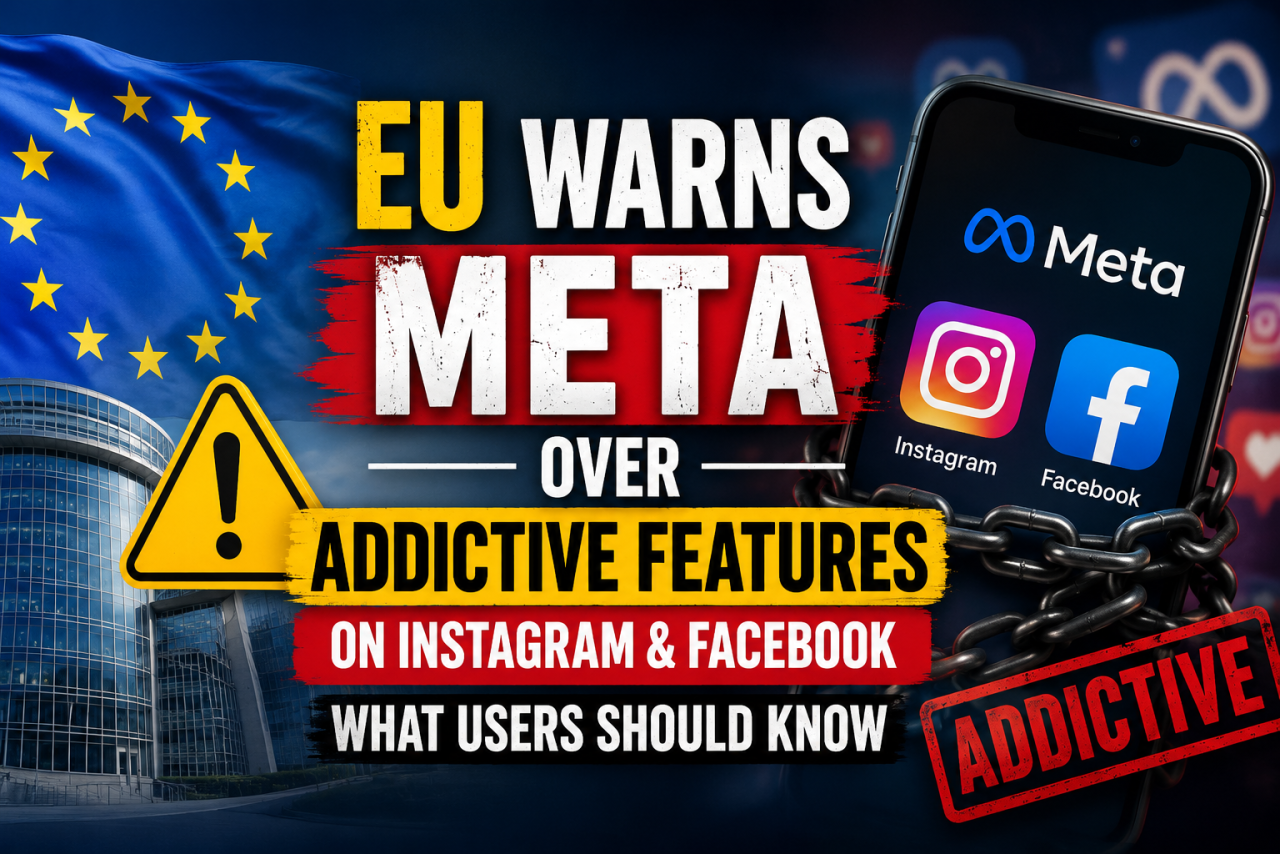
The EU says Instagram and Facebook may be designed to keep users hooked, raising fresh concerns over online safety and addiction.
The European Union has stepped up its scrutiny of social media giant Meta, accusing the company of designing Instagram and Facebook in ways that encourage excessive use. European regulators believe that several popular features on these platforms may keep users online longer than necessary, raising concerns about mental well-being, especially among children and teenagers.
The action is part of the European Union's broader effort to make digital platforms safer and more accountable. If Meta fails to address these concerns, the company could face heavy financial penalties under European law.
Why the European Union Is Concerned
According to the European Commission, Meta may have failed to properly assess the risks created by some of its platform designs. Regulators argue that features such as autoplay videos, endless scrolling, personalised recommendations, reels, and stories are built to maximise user engagement rather than promote healthy online behaviour.
These features continuously offer fresh content without requiring users to make conscious choices. As a result, many people spend far more time on social media than they originally intended. European authorities believe such design choices can encourage compulsive use, particularly among younger users whose online habits are still developing.
The Commission's findings come after a two-year investigation conducted under the European Union's Digital Services Act (DSA), one of the world's toughest laws governing large online platforms.
What the Investigation Found
The preliminary findings suggest that Meta did not adequately evaluate the possible harmful effects of its recommendation systems and engagement-driven features.
The European Commission also questioned whether the company's existing safety measures are sufficient. Officials noted that screen-time reminders can often be ignored with a single click, while parental control settings may require time, technical knowledge, and repeated effort to configure properly.
Regulators believe these measures place too much responsibility on users and parents instead of reducing the risks through better platform design.
Changes the EU Wants
The European Commission has suggested several changes that could reduce excessive social media use.
It wants autoplay and infinite scrolling to be turned off by default instead of being automatically enabled. The Commission has also called for more effective reminders encouraging users to take breaks from screens. In addition, it believes Meta should redesign its recommendation system so that it focuses less on keeping users engaged for longer periods.
European regulators argue that these changes would help users exercise greater control over the time they spend on social media while reducing the risk of unhealthy digital habits.
Meta Defends Its Efforts
Meta has rejected suggestions that it has ignored user safety. The company says it has introduced several features since the investigation began to improve protection for young users.
Among these measures are Teen Accounts, which automatically apply stronger privacy and safety settings for younger users. The company also says parents can restrict access to Instagram during night hours and set daily screen-time limits, including a 15-minute usage cap if they choose.
Meta maintains that it continues to invest in tools that help families manage children's online experiences while balancing user choice and platform functionality.
What Happens Next
The European Commission's findings are still preliminary, meaning the investigation has not yet reached its final stage. Meta will have an opportunity to respond to the allegations and present its defence before regulators make a final decision.
If the Commission ultimately concludes that Meta has violated the Digital Services Act, the company could face significant financial penalties and may be required to redesign key features across its platforms in Europe.
A Debate That Extends Beyond Europe
The case reflects a larger global debate over the responsibility of technology companies. Governments, health experts, educators, and parents are increasingly questioning whether social media platforms should prioritise user engagement when research continues to raise concerns about digital addiction, attention spans, and mental health.
The European Union's action against Meta may become an important test of how far regulators can go in shaping the design of online platforms. The outcome could influence digital policy not only in Europe but also in other countries considering stronger rules for social media companies.
The European Union has stepped up its scrutiny of social media giant Meta, accusing the company of designing Instagram and Facebook in ways that encourage excessive use. European regulators believe that several popular features on these platforms may keep users online longer than necessary, raising concerns about mental well-being, especially among children and teenagers.
The action is part of the European Union's broader effort to make digital platforms safer and more accountable. If Meta fails to address these concerns, the company could face heavy financial penalties under European law.
Why the European Union Is Concerned
According to the European Commission, Meta may have failed to properly assess the risks created by some of its platform designs. Regulators argue that features such as autoplay videos, endless scrolling, personalised recommendations, reels, and stories are built to maximise user engagement rather than promote healthy online behaviour.
These features continuously offer fresh content without requiring users to make conscious choices. As a result, many people spend far more time on social media than they originally intended. European authorities believe such design choices can encourage compulsive use, particularly among younger users whose online habits are still developing.
The Commission's findings come after a two-year investigation conducted under the European Union's Digital Services Act (DSA), one of the world's toughest laws governing large online platforms.
What the Investigation Found
The preliminary findings suggest that Meta did not adequately evaluate the possible harmful effects of its recommendation systems and engagement-driven features.
The European Commission also questioned whether the company's existing safety measures are sufficient. Officials noted that screen-time reminders can often be ignored with a single click, while parental control settings may require time, technical knowledge, and repeated effort to configure properly.
Regulators believe these measures place too much responsibility on users and parents instead of reducing the risks through better platform design.
Changes the EU Wants
The European Commission has suggested several changes that could reduce excessive social media use.
It wants autoplay and infinite scrolling to be turned off by default instead of being automatically enabled. The Commission has also called for more effective reminders encouraging users to take breaks from screens. In addition, it believes Meta should redesign its recommendation system so that it focuses less on keeping users engaged for longer periods.
European regulators argue that these changes would help users exercise greater control over the time they spend on social media while reducing the risk of unhealthy digital habits.
Meta Defends Its Efforts
Meta has rejected suggestions that it has ignored user safety. The company says it has introduced several features since the investigation began to improve protection for young users.
Among these measures are Teen Accounts, which automatically apply stronger privacy and safety settings for younger users. The company also says parents can restrict access to Instagram during night hours and set daily screen-time limits, including a 15-minute usage cap if they choose.
Meta maintains that it continues to invest in tools that help families manage children's online experiences while balancing user choice and platform functionality.
What Happens Next
The European Commission's findings are still preliminary, meaning the investigation has not yet reached its final stage. Meta will have an opportunity to respond to the allegations and present its defence before regulators make a final decision.
If the Commission ultimately concludes that Meta has violated the Digital Services Act, the company could face significant financial penalties and may be required to redesign key features across its platforms in Europe.
A Debate That Extends Beyond Europe
The case reflects a larger global debate over the responsibility of technology companies. Governments, health experts, educators, and parents are increasingly questioning whether social media platforms should prioritise user engagement when research continues to raise concerns about digital addiction, attention spans, and mental health.
The European Union's action against Meta may become an important test of how far regulators can go in shaping the design of online platforms. The outcome could influence digital policy not only in Europe but also in other countries considering stronger rules for social media companies.




















Leave a Comment