
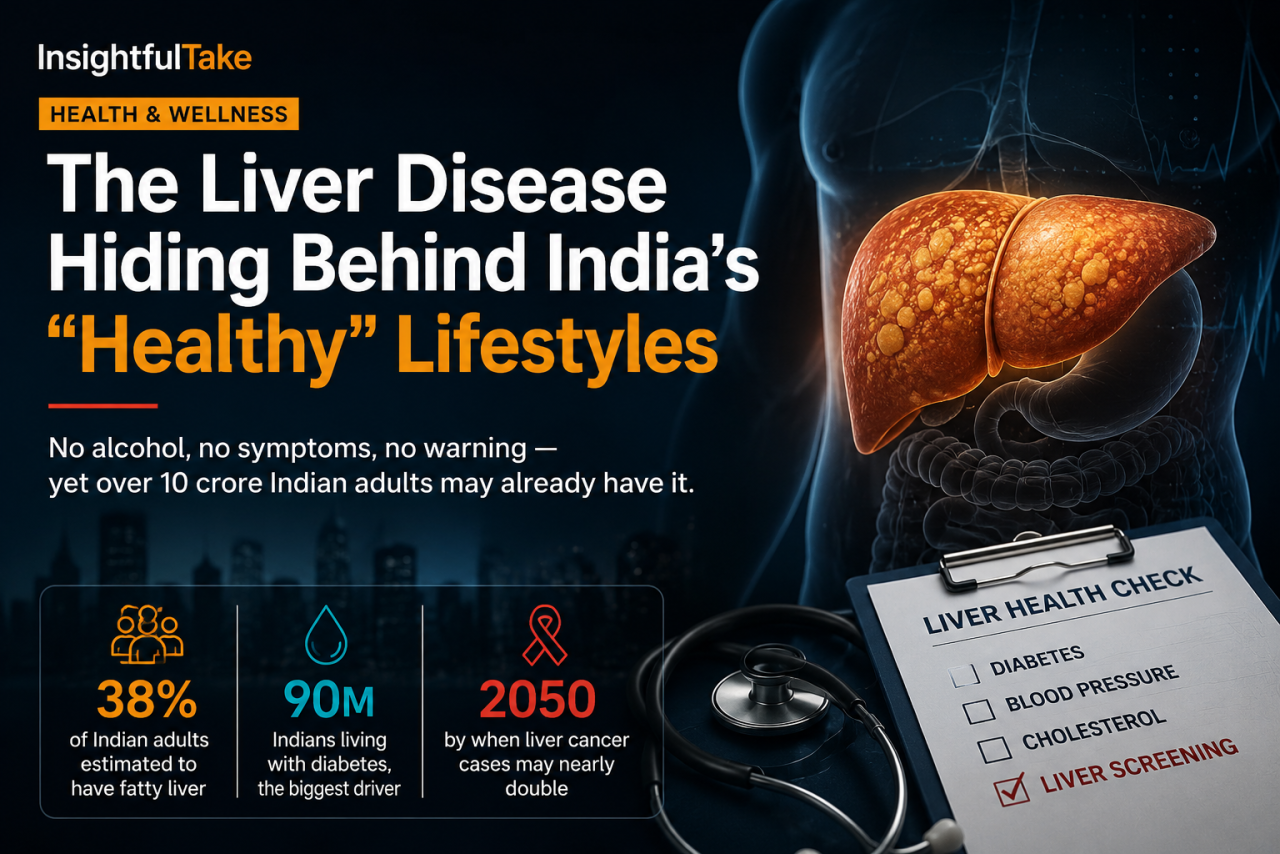
Over 10 crore Indians may have fatty liver disease without knowing it. Here's why this silent metabolic disorder deserves the same attention as diabetes and heart disease.
More than 10 crore Indian adults may be living with fatty liver disease today, and most do not even know it.
There is often no pain, no jaundice, and no obvious warning sign. The liver quietly accumulates fat over the years, gradually developing inflammation and scarring that can eventually lead to liver failure. What makes this condition particularly alarming is that many affected individuals eat home-cooked food, avoid alcohol, exercise regularly, and consider themselves healthy.
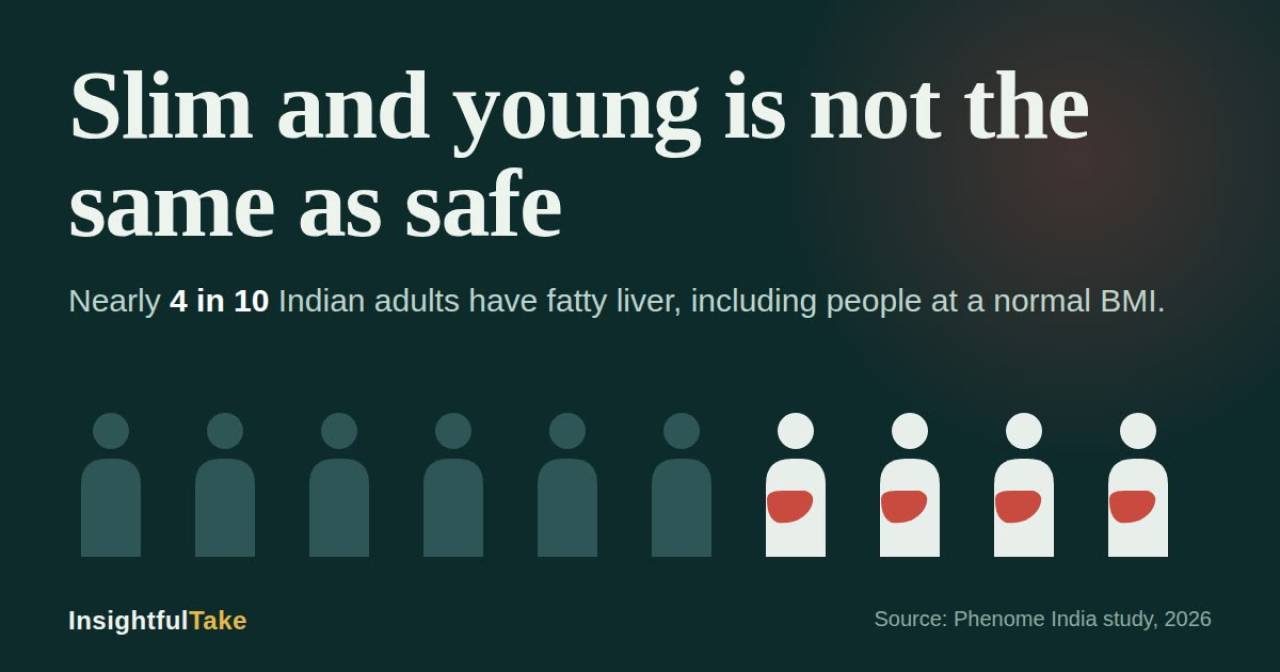
This hidden health threat is known as Metabolic Dysfunction-Associated Steatotic Liver Disease (MASLD), previously referred to as non-alcoholic fatty liver disease. Once viewed primarily as a condition affecting heavy drinkers or people with obesity, medical understanding has evolved significantly. Today, doctors are increasingly diagnosing MASLD in vegetarians, teetotalers, and even individuals who appear lean and physically fit.
The real culprit is often insulin resistance — the same metabolic dysfunction that drives type 2 diabetes, obesity, and hypertension. When the body struggles to process glucose efficiently, excess fat can accumulate in the liver regardless of alcohol consumption.
Why India Should Be Concerned
India already bears one of the world's largest diabetes burdens. Around 90 million adults are estimated to be living with diabetes, while millions more remain undiagnosed or pre-diabetic.
Since diabetes and MASLD share common metabolic roots, they frequently occur together. Studies suggest that nearly 38 percent of Indian adults could already have some degree of fatty liver disease.
The concern is not merely the presence of fat in the liver. In its early stages, fatty liver disease is often reversible. However, when left untreated for years, it can progress to inflammation, fibrosis (scarring), cirrhosis, and eventually liver cancer.
Global researchers studying liver cancer trends warn that annual cases worldwide could rise dramatically by 2050 if current patterns continue. More troubling is the age profile of patients. Conditions once associated primarily with older adults are now being diagnosed in Indians in their thirties and forties, decades earlier than previously expected.
The India-Specific Risk Factor
One reason the disease often goes unnoticed is the widespread belief that traditional Indian diets are automatically healthy.
While many Indian meals are home-cooked and vegetarian, they can also be rich in refined carbohydrates. Frequent consumption of white rice, maida-based foods, sugary beverages, sweets, and multiple cups of sweetened tea throughout the day can contribute significantly to insulin resistance.
As a result, a person may avoid meat and alcohol yet still develop serious metabolic health problems.
The challenge is compounded by modern lifestyles. Long commutes, desk-based jobs, limited physical activity, and extended periods of sitting have become the norm for millions of urban Indians. Together, these factors create an environment where fatty liver disease can develop silently over many years.
The Silent Nature of Liver Damage
Another major challenge is diagnosis.
Conventional liver function tests may appear completely normal even when fat accumulation and early scarring are already present. The liver has an extraordinary ability to compensate for damage, often delaying symptoms until the disease has progressed significantly.
Fortunately, diagnostic technology has improved. Non-invasive tools such as FibroScan can assess liver stiffness and fat content within minutes without needles, biopsies, or hospital admission. These tests are becoming increasingly accessible across Indian cities.
The problem is awareness. Most people never request a liver assessment because they do not experience any symptoms.
What Can Be Done?
Health experts emphasize that fatty liver disease should be viewed as part of the broader metabolic health crisis rather than as a separate condition.
Routine screening for diabetes, obesity, high cholesterol, and hypertension should also prompt an evaluation of liver health. Individuals with pre-diabetes, diabetes, or metabolic syndrome should discuss liver screening with their healthcare providers rather than waiting for symptoms to appear.
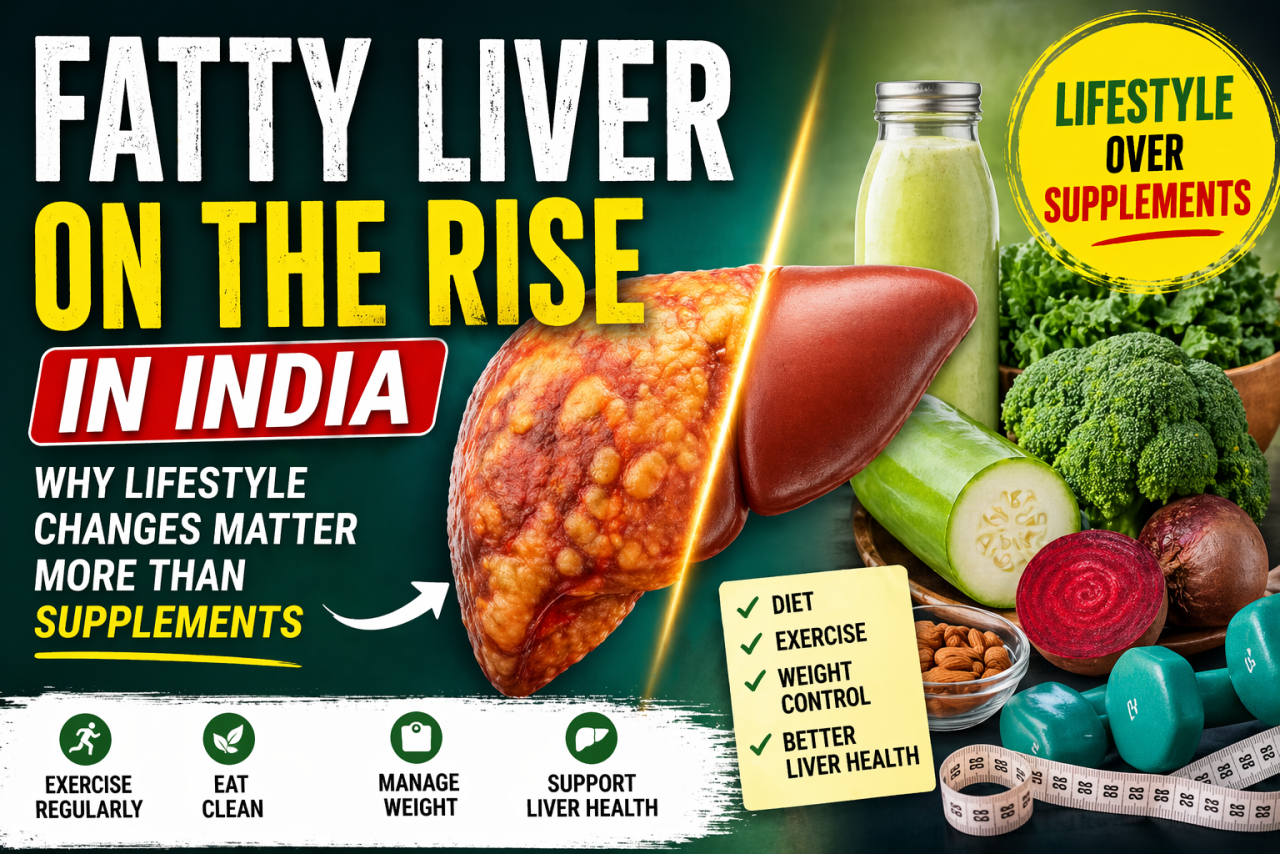
Lifestyle changes remain the most effective first line of defence. Research shows that losing just 7 to 10 percent of body weight can significantly reduce liver fat and inflammation. Regular physical activity, improved dietary habits, and better management of blood sugar levels can dramatically slow or even reverse disease progression in many cases.
In addition, newer metabolic and weight-loss medications, including semaglutide-based therapies available in India, are being studied for their potential benefits in treating fatty liver disease. Several advanced therapies are also being evaluated globally for patients with more severe liver scarring.
A Public Health Challenge Hiding in Plain Sight
India's fatty liver epidemic is not a separate health crisis. It is closely linked to the country's growing burden of diabetes, obesity, and metabolic disorders.
The liver often suffers silently while attention remains focused on blood sugar levels, blood pressure, and body weight. Yet the consequences of ignoring liver health can be devastating.
The encouraging reality is that MASLD is often preventable and, in its early stages, reversible. The key lies in early detection, greater awareness, and treating liver health as an essential part of routine metabolic care.
For millions of Indians who believe they are healthy because they do not drink alcohol or eat processed foods, the message is simple: a healthy lifestyle is about more than what is visible on the surface. Sometimes the most serious disease is the one that remains hidden for years.
More than 10 crore Indian adults may be living with fatty liver disease today, and most do not even know it.
There is often no pain, no jaundice, and no obvious warning sign. The liver quietly accumulates fat over the years, gradually developing inflammation and scarring that can eventually lead to liver failure. What makes this condition particularly alarming is that many affected individuals eat home-cooked food, avoid alcohol, exercise regularly, and consider themselves healthy.
This hidden health threat is known as Metabolic Dysfunction-Associated Steatotic Liver Disease (MASLD), previously referred to as non-alcoholic fatty liver disease. Once viewed primarily as a condition affecting heavy drinkers or people with obesity, medical understanding has evolved significantly. Today, doctors are increasingly diagnosing MASLD in vegetarians, teetotalers, and even individuals who appear lean and physically fit.
The real culprit is often insulin resistance — the same metabolic dysfunction that drives type 2 diabetes, obesity, and hypertension. When the body struggles to process glucose efficiently, excess fat can accumulate in the liver regardless of alcohol consumption.
Why India Should Be Concerned
India already bears one of the world's largest diabetes burdens. Around 90 million adults are estimated to be living with diabetes, while millions more remain undiagnosed or pre-diabetic.
Since diabetes and MASLD share common metabolic roots, they frequently occur together. Studies suggest that nearly 38 percent of Indian adults could already have some degree of fatty liver disease.
The concern is not merely the presence of fat in the liver. In its early stages, fatty liver disease is often reversible. However, when left untreated for years, it can progress to inflammation, fibrosis (scarring), cirrhosis, and eventually liver cancer.
Global researchers studying liver cancer trends warn that annual cases worldwide could rise dramatically by 2050 if current patterns continue. More troubling is the age profile of patients. Conditions once associated primarily with older adults are now being diagnosed in Indians in their thirties and forties, decades earlier than previously expected.
The India-Specific Risk Factor
One reason the disease often goes unnoticed is the widespread belief that traditional Indian diets are automatically healthy.
While many Indian meals are home-cooked and vegetarian, they can also be rich in refined carbohydrates. Frequent consumption of white rice, maida-based foods, sugary beverages, sweets, and multiple cups of sweetened tea throughout the day can contribute significantly to insulin resistance.
As a result, a person may avoid meat and alcohol yet still develop serious metabolic health problems.
The challenge is compounded by modern lifestyles. Long commutes, desk-based jobs, limited physical activity, and extended periods of sitting have become the norm for millions of urban Indians. Together, these factors create an environment where fatty liver disease can develop silently over many years.
The Silent Nature of Liver Damage
Another major challenge is diagnosis.
Conventional liver function tests may appear completely normal even when fat accumulation and early scarring are already present. The liver has an extraordinary ability to compensate for damage, often delaying symptoms until the disease has progressed significantly.
Fortunately, diagnostic technology has improved. Non-invasive tools such as FibroScan can assess liver stiffness and fat content within minutes without needles, biopsies, or hospital admission. These tests are becoming increasingly accessible across Indian cities.
The problem is awareness. Most people never request a liver assessment because they do not experience any symptoms.
What Can Be Done?
Health experts emphasize that fatty liver disease should be viewed as part of the broader metabolic health crisis rather than as a separate condition.
Routine screening for diabetes, obesity, high cholesterol, and hypertension should also prompt an evaluation of liver health. Individuals with pre-diabetes, diabetes, or metabolic syndrome should discuss liver screening with their healthcare providers rather than waiting for symptoms to appear.
Lifestyle changes remain the most effective first line of defence. Research shows that losing just 7 to 10 percent of body weight can significantly reduce liver fat and inflammation. Regular physical activity, improved dietary habits, and better management of blood sugar levels can dramatically slow or even reverse disease progression in many cases.
In addition, newer metabolic and weight-loss medications, including semaglutide-based therapies available in India, are being studied for their potential benefits in treating fatty liver disease. Several advanced therapies are also being evaluated globally for patients with more severe liver scarring.
A Public Health Challenge Hiding in Plain Sight
India's fatty liver epidemic is not a separate health crisis. It is closely linked to the country's growing burden of diabetes, obesity, and metabolic disorders.
The liver often suffers silently while attention remains focused on blood sugar levels, blood pressure, and body weight. Yet the consequences of ignoring liver health can be devastating.
The encouraging reality is that MASLD is often preventable and, in its early stages, reversible. The key lies in early detection, greater awareness, and treating liver health as an essential part of routine metabolic care.
For millions of Indians who believe they are healthy because they do not drink alcohol or eat processed foods, the message is simple: a healthy lifestyle is about more than what is visible on the surface. Sometimes the most serious disease is the one that remains hidden for years.



















Leave a Comment