
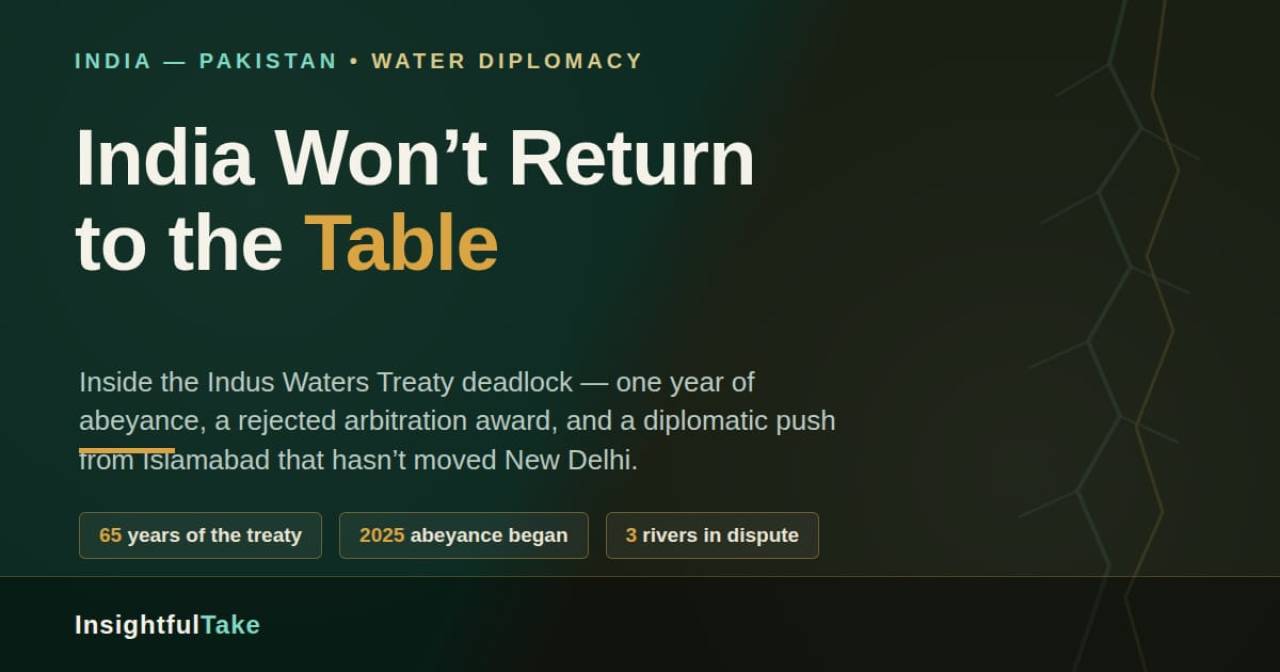
The treaty survived wars for 65 years, but the Pahalgam attack changed everything. Here's why India refuses to revive the Indus Waters Treaty despite global pressure.
More than a year after the Pahalgam terror attack, the Indus Waters Treaty remains frozen, and neither international arbitration nor Pakistan's diplomatic campaign has persuaded India to reconsider its position.
The Indus Waters Treaty, signed in 1960, divided the six rivers of the Indus basin between India and Pakistan. India received control over the three eastern rivers, Ravi, Beas and Sutlej. Pakistan received the bulk of the waters of the three western rivers, Indus, Jhelum and Chenab, while India retained limited rights for non-consumptive uses such as run-of-river hydropower. For 65 years, the agreement survived three wars, military confrontations and prolonged political hostility. It did not survive the Pahalgam attack.
On April 22, 2025, gunmen killed 26 tourists in Pahalgam, Jammu and Kashmir. India blamed The Resistance Front, which it links to Lashkar-e-Taiba, and within days announced that it was placing the Indus Waters Treaty in abeyance until Pakistan took "credible and irreversible" steps to end support for cross-border terrorism. It marked the first time since the treaty was signed that either country suspended its operation.
Pakistan responded on two fronts, legal and diplomatic. Neither has altered India's stance.
The Legal Challenge
Pakistan approached the Permanent Court of Arbitration at The Hague, whose jurisdiction India has consistently rejected since the proceedings began.
In June 2025, the Court ruled that the treaty contains no provision allowing either party to suspend it unilaterally and held that India's decision to place the treaty in abeyance did not affect the Court's jurisdiction. India dismissed the ruling, describing the tribunal as "illegally constituted."
The legal dispute deepened in May 2026 when the Court delivered another award concerning the amount of water India may store behind its run-of-river hydropower projects on the western rivers, a technical issue known as "maximum pondage." The ruling reportedly accepted Pakistan's interpretation of the treaty, reinforcing limits on India's operational flexibility under the original agreement.
New Delhi again rejected the award as "null and void" and reaffirmed that the treaty would remain in abeyance.
The episode illustrates a broader geopolitical reality. International arbitration may establish legal principles, but it cannot compel compliance when a state is prepared to bear the diplomatic costs of defiance. India appears to have concluded that domestic political consensus on terrorism outweighs any reputational consequences arising from ignoring adverse rulings.
Pakistan's Diplomatic Campaign
Alongside its legal efforts, Pakistan sought to internationalise the dispute.
On June 30, 2026, Deputy Prime Minister and Foreign Minister Ishaq Dar convened an international seminar in Islamabad titled "Indus Waters Treaty as an Enduring Legal and Institutional Framework." Diplomats, legal experts and water specialists gathered to argue that India's decision violated international law and threatened one of the world's most enduring water-sharing agreements.
The intended audience extended well beyond India. Islamabad sought to shape global opinion and increase diplomatic pressure on New Delhi.
India remained unmoved.
Within days, Ministry of External Affairs spokesperson Randhir Jaiswal reiterated that the treaty would remain suspended until Pakistan ended cross-border terrorism. The seminar received no substantive response beyond India's established position.
At times, the rhetoric escalated further.
In August 2025, Pakistan Army Chief Asim Munir reportedly warned that Pakistan would destroy any future Indian dam with "ten missiles," declaring that the Indus was not India's "family property." In June 2026, Defence Minister Khawaja Asif warned that the dispute could lead to war.
India dismissed these statements as attempts to divert attention from Pakistan's record on terrorism and human rights.
Why India Is Holding Its Ground
Two factors explain why New Delhi has maintained its position.
First, suspending the treaty carries relatively little immediate cost. India still lacks sufficient dam and canal infrastructure to fully utilise additional water from the western rivers. For now, the suspension functions more as a strategic and political instrument than as a major operational change in river management.
Second, water has become one of India's strongest sources of leverage. Unlike many diplomatic measures, the treaty directly connects Pakistan's security policies with a resource essential to its economy. Roughly four-fifths of Pakistan's irrigated farmland depends on the Indus river system, making water security a matter of national survival.
Pakistan's concerns are therefore far from theoretical.
Disruptions in flows along the Chenab, including a reported decline from more than 21,000 cusecs to below 6,000 cusecs during a single operational window in May 2026, have heightened fears that India can increasingly influence water availability even without formally withdrawing from the treaty.
A New Reality in India-Pakistan Relations
Neither government has shown any willingness to restore the framework that governed the Indus basin for more than six decades.
What began as India's response to the Pahalgam terror attack has evolved into a defining feature of contemporary India-Pakistan relations. The Indus Waters Treaty continues to exist on paper, remains the subject of legal dispute, but has effectively ceased to function as the cooperative mechanism it once represented.
For decades, the treaty stood as proof that even bitter rivals could separate water from conflict. Today, it reflects the opposite. In South Asia's increasingly fragile strategic landscape, security concerns have overtaken one of the world's most celebrated examples of water diplomacy.
More than a year after the Pahalgam terror attack, the Indus Waters Treaty remains frozen, and neither international arbitration nor Pakistan's diplomatic campaign has persuaded India to reconsider its position.
The Indus Waters Treaty, signed in 1960, divided the six rivers of the Indus basin between India and Pakistan. India received control over the three eastern rivers, Ravi, Beas and Sutlej. Pakistan received the bulk of the waters of the three western rivers, Indus, Jhelum and Chenab, while India retained limited rights for non-consumptive uses such as run-of-river hydropower. For 65 years, the agreement survived three wars, military confrontations and prolonged political hostility. It did not survive the Pahalgam attack.
On April 22, 2025, gunmen killed 26 tourists in Pahalgam, Jammu and Kashmir. India blamed The Resistance Front, which it links to Lashkar-e-Taiba, and within days announced that it was placing the Indus Waters Treaty in abeyance until Pakistan took "credible and irreversible" steps to end support for cross-border terrorism. It marked the first time since the treaty was signed that either country suspended its operation.
Pakistan responded on two fronts, legal and diplomatic. Neither has altered India's stance.
The Legal Challenge
Pakistan approached the Permanent Court of Arbitration at The Hague, whose jurisdiction India has consistently rejected since the proceedings began.
In June 2025, the Court ruled that the treaty contains no provision allowing either party to suspend it unilaterally and held that India's decision to place the treaty in abeyance did not affect the Court's jurisdiction. India dismissed the ruling, describing the tribunal as "illegally constituted."
The legal dispute deepened in May 2026 when the Court delivered another award concerning the amount of water India may store behind its run-of-river hydropower projects on the western rivers, a technical issue known as "maximum pondage." The ruling reportedly accepted Pakistan's interpretation of the treaty, reinforcing limits on India's operational flexibility under the original agreement.
New Delhi again rejected the award as "null and void" and reaffirmed that the treaty would remain in abeyance.
The episode illustrates a broader geopolitical reality. International arbitration may establish legal principles, but it cannot compel compliance when a state is prepared to bear the diplomatic costs of defiance. India appears to have concluded that domestic political consensus on terrorism outweighs any reputational consequences arising from ignoring adverse rulings.
Pakistan's Diplomatic Campaign
Alongside its legal efforts, Pakistan sought to internationalise the dispute.
On June 30, 2026, Deputy Prime Minister and Foreign Minister Ishaq Dar convened an international seminar in Islamabad titled "Indus Waters Treaty as an Enduring Legal and Institutional Framework." Diplomats, legal experts and water specialists gathered to argue that India's decision violated international law and threatened one of the world's most enduring water-sharing agreements.
The intended audience extended well beyond India. Islamabad sought to shape global opinion and increase diplomatic pressure on New Delhi.
India remained unmoved.
Within days, Ministry of External Affairs spokesperson Randhir Jaiswal reiterated that the treaty would remain suspended until Pakistan ended cross-border terrorism. The seminar received no substantive response beyond India's established position.
At times, the rhetoric escalated further.
In August 2025, Pakistan Army Chief Asim Munir reportedly warned that Pakistan would destroy any future Indian dam with "ten missiles," declaring that the Indus was not India's "family property." In June 2026, Defence Minister Khawaja Asif warned that the dispute could lead to war.
India dismissed these statements as attempts to divert attention from Pakistan's record on terrorism and human rights.
Why India Is Holding Its Ground
Two factors explain why New Delhi has maintained its position.
First, suspending the treaty carries relatively little immediate cost. India still lacks sufficient dam and canal infrastructure to fully utilise additional water from the western rivers. For now, the suspension functions more as a strategic and political instrument than as a major operational change in river management.
Second, water has become one of India's strongest sources of leverage. Unlike many diplomatic measures, the treaty directly connects Pakistan's security policies with a resource essential to its economy. Roughly four-fifths of Pakistan's irrigated farmland depends on the Indus river system, making water security a matter of national survival.
Pakistan's concerns are therefore far from theoretical.
Disruptions in flows along the Chenab, including a reported decline from more than 21,000 cusecs to below 6,000 cusecs during a single operational window in May 2026, have heightened fears that India can increasingly influence water availability even without formally withdrawing from the treaty.
A New Reality in India-Pakistan Relations
Neither government has shown any willingness to restore the framework that governed the Indus basin for more than six decades.
What began as India's response to the Pahalgam terror attack has evolved into a defining feature of contemporary India-Pakistan relations. The Indus Waters Treaty continues to exist on paper, remains the subject of legal dispute, but has effectively ceased to function as the cooperative mechanism it once represented.
For decades, the treaty stood as proof that even bitter rivals could separate water from conflict. Today, it reflects the opposite. In South Asia's increasingly fragile strategic landscape, security concerns have overtaken one of the world's most celebrated examples of water diplomacy.


























Leave a Comment