
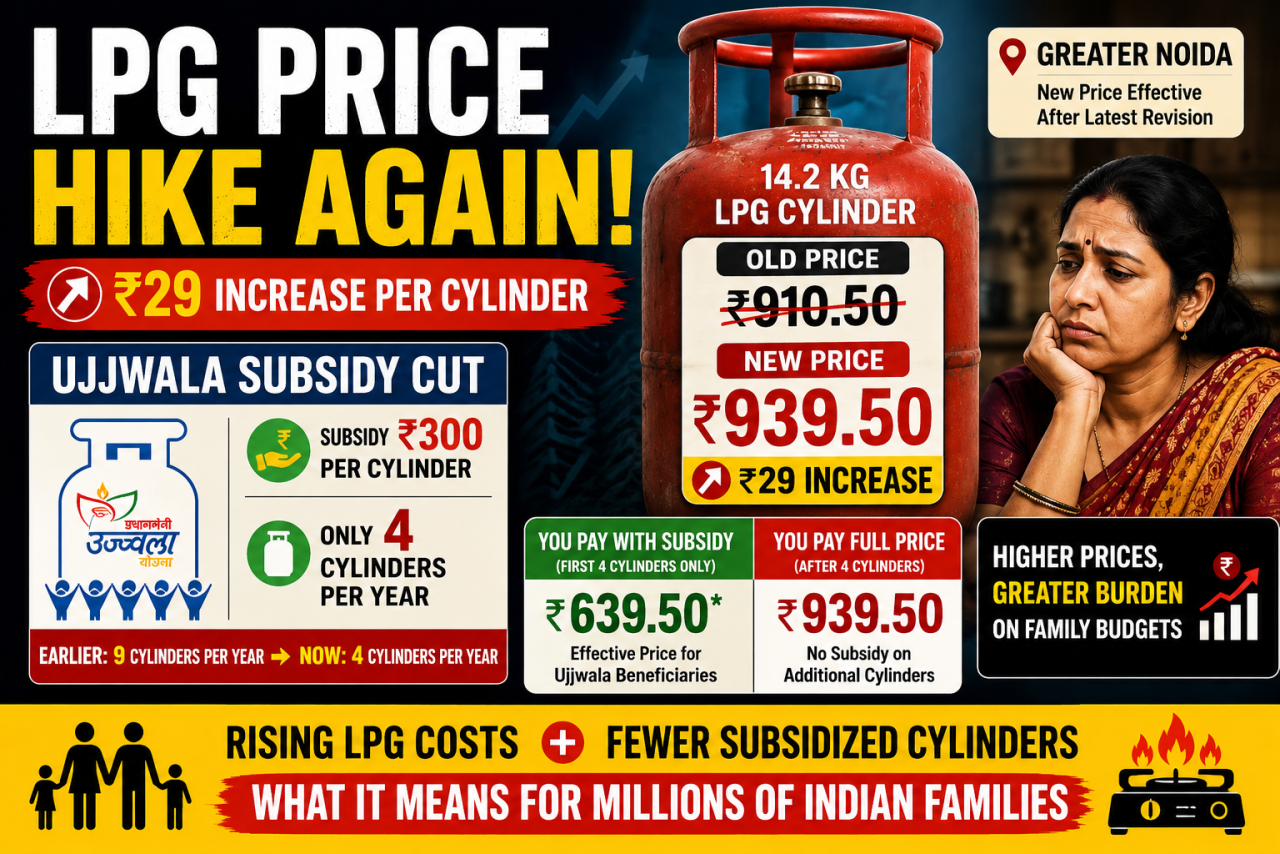
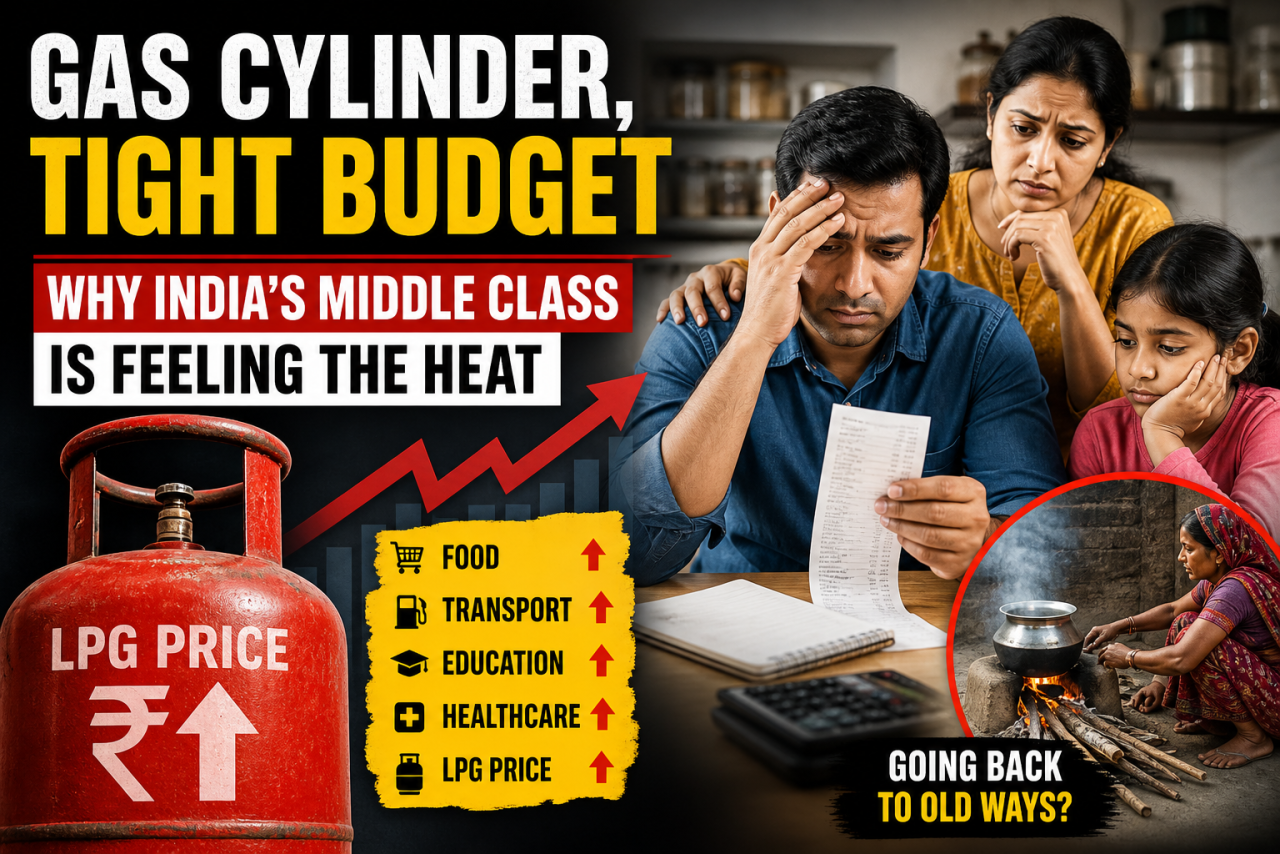
As LPG cylinder prices rise and Ujjwala subsidy support shrinks, millions of Indian families are confronting a growing challenge: keeping clean cooking fuel affordable.
Millions of Indian households are facing fresh pressure on their monthly budgets after the latest increase in domestic LPG prices. The government-owned oil marketing companies have raised the price of a standard 14.2-kg LPG cylinder by ₹29, marking the second increase in just three months. At the same time, a recent reduction in the number of subsidized cylinders available under the Pradhan Mantri Ujjwala Yojana (PMUY) has added to concerns about the affordability of cooking fuel for low-income families.
Together, these two developments have sparked a debate about the growing cost of essential household energy and its impact on ordinary citizens.
LPG Becomes Costlier Again
The latest revision has increased the price of a 14.2-kg domestic LPG cylinder in Delhi from ₹803 to ₹832. This follows an earlier hike of ₹50 per cylinder in March, taking the total increase over the last three months to ₹79.
For many families, cooking gas is a basic necessity rather than a discretionary expense. As a result, even a relatively small increase can affect household finances, especially at a time when food prices, transportation costs, and other living expenses remain high.
The price revision comes amid continuing volatility in global energy markets. India imports a large portion of its LPG requirements, making domestic prices sensitive to international fuel costs. Rising global energy prices and supply disruptions have increased the financial burden on oil marketing companies, prompting them to revise retail prices.
Industry experts say that despite the latest increase, state-owned fuel retailers are still not fully recovering their costs on domestic LPG sales.
A Wider Fuel Price Challenge
The LPG hike is part of a broader trend of rising fuel costs across the country. Petrol and diesel prices have witnessed significant increases in recent months, while compressed natural gas (CNG) rates have also moved upward in many cities.
Higher fuel costs often affect more than just transportation. They can increase the cost of moving goods across the country, pushing up prices of food, vegetables, and everyday consumer products. As a result, the impact of fuel price increases is felt across the economy.
For middle-class households that receive no LPG subsidy, every price increase directly affects monthly expenses. Families that use one LPG cylinder every month may now spend several hundred rupees more each year compared with earlier rates.
Ujjwala Scheme: A Landmark Initiative
The Pradhan Mantri Ujjwala Yojana, launched in 2016, was designed to provide clean cooking fuel to economically weaker households. The scheme aimed to reduce dependence on traditional fuels such as firewood, coal, and cow dung, which are linked to indoor air pollution and serious health problems.
Over the years, the programme has provided LPG connections to more than 10 crore beneficiaries, most of them women from low-income households.
The scheme has been widely praised for improving health outcomes, reducing the burden of collecting firewood, and encouraging the use of cleaner energy sources in rural India.
However, providing a gas connection is only one part of the challenge. Ensuring that families can afford regular refills is equally important.
Subsidized Cylinder Quota Reduced
One of the most significant recent changes affecting Ujjwala beneficiaries is the reduction in the annual quota of subsidized cylinders.
The government continues to provide a subsidy of ₹300 per cylinder under the scheme. However, the number of subsidized cylinders available to beneficiaries has been reduced.
Earlier, beneficiaries could receive subsidy support on a larger number of cylinders annually. The subsidy quota was subsequently reduced to nine cylinders per year and has now been further cut to just four cylinders annually.
This means that while the subsidy amount remains unchanged, the total financial assistance available to a household has fallen sharply.
Under the current arrangement:
- Subsidy per cylinder: ₹300
- Number of subsidized cylinders per year: 4
- Maximum annual subsidy: ₹1,200
Previously, when nine subsidized cylinders were available, a household could receive up to ₹2,700 in annual support. The latest change therefore represents a significant reduction in overall assistance.
Concerns About Affordability
Supporters of the government's decision argue that the average LPG consumption among many Ujjwala beneficiaries is around four to five cylinders per year. From this perspective, limiting subsidies to four cylinders may reflect actual usage patterns.
However, critics argue that the reduction could create difficulties for larger families and households that rely entirely on LPG for cooking. Once the four subsidized cylinders are exhausted, beneficiaries must purchase additional refills at the full market price.
Some experts fear that rising LPG prices combined with reduced subsidy coverage could discourage regular LPG use among poorer households. In extreme cases, families may return to traditional cooking fuels, reversing some of the health and environmental gains achieved through the Ujjwala programme.
Balancing Welfare and Fiscal Pressures
The government faces a difficult balancing act. On one hand, it must protect consumers from sharp increases in global energy prices. On the other hand, it must manage fiscal pressures and reduce the burden of subsidy spending.
The latest LPG price hike and the reduction in subsidized cylinder quotas reflect this challenge. While policymakers seek to maintain the financial sustainability of fuel subsidies, consumers are increasingly worried about the rising cost of everyday essentials.
For millions of Indian households, cooking gas is not a luxury but a necessity. As fuel prices continue to fluctuate and subsidy support becomes more limited, the question of affordability is likely to remain at the center of public discussion in the months ahead.
Millions of Indian households are facing fresh pressure on their monthly budgets after the latest increase in domestic LPG prices. The government-owned oil marketing companies have raised the price of a standard 14.2-kg LPG cylinder by ₹29, marking the second increase in just three months. At the same time, a recent reduction in the number of subsidized cylinders available under the Pradhan Mantri Ujjwala Yojana (PMUY) has added to concerns about the affordability of cooking fuel for low-income families.
Together, these two developments have sparked a debate about the growing cost of essential household energy and its impact on ordinary citizens.
LPG Becomes Costlier Again
The latest revision has increased the price of a 14.2-kg domestic LPG cylinder in Delhi from ₹803 to ₹832. This follows an earlier hike of ₹50 per cylinder in March, taking the total increase over the last three months to ₹79.
For many families, cooking gas is a basic necessity rather than a discretionary expense. As a result, even a relatively small increase can affect household finances, especially at a time when food prices, transportation costs, and other living expenses remain high.
The price revision comes amid continuing volatility in global energy markets. India imports a large portion of its LPG requirements, making domestic prices sensitive to international fuel costs. Rising global energy prices and supply disruptions have increased the financial burden on oil marketing companies, prompting them to revise retail prices.
Industry experts say that despite the latest increase, state-owned fuel retailers are still not fully recovering their costs on domestic LPG sales.
A Wider Fuel Price Challenge
The LPG hike is part of a broader trend of rising fuel costs across the country. Petrol and diesel prices have witnessed significant increases in recent months, while compressed natural gas (CNG) rates have also moved upward in many cities.
Higher fuel costs often affect more than just transportation. They can increase the cost of moving goods across the country, pushing up prices of food, vegetables, and everyday consumer products. As a result, the impact of fuel price increases is felt across the economy.
For middle-class households that receive no LPG subsidy, every price increase directly affects monthly expenses. Families that use one LPG cylinder every month may now spend several hundred rupees more each year compared with earlier rates.
Ujjwala Scheme: A Landmark Initiative
The Pradhan Mantri Ujjwala Yojana, launched in 2016, was designed to provide clean cooking fuel to economically weaker households. The scheme aimed to reduce dependence on traditional fuels such as firewood, coal, and cow dung, which are linked to indoor air pollution and serious health problems.
Over the years, the programme has provided LPG connections to more than 10 crore beneficiaries, most of them women from low-income households.
The scheme has been widely praised for improving health outcomes, reducing the burden of collecting firewood, and encouraging the use of cleaner energy sources in rural India.
However, providing a gas connection is only one part of the challenge. Ensuring that families can afford regular refills is equally important.
Subsidized Cylinder Quota Reduced
One of the most significant recent changes affecting Ujjwala beneficiaries is the reduction in the annual quota of subsidized cylinders.
The government continues to provide a subsidy of ₹300 per cylinder under the scheme. However, the number of subsidized cylinders available to beneficiaries has been reduced.
Earlier, beneficiaries could receive subsidy support on a larger number of cylinders annually. The subsidy quota was subsequently reduced to nine cylinders per year and has now been further cut to just four cylinders annually.
This means that while the subsidy amount remains unchanged, the total financial assistance available to a household has fallen sharply.
Under the current arrangement:
- Subsidy per cylinder: ₹300
- Number of subsidized cylinders per year: 4
- Maximum annual subsidy: ₹1,200
Previously, when nine subsidized cylinders were available, a household could receive up to ₹2,700 in annual support. The latest change therefore represents a significant reduction in overall assistance.
Concerns About Affordability
Supporters of the government's decision argue that the average LPG consumption among many Ujjwala beneficiaries is around four to five cylinders per year. From this perspective, limiting subsidies to four cylinders may reflect actual usage patterns.
However, critics argue that the reduction could create difficulties for larger families and households that rely entirely on LPG for cooking. Once the four subsidized cylinders are exhausted, beneficiaries must purchase additional refills at the full market price.
Some experts fear that rising LPG prices combined with reduced subsidy coverage could discourage regular LPG use among poorer households. In extreme cases, families may return to traditional cooking fuels, reversing some of the health and environmental gains achieved through the Ujjwala programme.
Balancing Welfare and Fiscal Pressures
The government faces a difficult balancing act. On one hand, it must protect consumers from sharp increases in global energy prices. On the other hand, it must manage fiscal pressures and reduce the burden of subsidy spending.
The latest LPG price hike and the reduction in subsidized cylinder quotas reflect this challenge. While policymakers seek to maintain the financial sustainability of fuel subsidies, consumers are increasingly worried about the rising cost of everyday essentials.
For millions of Indian households, cooking gas is not a luxury but a necessity. As fuel prices continue to fluctuate and subsidy support becomes more limited, the question of affordability is likely to remain at the center of public discussion in the months ahead.
















Leave a Comment