
The IPL may dominate cricket's business landscape, but the BCCI's latest sponsorship hike proves that Team India's bilateral matches remain one of the sport's biggest commercial attractions.
The Indian Premier League (IPL) may dominate the cricket calendar, headlines and advertising budgets, but the Board of Control for Cricket in India (BCCI) has reaffirmed its confidence in international cricket. The board has significantly increased the base price for sponsorship rights of India's bilateral home matches, signalling that international fixtures remain a valuable commercial property.
BCCI Raises Sponsorship Rates
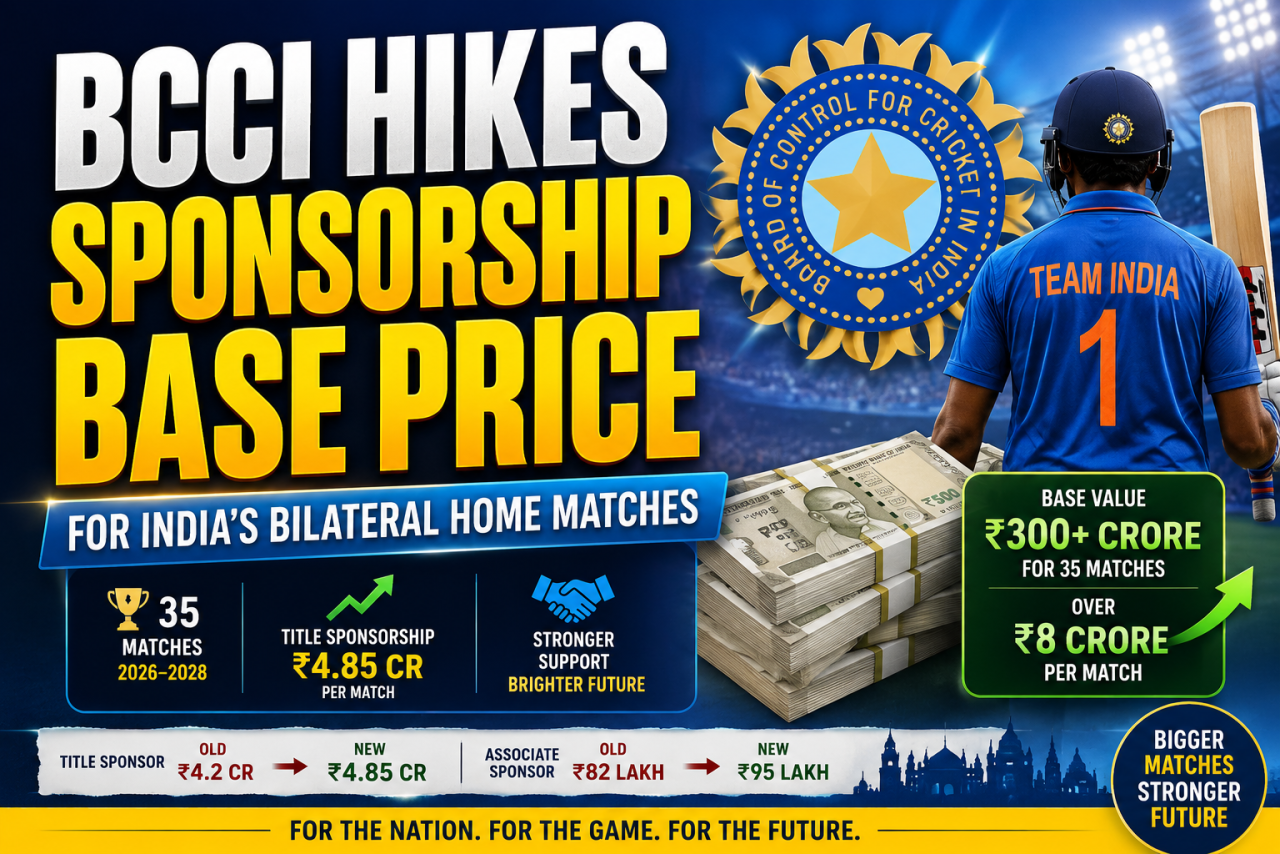
The BCCI has invited fresh sponsorship bids for India's bilateral home matches scheduled between September 2026 and March 2028. The package includes 35 matches across Tests, One Day Internationals (ODIs) and Twenty20 Internationals (T20Is).
Under the new tender:
- Title sponsorship base price has been increased to Rs 4.85 crore per match, up from Rs 4.2 crore per match under the current IDFC First Bank agreement.
- Associate sponsorship base price has been raised to Rs 95 lakh per match, compared with the previous Rs 82 lakh per match paid by SBI Life, Campa and Atomberg.
- Asian Paints has already secured the fourth associate sponsorship slot at a similar valuation.
At the base price alone, the sponsorship inventory for the 35-match cycle is valued at more than Rs 300 crore, translating to over Rs 8 crore per match before competitive bidding begins.
The previous bidding process also highlighted strong corporate interest. Apollo Tyres secured India's jersey sponsorship by bidding Rs 579 crore, ahead of Canva's Rs 544 crore and JK Cement's Rs 477 crore. If similar competition emerges this time, the final sponsorship value could rise well above the reserve price.
Broadcast Rights Continue to Drive Revenue
While sponsorship contributes significantly to cricket's commercial value, media rights remain the biggest source of revenue.
JioStar currently holds the broadcasting rights for India's bilateral matches until March 2028 under a deal worth Rs 5,963 crore, which works out to roughly Rs 67.75 crore per match.
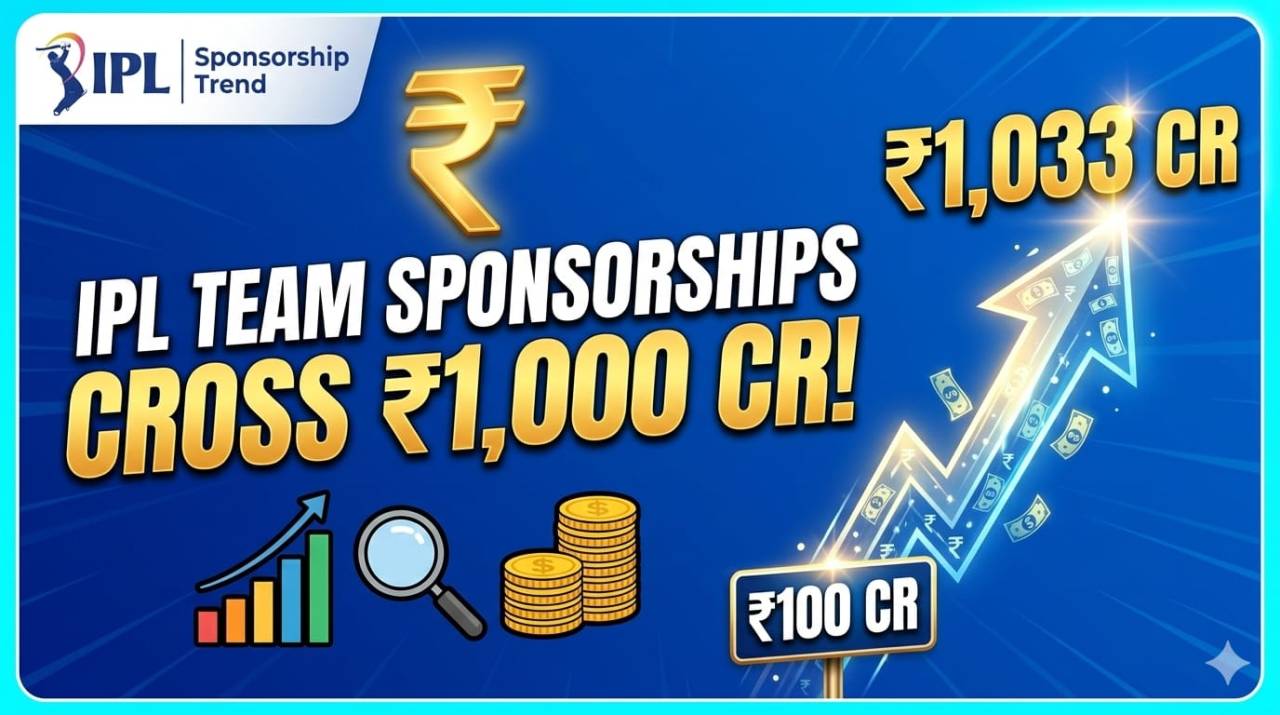
Despite these impressive figures, the IPL remains cricket's biggest commercial engine, generating nearly 60 percent of India's cricket revenue within a two-month window.
This has led to speculation that bilateral cricket could gradually lose importance. However, industry observers believe that India's international matches continue to enjoy a unique appeal that franchise leagues, outside the IPL, have not been able to match. Test cricket, in particular, still commands significant commercial and sporting value.
India Remains Cricket's Biggest Attraction
India's upcoming international schedule reinforces that importance.
The national team is scheduled to host:
- A five-Test series against Australia in 2027
- A five-Test series against England in early 2028
These marquee contests form part of the reciprocal arrangements between cricket's "Big Three" — India, England and Australia — and remain central to the financial health of Test cricket.
The dependence on India is evident across the cricketing world.
The England and Wales Cricket Board (ECB) recently acknowledged that the absence of a home series against India in 2027 would significantly affect its revenues. Smaller cricket boards rely even more heavily on Indian tours. Reports estimate that both Cricket Ireland and Cricket Zimbabwe could earn around $2 million per match by hosting India this year, revenues that are difficult to generate from visits by most other teams.
Bilateral Cricket Still Has Strong Commercial Value
There is continuing debate over whether the IPL will eventually occupy a larger share of the international calendar. However, the latest sponsorship pricing suggests that bilateral cricket remains a commercially attractive product outside ICC tournaments.
Rather than reducing its commitment to international cricket, the BCCI appears focused on balancing the calendar while continuing to maximise the value of bilateral series.
The upcoming bidding process will offer a clear indication of corporate confidence. If companies continue to invest aggressively in Team India's home fixtures, it will reinforce what the current numbers already suggest: international cricket remains one of the strongest commercial pillars of the sport, with fans continuing to value country-versus-country contests alongside franchise cricket.
The Indian Premier League (IPL) may dominate the cricket calendar, headlines and advertising budgets, but the Board of Control for Cricket in India (BCCI) has reaffirmed its confidence in international cricket. The board has significantly increased the base price for sponsorship rights of India's bilateral home matches, signalling that international fixtures remain a valuable commercial property.
BCCI Raises Sponsorship Rates
The BCCI has invited fresh sponsorship bids for India's bilateral home matches scheduled between September 2026 and March 2028. The package includes 35 matches across Tests, One Day Internationals (ODIs) and Twenty20 Internationals (T20Is).
Under the new tender:
- Title sponsorship base price has been increased to Rs 4.85 crore per match, up from Rs 4.2 crore per match under the current IDFC First Bank agreement.
- Associate sponsorship base price has been raised to Rs 95 lakh per match, compared with the previous Rs 82 lakh per match paid by SBI Life, Campa and Atomberg.
- Asian Paints has already secured the fourth associate sponsorship slot at a similar valuation.
At the base price alone, the sponsorship inventory for the 35-match cycle is valued at more than Rs 300 crore, translating to over Rs 8 crore per match before competitive bidding begins.
The previous bidding process also highlighted strong corporate interest. Apollo Tyres secured India's jersey sponsorship by bidding Rs 579 crore, ahead of Canva's Rs 544 crore and JK Cement's Rs 477 crore. If similar competition emerges this time, the final sponsorship value could rise well above the reserve price.
Broadcast Rights Continue to Drive Revenue
While sponsorship contributes significantly to cricket's commercial value, media rights remain the biggest source of revenue.
JioStar currently holds the broadcasting rights for India's bilateral matches until March 2028 under a deal worth Rs 5,963 crore, which works out to roughly Rs 67.75 crore per match.
Despite these impressive figures, the IPL remains cricket's biggest commercial engine, generating nearly 60 percent of India's cricket revenue within a two-month window.
This has led to speculation that bilateral cricket could gradually lose importance. However, industry observers believe that India's international matches continue to enjoy a unique appeal that franchise leagues, outside the IPL, have not been able to match. Test cricket, in particular, still commands significant commercial and sporting value.
India Remains Cricket's Biggest Attraction
India's upcoming international schedule reinforces that importance.
The national team is scheduled to host:
- A five-Test series against Australia in 2027
- A five-Test series against England in early 2028
These marquee contests form part of the reciprocal arrangements between cricket's "Big Three" — India, England and Australia — and remain central to the financial health of Test cricket.
The dependence on India is evident across the cricketing world.
The England and Wales Cricket Board (ECB) recently acknowledged that the absence of a home series against India in 2027 would significantly affect its revenues. Smaller cricket boards rely even more heavily on Indian tours. Reports estimate that both Cricket Ireland and Cricket Zimbabwe could earn around $2 million per match by hosting India this year, revenues that are difficult to generate from visits by most other teams.
Bilateral Cricket Still Has Strong Commercial Value
There is continuing debate over whether the IPL will eventually occupy a larger share of the international calendar. However, the latest sponsorship pricing suggests that bilateral cricket remains a commercially attractive product outside ICC tournaments.
Rather than reducing its commitment to international cricket, the BCCI appears focused on balancing the calendar while continuing to maximise the value of bilateral series.
The upcoming bidding process will offer a clear indication of corporate confidence. If companies continue to invest aggressively in Team India's home fixtures, it will reinforce what the current numbers already suggest: international cricket remains one of the strongest commercial pillars of the sport, with fans continuing to value country-versus-country contests alongside franchise cricket.
















Leave a Comment