
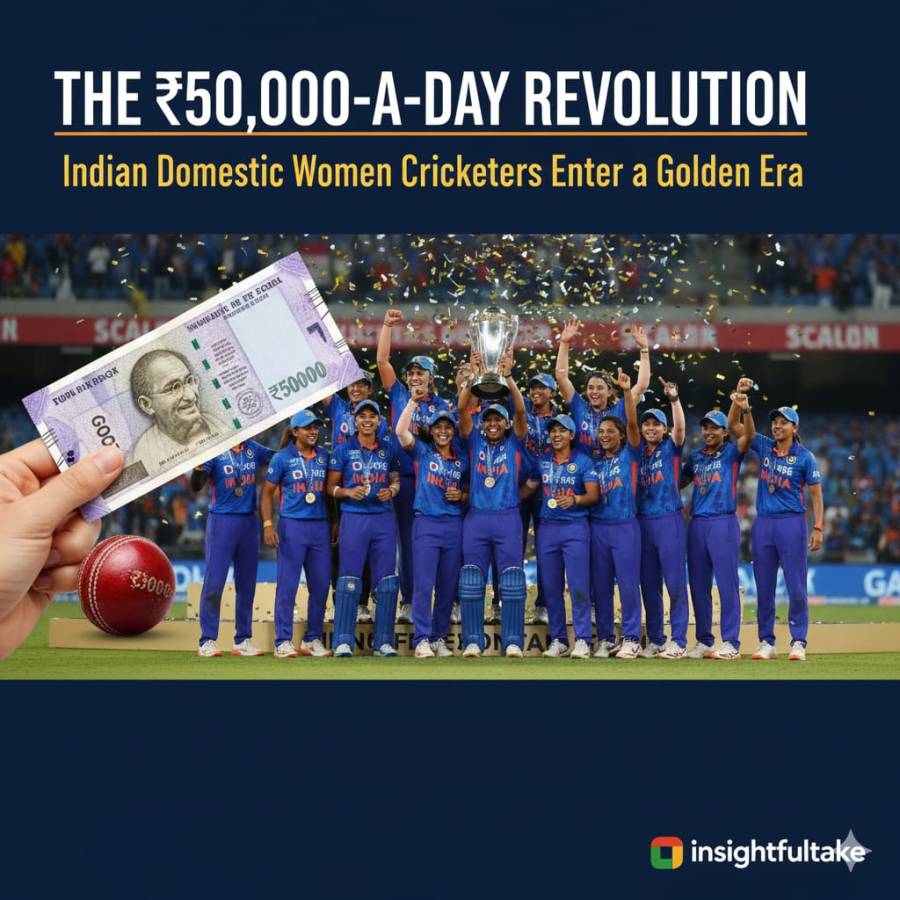
India’s domestic women cricketers are entering a new financial golden era shaped by a historic BCCI pay hike. Imagine standing in a humid dressing room in Baroda or Cuttack, nursing a bruised finger after a day of elite-level cricket, knowing your daily earnings wouldn't even cover the cost of a high-end pair of batting pads. For the longest time, this was the quiet reality for the women who form the backbone of Indian cricket. While the lights of the WPL and the fame of the national squad offered a glimpse of a different life, the "domestic grind" remained a labor of love rather than a path to financial freedom.
That reality just shifted on its axis
Following a breathtaking World Cup run that saw Harmanpreet Kaur’s squad transform from tournament underdogs into world champions in November 2025, the BCCI has delivered what many are calling the most significant administrative victory for the sport: a massive, tiered pay hike for domestic women cricketers. It isn’t just about adding zeroes to a paycheck; it’s about a fundamental change in how India values its female athletes.
The Mathematics of Respect
Let’s look at the numbers through the eyes of a senior domestic player. Just a few weeks ago, a day on the field earned a member of the Playing XI ₹20,000. Under the newly ratified structure approved this Monday (December 22, 2025), that figure has jumped to ₹50,000 per day.
To put that in perspective, a standard four-day domestic fixture now yields a match fee of ₹2 lakh. For a young woman from a small town, this isn't just "pocket money"—it is life-altering capital. It is the ability to buy a home, to afford specialized coaching, and to tell a skeptical parent that cricket is a "real" job.
The ripples go deeper than the top tier
- The Reserves: In a move that acknowledges the importance of bench strength, reserve players will now earn ₹25,000 per day, up from ₹10,000. This prevents the "forgotten player" syndrome, where those on the fringes of the team often feel the financial pinch the hardest.
- The Junior Circuit: The U-19 and U-23 players have seen their match fees rise to ₹25,000 per day. By injecting this level of capital into the youth level, the BCCI is effectively "future-proofing" the sport, ensuring that the next generation of talent doesn't drop out due to economic pressure before they hit their prime.
The "World Cup Dividend"
This announcement didn't happen by accident. It is the direct result of a "perfect storm" of performance and popularity. Earlier this year, the Indian women’s team did something miraculous. After losing three consecutive games in the league stage of the ODI World Cup, they were written off by critics.
Instead of folding, they produced a streak of cricket that captured the national imagination, culminating in a historic final win against South Africa at the DY Patil Stadium. The image of the team lifting the trophy in front of a roaring home crowd changed the commercial math for the BCCI. The board's decision to award a ₹51 crore cash prize to the World Cup squad was the first signal; this domestic hike is the second, more permanent one.
A New Career Path: The "Middle Class" of Cricket
For years, Indian cricket was a "winner-takes-all" system. If you made the national team, you were a star; if you didn't, you were a ghost. This hike creates a healthy "middle class" in Indian women's cricket.
We are moving toward a system where a player can have a fulfilling, 15-year career playing for Mumbai or Railways, never making the Indian squad, yet still retiring with financial security. This is the hallmark of a truly professional sporting nation. It removes the desperation from the game, allowing players to play with more freedom and less fear of the future.
The WPL Factor
With the next season of the Women’s Premier League (WPL) kicking off next month, the timing is surgical. The domestic hike ensures that the gap between the "overnight millionaires" of the WPL auction and the standard domestic player doesn't become a canyon. It maintains a level of competitive dignity across the board.
The message from the BCCI Apex Council is crystal clear that the days of women’s cricket being treated as a secondary concern are over. This is now a high-stakes, high-reward industry. When those players walk out for their next domestic match, they won't just be playing for pride—they’ll be playing as recognized professionals in one of the most lucrative sporting ecosystems on earth.




















Leave a Comment