
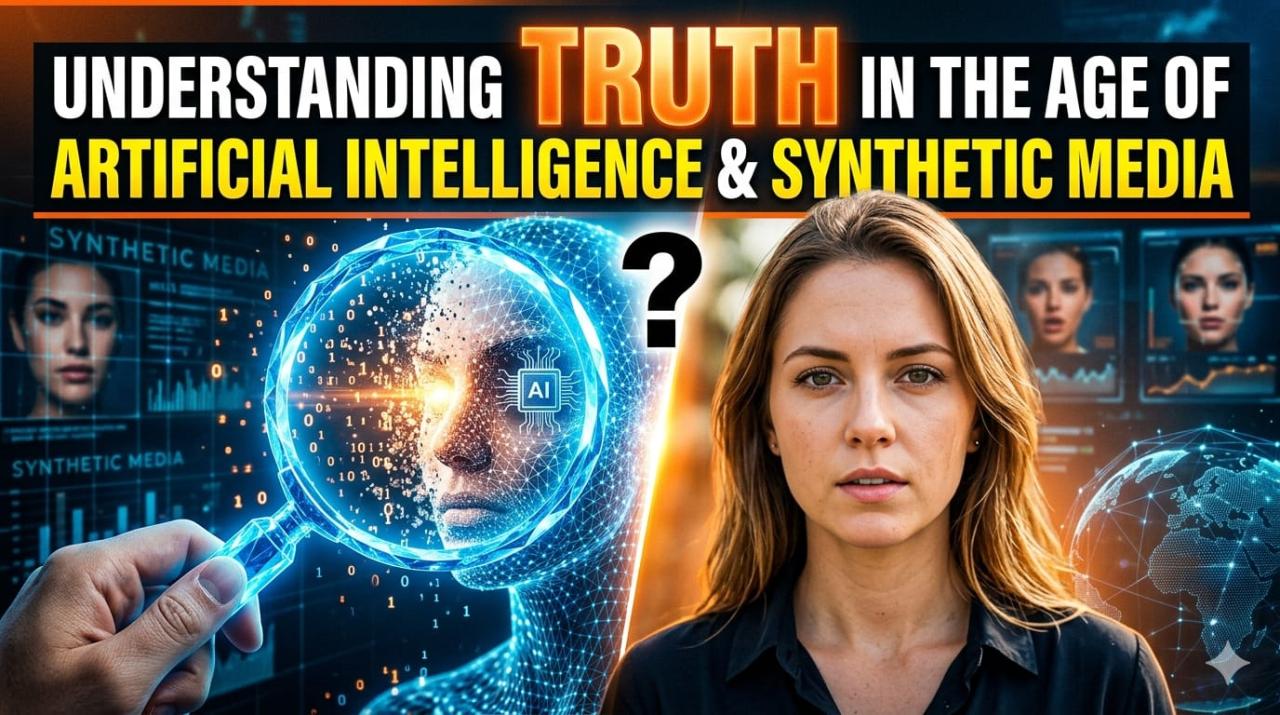
In an age where artificial intelligence can recreate faces, voices, and events with startling accuracy, the real challenge is no longer creating content, but protecting the truth.
The world of digital media is changing very fast. Artificial intelligence, which was once seen as a new and limited technology, has now become a common tool for creating images, videos, audio, and written content. Today, many people use AI tools to edit photos, write articles, generate artwork, and even create realistic videos. Because of this rapid growth, it has become difficult to clearly tell the difference between what is real and what is created by a computer program. This situation has raised important questions about truth, trust, and responsibility in society.
Artificial intelligence offers many benefits. It helps people express their creativity, improves productivity, and makes certain tasks easier and faster. However, along with these advantages come serious challenges. AI can create content that looks very real but is actually false or misleading. For example, a video can be altered to show a person saying something they never said. Such content can harm a person’s reputation, disturb social harmony, and spread confusion among the public. When people cannot easily distinguish between real and artificial content, it weakens trust in media and public communication.
In response to these concerns, governments and institutions are trying to develop better systems of digital governance. Instead of taking action only after harm has been done, there is now a focus on preventing problems before they spread widely. This approach aims to include safety measures directly within digital tools and platforms. The idea is to ensure that transparency becomes a basic feature of technology.
One important step in this direction is clearly defining what is meant by “synthetically generated information.” This term refers to content that is created or significantly changed by artificial intelligence in a way that makes it appear authentic. It is important to understand that not all digital editing is harmful. Simple changes such as improving brightness, reducing background noise, or correcting colors are common and usually harmless. The real concern arises when AI is used to create content that falsely represents reality or misleads viewers in a serious way.
By clearly defining synthetic content, authorities can apply proper rules and guidelines. This helps in creating a fair system where creativity is not discouraged, but misuse is controlled. Just as newspapers and television channels are expected to follow certain standards of accuracy and responsibility, similar standards can be applied to AI-generated content. This ensures that new technology is used in a responsible manner.
Another important development is the idea of acting before harmful content spreads widely. Digital platforms are now being encouraged to use technical tools that can identify AI-generated content at the time it is created or uploaded. For ordinary users, this may appear as clear labels stating that a piece of content has been generated by AI. Some systems also include hidden information, called metadata, which records how and when the content was created. These measures help viewers make informed decisions about what they are watching or reading.
Transparency plays a key role in protecting public trust. When people know that a video or image is AI-generated, they can judge it more carefully. This simple step can reduce confusion and prevent the spread of misinformation. It also protects the dignity of individuals who might otherwise become victims of fake or manipulated content.
Effective regulation does not mean strict control over all digital activity. Instead, it involves sharing responsibility in a balanced way. Large digital platforms that reach millions of users have a greater duty to ensure safety and transparency. At the same time, laws should remain flexible so that innovation and technological development are not unnecessarily restricted.
The growth of synthetic media presents a major challenge for society. Ultimately, it is a question of trust. People need to feel confident that technology will not harm their rights or spread false information. By promoting transparency, accountability, and user awareness, society can create a digital environment that supports innovation while protecting truth and human dignity.
The world of digital media is changing very fast. Artificial intelligence, which was once seen as a new and limited technology, has now become a common tool for creating images, videos, audio, and written content. Today, many people use AI tools to edit photos, write articles, generate artwork, and even create realistic videos. Because of this rapid growth, it has become difficult to clearly tell the difference between what is real and what is created by a computer program. This situation has raised important questions about truth, trust, and responsibility in society.
Artificial intelligence offers many benefits. It helps people express their creativity, improves productivity, and makes certain tasks easier and faster. However, along with these advantages come serious challenges. AI can create content that looks very real but is actually false or misleading. For example, a video can be altered to show a person saying something they never said. Such content can harm a person’s reputation, disturb social harmony, and spread confusion among the public. When people cannot easily distinguish between real and artificial content, it weakens trust in media and public communication.
In response to these concerns, governments and institutions are trying to develop better systems of digital governance. Instead of taking action only after harm has been done, there is now a focus on preventing problems before they spread widely. This approach aims to include safety measures directly within digital tools and platforms. The idea is to ensure that transparency becomes a basic feature of technology.
One important step in this direction is clearly defining what is meant by “synthetically generated information.” This term refers to content that is created or significantly changed by artificial intelligence in a way that makes it appear authentic. It is important to understand that not all digital editing is harmful. Simple changes such as improving brightness, reducing background noise, or correcting colors are common and usually harmless. The real concern arises when AI is used to create content that falsely represents reality or misleads viewers in a serious way.
By clearly defining synthetic content, authorities can apply proper rules and guidelines. This helps in creating a fair system where creativity is not discouraged, but misuse is controlled. Just as newspapers and television channels are expected to follow certain standards of accuracy and responsibility, similar standards can be applied to AI-generated content. This ensures that new technology is used in a responsible manner.
Another important development is the idea of acting before harmful content spreads widely. Digital platforms are now being encouraged to use technical tools that can identify AI-generated content at the time it is created or uploaded. For ordinary users, this may appear as clear labels stating that a piece of content has been generated by AI. Some systems also include hidden information, called metadata, which records how and when the content was created. These measures help viewers make informed decisions about what they are watching or reading.
Transparency plays a key role in protecting public trust. When people know that a video or image is AI-generated, they can judge it more carefully. This simple step can reduce confusion and prevent the spread of misinformation. It also protects the dignity of individuals who might otherwise become victims of fake or manipulated content.
Effective regulation does not mean strict control over all digital activity. Instead, it involves sharing responsibility in a balanced way. Large digital platforms that reach millions of users have a greater duty to ensure safety and transparency. At the same time, laws should remain flexible so that innovation and technological development are not unnecessarily restricted.
The growth of synthetic media presents a major challenge for society. Ultimately, it is a question of trust. People need to feel confident that technology will not harm their rights or spread false information. By promoting transparency, accountability, and user awareness, society can create a digital environment that supports innovation while protecting truth and human dignity.





















Leave a Comment