
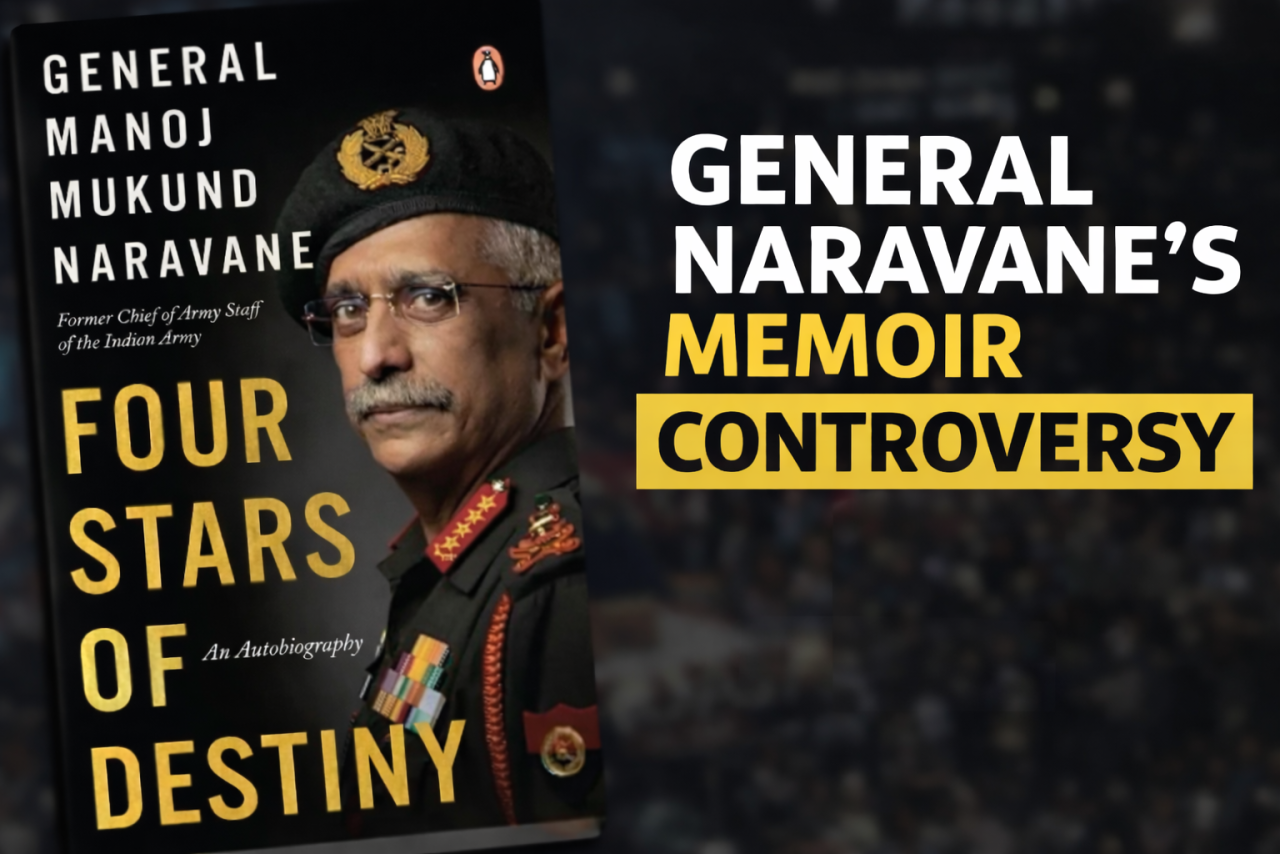
Can an unpublished military memoir shake Parliament and ignite a national debate on war, secrecy, and accountability? Four Stars of Destiny has done exactly that—even before reaching readers.
General Manoj Mukund Naravane’s unpublished memoir Four Stars of Destiny has drawn national attention even before reaching bookstores. Rarely does a manuscript trigger heated debate in Parliament, spark political confrontation, and raise legal questions about official secrecy. Yet the discussion around this book shows how deeply issues of national security, transparency, and political accountability matter in India today.
At its core, Four Stars of Destiny is believed to be a personal and professional account of General Naravane’s tenure as Chief of Army Staff. The title itself suggests reflection on leadership at the highest level of the Indian Army. Though the book has not been officially released, excerpts cited in public debate indicate that it discusses key events, including India’s handling of tensions with China. That alone makes it a significant document, because military memoirs often provide insights that are not available in official press briefings or public statements.
From what has been reported, the manuscript appears to combine strategic assessment with personal experience. Senior military leaders occupy a unique position. They are directly involved in operational planning and high-level discussions with the government. When such leaders write memoirs, they offer readers a rare window into decision-making during moments of crisis. If handled responsibly, such accounts can enrich public understanding of national security challenges.
At the same time, the controversy around this memoir shows the delicate balance between openness and confidentiality. Defence matters are not like routine policy debates. Information about troop movement, operational strategy, intelligence assessments, and diplomatic negotiations can have long-term consequences. Governments therefore review such manuscripts carefully before publication. In this case, the book was reportedly submitted for review in early 2024, but no final decision has been announced. That delay has only increased speculation.
One important aspect of the debate is how excerpts from the manuscript reached the public domain. Questions have been raised about access to an unpublished text and about whether official rules were followed. The matter has even involved legal provisions such as the Official Secrets Act. This situation highlights the risks of partial leaks. When isolated lines are quoted without full context, they can create political controversy without allowing readers to judge the complete argument of the author.
As a memoir, Four Stars of Destiny seems to promise more than just operational details. Military autobiographies often reflect on leadership, civil-military relations, and the pressures of command. India has a strong tradition of civilian control over the armed forces. Any account by a former Army Chief inevitably touches on how the military and political leadership interact during crises. That makes the book important not only for defence experts but also for students of governance.
The public interest in this memoir is understandable. Citizens have the right to understand how major security challenges were handled, especially when those events shaped national policy and public debate. Transparency builds trust. At the same time, responsible disclosure is essential. A memoir should inform without compromising national interests.
The current situation, where the book remains unpublished but widely discussed, creates confusion. It prevents readers from engaging with the full text while allowing selective interpretation to dominate the conversation. A clear decision—either approving publication in full or with necessary redactions—would serve the public better than prolonged uncertainty.
Based on available information, Four Stars of Destiny appears to be a serious and reflective work rather than a sensational account. It seems intended to document a critical period in India’s military history and to share lessons from high command. Such works contribute to democratic debate when they are presented in a complete and responsible manner.
In the end, the book represents more than one general’s story. It raises broader questions about how a democracy handles sensitive history, how leaders record their experiences, and how governments balance secrecy with accountability. If published thoughtfully, Four Stars of Destiny could become an important addition to India’s military literature and a valuable resource for understanding recent strategic challenges.


















Leave a Comment