
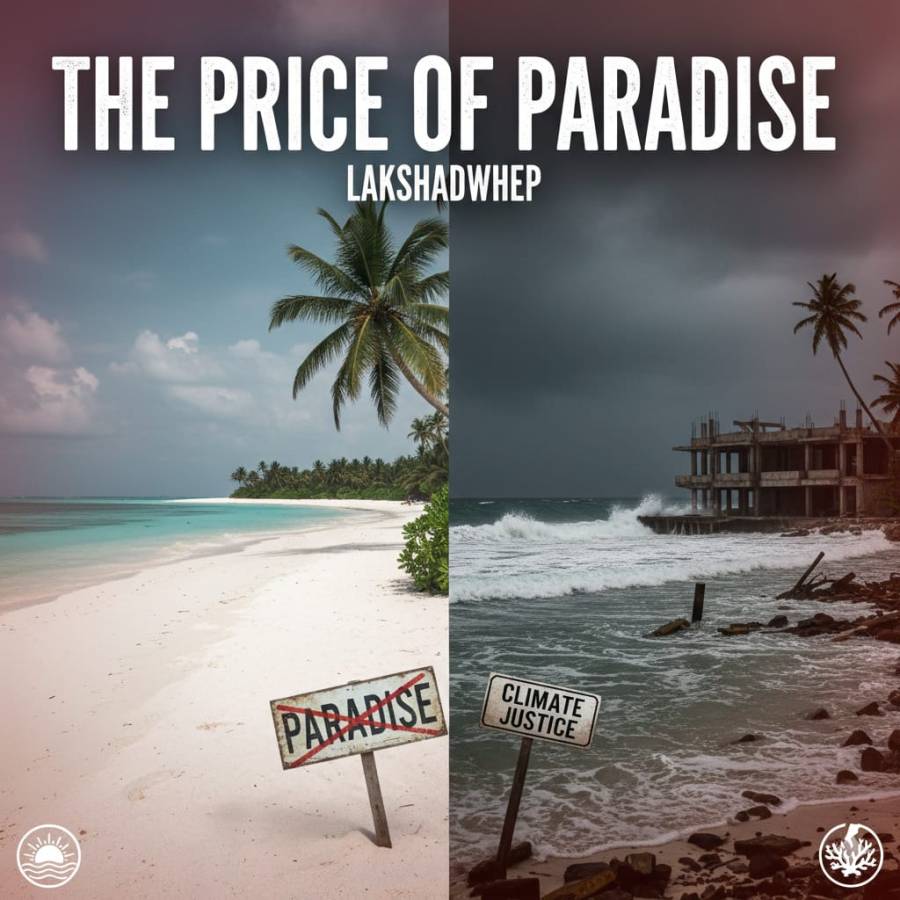
Land acquisition, tourism expansion, and climate risks are reshaping the future of Lakshadweep’s fragile island ecosystem.
The Lakshadweep islands are frequently promoted as an unspoiled tourist destination in the Arabian Sea. However, for residents and environmental experts, the islands represent a sensitive ecological region with strategic and environmental significance. In recent years, Lakshadweep has come under increasing pressure from proposed tourism-led development and the effects of climate change.
The Lakshadweep administration’s decision to acquire more than 100,000 square meters of privately owned land on Agatti Island has triggered protests among local residents. Lakshadweep has a total land area of approximately 32 square kilometers, spread across multiple coral atolls. In this context, the proposed land acquisition accounts for nearly 3% of the island’s total land area. Given the limited availability of land, such acquisitions have raised concerns about their impact on housing, livelihoods, and long-term sustainability for the island population.
Legal and Community Concerns
A central issue in the ongoing dispute is the question of consultation and consent. Local residents have alleged that the land acquisition process has moved forward without adequate involvement of gram sabhas (village councils) or individual landowners. Existing legal frameworks governing land acquisition in India emphasize the importance of community participation, particularly when land is acquired for public purposes.
The administration has also proposed changes to property regulations aimed at facilitating private investment in tourism infrastructure, including resorts and hospitality projects. Local groups have expressed concern that these changes could make land acquisition easier for private developers while reducing safeguards for residents. Critics argue that development initiatives should involve local communities in planning and decision-making, especially in regions with limited land resources and distinct social structures.
Environmental Vulnerability
Lakshadweep’s environmental conditions add another layer of complexity to the development debate. The islands are composed of low-lying coral atolls that are highly sensitive to changes in sea levels, ocean temperatures, and weather patterns. Scientific studies have documented rising sea surface temperatures in the region, contributing to coral bleaching events that weaken reef systems.
Coral reefs act as natural barriers against coastal erosion and storm surges. Their degradation increases the vulnerability of islands to flooding and erosion. In addition, the Arabian Sea has experienced increased cyclonic activity in recent years, heightening risks for coastal infrastructure. Experts have cautioned that large-scale construction in such environments may increase exposure to climate-related hazards.
Tourism-related waste management has also emerged as a concern. Lakshadweep’s lagoon-based ecosystems have limited capacity to absorb pollution. Untreated waste and effluents can accumulate within these systems, affecting marine biodiversity and local fishing activities, which form a major source of livelihood for island communities.
Governance and Policy Considerations
The developments in Lakshadweep have raised broader questions about governance in environmentally sensitive regions. Policy experts emphasize the need for development models that account for ecological limits, climate risks, and social impacts. Community participation is considered a key component in ensuring that development policies are sustainable and locally appropriate.
Local residents possess long-standing knowledge of the region’s ecology and resource management practices. Incorporating this knowledge into planning processes can help balance economic objectives with environmental protection. Policies that affect land use, housing, and livelihoods in Lakshadweep are likely to have long-term consequences due to the region’s geographic constraints.
Sustainable development in Lakshadweep involves maintaining environmental stability while ensuring that local communities continue to have access to land, resources, and economic opportunities. Decisions taken today will influence the habitability and resilience of the islands in the coming decades.

























Leave a Comment