
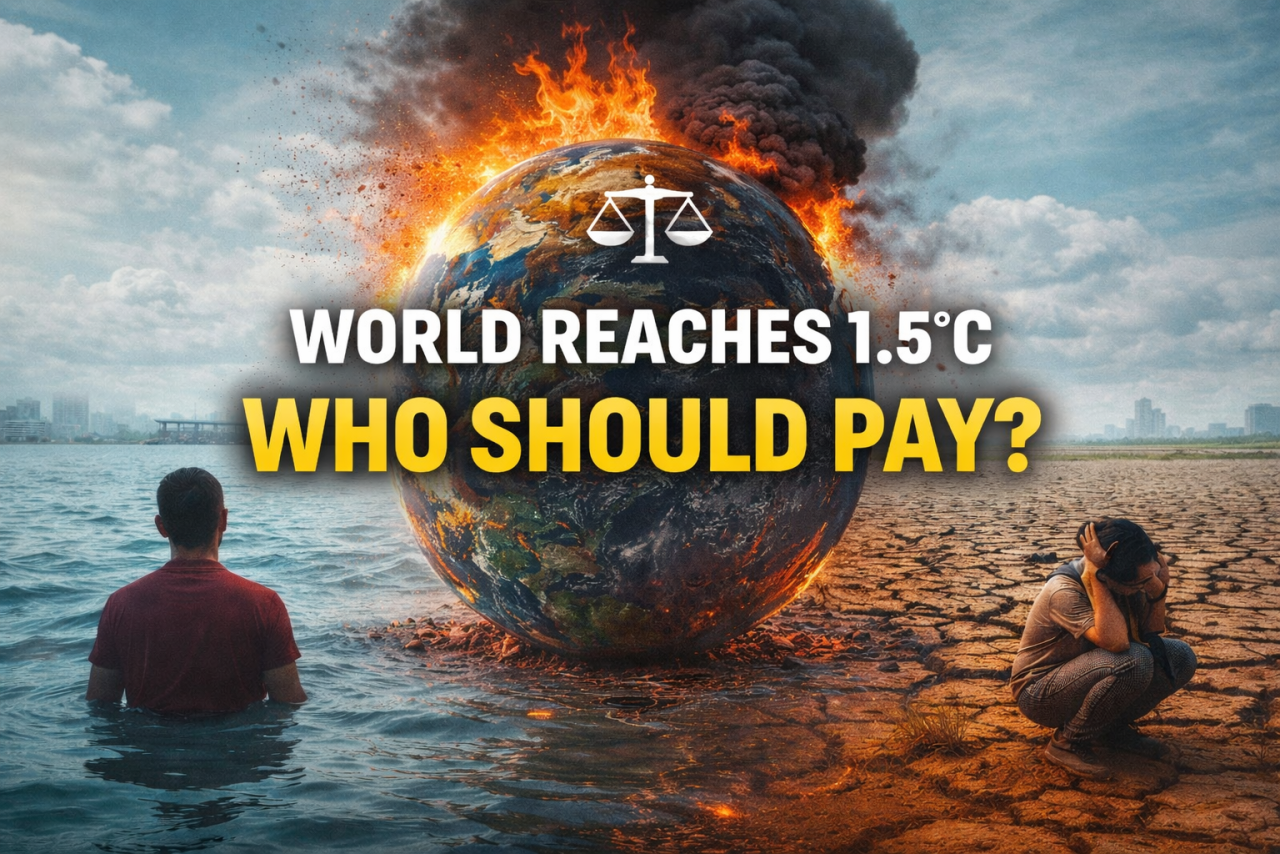
Climate change has crossed a line — now science wants countries to answer for it.
Climate change is often discussed in terms of global summits, scientific reports, and diplomatic negotiations, making it feel distant from the everyday lives of ordinary people. But the reality is very different. What scientists are now warning about has direct consequences for farmers, workers, coastal families, city dwellers, and future generations. A new accountability system proposed by climate scientists aims to make countries answerable for their role in pushing the planet beyond the critical 1.5 degree Celsius warming limit, and this is something every citizen should understand.
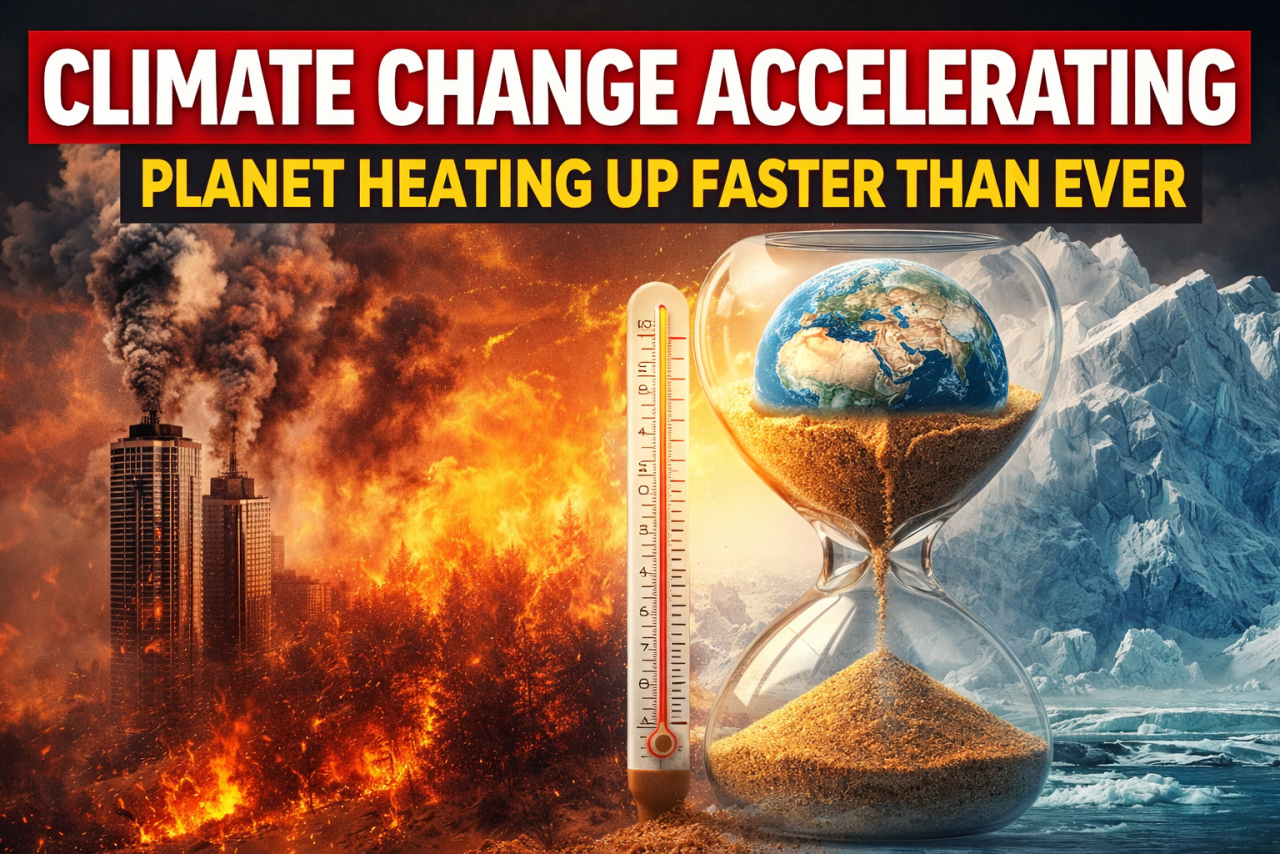
The 1.5°C limit is not an arbitrary number. It was agreed upon under the Paris Agreement as a threshold to avoid the most dangerous impacts of climate change. Scientists have repeatedly said that crossing this limit increases the risk of extreme heatwaves, floods, droughts, sea-level rise, crop failures, and health crises. Now, with global warming dangerously close to breaching this limit, researchers argue that voluntary climate promises are no longer enough. What is needed is accountability.
The proposed system is based on the idea of a global carbon budget. Simply put, there is only a limited amount of carbon dioxide humanity can emit if it wants to keep warming within 1.5°C. Scientists suggest calculating how much of this carbon budget each country has fairly used since a certain year, such as 1990. Countries that have already emitted more than their fair share would be considered to be in “carbon debt.” Every additional unit of pollution they release adds to this debt.
Why does this matter to common people? Because climate change is not caused equally by all, and its impacts are not felt equally either. Rich, industrialized nations have historically emitted far more greenhouse gases than developing countries. Yet, it is often poorer communities that face the harshest consequences—flooded homes, failing crops, water shortages, and loss of livelihoods. An accountability framework helps expose this imbalance in a clear and measurable way.
For everyday citizens, this system can bring transparency. It can help people understand which countries, and by extension which economic models and industries, have contributed most to the crisis. This knowledge empowers voters, activists, and communities to demand fairer climate policies. When accountability is backed by science, it becomes harder for governments to hide behind vague commitments or delay action.
Another important aspect is corrective justice. Scientists argue that once carbon debt is calculated, it can guide remedial measures. This includes investing in carbon removal technologies, supporting climate adaptation in vulnerable regions, and addressing climate-related loss and damage. For a farmer facing unpredictable monsoons or a coastal family threatened by rising seas, such support is not charity—it is a matter of justice.
The proposed system can also change how we look at development. Many developing countries still need carbon space to grow, provide jobs, and lift people out of poverty. If richer nations reduce emissions faster and support cleaner technologies elsewhere, it creates room for fair development. This directly affects common people by shaping access to energy, transport, housing, and employment in a climate-safe way.
Importantly, the accountability framework is not just about blaming. Scientists say it can also assess whether major emitters could have realistically followed cleaner paths earlier and helped others do the same through finance and technology. This helps people understand that climate change is not just a natural disaster but also the result of policy choices.
For citizens, awareness of such proposals strengthens democratic pressure. When people know that exceeding 1.5°C represents a failure to prevent dangerous human interference with the climate system, they can better question their leaders. Why were warnings ignored? Why were cleaner alternatives delayed? Why are vulnerable communities left to cope alone?
Climate change is no longer a distant future problem. Heatwaves, floods, and erratic weather are already part of daily news. A scientific accountability system connects these lived experiences with global responsibility. It tells common people that their suffering is not invisible and that science is providing tools to demand fairness.
In the end, this proposal reminds us that climate action is not only about saving the planet in abstract terms. It is about protecting homes, health, food, and dignity. Understanding how accountability works is the first step for citizens to push for a future where responsibility matches impact, and where those who contributed most to the crisis also do the most to fix it.






















Leave a Comment