
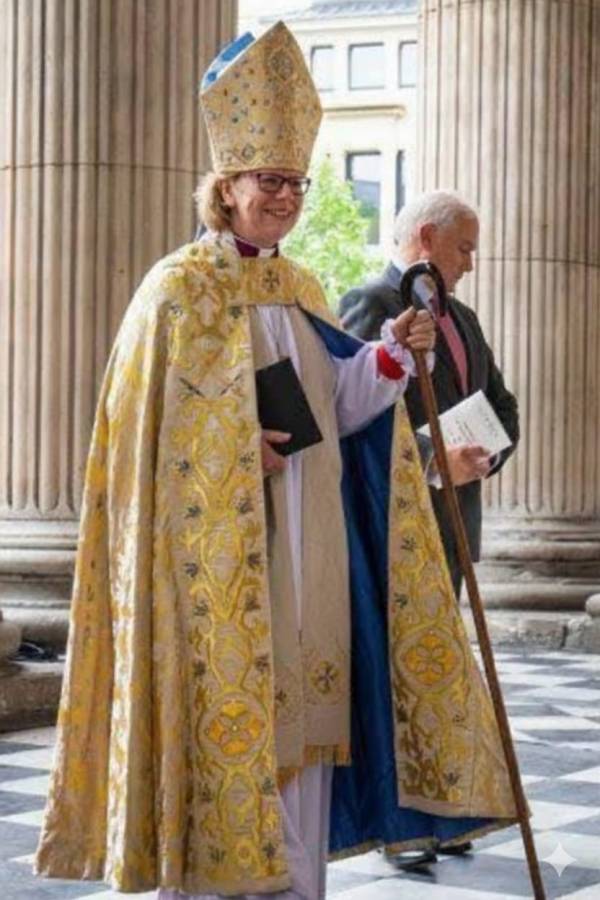
Sarah Mullally’s appointment is not just a first for the Church of England—it is a clear sign of how one of Britain’s oldest institutions is being forced to adapt to changing social realities.
The Church of England entered a notable moment this week with the formal confirmation of Sarah Mullally as one of its senior leaders. While headlines quickly highlighted the historic nature of the appointment, the development reflects a longer and more complex process—one in which a centuries-old institution continues to respond to social change while holding on to tradition.
This is not a sudden shift, but another step in the Church’s gradual rethinking of leadership, authority, and representation.
From Nursing to Church Leadership
Sarah Mullally’s path to the top of the Church of England is unusual and closely tied to public service. Before entering church leadership, Mullally, 63, trained as a cancer nurse and later became England’s Chief Nursing Officer. Her professional life was shaped by frontline care, administration, and public accountability—experiences that have influenced how she approaches leadership in the Church.
Her personal journey mirrors wider institutional change. The Church of England allowed women to become priests only in 1994. The first woman bishop was appointed in 2015. Compared to that timeline, Mullally’s rise has been relatively quick, showing how much the Church’s internal culture has shifted in a short period.
Historical and Theological Background
To understand the significance of Mullally’s appointment, it helps to look at the Church of England’s history. Since breaking away from the Roman Catholic Church in the 16th century under King Henry VIII, the Anglican Church has followed its own path, often balancing reform with tradition.
According to George Gross, a scholar of theology and monarchy at King’s College London, Mullally’s appointment highlights how different the Anglican Church has become from the Catholic Church. While the Catholic Church does not allow women to become priests, the Church of England has increasingly positioned itself as an institution willing to adapt to social realities.
This difference reflects not only theology, but also the Church of England’s role as a national church closely linked to British society and public life.
Divisions Within the Anglican Communion
Despite the ceremonial tone of the Confirmation of Election service, Mullally’s appointment has sparked debate across the Anglican Communion, which includes around 100 million members in 165 countries.
Disagreements already exist within the Communion, and her leadership may sharpen some of them, particularly on three key issues:
- Gender and Church Authority: Conservative groups such as Gafcon argue that senior church roles should remain male-only, based on their interpretation of scripture.
- LGBTQ+ Issues: Mullally has supported the blessing of same-sex marriages, a position that has drawn criticism from several Anglican leaders, including Archbishop Laurent Mbanda of Rwanda.
- Institutional Accountability: Mullally also inherits the challenge of addressing long-standing sexual abuse scandals that have damaged the Church’s credibility over the past decade.
Supporters see her as someone capable of reform and openness. Critics worry that her leadership moves the Church further away from traditional doctrine.
Why the Appointment Matters
This development is not just about internal Church governance. It reflects broader questions about gender, authority, and representation in public institutions.
Religious organizations often change more slowly than the societies around them. The Church of England’s decision signals an effort to remain connected to its congregation and relevant in a changing social environment. It suggests that leadership roles are increasingly being judged on experience, judgement, and responsibility rather than gender alone.
Final take
Sarah Mullally takes on her role at a time when the Church of England faces both internal divisions and external scrutiny. Her leadership will be shaped by how effectively she manages disagreements within the global Anglican community while addressing practical and moral challenges at home.
Whether her tenure brings unity or further debate remains to be seen. What is clear is that the Church of England is continuing to redefine how it understands leadership in the modern world—and Mullally will play a central role in that process.
























Leave a Comment