
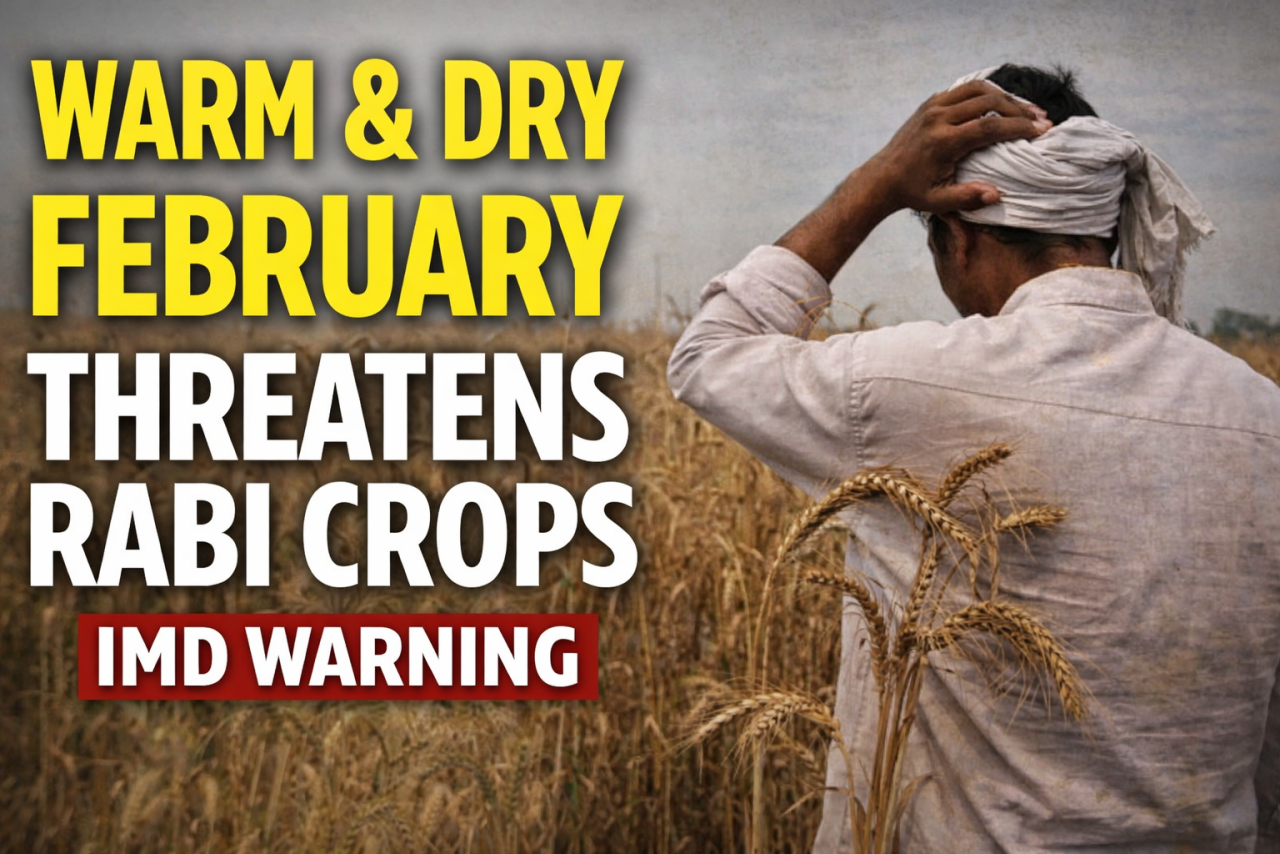
India is likely to face a warm and dry February this year, and this weather pattern can create serious problems for farmers who depend on Rabi crops for their livelihood. The India Meteorological Department (IMD) has warned that higher-than-normal temperatures and low rainfall during February may harm crops such as wheat, barley, mustard, chickpea, lentil and field peas, especially in northwestern and central parts of the country.
Rabi crops are usually grown during winter and depend on cool temperatures and timely rainfall. February is an important month because crops are in critical stages like flowering, grain formation and filling. If temperatures rise too fast during this period, crops may mature earlier than normal. This forced maturity does not give grains enough time to grow fully, which can reduce yield and quality.
According to IMD, day and night temperatures in February are expected to remain above normal in many regions. This is happening because western disturbances, which usually bring winter rain and cold conditions to north India, are fewer and weaker this season. As a result, rainfall is expected to stay below normal across most of northwest India, including Punjab, Haryana, western Uttar Pradesh, Rajasthan, Himachal Pradesh, Jammu and Kashmir, Ladakh, and parts of Uttarakhand.
Low rainfall means less soil moisture, which can stress crops. Wheat and barley are especially sensitive to heat during grain formation. Higher temperatures can lead to forced maturity, smaller grains, and lower overall production. In some cases, heat stress can also cause sterile spikelets, where grains do not form properly, further reducing yield.
Oilseed crops like mustard may also suffer. Warmer weather can lead to early flowering and faster maturity, which again affects seed development. Pulses such as chickpea, lentil and field peas may also mature earlier than usual. Early maturity reduces the time available for proper pod and seed formation, leading to lower harvests.
Another major concern is the increase in pests. Warm and dry weather creates favorable conditions for aphids and other sucking insects. These pests can multiply quickly and damage crops by feeding on plant sap. If pest attacks are not controlled in time, they can cause significant losses. Farmers may need to monitor their fields more frequently and take timely action based on local agricultural advice.
IMD has also pointed out that minimum temperatures are likely to remain above normal in most parts of the country, except some regions in the southern peninsula. Cold wave days are expected to be fewer in northwest and central India. This indicates that the winter season is ending earlier than usual, leading to a shorter spring period. A shorter spring increases the risk of heat stress on crops before harvest.
Climate experts have linked these changing weather patterns to long-term climate change. In recent years, winter rainfall and snowfall over the western Himalayan region have been declining. This affects not only crops but also groundwater recharge and river flows, which are important for irrigation in the coming months.
Farmers are advised to stay alert and follow guidance issued by agricultural departments and Krishi Vigyan Kendras. Proper irrigation management is important to reduce heat stress, but excess watering should be avoided. Timely irrigation during critical stages like flowering and grain filling can help protect crops. Farmers should also keep an eye on pest activity and use recommended pest management practices when needed.
Crop diversification and use of heat-tolerant varieties can help reduce risks in the long term. In the short term, awareness and timely action are key. Weather conditions are changing, and farming practices must adapt to protect crops and incomes.
The IMD warning is a reminder that weather plays a major role in agriculture. With careful planning, regular monitoring, and support from agricultural experts, farmers can reduce losses and safeguard their Rabi crops during this challenging season.
























Leave a Comment