
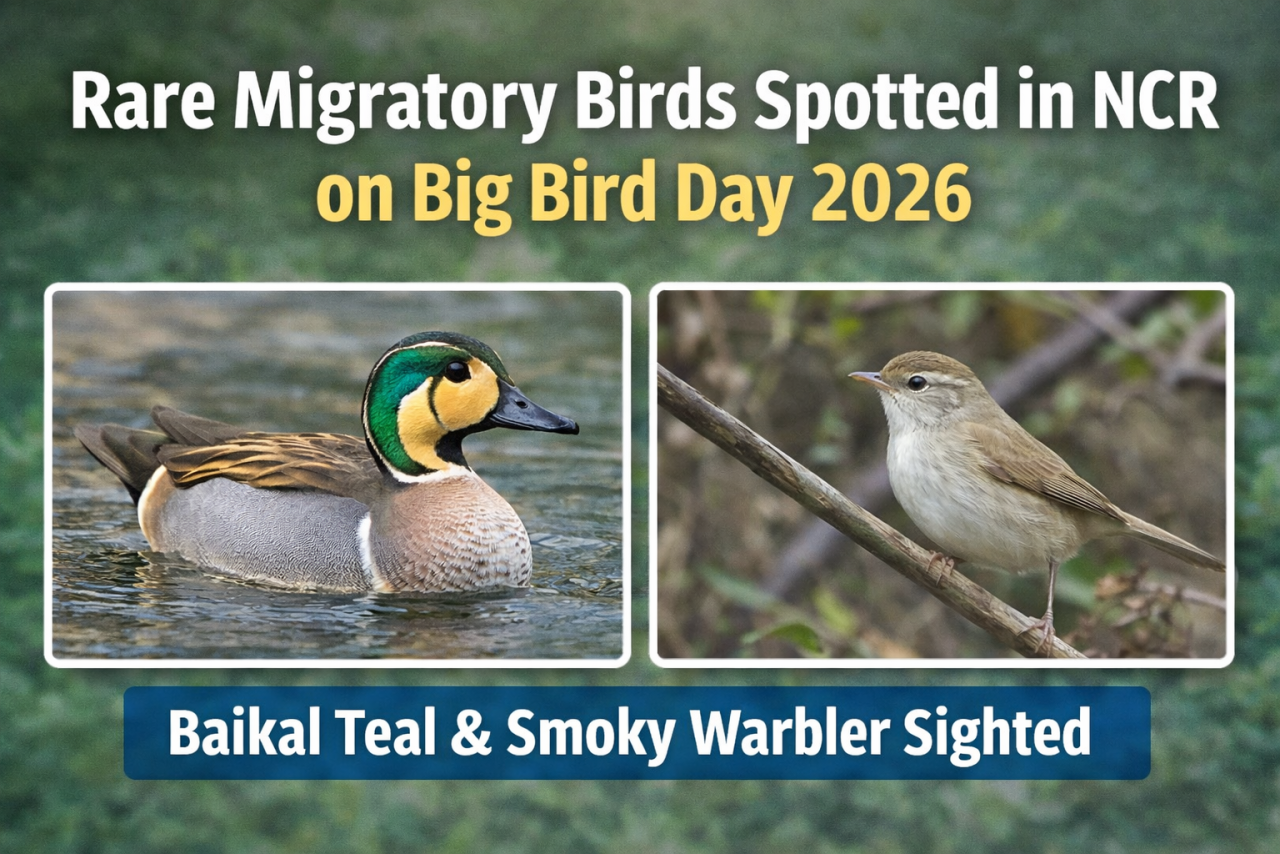
From Siberia to NCR — rare migratory birds have chosen India’s wetlands this winter, and their arrival tells a powerful story about nature, climate, and conservation.
Big Bird Day (BBD) 2026 turned out to be a memorable event for bird lovers across Delhi and the National Capital Region (NCR). Enthusiasts, experts, and nature lovers came together to observe and document birds, and the day brought exciting news — rare migratory birds like the Baikal teal and the smoky warbler were sighted in the region.
Big Bird Day is celebrated every year to encourage people to learn about birds and protect their habitats. This year, more than 30 locations across NCR were covered, including popular birding spots such as Okhla Bird Sanctuary, Yamuna floodplains, Bhondsi, Dhanauri, Sultanpur, Mangar Bani, Mandothi village, Chandu, and Surajpur. Participants began early in the morning, armed with binoculars, cameras, and notebooks, eager to spot winter visitors and resident birds.
One of the most exciting sightings was the Baikal teal, a migratory duck that usually breeds in Siberia and parts of northern Asia. It is rarely seen in north India, making its presence in Mandothi village of Jhajjar district, Haryana, very special. Along with it, birders also spotted the smoky warbler, a small and elusive migratory bird. These sightings highlight the importance of rural wetlands and village ponds in supporting migratory birds.
According to organisers, this year’s bird count showed mixed results. While the overall number of birds was slightly lower, the diversity of species showed a positive trend. Experts believe this happened because the winter season arrived late. An extended monsoon also created temporary water bodies, which influenced bird movement and delayed the arrival of some migratory species.
Delhi Development Authority’s biodiversity parks also played an important role during Big Bird Day. At the Yamuna Biodiversity Park, birdwatchers recorded notable species such as the ferruginous pochard, Eurasian wigeon, pied avocet, and Pallas’s gull. The orange-headed thrush, a beautiful forest bird with a bright orange face, was another highlight across multiple locations.
Other biodiversity parks also reported exciting sightings. Tilpath Valley Biodiversity Park recorded the red-breasted flycatcher and yellow-eyed babbler. At Tughlaqabad Biodiversity Park, birders spotted a black redstart, while the Northern Ridge also reported sightings of the orange-headed thrush. These observations show that even urban and semi-urban green spaces can support rich birdlife when protected properly.
Bird experts say these sightings are encouraging, but they also come with a warning. Wetlands, grasslands, and forest patches around cities are shrinking due to construction, pollution, and neglect. Migratory birds depend on clean water bodies and undisturbed resting places during their long journeys. Protecting village ponds, floodplains, and biodiversity parks is crucial for their survival.
For bird lovers, Big Bird Day is not just about counting species. It is about building awareness and creating a bond with nature. Anyone can participate — students, families, photographers, or first-time birdwatchers. Even watching birds from a balcony or nearby park helps people understand how seasons and climate affect wildlife.
The rare sightings during Big Bird Day 2026 remind us that India lies on an important global migratory route. With better conservation efforts and community participation, our cities and villages can continue to welcome these winged visitors every winter. For bird lovers, every sighting is a reminder that nature still thrives — if we give it space and care.


























Leave a Comment