
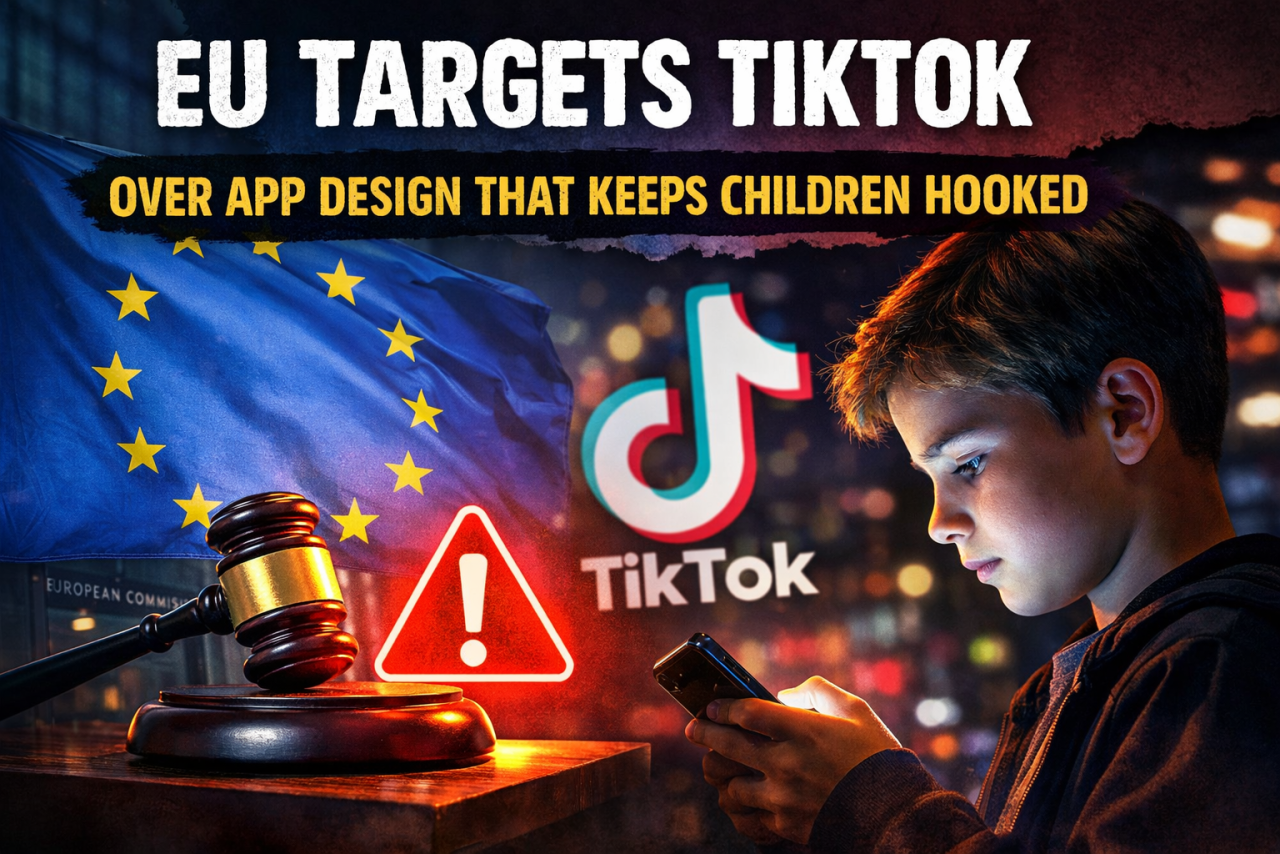
What looks like harmless scrolling is now under legal fire as Europe questions how TikTok keeps children hooked.
In today’s digital world, endless scrolling has become second nature. Many users open social media without thinking and continue long after they planned to stop. What appears to be harmless entertainment is now facing serious scrutiny. The European Union has formally accused TikTok of using app design features that may be harming the mental and physical wellbeing of children, marking a major shift in how governments approach regulation of big tech platforms.
What the EU Is Accusing TikTok Of
After a two-year investigation, EU regulators concluded that TikTok’s design actively encourages compulsive use, particularly among young users. The focus of the investigation was not specific content but how the platform operates as a system.
Regulators pointed to several features that are central to TikTok’s engagement model: infinite scrolling that removes any natural stopping point, autoplay that pushes the next video without pause, frequent push notifications that pull users back into the app, and highly personalized algorithms that quickly learn user preferences and serve an endless stream of attention-grabbing content.
European Commission spokesman Thomas Regnier cited data showing that around 7 percent of children aged 12 to 15 spend four to five hours a day on TikTok. More concerning, the platform is reportedly the most used social media app among teenagers after midnight, raising alarms about disrupted sleep and long-term health effects.
Why App Design Is at the Center of the Case
The EU’s case goes beyond what users watch on TikTok. It focuses on how the app is built. Regulators argue that the platform’s design constantly rewards engagement and reduces users’ ability to self-regulate, especially among children.
Officials also questioned the effectiveness of TikTok’s existing safety tools, such as screen-time limits and sleep reminders. According to the Commission, these features are easy to ignore and place too much responsibility on parents, many of whom may lack the time or technical knowledge to manage complex parental controls.
What TikTok Could Face
If TikTok fails to make the required changes, the EU can issue a non-compliance decision. This could lead to fines of up to 6 percent of the company’s total annual global revenue, a penalty that would run into billions of dollars.
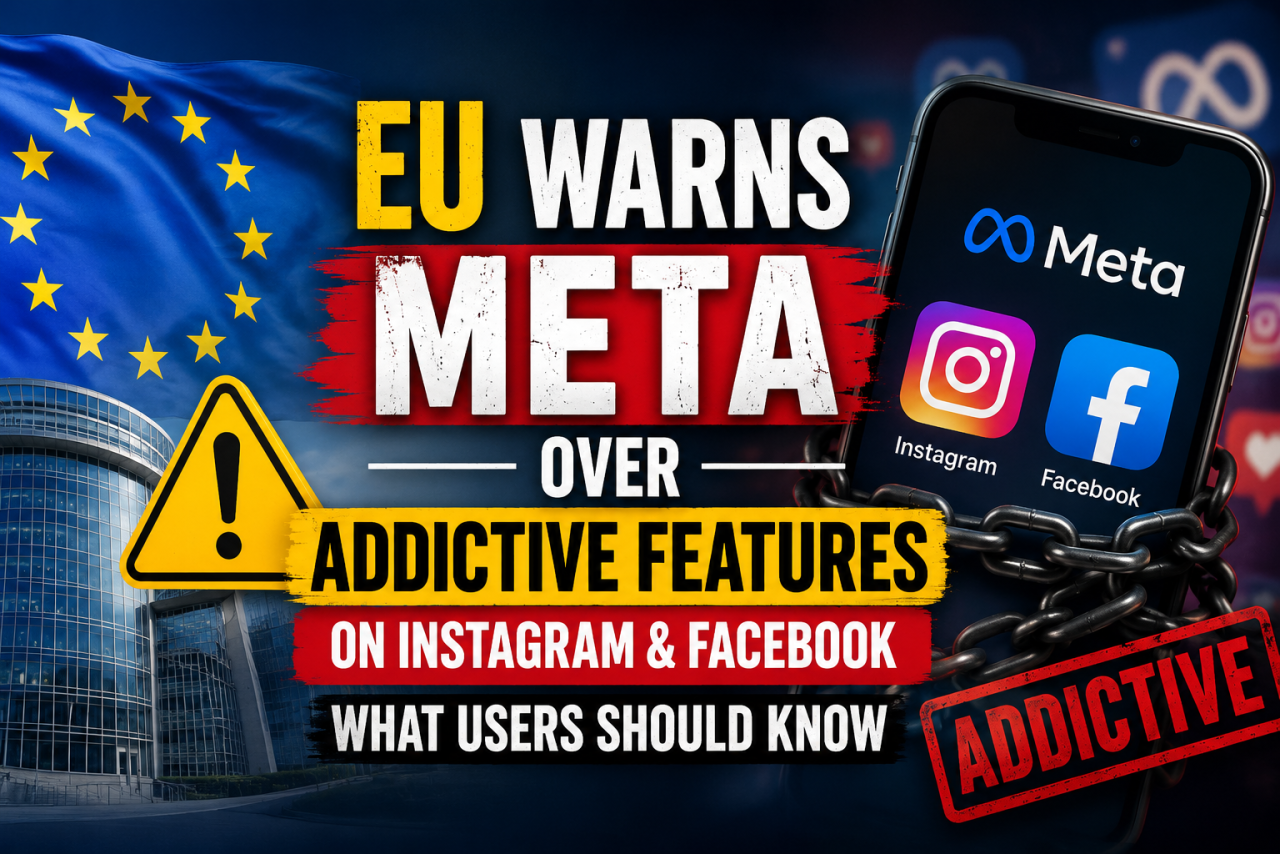
The action against TikTok reflects a broader global shift. Australia has moved to restrict social media access for children under 16. Countries such as France, Spain, and the United Kingdom are considering similar measures. In the United States, technology companies including Meta and Google are facing lawsuits over claims that their platforms encourage addictive behavior among minors.
TikTok’s Response
TikTok has strongly rejected the EU’s findings, calling them inaccurate and without merit. The company maintains that it offers robust tools to help users manage their time and argues that its platform provides a safe space for creativity and expression. TikTok also claims its safety systems are among the strongest in the industry.
What Comes Next
The European Commission is pushing for deeper changes to the platform. These include disabling infinite scrolling by default, introducing stronger usage breaks that genuinely interrupt prolonged viewing, and adjusting recommendation systems to prevent users from being drawn into endless loops of similar content.
Regardless of the final outcome, the case marks a turning point. Social media platforms are increasingly being viewed not just as communication tools, but as products designed to shape behavior. For parents, users, and policymakers, the EU’s action against TikTok highlights a growing demand for clearer boundaries to protect children in the digital age.



















Leave a Comment