
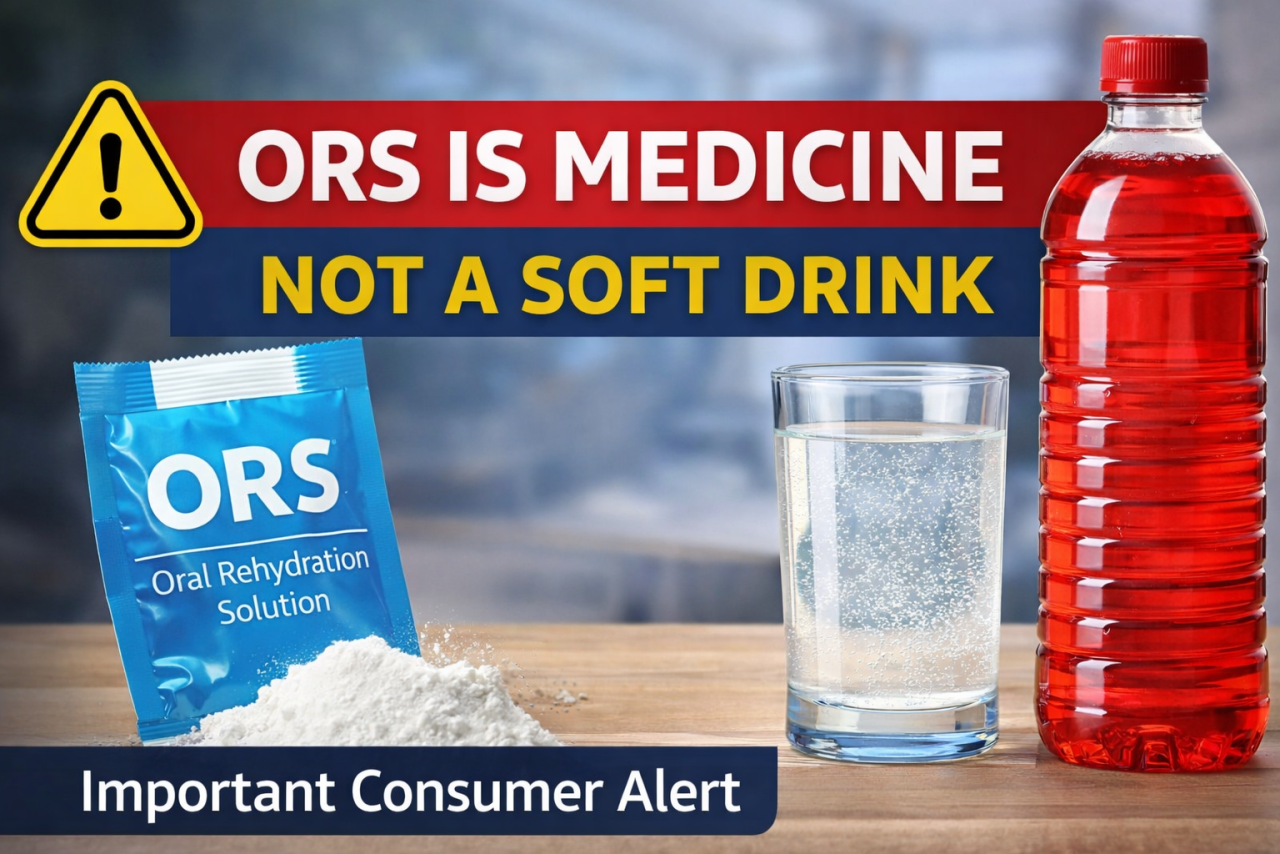
Many Indians still believe bottled electrolyte drinks are the same as ORS. A recent Delhi High Court case explains why that misunderstanding can be dangerous.
The recent decision of the Delhi High Court involving Johnson & Johnson’s consumer health arm and the sale of ORS-branded drinks is an important moment for consumer awareness in India. This case is not only about a company withdrawing a legal petition. It is about protecting public health and ensuring that consumers clearly understand what they are buying and why it matters.
Oral Rehydration Solution, commonly known as ORS, is a life-saving medical formulation. It is recommended by doctors and health authorities across the world for treating dehydration caused by diarrhoea, vomiting, and heat-related illnesses. ORS works because it has a precise balance of salts and glucose that helps the body absorb fluids quickly. This balance is critical. Any product that uses the ORS name but does not follow this medical formulation can confuse consumers and put lives at risk.
In October last year, the Food Safety and Standards Authority of India (FSSAI) issued strict directions to food and beverage companies. It barred them from using the term “ORS” in the name, label, advertisement, or trademark of any food or drink product. The regulator found that using ORS branding for flavoured drinks, fruit-based beverages, or ready-to-drink products was misleading. According to FSSAI, such practices violated the Food Safety and Standards Act, 2006.
Johnson & Johnson’s subsidiary, JNTL Consumer Health, challenged this order in court. The company was selling an electrolyte drink under the brand name ORSL. However, in November, the Delhi High Court refused to allow the sale of over ₹100 crore worth of unsold ORSL drinks. The court observed that selling such products could pose serious public health risks, especially in rural areas where diarrhoea-related deaths remain high. Many people may believe that these drinks are medically approved ORS and use them instead of consulting a doctor or using proper ORS.
The court also pointed out a crucial fact: ORS is not a scheduled drug and can be bought without a prescription. Because of this, people already assume it is safe and medically reliable. Allowing non-medical drinks to be sold under the same name could mislead consumers into thinking they are using a treatment when they are not. This confusion can delay proper medical care, especially for children, the elderly, and those living in areas with limited healthcare access.
After the court’s strong observations, JNTL Consumer Health decided to withdraw its petition. The company informed the court that it had stopped using the ORSL name in good faith and had rebranded its electrolyte drinks under a new name, “ERZL.” Accepting this submission, the Delhi High Court dismissed the petition as withdrawn.
For consumers, the key lesson from this case is simple but important. ORS is a medical solution meant for treating dehydration caused by illness. It is not the same as a flavoured electrolyte drink or a health beverage. While electrolyte drinks may help with hydration after exercise or heat exposure, they are not a substitute for ORS in medical situations.
Consumers should always read labels carefully. If a product claims to be ORS, it should meet medical standards and usually comes in sachet form with clear instructions for mixing with clean water. Brightly packaged bottled drinks with flavours should not be assumed to have the same benefits, even if they mention electrolytes.
This case also highlights the role of regulators and courts in safeguarding public health. Clear naming, honest advertising, and proper classification of products are essential to prevent confusion. When health-related terms are used loosely for commercial gain, the cost is often paid by unaware consumers.
In the end, informed choices save lives. Understanding the difference between medical ORS and commercial drinks is a small step that can make a big difference, especially during illness or emergencies.






















Leave a Comment