
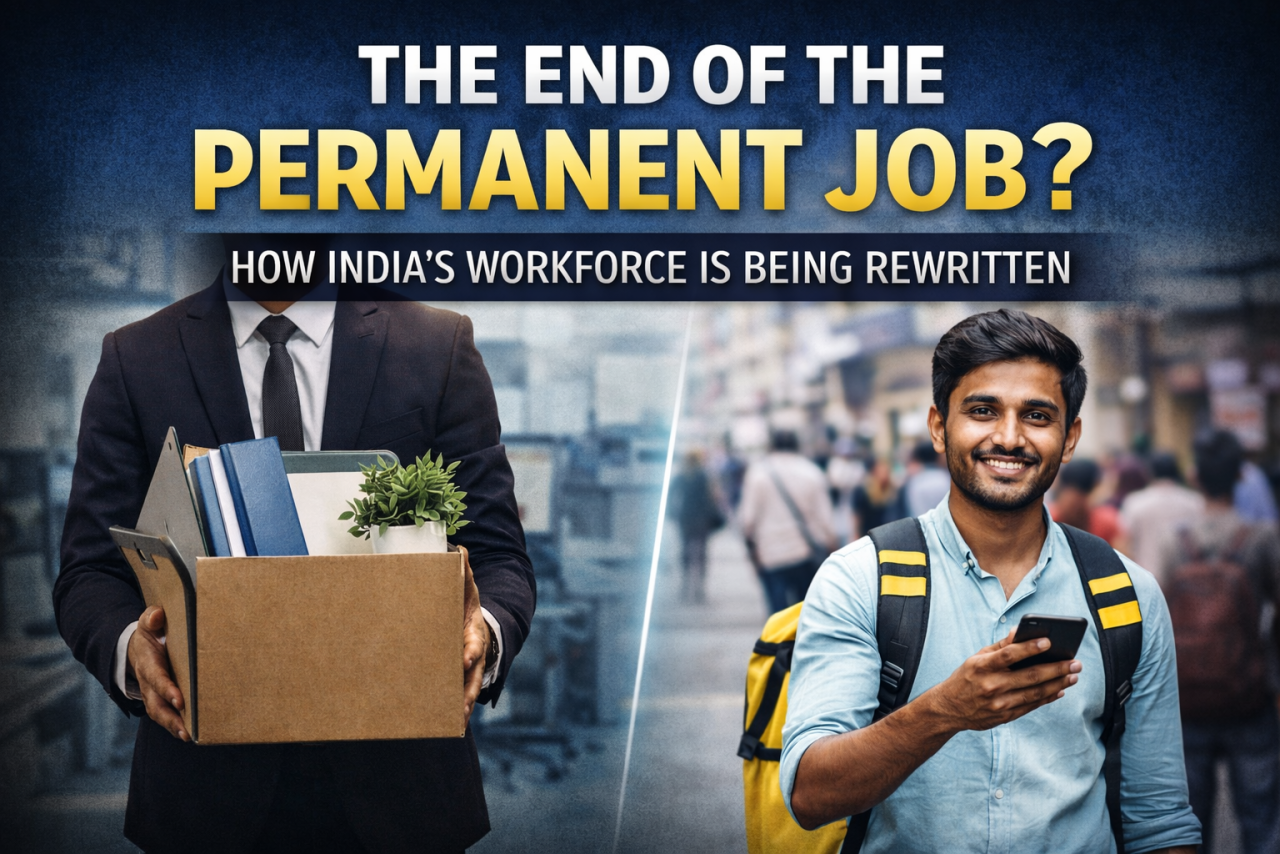
Permanent jobs are no longer the default in India. As companies move toward contract and task-based hiring, the meaning of job security is being quietly redefined.
For much of India’s modern economic history, the promise of a permanent job defined professional success. A stable role with a fixed salary, health benefits, and a predictable career path was seen as the ultimate marker of security. That model, however, is steadily losing relevance. Today’s hiring landscape points to a clear shift away from long-term employment toward short-term, contractual, and task-based work. What was once viewed as supplementary income is now becoming central to how India works.
As the post-festive period gives way to the summer months, recruitment activity has slowed noticeably. Traditionally, the months following the festive season saw companies hiring in preparation for the new financial year. This year, that momentum is largely absent. Hiring continues in sectors such as e-commerce, logistics, banking, and services, but it is mostly limited to replacement hiring. Instead of creating new positions, companies are filling gaps left by employee exits.
This slowdown is closely tied to weak consumer sentiment. With limited fiscal measures to boost disposable income, household spending has remained subdued. When consumption slows, businesses scale back production and expansion plans. In such an environment, committing to permanent employees becomes a calculated risk. Fixed payroll costs, long-term benefits, and compliance obligations make permanent hiring less attractive when demand visibility remains uncertain.
In response, flexible employment models have gained ground. Contractual work, freelancing, and gig-based roles are increasingly filling the space once dominated by permanent jobs. This shift is not confined to major metros. While cities like Bengaluru, Mumbai, and Delhi are seeing cautious hiring, Tier-2 and Tier-3 cities are emerging as important centres for temporary and project-based employment, driven by local demand and cost efficiency.
Seasonal business cycles play a key role in this transition. Industries such as consumer durables, beverages, tourism, and logistics experience sharp spikes in demand during specific periods. Hiring permanent staff for these short-lived surges is inefficient. Contractual workers allow companies to expand and contract their workforce in line with market needs, keeping costs under control.
Regulatory uncertainty has further reinforced this trend. New labour codes and ongoing economic volatility have made employers wary of long-term commitments. Permanent employment brings with it obligations related to severance, benefits, and compliance. Contract hiring, by contrast, offers flexibility and reduces financial exposure in an unpredictable environment.
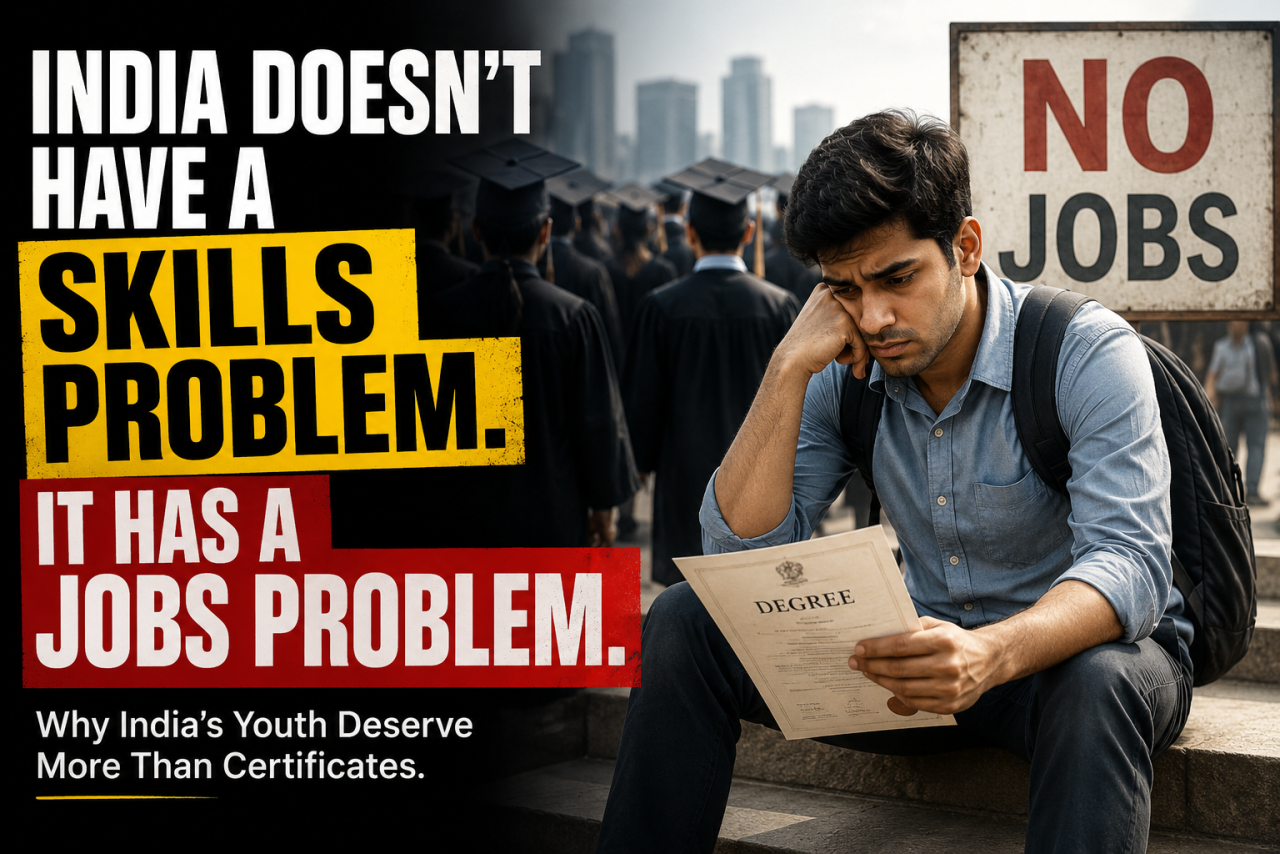
For young job seekers, this reality can feel unsettling. The security enjoyed by earlier generations appears increasingly out of reach. Yet this transformation also signals a deeper shift from a tenure-based employment system to a skill-driven economy. In this model, job stability depends less on staying with one employer and more on the ability to offer relevant, in-demand skills.
For professionals with specialised expertise—such as designers, software developers, data analysts, consultants, and logistics specialists—the task-based economy can offer greater autonomy and, in some cases, higher earnings. Multiple short-term assignments reduce dependence on a single employer and open up diverse income streams.
However, the challenges are significant. Contract and gig roles often lack health insurance, paid leave, and retirement benefits. Income uncertainty and limited social security pose long-term risks, especially for workers with fewer skills or weaker bargaining power. As flexible work becomes mainstream, the absence of protective frameworks is becoming harder to ignore.
Current trends suggest that a strong revival of permanent hiring is unlikely in the near term. Over the coming months, companies are expected to continue favouring contractual arrangements while waiting for clearer signals of sustained consumer demand. This points to a structural change rather than a temporary slowdown.
For India’s workforce, the message is increasingly clear. The era of the “job for life” is fading. Adaptability, continuous skill development, and flexibility are no longer optional. As the employment landscape is rewritten, success will depend not on holding a permanent title, but on staying relevant in a rapidly evolving economy.

























Leave a Comment