
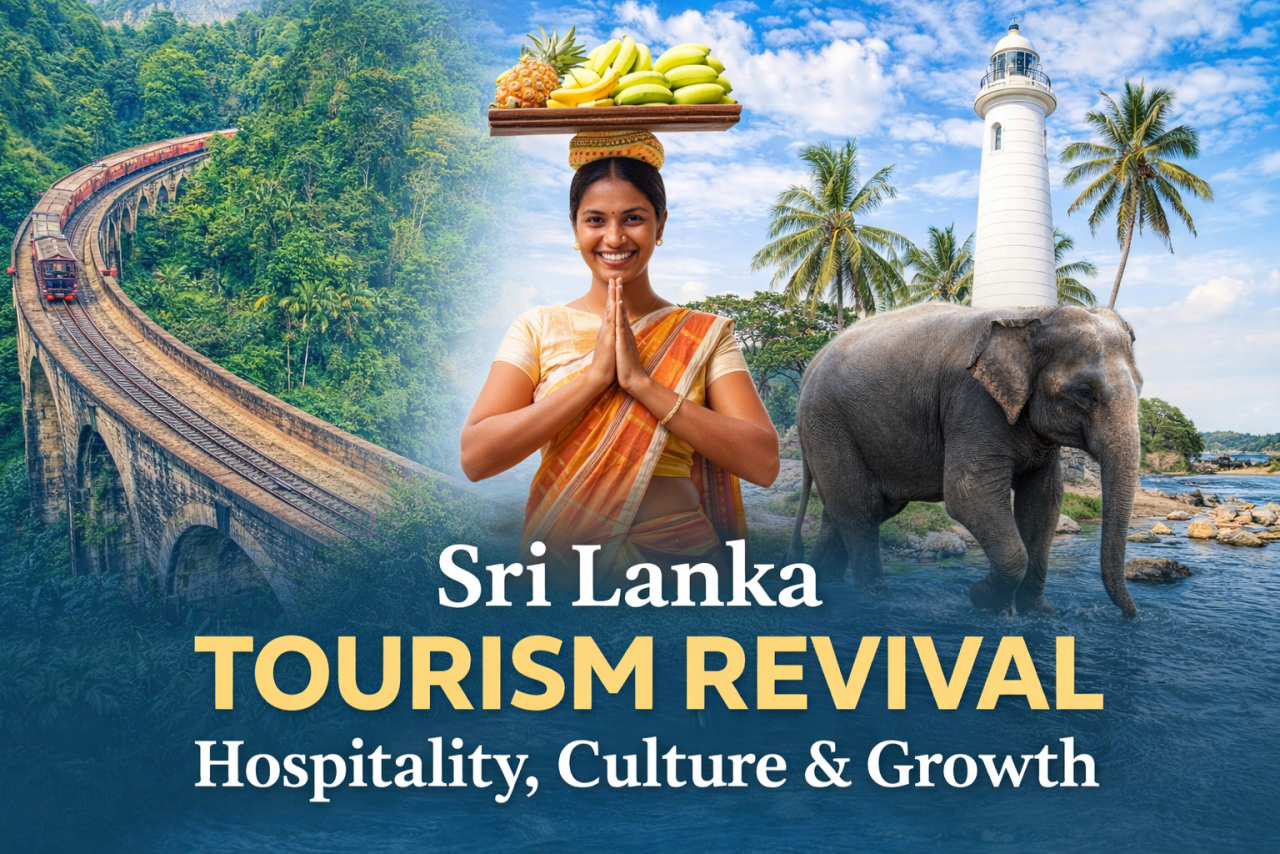
When an economy falters, recovery often begins with restoring confidence. In Sri Lanka’s case, tourism has become the proving ground for that renewal.
Iconic landscapes capture attention, but they do not by themselves explain the structural revival of Sri Lanka’s tourism sector. The island’s beaches, tea estates and ancient temples have long defined its global image. The recent rise in visitor numbers reflects deeper economic adjustments and deliberate policy direction rather than scenic appeal alone.
After a period of acute financial distress, Sri Lanka faced depleted foreign reserves, inflationary pressure and declining investor confidence. Tourism moved from being an important industry to becoming an economic necessity. Every international arrival contributes foreign exchange earnings, supports employment and sustains a chain of allied sectors including transport, hospitality, food services and handicrafts.
The recovery has been supported by administrative measures designed to rebuild credibility. Visa processes have been streamlined, regional air connectivity strengthened and targeted outreach undertaken in key markets. India has emerged as a significant source of arrivals, aided by geographic proximity and cultural familiarity. For Indian travellers, Sri Lanka offers international travel within short flying time and manageable cost.
Service delivery across the hospitality sector has reinforced this momentum. Hotels, resorts and boutique properties display operational discipline and consistent standards. Staff training, guest engagement and attention to detail indicate an awareness that long-term recovery depends on reputation and repeat visits. Tourism growth under current conditions is tied closely to trust.
Cultural factors also shape the visitor experience. Traditions of welcoming guests with respect remain embedded in social practice, and that ethos extends into professional hospitality. Visitors frequently encounter interactions that feel structured yet personal. This blend of efficiency and warmth strengthens the country’s competitive position within South Asia.
Geography provides an additional structural advantage. Sri Lanka concentrates diverse experiences within a compact territory. Wildlife reserves such as Yala, the tea-growing highlands, historic centres like Anuradhapura and Polonnaruwa, and coastal leisure destinations can be combined within a short itinerary. Travel time between circuits remains manageable, which increases value for short-duration visitors and reduces logistical strain.
Infrastructure development has supported this integration. Road networks linking major tourism corridors have improved over time, and heritage sites generally show signs of administrative oversight. Public spaces in key destinations retain accessibility without excessive congestion. The overall environment appeals to travellers seeking both convenience and relative calm.
Perception management has also played a role in the revival. During the height of economic turmoil, international coverage focused on shortages and instability. As macroeconomic conditions stabilised, communication strategies shifted toward reassurance and operational readiness. The message emphasised continuity and openness. Restoring confidence became as critical as attracting new interest.
Sustainability remains central to long-term success. Tourism generates essential foreign exchange, though concentration in a single sector carries inherent risk. Global travel patterns are influenced by health events, geopolitical shifts and climate-related disruptions. Strategic planning will need to prioritise environmental safeguards, diversification and quality control to prevent vulnerability.
Current indicators nevertheless suggest measured progress. Visitor inflows are rising, and private sector participation appears steady. The recovery does not represent a simple return to earlier conditions; it reflects recalibration in governance, service standards and market positioning.
For travellers, Sri Lanka offers international exposure within an intimate scale. For the country, tourism functions as a stabilising economic instrument and a symbol of resilience. The island’s trajectory underscores a broader lesson in recovery economics: sustainable growth depends less on spectacle and more on credibility, coordination and consistency.
Sri Lanka’s tourism revival is therefore not a product of imagery alone. It is the outcome of structural adaptation, cultural continuity and strategic engagement with regional markets. The island’s next phase will depend on maintaining that balance with discipline and foresight.
















Leave a Comment