
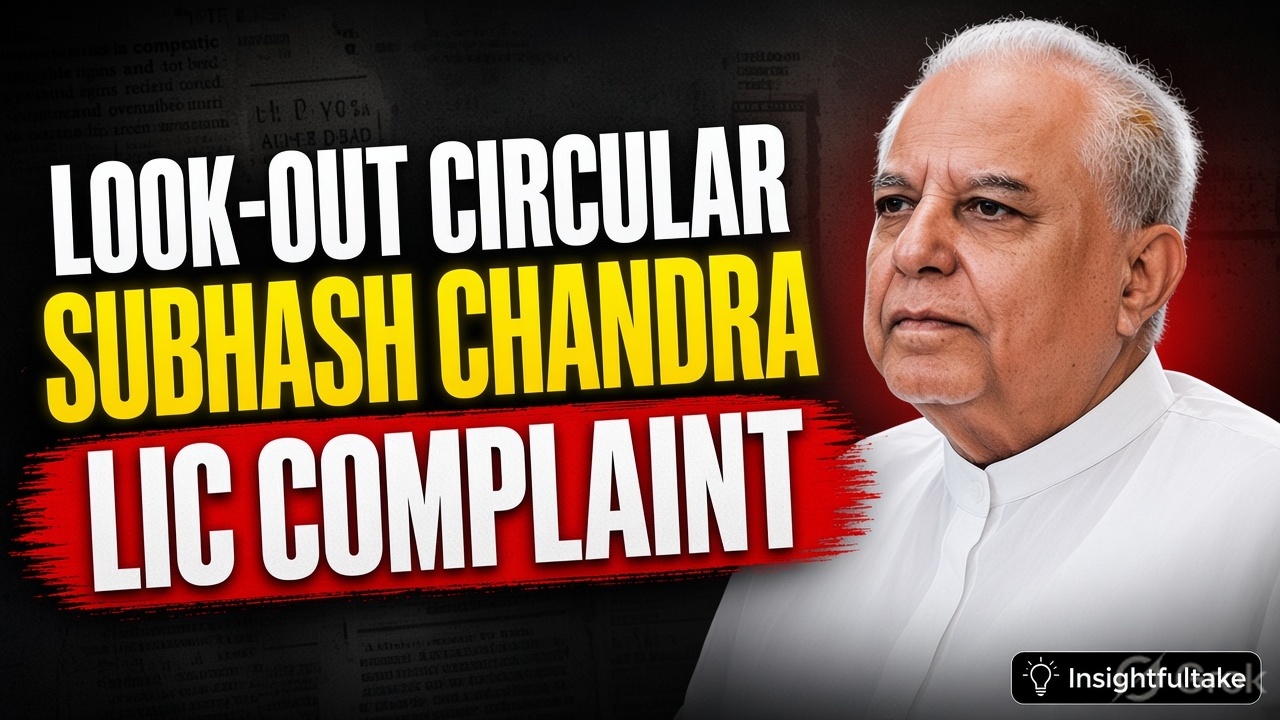
A ₹1,322 crore loss linked to alleged false net-worth declarations raises a question far bigger than one businessman: when corporate lending goes wrong, who ultimately pays the price?
The Central Bureau of Investigation has booked Essel Group chairperson and Zee founder Subhash Chandra for allegedly misleading LIC Housing Finance Limited (LICHFL) about his net worth while standing as personal guarantor for two corporate loans. Both loans defaulted, leaving the public-sector lender facing a reported loss of ₹1,322 crore. A look-out circular has been issued to prevent Chandra from leaving the country, while the Enforcement Directorate is examining the matter separately.
On paper, this may look like another corporate fraud case. In reality, it opens a much bigger question about how large loans are sanctioned, how promoter guarantees are assessed, and who ultimately bears the cost when those assurances collapse.
The Numbers That Do Not Add Up
According to the FIR filed on August 31, Vasant Sagar Properties Private Limited received a ₹500 crore loan facility backed by Chandra's personal guarantee. The certificate submitted by him reportedly put his net worth, as of March 2017, at ₹59,113 crore.
A year later, in connection with a separate ₹480 crore loan to Digital Subscriber Management and Consultancy Services, his certified net worth was stated at ₹40,562 crore.
The numbers became dramatically different during subsequent insolvency proceedings.
By the time his companies entered insolvency, Chandra told the tribunal that his net worth in 2024 was ₹31.79 crore. He also maintained that his net worth had never exceeded ₹40,000 crore in 2017-18.
That is not a minor accounting discrepancy. It is a difference running into tens of thousands of crores between figures allegedly declared to secure loans and figures subsequently presented before a tribunal.
The CBI has accused Chandra and his associates of conspiring to defraud LICHFL through the alleged misrepresentation. Whether those allegations ultimately stand will be determined through due legal process. But the enormous discrepancy itself demands scrutiny.
A Loan Problem That Does Not Stay in the Boardroom
There is another reason this case deserves attention.
LIC Housing Finance is not simply a private financial institution taking a commercial gamble with its own capital. It is a subsidiary of Life Insurance Corporation of India, an institution deeply embedded in the financial lives of millions of Indians.
That makes large losses at institutions connected to the public financial system more than a corporate balance-sheet problem.
When a major loan turns sour, the loss does not simply disappear. It has to be accounted for somewhere.
The promoter may face investigation. The lender may pursue recovery. Insolvency proceedings may follow. But the broader financial system ultimately absorbs the consequences through provisions, reduced profitability, higher risk premiums or more cautious lending.
The ordinary policyholder, depositor or investor may never know how much of that risk travelled through the system.
That is the uncomfortable part of India's corporate lending story.
The names change. The mechanism often does not.
A large promoter provides a financial assurance. A substantial loan is sanctioned. The business struggles or collapses. Repayment stops. Years later, investigations and insolvency proceedings begin. By then, the money may have moved through multiple entities, guarantees and transactions, making recovery far more complicated.
The Accountability Gap on Both Sides
It would be easy to make this story entirely about alleged dishonesty by one businessman.
That would also be incomplete.
A ₹500 crore loan cannot reasonably be explained as the product of one certificate.
Large financial institutions have due-diligence procedures, credit committees, risk assessments and mechanisms for verifying the financial strength of guarantors. If a promoter's claimed net worth runs into tens of thousands of crores, the obvious question is not only whether the declaration was truthful.
It is also this:
How was it verified?
If the figures were inaccurate, why were they not detected before such large exposure was created?
And if the institution's internal processes did detect concerns, why was the exposure allowed to continue?
These questions do not absolve a borrower or guarantor of responsibility if wrongdoing is eventually established. They simply recognise that lending is a two-sided process.
A borrower can misrepresent. A lender can fail to verify.
Both deserve scrutiny.
The Insolvency Question
The case becomes even more striking when viewed alongside Chandra's personal insolvency proceedings.
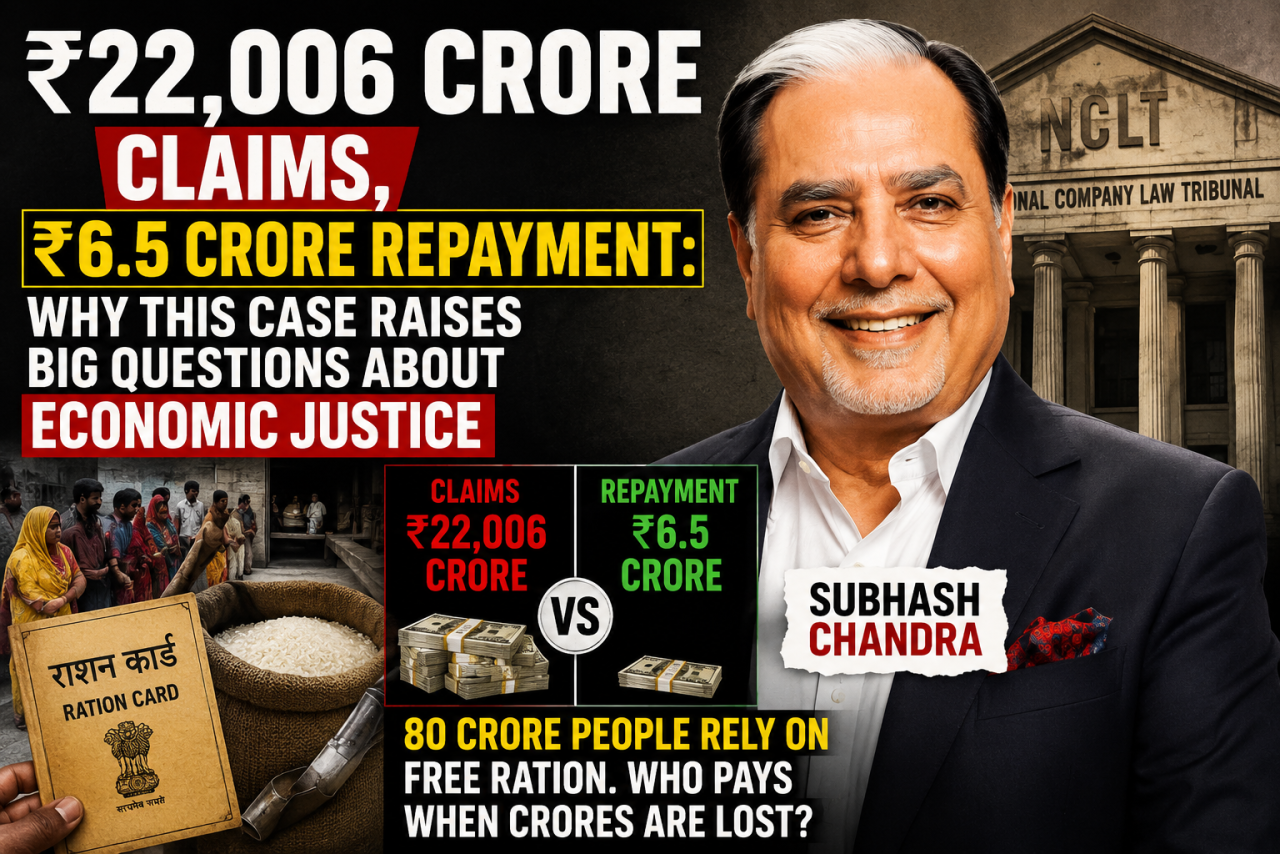
The National Company Law Tribunal approved a repayment plan under which Chandra would settle admitted claims of ₹22,006 crore for ₹6.25 crore. A five-member bench subsequently stayed that order.
The extraordinary gap between the admitted claims and the proposed repayment naturally raises questions about how much creditors can realistically recover once a major promoter enters personal insolvency.
In a video statement responding to the repayment plan, Chandra denied personally borrowing money from lenders, arguing that he had only signed personal guarantees. He also said he intended to work with a friend in Switzerland on investment-related matters.
His position will be tested through the legal process.
But the larger policy question remains.
What does accountability mean when the amount owed is measured in thousands of crores, but the eventual recovery can be a tiny fraction of that figure?
Prevention Matters More Than Post-Facto Action
The CBI investigation is important. So are the actions of the Enforcement Directorate and the insolvency process.
But criminal action after a loss has already crystallised is not the same as preventing the loss in the first place.
India has spent years strengthening its insolvency and banking frameworks. Yet the recurring problem remains recovery.
By the time a major corporate account becomes a legal case, the institution may already be dealing with a substantial hole in its books.
That is why the Chandra case should not end with the question of whether one promoter allegedly misrepresented his wealth.
It should also force a review of how such claims are independently verified, how personal guarantees are valued, how lending decisions are monitored and how quickly institutions respond when warning signs emerge.
The Cost Does Not Always Have a Name
The most important question raised by the Chandra case is ultimately not about Subhash Chandra.
It is about the distance between those who make financial decisions and those who eventually bear their consequences.
A promoter signs a guarantee.
A lender approves a loan.
A company defaults.
Lawyers enter the courtroom.
Investigators begin their work.
Years pass.
But somewhere beneath all of this sits a financial system whose losses must eventually be absorbed.
That cost may not arrive as a bill addressed to an ordinary citizen. It can appear instead through weaker returns, higher borrowing costs, tighter credit or reduced confidence in institutions.
That is why corporate defaults involving public financial institutions deserve scrutiny beyond the boardroom.
The CBI's allegations against Chandra must be tested in court, and he remains entitled to due process. But whatever the final legal outcome, the case exposes a broader weakness in India's financial architecture.
When promoters make promises worth thousands of crores, the system must ensure that those promises are real. Because when they are not, it is rarely only the promoter who pays.
The Central Bureau of Investigation has booked Essel Group chairperson and Zee founder Subhash Chandra for allegedly misleading LIC Housing Finance Limited (LICHFL) about his net worth while standing as personal guarantor for two corporate loans. Both loans defaulted, leaving the public-sector lender facing a reported loss of ₹1,322 crore. A look-out circular has been issued to prevent Chandra from leaving the country, while the Enforcement Directorate is examining the matter separately.
On paper, this may look like another corporate fraud case. In reality, it opens a much bigger question about how large loans are sanctioned, how promoter guarantees are assessed, and who ultimately bears the cost when those assurances collapse.
The Numbers That Do Not Add Up
According to the FIR filed on August 31, Vasant Sagar Properties Private Limited received a ₹500 crore loan facility backed by Chandra's personal guarantee. The certificate submitted by him reportedly put his net worth, as of March 2017, at ₹59,113 crore.
A year later, in connection with a separate ₹480 crore loan to Digital Subscriber Management and Consultancy Services, his certified net worth was stated at ₹40,562 crore.
The numbers became dramatically different during subsequent insolvency proceedings.
By the time his companies entered insolvency, Chandra told the tribunal that his net worth in 2024 was ₹31.79 crore. He also maintained that his net worth had never exceeded ₹40,000 crore in 2017-18.
That is not a minor accounting discrepancy. It is a difference running into tens of thousands of crores between figures allegedly declared to secure loans and figures subsequently presented before a tribunal.
The CBI has accused Chandra and his associates of conspiring to defraud LICHFL through the alleged misrepresentation. Whether those allegations ultimately stand will be determined through due legal process. But the enormous discrepancy itself demands scrutiny.
A Loan Problem That Does Not Stay in the Boardroom
There is another reason this case deserves attention.
LIC Housing Finance is not simply a private financial institution taking a commercial gamble with its own capital. It is a subsidiary of Life Insurance Corporation of India, an institution deeply embedded in the financial lives of millions of Indians.
That makes large losses at institutions connected to the public financial system more than a corporate balance-sheet problem.
When a major loan turns sour, the loss does not simply disappear. It has to be accounted for somewhere.
The promoter may face investigation. The lender may pursue recovery. Insolvency proceedings may follow. But the broader financial system ultimately absorbs the consequences through provisions, reduced profitability, higher risk premiums or more cautious lending.
The ordinary policyholder, depositor or investor may never know how much of that risk travelled through the system.
That is the uncomfortable part of India's corporate lending story.
The names change. The mechanism often does not.
A large promoter provides a financial assurance. A substantial loan is sanctioned. The business struggles or collapses. Repayment stops. Years later, investigations and insolvency proceedings begin. By then, the money may have moved through multiple entities, guarantees and transactions, making recovery far more complicated.
The Accountability Gap on Both Sides
It would be easy to make this story entirely about alleged dishonesty by one businessman.
That would also be incomplete.
A ₹500 crore loan cannot reasonably be explained as the product of one certificate.
Large financial institutions have due-diligence procedures, credit committees, risk assessments and mechanisms for verifying the financial strength of guarantors. If a promoter's claimed net worth runs into tens of thousands of crores, the obvious question is not only whether the declaration was truthful.
It is also this:
How was it verified?
If the figures were inaccurate, why were they not detected before such large exposure was created?
And if the institution's internal processes did detect concerns, why was the exposure allowed to continue?
These questions do not absolve a borrower or guarantor of responsibility if wrongdoing is eventually established. They simply recognise that lending is a two-sided process.
A borrower can misrepresent. A lender can fail to verify.
Both deserve scrutiny.
The Insolvency Question
The case becomes even more striking when viewed alongside Chandra's personal insolvency proceedings.
The National Company Law Tribunal approved a repayment plan under which Chandra would settle admitted claims of ₹22,006 crore for ₹6.25 crore. A five-member bench subsequently stayed that order.
The extraordinary gap between the admitted claims and the proposed repayment naturally raises questions about how much creditors can realistically recover once a major promoter enters personal insolvency.
In a video statement responding to the repayment plan, Chandra denied personally borrowing money from lenders, arguing that he had only signed personal guarantees. He also said he intended to work with a friend in Switzerland on investment-related matters.
His position will be tested through the legal process.
But the larger policy question remains.
What does accountability mean when the amount owed is measured in thousands of crores, but the eventual recovery can be a tiny fraction of that figure?
Prevention Matters More Than Post-Facto Action
The CBI investigation is important. So are the actions of the Enforcement Directorate and the insolvency process.
But criminal action after a loss has already crystallised is not the same as preventing the loss in the first place.
India has spent years strengthening its insolvency and banking frameworks. Yet the recurring problem remains recovery.
By the time a major corporate account becomes a legal case, the institution may already be dealing with a substantial hole in its books.
That is why the Chandra case should not end with the question of whether one promoter allegedly misrepresented his wealth.
It should also force a review of how such claims are independently verified, how personal guarantees are valued, how lending decisions are monitored and how quickly institutions respond when warning signs emerge.
The Cost Does Not Always Have a Name
The most important question raised by the Chandra case is ultimately not about Subhash Chandra.
It is about the distance between those who make financial decisions and those who eventually bear their consequences.
A promoter signs a guarantee.
A lender approves a loan.
A company defaults.
Lawyers enter the courtroom.
Investigators begin their work.
Years pass.
But somewhere beneath all of this sits a financial system whose losses must eventually be absorbed.
That cost may not arrive as a bill addressed to an ordinary citizen. It can appear instead through weaker returns, higher borrowing costs, tighter credit or reduced confidence in institutions.
That is why corporate defaults involving public financial institutions deserve scrutiny beyond the boardroom.
The CBI's allegations against Chandra must be tested in court, and he remains entitled to due process. But whatever the final legal outcome, the case exposes a broader weakness in India's financial architecture.
When promoters make promises worth thousands of crores, the system must ensure that those promises are real. Because when they are not, it is rarely only the promoter who pays.






















Leave a Comment