
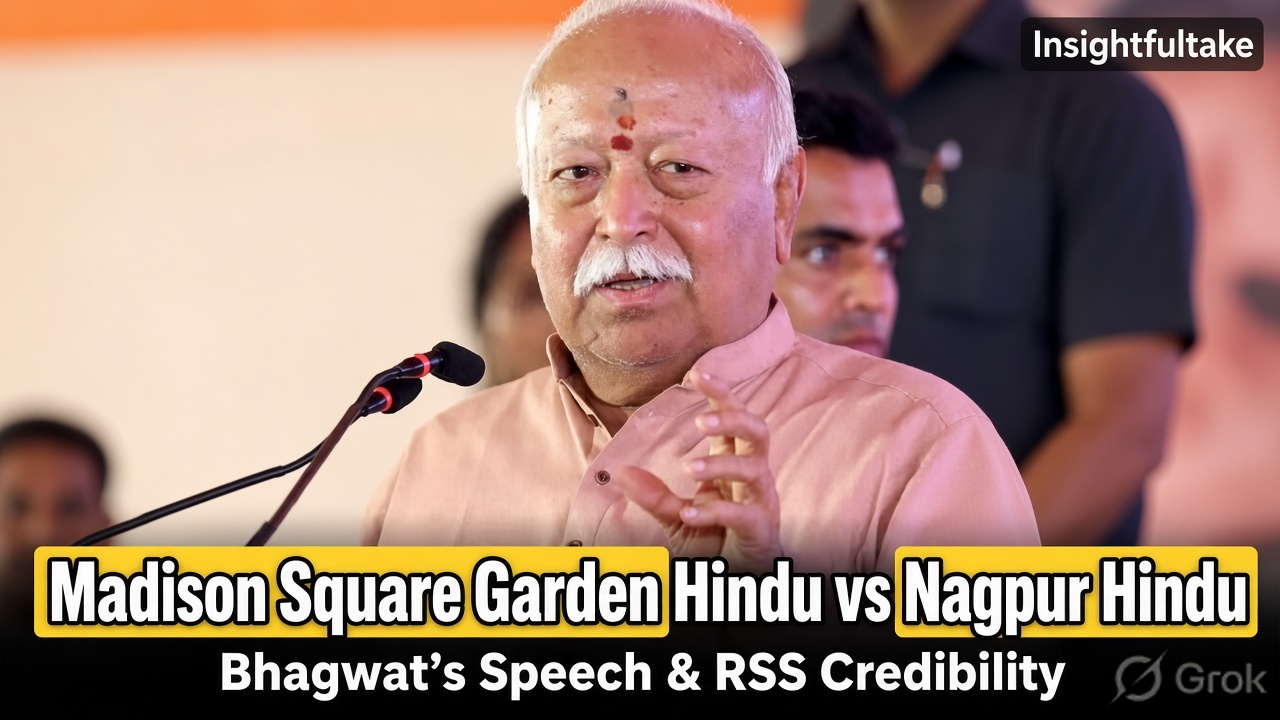
Can one speech in New York erase years of silence in Nagpur?
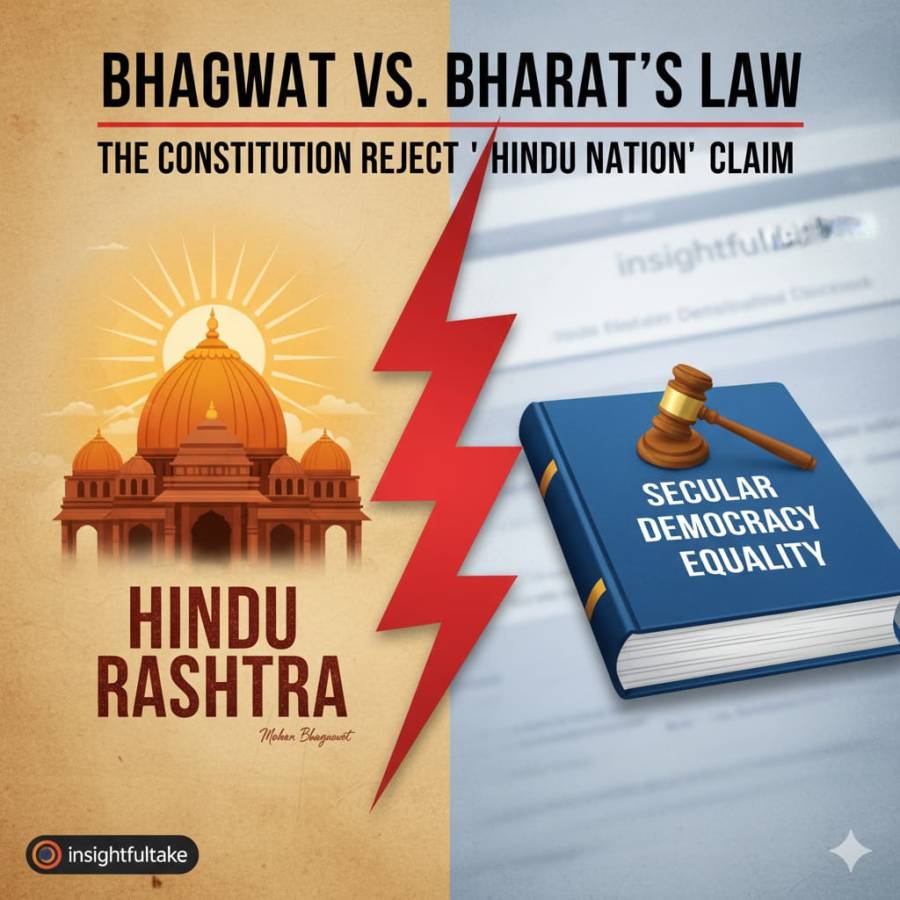
When RSS chief Mohan Bhagwat stood at Madison Square Garden on August 29 and told a packed hall that "a Hindu who believes there should be no Muslims in India would cease to be Hindu," the line travelled fast. Clips went viral. Some Muslim community leaders in attendance welcomed it. Congress MP Kapil Sibal, however, asked the question that mattered more than the applause: do these words match the RSS's actions back home?
That single question is the real story here, and it deserves more than a passing mention.
A speech built for an audience, not a country
Every speaker adjusts language to the room they are in. That is normal. But there is a difference between adjusting tone and reversing substance. In New York, Bhagwat spoke of "oneness," of humanity binding all faiths together, of India's civilisational duty to shelter everyone regardless of religion. It was warm, constitutional, and, frankly, exactly what the Preamble of India already promises every citizen.
The trouble is that this vocabulary rarely survives the flight back to Delhi. In India, the RSS's ideological ecosystem — the parivar of organisations loosely or directly linked to it — has spent years normalising a very different conversation: love jihad, population conspiracy theories, bulldozer justice aimed disproportionately at one community, and election-season rhetoric that treats Muslim citizens as a problem to be managed rather than neighbours to be counted. None of that vanished because of one speech in Manhattan.
Why the "few bad apples" defence doesn't hold
A common response from RSS sympathisers is that fringe elements say fringe things, and the leadership should not be blamed for every local leader's loose talk. That argument would carry more weight if the leadership spoke up as quickly against hate speech as it does against "misrepresentation" of Hindutva abroad. Silence is not neutral. When a Sanghchalak stays quiet for weeks after an inflammatory remark by a minister or a state party functionary, and then delivers a flawless message of unity to an international audience protected by distance and applause, the silence itself becomes the message people at home receive.
This is not a new observation, incidentally. Commentators have long noted Bhagwat's pattern of dropping "inclusive" lines — at Vijayadashami speeches, at conclaves, in outreach to Muslim intellectuals — only for the ground-level machinery of the Sangh Parivar to carry on as before. If anything, New York simply moved the pattern onto a bigger stage, made larger by protests from groups like Hindus for Human Rights and public criticism from New York's own mayor, who questioned why an organisation with a documented history of majoritarian politics was being given a global platform to rebrand itself.
Two vocabularies, one credibility problem
The uncomfortable truth is that Bhagwat's New York address was not wrong on principle — it was right, almost embarrassingly so, compared to what Indian citizens actually hear from many of his organisation's political offspring through the year. The problem is not the content of the speech. The problem is that a five-minute quote, delivered abroad, cannot function as an alibi for a domestic discourse that treats minority belonging as conditional and constantly up for negotiation.
Real inclusiveness is not proven in a convention hall in New York. It is proven in whether a Muslim family's citizenship is questioned by a minister without consequence, whether hate speech at a religious gathering draws swift condemnation from the RSS headquarters in Nagpur, and whether "belonging" is treated as a settled constitutional fact rather than something minorities must keep re-earning.
Until that consistency exists, every Madison Square Garden speech will remain what it currently is: a beautifully worded press release for an audience that does not have to live with the consequences of the words not being kept.
When RSS chief Mohan Bhagwat stood at Madison Square Garden on August 29 and told a packed hall that "a Hindu who believes there should be no Muslims in India would cease to be Hindu," the line travelled fast. Clips went viral. Some Muslim community leaders in attendance welcomed it. Congress MP Kapil Sibal, however, asked the question that mattered more than the applause: do these words match the RSS's actions back home?
That single question is the real story here, and it deserves more than a passing mention.
A speech built for an audience, not a country
Every speaker adjusts language to the room they are in. That is normal. But there is a difference between adjusting tone and reversing substance. In New York, Bhagwat spoke of "oneness," of humanity binding all faiths together, of India's civilisational duty to shelter everyone regardless of religion. It was warm, constitutional, and, frankly, exactly what the Preamble of India already promises every citizen.
The trouble is that this vocabulary rarely survives the flight back to Delhi. In India, the RSS's ideological ecosystem — the parivar of organisations loosely or directly linked to it — has spent years normalising a very different conversation: love jihad, population conspiracy theories, bulldozer justice aimed disproportionately at one community, and election-season rhetoric that treats Muslim citizens as a problem to be managed rather than neighbours to be counted. None of that vanished because of one speech in Manhattan.
Why the "few bad apples" defence doesn't hold
A common response from RSS sympathisers is that fringe elements say fringe things, and the leadership should not be blamed for every local leader's loose talk. That argument would carry more weight if the leadership spoke up as quickly against hate speech as it does against "misrepresentation" of Hindutva abroad. Silence is not neutral. When a Sanghchalak stays quiet for weeks after an inflammatory remark by a minister or a state party functionary, and then delivers a flawless message of unity to an international audience protected by distance and applause, the silence itself becomes the message people at home receive.
This is not a new observation, incidentally. Commentators have long noted Bhagwat's pattern of dropping "inclusive" lines — at Vijayadashami speeches, at conclaves, in outreach to Muslim intellectuals — only for the ground-level machinery of the Sangh Parivar to carry on as before. If anything, New York simply moved the pattern onto a bigger stage, made larger by protests from groups like Hindus for Human Rights and public criticism from New York's own mayor, who questioned why an organisation with a documented history of majoritarian politics was being given a global platform to rebrand itself.
Two vocabularies, one credibility problem
The uncomfortable truth is that Bhagwat's New York address was not wrong on principle — it was right, almost embarrassingly so, compared to what Indian citizens actually hear from many of his organisation's political offspring through the year. The problem is not the content of the speech. The problem is that a five-minute quote, delivered abroad, cannot function as an alibi for a domestic discourse that treats minority belonging as conditional and constantly up for negotiation.
Real inclusiveness is not proven in a convention hall in New York. It is proven in whether a Muslim family's citizenship is questioned by a minister without consequence, whether hate speech at a religious gathering draws swift condemnation from the RSS headquarters in Nagpur, and whether "belonging" is treated as a settled constitutional fact rather than something minorities must keep re-earning.
Until that consistency exists, every Madison Square Garden speech will remain what it currently is: a beautifully worded press release for an audience that does not have to live with the consequences of the words not being kept.















Leave a Comment