
In a world that rewards appearances over honesty, being genuine takes courage. The real cost of pretending may be losing touch with who we are.
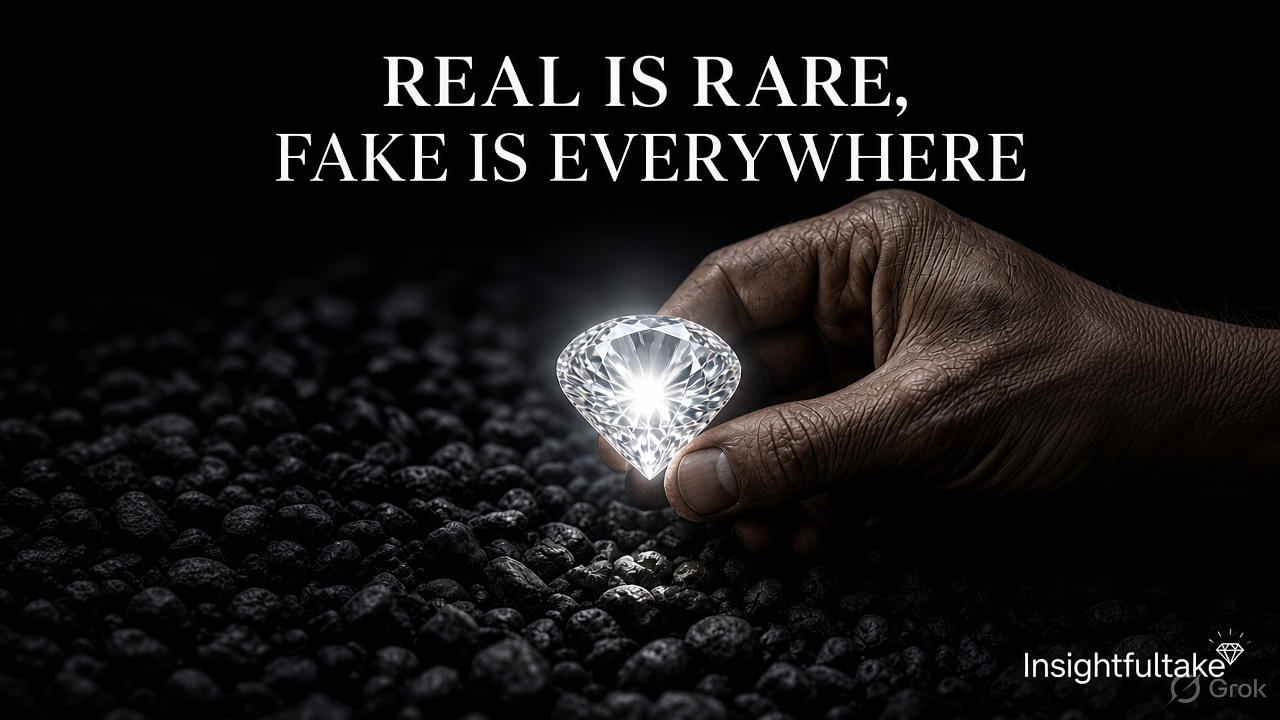
We live in a time when almost everything can be copied. Smiles are practised in mirrors before they appear on screens. Conversations are rehearsed for effect. Achievements are presented for maximum impact. Even kindness is sometimes measured by how well it photographs. In this environment, the statement “Real is rare, fake is everywhere” no longer sounds like a clever observation. It feels like a quiet warning about the way we live.
Most of us know what this means. We feel it when a compliment comes with an agenda. We notice it when a friendship requires constant performance to survive. We see it at work when the polished version of a person receives more appreciation than the honest one. Fakeness is not always malicious. Often, it is simply easier. It travels faster, attracts attention and demands less of us. Being real requires presence, courage and a willingness to be seen without a filter. Perhaps that is why it has become so rare.
Yet scarcity does not mean impossibility. Authenticity has not disappeared from human life. It has simply become quieter. It lives in the friend who tells you an uncomfortable truth but does not abandon you afterward. It appears in work done well for its own sake, rather than for applause. It exists in those moments when someone sits beside you in silence instead of rushing to offer solutions.
Such moments rarely announce themselves. They do not need an audience or public approval. They leave something more lasting behind: the feeling that, for once, nothing was being pretended.
The deeper problem is not that the world produces too much artificiality. It is that we have gradually learned to prefer it. We scroll past the unpolished because it feels less exciting. We avoid difficult conversations because awkwardness makes us uncomfortable. We present improved versions of our lives because the imperfect ones leave us exposed.
Over time, this preference becomes a habit, and the habit begins to shape our character. We start confusing visibility with value, popularity with affection and presentation with truth. Without realising it, we begin to treat authenticity as another personal brand to promote rather than a way of living.
Choosing to be real does not require a dramatic rebellion. It begins with ordinary decisions. It means answering a question honestly when a convenient answer would be easier. It means making time for a relationship that has become quiet instead of constantly searching for something more exciting. It means allowing a piece of work to stand on its own merits rather than endlessly adjusting it to win approval.
These choices may appear insignificant to others. Yet they help rebuild something essential: our ability to trust our own judgement and live without constantly seeking validation.
Being real comes at a cost. It may make you less popular, less impressive on paper or less attractive to people who value appearances above substance. Some relationships may weaken when you stop playing the role others expect you to play. Certain opportunities may pass you by because you refuse to present yourself as someone you are not.
But there is a greater cost to pretending for too long. When we spend our lives surrounded by manufactured images and carefully managed impressions, we gradually lose the ability to recognise what is genuine, even within ourselves. We begin to doubt our instincts, question other people's sincerity and mistake performance for personality.
Eventually, we may become so accustomed to presenting ourselves that we no longer know where the performance ends and the person begins.
The encouraging truth is that authenticity can inspire others. One person who refuses to pretend can make it easier for another to do the same. An honest conversation can restore trust in a relationship. Work created with sincerity rather than constant calculation can remind people that depth still matters.
You do not have to change the world to make a difference. Sometimes, you simply have to stop adding to the noise.
This does not mean rejecting every modern tool, every polished presentation or every carefully crafted public image. There is nothing inherently wrong with technology, ambition or the desire to make a good impression. The important thing is to understand the difference between what is useful and what is true.
A polished surface can attract attention, but it cannot guarantee substance. A carefully chosen image can communicate something about us, but it cannot replace the person we are when nobody is watching. Recognition may bring satisfaction, but it cannot always provide the deeper comfort of knowing that we have acted according to our values.
The real challenge is to use the tools available to us without allowing them to define us.
Real is rare. Fake is everywhere. This is not a reason to despair. It is a reason to become more deliberate about our choices. Every day gives us opportunities to choose the more honest path: to speak without a script, to stay when leaving would be easier, to admit a mistake rather than protect our pride, and to create something meaningful without demanding immediate recognition.
These choices may never make headlines. They may not attract thousands of likes or become the subject of public admiration. Their value lies elsewhere. They allow us to build lives that feel genuinely our own.
In a world where artificiality is effortless and appearances often receive the greatest rewards, being real becomes an act of quiet courage. It is not always glamorous, and it is not always rewarded. It demands patience, honesty and the willingness to accept that not everyone will understand us.
But authenticity offers something that imitation cannot. It allows us to form relationships without constant performance, pursue meaningful work without living for applause, and face ourselves without needing to maintain an illusion.
The world may continue to reward the fake. We cannot always change what it values. We can, however, decide what we value in ourselves and in others.
Being real may not make life easier. It can make life more honest, more meaningful and more truly our own. And in a world full of things designed to look genuine, that is a quality worth protecting.
We live in a time when almost everything can be copied. Smiles are practised in mirrors before they appear on screens. Conversations are rehearsed for effect. Achievements are presented for maximum impact. Even kindness is sometimes measured by how well it photographs. In this environment, the statement “Real is rare, fake is everywhere” no longer sounds like a clever observation. It feels like a quiet warning about the way we live.
Most of us know what this means. We feel it when a compliment comes with an agenda. We notice it when a friendship requires constant performance to survive. We see it at work when the polished version of a person receives more appreciation than the honest one. Fakeness is not always malicious. Often, it is simply easier. It travels faster, attracts attention and demands less of us. Being real requires presence, courage and a willingness to be seen without a filter. Perhaps that is why it has become so rare.
Yet scarcity does not mean impossibility. Authenticity has not disappeared from human life. It has simply become quieter. It lives in the friend who tells you an uncomfortable truth but does not abandon you afterward. It appears in work done well for its own sake, rather than for applause. It exists in those moments when someone sits beside you in silence instead of rushing to offer solutions.
Such moments rarely announce themselves. They do not need an audience or public approval. They leave something more lasting behind: the feeling that, for once, nothing was being pretended.
The deeper problem is not that the world produces too much artificiality. It is that we have gradually learned to prefer it. We scroll past the unpolished because it feels less exciting. We avoid difficult conversations because awkwardness makes us uncomfortable. We present improved versions of our lives because the imperfect ones leave us exposed.
Over time, this preference becomes a habit, and the habit begins to shape our character. We start confusing visibility with value, popularity with affection and presentation with truth. Without realising it, we begin to treat authenticity as another personal brand to promote rather than a way of living.
Choosing to be real does not require a dramatic rebellion. It begins with ordinary decisions. It means answering a question honestly when a convenient answer would be easier. It means making time for a relationship that has become quiet instead of constantly searching for something more exciting. It means allowing a piece of work to stand on its own merits rather than endlessly adjusting it to win approval.
These choices may appear insignificant to others. Yet they help rebuild something essential: our ability to trust our own judgement and live without constantly seeking validation.
Being real comes at a cost. It may make you less popular, less impressive on paper or less attractive to people who value appearances above substance. Some relationships may weaken when you stop playing the role others expect you to play. Certain opportunities may pass you by because you refuse to present yourself as someone you are not.
But there is a greater cost to pretending for too long. When we spend our lives surrounded by manufactured images and carefully managed impressions, we gradually lose the ability to recognise what is genuine, even within ourselves. We begin to doubt our instincts, question other people's sincerity and mistake performance for personality.
Eventually, we may become so accustomed to presenting ourselves that we no longer know where the performance ends and the person begins.
The encouraging truth is that authenticity can inspire others. One person who refuses to pretend can make it easier for another to do the same. An honest conversation can restore trust in a relationship. Work created with sincerity rather than constant calculation can remind people that depth still matters.
You do not have to change the world to make a difference. Sometimes, you simply have to stop adding to the noise.
This does not mean rejecting every modern tool, every polished presentation or every carefully crafted public image. There is nothing inherently wrong with technology, ambition or the desire to make a good impression. The important thing is to understand the difference between what is useful and what is true.
A polished surface can attract attention, but it cannot guarantee substance. A carefully chosen image can communicate something about us, but it cannot replace the person we are when nobody is watching. Recognition may bring satisfaction, but it cannot always provide the deeper comfort of knowing that we have acted according to our values.
The real challenge is to use the tools available to us without allowing them to define us.
Real is rare. Fake is everywhere. This is not a reason to despair. It is a reason to become more deliberate about our choices. Every day gives us opportunities to choose the more honest path: to speak without a script, to stay when leaving would be easier, to admit a mistake rather than protect our pride, and to create something meaningful without demanding immediate recognition.
These choices may never make headlines. They may not attract thousands of likes or become the subject of public admiration. Their value lies elsewhere. They allow us to build lives that feel genuinely our own.
In a world where artificiality is effortless and appearances often receive the greatest rewards, being real becomes an act of quiet courage. It is not always glamorous, and it is not always rewarded. It demands patience, honesty and the willingness to accept that not everyone will understand us.
But authenticity offers something that imitation cannot. It allows us to form relationships without constant performance, pursue meaningful work without living for applause, and face ourselves without needing to maintain an illusion.
The world may continue to reward the fake. We cannot always change what it values. We can, however, decide what we value in ourselves and in others.
Being real may not make life easier. It can make life more honest, more meaningful and more truly our own. And in a world full of things designed to look genuine, that is a quality worth protecting.









Leave a Comment