
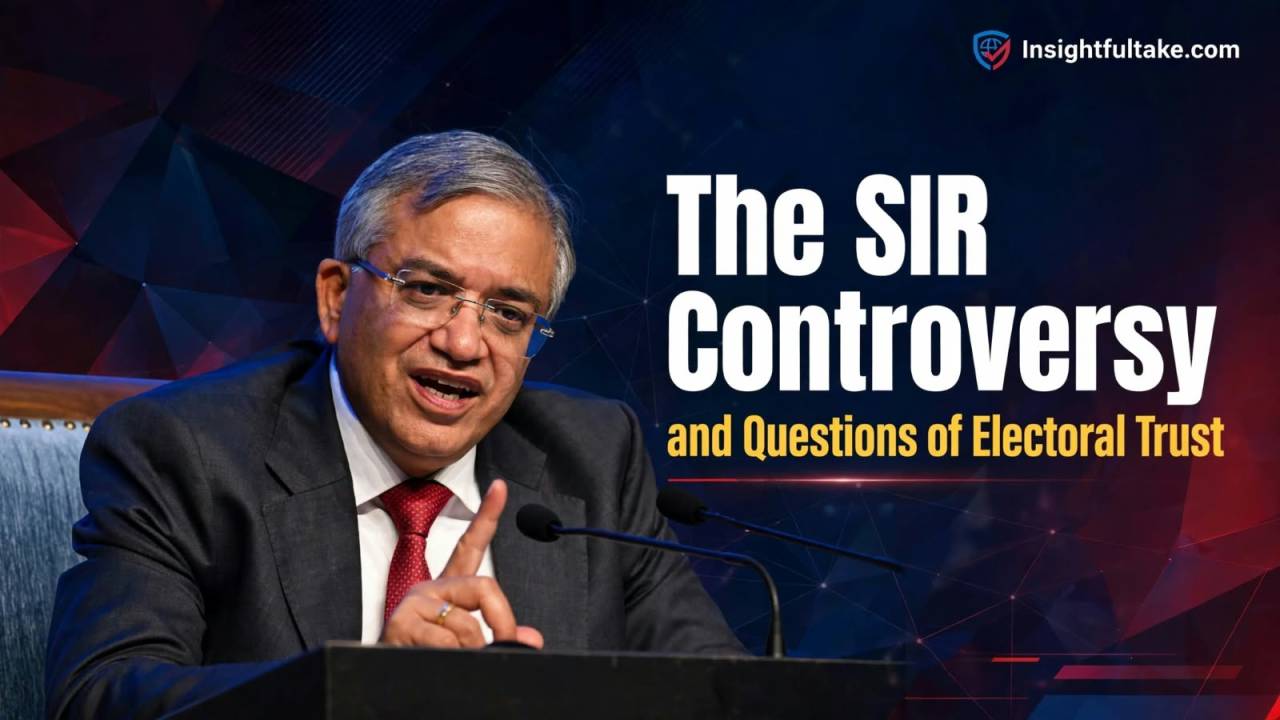
A career built on administrative experience has brought Gyanesh Kumar to the centre of a national debate over voter rights and the independence of India’s Election Commission.
In the corridors of Nirvachan Sadan, where the credibility of the world’s largest democracy is tested through every election, Gyanesh Kumar cuts an unassuming figure. Soft-spoken, methodical and rarely given to public drama, India’s 26th Chief Election Commissioner spent much of his career away from the public spotlight. Since taking office on 19 February 2025, however, he has found himself at the centre of an intense political controversy over the Special Intensive Revision (SIR) of electoral rolls and the larger questions it has raised about the Election Commission’s independence.
Born on 27 January 1964 in Agra, Uttar Pradesh, Kumar’s early life was marked by academic excellence. He topped the Uttar Pradesh Board examinations in both high school in 1979 and intermediate in 1981. After studying in Gorakhpur, Lucknow and Kanpur, he secured admission to the Indian Institute of Technology Kanpur, where he earned a B.Tech in Civil Engineering in 1985.
His education extended beyond engineering. He later studied Business Finance at the Institute of Chartered Financial Analysts of India and Environmental Economics at Harvard University’s Institute for International Development. In November 2025, IIT Kanpur recognised his achievements with its Distinguished Alumnus Award, bringing his professional journey back to the institution where it began.
From Kerala’s Administration to the Corridors of Power
Kumar entered the Indian Administrative Service after clearing the civil services examination in 1988. Allotted the Kerala cadre, he spent the formative decades of his career in the state, serving in a range of administrative and managerial positions.
His early assignments included Sub-Collector in Adoor, in Pathanamthitta district, followed by Municipal Commissioner of the Corporation of Cochin, Managing Director of the Kerala State Cooperative Bank and District Collector of Ernakulam. He subsequently held secretarial responsibilities in areas including finance resources, public works, food and civil supplies, and the state’s Modernising Government Programme.
His years in Kerala gave him experience in district administration, urban governance, financial management and public service delivery. He also worked across changing political administrations, including governments led by the Congress and the Left, as part of his responsibilities as a career civil servant.
The experience provided a foundation for his eventual move to the Union government, where his responsibilities would increasingly involve matters of national importance.
Handling Sensitive Files at the Centre
After serving as Resident Commissioner of Kerala House in New Delhi, Kumar moved into central government assignments. He served as Joint Secretary in the Ministry of Defence from 2007 to 2012, followed by positions in the Ministry of Home Affairs as Joint Secretary and Additional Secretary.
His work in the Home Ministry brought him into contact with several consequential developments in Indian politics and governance. These included the administrative aftermath of the abrogation of Article 370 in August 2019, the security transition in Jammu and Kashmir, and the establishment of the Shri Ram Janmabhoomi Teerth Kshetra Trust following the Supreme Court’s Ayodhya verdict.
He later served as Secretary in the Ministry of Parliamentary Affairs and then as Secretary in the Ministry of Cooperation. In the latter role, he worked on reforms concerning multi-state cooperative societies and the development of national-level cooperative institutions.
These assignments placed him at the intersection of administration, legislation and political decision-making. They also brought experience in managing complex government processes, often involving issues with significant public and constitutional implications.
From Retirement to the Election Commission
Kumar retired from the civil service on 31 January 2024 after more than three decades of administrative experience. On 15 March 2024, he was appointed Election Commissioner, joining the institution responsible for overseeing India’s electoral process.
On 19 February 2025, he succeeded Rajiv Kumar as Chief Election Commissioner.
His appointment came under the framework of the Chief Election Commissioner and Other Election Commissioners Act, 2023. The law changed the composition of the selection committee by replacing the Chief Justice of India with a Union Cabinet minister nominated by the Prime Minister, alongside the Prime Minister and the Leader of the Opposition in the Lok Sabha.
The change became a major point of debate over the institutional independence of the Election Commission. Critics argued that the new arrangement increased the government’s influence over appointments, while the government defended the statutory framework.
Kumar’s tenure, scheduled to continue until 26 January 2029, places him in charge of the institution during a period when its decisions are being closely scrutinised by political parties, courts and civil society.
The SIR Controversy and Questions of Electoral Trust
The Special Intensive Revision of electoral rolls has become one of the defining challenges of Kumar’s tenure. Beginning in Bihar and subsequently extending to other states and Union territories, the exercise has triggered an intense debate over how India verifies its voter lists and protects citizens’ right to vote.
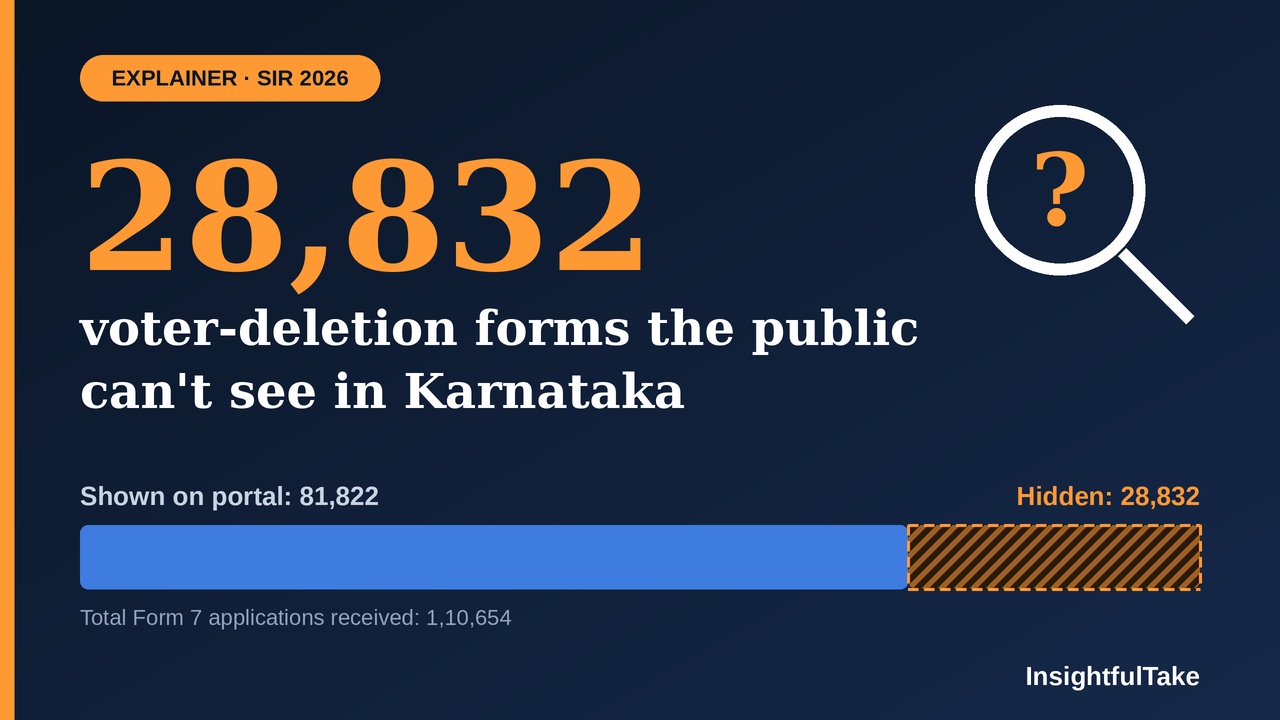
The revision has involved large-scale scrutiny of electoral records, with millions of names reportedly deleted from draft rolls. The Election Commission has defended the exercise as necessary to remove outdated, duplicate and ineligible entries while improving the accuracy of voter lists. It has also undertaken measures to facilitate enrolment for eligible voters whose names are missing.
Opposition parties and civil society groups, however, have raised concerns about the possibility of eligible voters being excluded, the transparency of the process and the adequacy of consultation. The controversy has been particularly significant in Bihar, where electoral registration has long been intertwined with questions of migration, documentation and access to public services.
The larger issue extends beyond the mechanics of updating voter lists. Electoral rolls determine who can participate in the democratic process. Any exercise involving mass deletions therefore requires clear procedures, accessible remedies and safeguards against the exclusion of eligible citizens.
Reports of disagreements within the Election Commission have added to the scrutiny. Allegations that decisions were taken without adequate consensus have prompted further questions about the functioning of the three-member body. Opposition demands for Kumar’s resignation and calls for his removal have also become part of the political debate.
For the Chief Election Commissioner, the challenge is not simply to defend the administrative rationale behind the revision. It is also to demonstrate that the process is transparent, that eligible voters are protected and that complaints can be resolved fairly and promptly.
The Bureaucrat Behind the Constitutional Office
Those familiar with Kumar’s administrative career have described him as a composed officer with a preference for methodical work over public display. His professional background spans engineering, finance, environmental economics, district administration and central policymaking.
Such a career offers one explanation for his reputation as a systems-oriented administrator. In Kerala, he worked across local governance and cooperative institutions. In New Delhi, he handled files involving national security, legislation and institutional reform.
Yet the qualities that serve a bureaucrat well do not automatically settle the demands of a constitutional office. Administrative competence is essential, but the Election Commission must also command public confidence in its neutrality.
The distinction matters because the Commission’s authority rests not only on its legal powers but also on the willingness of citizens and political parties to trust the fairness of the electoral process. Decisions concerning voter registration, election schedules, campaign conduct and the enforcement of electoral rules can have consequences far beyond routine administration.
For Kumar, the central test is therefore whether the Commission can demonstrate impartiality through its decisions, procedures and responses to criticism.
A Legacy Still Being Written
Gyanesh Kumar’s career reflects a familiar path through the Indian administrative system: rigorous education, years of service in a state cadre, increasingly senior assignments in the Union government and eventual elevation to a constitutional office.
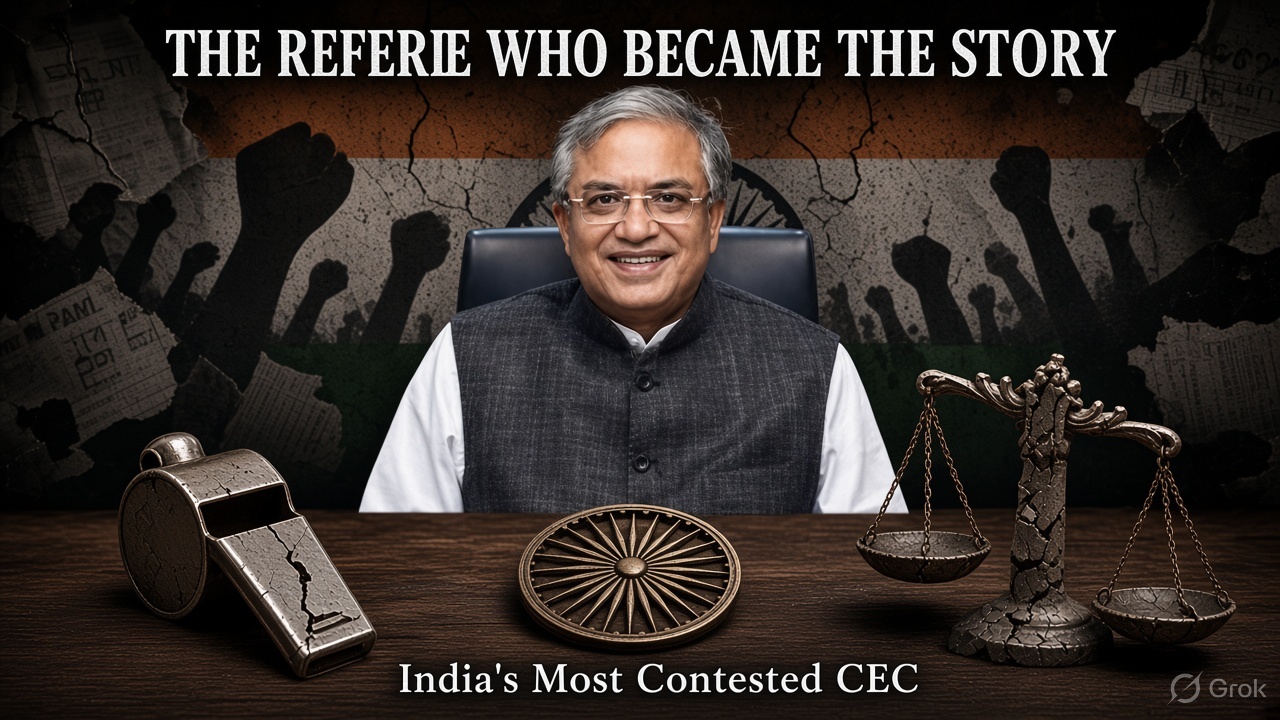
But his tenure as Chief Election Commissioner is unfolding under conditions that make the office particularly demanding. The debate over electoral roll revisions has placed questions of institutional independence, procedural fairness and the right to vote at the centre of national political discussion.
At 62, with several years remaining in his tenure, Kumar has time to shape how the institution responds to these concerns. His legacy will depend not only on the administrative outcomes of the SIR exercise but also on whether the Election Commission can establish that every eligible citizen has a fair opportunity to vote.
He may have entered public life as an engineer and built his career as a civil servant. Today, his most consequential responsibility is to safeguard confidence in the democratic process.
Whether history remembers him as an administrator who strengthened electoral rolls or as a Chief Election Commissioner whose tenure intensified concerns about institutional trust remains an open question. The answer will depend on the decisions made under his leadership and on the confidence those decisions inspire among the people whose votes give Indian democracy its legitimacy.
In the corridors of Nirvachan Sadan, where the credibility of the world’s largest democracy is tested through every election, Gyanesh Kumar cuts an unassuming figure. Soft-spoken, methodical and rarely given to public drama, India’s 26th Chief Election Commissioner spent much of his career away from the public spotlight. Since taking office on 19 February 2025, however, he has found himself at the centre of an intense political controversy over the Special Intensive Revision (SIR) of electoral rolls and the larger questions it has raised about the Election Commission’s independence.
Born on 27 January 1964 in Agra, Uttar Pradesh, Kumar’s early life was marked by academic excellence. He topped the Uttar Pradesh Board examinations in both high school in 1979 and intermediate in 1981. After studying in Gorakhpur, Lucknow and Kanpur, he secured admission to the Indian Institute of Technology Kanpur, where he earned a B.Tech in Civil Engineering in 1985.
His education extended beyond engineering. He later studied Business Finance at the Institute of Chartered Financial Analysts of India and Environmental Economics at Harvard University’s Institute for International Development. In November 2025, IIT Kanpur recognised his achievements with its Distinguished Alumnus Award, bringing his professional journey back to the institution where it began.
From Kerala’s Administration to the Corridors of Power
Kumar entered the Indian Administrative Service after clearing the civil services examination in 1988. Allotted the Kerala cadre, he spent the formative decades of his career in the state, serving in a range of administrative and managerial positions.
His early assignments included Sub-Collector in Adoor, in Pathanamthitta district, followed by Municipal Commissioner of the Corporation of Cochin, Managing Director of the Kerala State Cooperative Bank and District Collector of Ernakulam. He subsequently held secretarial responsibilities in areas including finance resources, public works, food and civil supplies, and the state’s Modernising Government Programme.
His years in Kerala gave him experience in district administration, urban governance, financial management and public service delivery. He also worked across changing political administrations, including governments led by the Congress and the Left, as part of his responsibilities as a career civil servant.
The experience provided a foundation for his eventual move to the Union government, where his responsibilities would increasingly involve matters of national importance.
Handling Sensitive Files at the Centre
After serving as Resident Commissioner of Kerala House in New Delhi, Kumar moved into central government assignments. He served as Joint Secretary in the Ministry of Defence from 2007 to 2012, followed by positions in the Ministry of Home Affairs as Joint Secretary and Additional Secretary.
His work in the Home Ministry brought him into contact with several consequential developments in Indian politics and governance. These included the administrative aftermath of the abrogation of Article 370 in August 2019, the security transition in Jammu and Kashmir, and the establishment of the Shri Ram Janmabhoomi Teerth Kshetra Trust following the Supreme Court’s Ayodhya verdict.
He later served as Secretary in the Ministry of Parliamentary Affairs and then as Secretary in the Ministry of Cooperation. In the latter role, he worked on reforms concerning multi-state cooperative societies and the development of national-level cooperative institutions.
These assignments placed him at the intersection of administration, legislation and political decision-making. They also brought experience in managing complex government processes, often involving issues with significant public and constitutional implications.
From Retirement to the Election Commission
Kumar retired from the civil service on 31 January 2024 after more than three decades of administrative experience. On 15 March 2024, he was appointed Election Commissioner, joining the institution responsible for overseeing India’s electoral process.
On 19 February 2025, he succeeded Rajiv Kumar as Chief Election Commissioner.
His appointment came under the framework of the Chief Election Commissioner and Other Election Commissioners Act, 2023. The law changed the composition of the selection committee by replacing the Chief Justice of India with a Union Cabinet minister nominated by the Prime Minister, alongside the Prime Minister and the Leader of the Opposition in the Lok Sabha.
The change became a major point of debate over the institutional independence of the Election Commission. Critics argued that the new arrangement increased the government’s influence over appointments, while the government defended the statutory framework.
Kumar’s tenure, scheduled to continue until 26 January 2029, places him in charge of the institution during a period when its decisions are being closely scrutinised by political parties, courts and civil society.
The SIR Controversy and Questions of Electoral Trust
The Special Intensive Revision of electoral rolls has become one of the defining challenges of Kumar’s tenure. Beginning in Bihar and subsequently extending to other states and Union territories, the exercise has triggered an intense debate over how India verifies its voter lists and protects citizens’ right to vote.
The revision has involved large-scale scrutiny of electoral records, with millions of names reportedly deleted from draft rolls. The Election Commission has defended the exercise as necessary to remove outdated, duplicate and ineligible entries while improving the accuracy of voter lists. It has also undertaken measures to facilitate enrolment for eligible voters whose names are missing.
Opposition parties and civil society groups, however, have raised concerns about the possibility of eligible voters being excluded, the transparency of the process and the adequacy of consultation. The controversy has been particularly significant in Bihar, where electoral registration has long been intertwined with questions of migration, documentation and access to public services.
The larger issue extends beyond the mechanics of updating voter lists. Electoral rolls determine who can participate in the democratic process. Any exercise involving mass deletions therefore requires clear procedures, accessible remedies and safeguards against the exclusion of eligible citizens.
Reports of disagreements within the Election Commission have added to the scrutiny. Allegations that decisions were taken without adequate consensus have prompted further questions about the functioning of the three-member body. Opposition demands for Kumar’s resignation and calls for his removal have also become part of the political debate.
For the Chief Election Commissioner, the challenge is not simply to defend the administrative rationale behind the revision. It is also to demonstrate that the process is transparent, that eligible voters are protected and that complaints can be resolved fairly and promptly.
The Bureaucrat Behind the Constitutional Office
Those familiar with Kumar’s administrative career have described him as a composed officer with a preference for methodical work over public display. His professional background spans engineering, finance, environmental economics, district administration and central policymaking.
Such a career offers one explanation for his reputation as a systems-oriented administrator. In Kerala, he worked across local governance and cooperative institutions. In New Delhi, he handled files involving national security, legislation and institutional reform.
Yet the qualities that serve a bureaucrat well do not automatically settle the demands of a constitutional office. Administrative competence is essential, but the Election Commission must also command public confidence in its neutrality.
The distinction matters because the Commission’s authority rests not only on its legal powers but also on the willingness of citizens and political parties to trust the fairness of the electoral process. Decisions concerning voter registration, election schedules, campaign conduct and the enforcement of electoral rules can have consequences far beyond routine administration.
For Kumar, the central test is therefore whether the Commission can demonstrate impartiality through its decisions, procedures and responses to criticism.
A Legacy Still Being Written
Gyanesh Kumar’s career reflects a familiar path through the Indian administrative system: rigorous education, years of service in a state cadre, increasingly senior assignments in the Union government and eventual elevation to a constitutional office.
But his tenure as Chief Election Commissioner is unfolding under conditions that make the office particularly demanding. The debate over electoral roll revisions has placed questions of institutional independence, procedural fairness and the right to vote at the centre of national political discussion.
At 62, with several years remaining in his tenure, Kumar has time to shape how the institution responds to these concerns. His legacy will depend not only on the administrative outcomes of the SIR exercise but also on whether the Election Commission can establish that every eligible citizen has a fair opportunity to vote.
He may have entered public life as an engineer and built his career as a civil servant. Today, his most consequential responsibility is to safeguard confidence in the democratic process.
Whether history remembers him as an administrator who strengthened electoral rolls or as a Chief Election Commissioner whose tenure intensified concerns about institutional trust remains an open question. The answer will depend on the decisions made under his leadership and on the confidence those decisions inspire among the people whose votes give Indian democracy its legitimacy.














Leave a Comment