
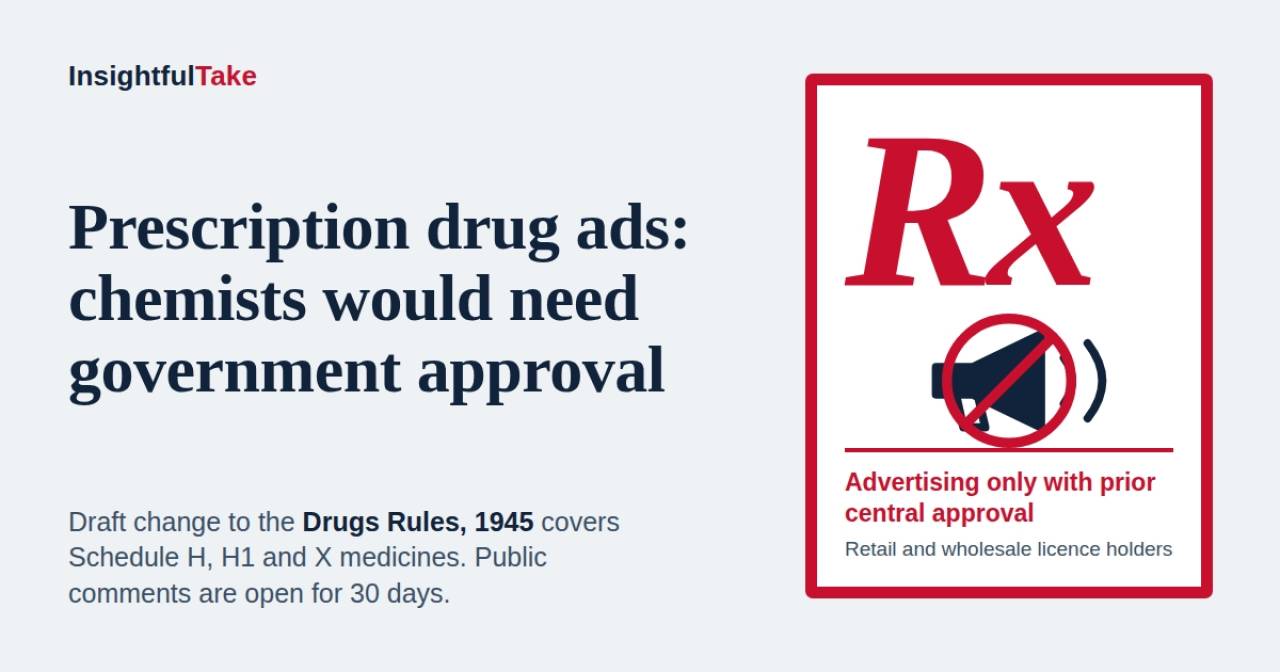
India plans to tighten advertising rules for powerful medicines, targeting chemists, wholesalers and distributors amid concerns over self-medication and antibiotic misuse.
Walking into a chemist shop and buying a tablet without a prescription is common in many parts of India. The Union government now wants to tighten the rules governing how certain prescription medicines are advertised, including by retailers, wholesalers and distributors.
The Union Health Ministry has published a draft amendment to the Drugs Rules, 1945, in the official gazette. It proposes requiring prior approval from the Central Government before licensed sellers can advertise medicines listed under Schedules H, H1 and X.
Stakeholders have 30 days to submit their comments and suggestions. The amendment is still a proposal and will not become law unless it is finalised.
Why Does the Government Want to Tighten the Rules?
Many medicines are intended for use only under medical supervision. Yet easy access, aggressive promotion and the habit of relying on familiar tablets can encourage people to treat themselves without consulting a doctor.
The ministry's proposal aims to strengthen oversight of pharmaceutical sales, discourage unauthorised advertising of prescription medicines and reduce the risks associated with inappropriate self-medication.
The concern extends beyond individual health. Misusing certain medicines, particularly antibiotics, can make infections more difficult to treat and increase the risk of antimicrobial resistance.
What Are Schedules H, H1 and X?
India's Drugs Rules classify medicines into different categories, with specific conditions governing their sale and use. Three categories are central to the proposed amendment.
- Schedule H: Prescription medicines that can be sold only on the prescription of a registered medical practitioner.
- Schedule H1: Certain medicines subject to stricter sale and record-keeping requirements. Pharmacies must maintain records of these sales.
- Schedule X: A category of tightly controlled medicines subject to additional requirements for sale, storage and record-keeping.
These categories do not cover every prescription medicine in India, but they include drugs for which unauthorised promotion and inappropriate use raise particular concerns.
What Will the Draft Amendment Change?
Under the existing framework, restrictions already apply to advertising medicines covered by these schedules. However, the government has identified a gap concerning licensed sellers and distributors.
The ministry proposes inserting a new sub-rule, numbered (22), under Rule 65 of the Drugs Rules, 1945. The provision would extend the advertising restriction to people licensed to sell, stock, exhibit, offer for sale or distribute drugs.
If adopted, the amendment would mean that a licensed chemist, wholesaler or distributor could not advertise a Schedule H, H1 or X medicine without prior sanction from the Central Government.
The proposed change would extend the restriction beyond the existing framework to cover those involved in the sale and distribution of medicines. Its practical impact will depend on the final wording and implementation of the rule.
Why Has the Proposal Come Now?
The proposal follows discussions at the 93rd meeting of the Drugs Technical Advisory Board, held on February 16, 2026. The board considered the need for stronger measures to discourage the purchase of prescription medicines without appropriate medical advice.
The draft reflects a wider regulatory concern about the availability and promotion of medicines that should be used under professional supervision.
However, restricting advertisements alone cannot ensure that every medicine is sold against a valid prescription. Effective enforcement, responsible pharmacy practices and public awareness will also matter.
Antibiotic Misuse Remains a Major Concern
One of the key concerns behind tighter controls is the misuse of antibiotics.
A senior government official, speaking anonymously to Hindustan Times, said the proposed measure could help curb the misuse of medicines such as antibiotics, which contributes to antimicrobial resistance.
Antimicrobial resistance develops when bacteria and other microorganisms evolve in ways that make medicines less effective against them. Misuse and overuse of antibiotics can accelerate this process.
Taking antibiotics when they are not needed, using the wrong medicine or failing to follow a prescribed treatment plan can contribute to the problem. As resistance spreads, infections may become harder and more expensive to treat, and some medicines may no longer work against particular bacteria.
Antibiotics should therefore be taken only when prescribed and according to the treating clinician's instructions. Patients should not stop, extend or restart a course on their own.
What Are Chemists Saying?
The draft has received support from at least one major chemists' trade body.
Rajiv Singhal, general secretary of the All India Organisation of Chemists and Druggists, told Hindustan Times that traditional pharmacy owners had long raised concerns about online pharmacies advertising steep discounts on medicines.
He argued that such offers can put neighbourhood chemists at a disadvantage, particularly when the discounts appear unrealistic.
His comments reflect the concerns of a trade body representing chemists and druggists. They do not, by themselves, establish whether individual online pharmacy offers violate existing rules. The views of online pharmacy operators are not included in this report.
What Does This Mean for Consumers?
For now, there is no immediate change at the pharmacy counter because the amendment remains at the draft stage. However, consumers can take a few practical steps to use medicines more safely.
- Avoid self-medication: A medicine that worked for a friend or relative may be unsuitable for you. Seek medical advice before using prescription drugs.
- Follow prescription requirements: If a chemist asks for a prescription for a restricted medicine, cooperate rather than treating the request as an unnecessary formality.
- Be cautious about discounts: An attractive offer is not a reason to buy or use a prescription medicine without medical advice.
- Use antibiotics responsibly: Take them as prescribed and consult your doctor if you experience side effects or have concerns about the treatment.
- Ask for a bill: Keep the purchase receipt and prescription where applicable. They can help establish what medicine was dispensed and when.
Consumers should also remember that advertising restrictions and prescription requirements are separate issues. Even if an advertisement is permitted, that does not mean a medicine is suitable for everyone or can be purchased without meeting the applicable legal requirements.
Can Advertising Restrictions Solve the Problem?
Tighter controls could limit the promotion of powerful medicines by sellers and distributors, but they cannot address every reason people turn to self-medication.
In many neighbourhoods, a chemist is the most accessible source of advice when someone falls ill. Cost, limited access to doctors and the familiarity of commonly used medicines can all influence purchasing decisions.
The success of the proposed amendment will depend on how it is implemented, how violations are handled and whether consumers understand why certain medicines require medical supervision. Access to affordable healthcare and responsible dispensing practices will remain important.
The ministry will consider feedback before deciding whether to finalise the proposal and in what form.
Walking into a chemist shop and buying a tablet without a prescription is common in many parts of India. The Union government now wants to tighten the rules governing how certain prescription medicines are advertised, including by retailers, wholesalers and distributors.
The Union Health Ministry has published a draft amendment to the Drugs Rules, 1945, in the official gazette. It proposes requiring prior approval from the Central Government before licensed sellers can advertise medicines listed under Schedules H, H1 and X.
Stakeholders have 30 days to submit their comments and suggestions. The amendment is still a proposal and will not become law unless it is finalised.
Why Does the Government Want to Tighten the Rules?
Many medicines are intended for use only under medical supervision. Yet easy access, aggressive promotion and the habit of relying on familiar tablets can encourage people to treat themselves without consulting a doctor.
The ministry's proposal aims to strengthen oversight of pharmaceutical sales, discourage unauthorised advertising of prescription medicines and reduce the risks associated with inappropriate self-medication.
The concern extends beyond individual health. Misusing certain medicines, particularly antibiotics, can make infections more difficult to treat and increase the risk of antimicrobial resistance.
What Are Schedules H, H1 and X?
India's Drugs Rules classify medicines into different categories, with specific conditions governing their sale and use. Three categories are central to the proposed amendment.
- Schedule H: Prescription medicines that can be sold only on the prescription of a registered medical practitioner.
- Schedule H1: Certain medicines subject to stricter sale and record-keeping requirements. Pharmacies must maintain records of these sales.
- Schedule X: A category of tightly controlled medicines subject to additional requirements for sale, storage and record-keeping.
These categories do not cover every prescription medicine in India, but they include drugs for which unauthorised promotion and inappropriate use raise particular concerns.
What Will the Draft Amendment Change?
Under the existing framework, restrictions already apply to advertising medicines covered by these schedules. However, the government has identified a gap concerning licensed sellers and distributors.
The ministry proposes inserting a new sub-rule, numbered (22), under Rule 65 of the Drugs Rules, 1945. The provision would extend the advertising restriction to people licensed to sell, stock, exhibit, offer for sale or distribute drugs.
If adopted, the amendment would mean that a licensed chemist, wholesaler or distributor could not advertise a Schedule H, H1 or X medicine without prior sanction from the Central Government.
The proposed change would extend the restriction beyond the existing framework to cover those involved in the sale and distribution of medicines. Its practical impact will depend on the final wording and implementation of the rule.
Why Has the Proposal Come Now?
The proposal follows discussions at the 93rd meeting of the Drugs Technical Advisory Board, held on February 16, 2026. The board considered the need for stronger measures to discourage the purchase of prescription medicines without appropriate medical advice.
The draft reflects a wider regulatory concern about the availability and promotion of medicines that should be used under professional supervision.
However, restricting advertisements alone cannot ensure that every medicine is sold against a valid prescription. Effective enforcement, responsible pharmacy practices and public awareness will also matter.
Antibiotic Misuse Remains a Major Concern
One of the key concerns behind tighter controls is the misuse of antibiotics.
A senior government official, speaking anonymously to Hindustan Times, said the proposed measure could help curb the misuse of medicines such as antibiotics, which contributes to antimicrobial resistance.
Antimicrobial resistance develops when bacteria and other microorganisms evolve in ways that make medicines less effective against them. Misuse and overuse of antibiotics can accelerate this process.
Taking antibiotics when they are not needed, using the wrong medicine or failing to follow a prescribed treatment plan can contribute to the problem. As resistance spreads, infections may become harder and more expensive to treat, and some medicines may no longer work against particular bacteria.
Antibiotics should therefore be taken only when prescribed and according to the treating clinician's instructions. Patients should not stop, extend or restart a course on their own.
What Are Chemists Saying?
The draft has received support from at least one major chemists' trade body.
Rajiv Singhal, general secretary of the All India Organisation of Chemists and Druggists, told Hindustan Times that traditional pharmacy owners had long raised concerns about online pharmacies advertising steep discounts on medicines.
He argued that such offers can put neighbourhood chemists at a disadvantage, particularly when the discounts appear unrealistic.
His comments reflect the concerns of a trade body representing chemists and druggists. They do not, by themselves, establish whether individual online pharmacy offers violate existing rules. The views of online pharmacy operators are not included in this report.
What Does This Mean for Consumers?
For now, there is no immediate change at the pharmacy counter because the amendment remains at the draft stage. However, consumers can take a few practical steps to use medicines more safely.
- Avoid self-medication: A medicine that worked for a friend or relative may be unsuitable for you. Seek medical advice before using prescription drugs.
- Follow prescription requirements: If a chemist asks for a prescription for a restricted medicine, cooperate rather than treating the request as an unnecessary formality.
- Be cautious about discounts: An attractive offer is not a reason to buy or use a prescription medicine without medical advice.
- Use antibiotics responsibly: Take them as prescribed and consult your doctor if you experience side effects or have concerns about the treatment.
- Ask for a bill: Keep the purchase receipt and prescription where applicable. They can help establish what medicine was dispensed and when.
Consumers should also remember that advertising restrictions and prescription requirements are separate issues. Even if an advertisement is permitted, that does not mean a medicine is suitable for everyone or can be purchased without meeting the applicable legal requirements.
Can Advertising Restrictions Solve the Problem?
Tighter controls could limit the promotion of powerful medicines by sellers and distributors, but they cannot address every reason people turn to self-medication.
In many neighbourhoods, a chemist is the most accessible source of advice when someone falls ill. Cost, limited access to doctors and the familiarity of commonly used medicines can all influence purchasing decisions.
The success of the proposed amendment will depend on how it is implemented, how violations are handled and whether consumers understand why certain medicines require medical supervision. Access to affordable healthcare and responsible dispensing practices will remain important.
The ministry will consider feedback before deciding whether to finalise the proposal and in what form.






















Leave a Comment