
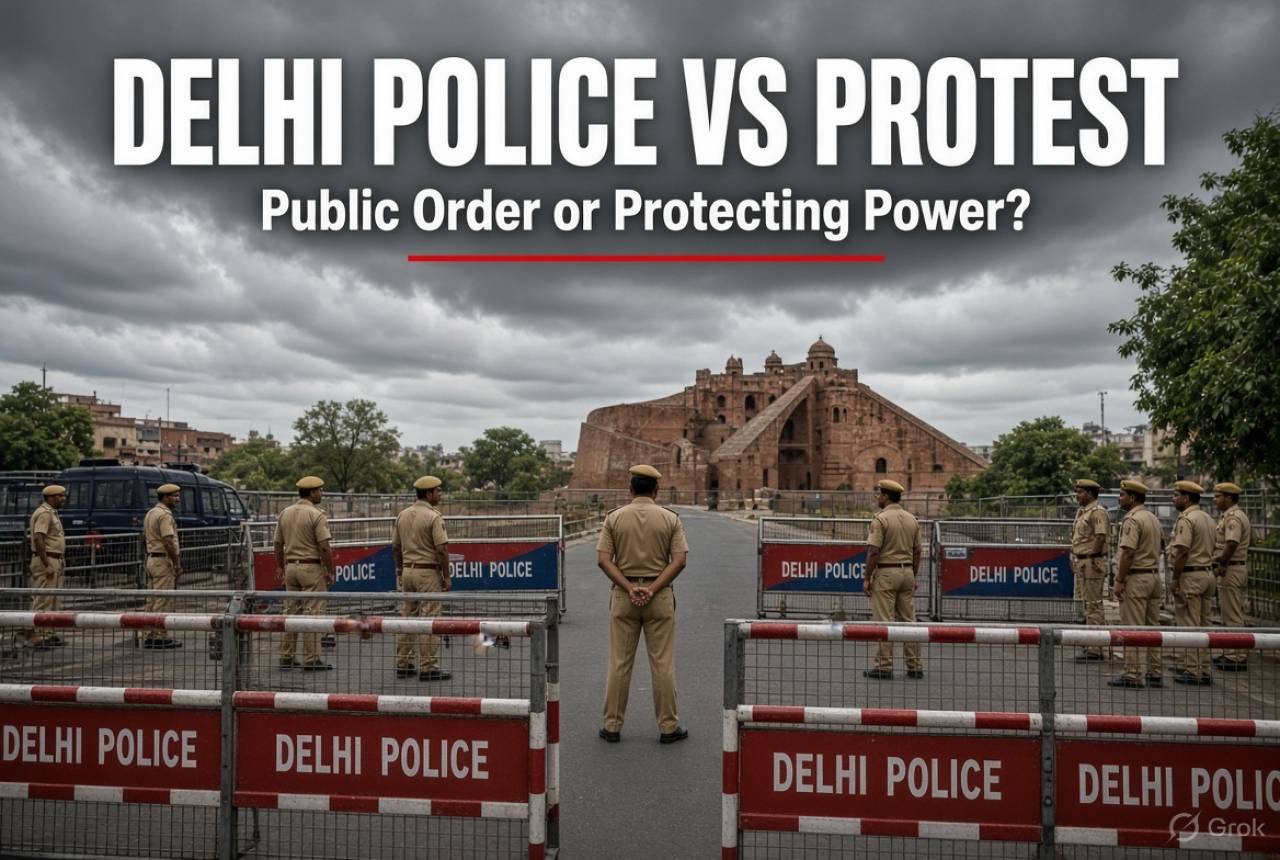
Security measures ahead of the Jantar Mantar protest raise a difficult question: where does maintaining public order end and restricting peaceful dissent begin?
Delhi Police has stepped up measures to discourage citizens from joining the October 10 protest at Jantar Mantar, organised by the Cockroach Janta Party (CJP) along with Left groups and youth organisations. The protest demands the removal of Chief Election Commissioner Gyanesh Kumar and the suspension of the Special Intensive Revision (SIR) of electoral rolls.
Permission for the demonstration has been denied, and heavy security has been deployed across the New Delhi district. According to reports, police have held meetings with student paying-guest accommodation owners, market associations and Resident Welfare Associations, urging community representatives to discourage participation. Shops have reportedly been asked to close early. People who attended previous demonstrations are being monitored, with preventive detention being considered under applicable legal provisions. Facial recognition technology is also reportedly being used to identify individuals flagged during earlier protests.
Police have cited procedural and practical reasons for their decision. The application or intimation for the protest allegedly arrived only three days before the event, against a requirement of ten days. Authorities have also referred to alleged violations during an earlier CJP demonstration, including overstaying the permitted duration and injuries to police personnel. Prohibitory orders under Section 163 of the Bharatiya Nagarik Suraksha Sanhita (BNSS) are in force. Officials argue that an unauthorised gathering could create law-and-order problems and disrupt traffic in a sensitive part of central Delhi.
These are familiar arguments in the policing of public demonstrations. Advance notice allows authorities to assess crowd size, arrange security and manage traffic. Previous incidents can also inform decisions about the risks associated with a gathering. But the scale of the reported response raises a larger question. When measures extend to community outreach, early shop closures, surveillance and possible preventive detention, are the authorities simply managing a crowd, or are they trying to ensure that the protest attracts as few people as possible?
Why the Protest Matters
The political context helps explain why the demonstration has drawn such attention. The CJP began as a satirical youth response to a judicial remark and later mobilised around alleged irregularities in examinations. It has now turned its attention to the Election Commission.
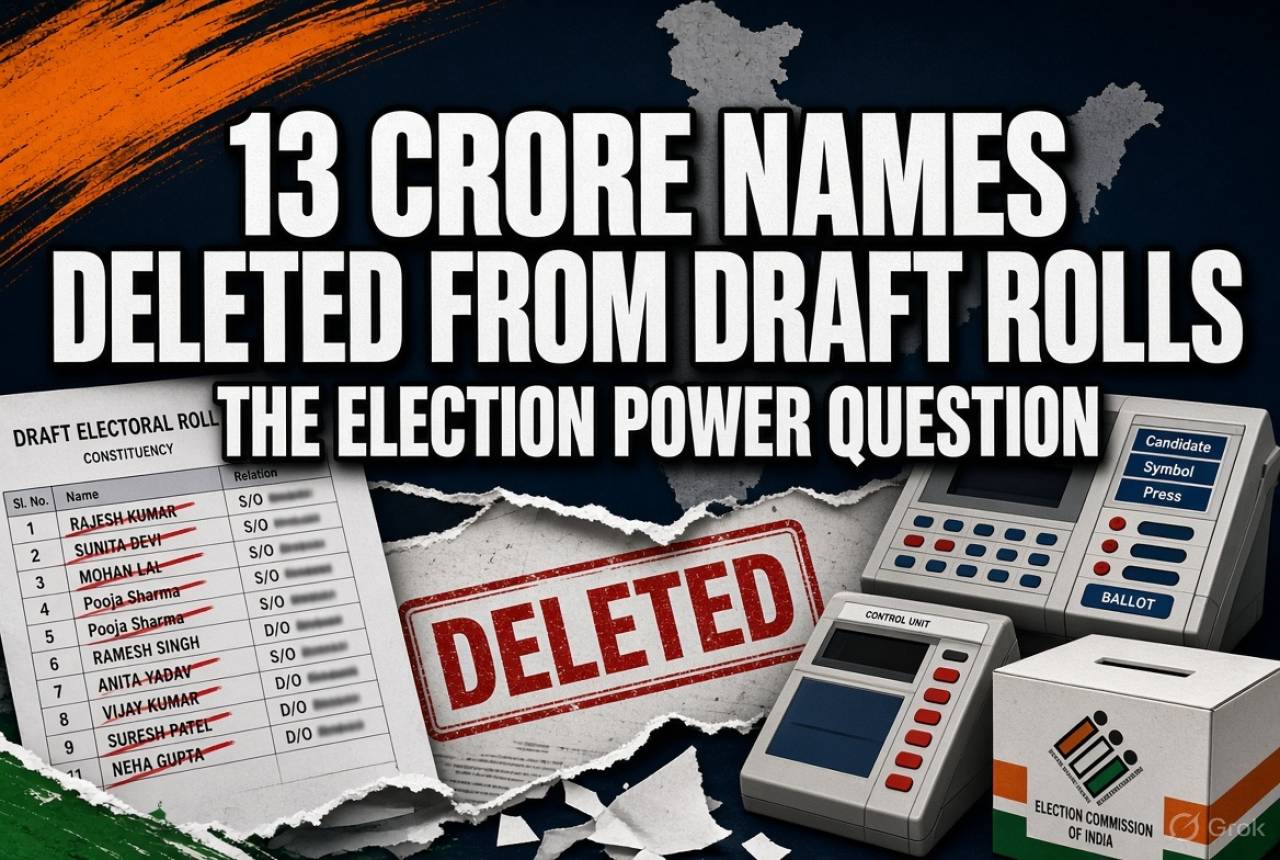
Protesters have raised concerns about the transparency of the SIR process, including alleged large-scale deletions from electoral rolls and reported differences among election commissioners over decisions taken without full consensus. Their demands for the Chief Election Commissioner's removal and a halt to the revision challenge the functioning of an institution central to India's electoral democracy.
These allegations require scrutiny and should not automatically be treated as established facts. However, questioning the Election Commission is a legitimate part of democratic debate. Electoral roll revisions affect who can exercise the right to vote, making transparency, due process and public confidence essential.
The issue becomes particularly sensitive when a protest challenges the institution responsible for overseeing elections. The authorities must protect public order, but they must also ensure that criticism of constitutional institutions is not treated as a threat merely because it is politically inconvenient.
The Question of Police Neutrality
Delhi Police functions under the Union Home Ministry. Its responsibility is to maintain law and order, enforce the law and protect citizens. Yet its administrative relationship with the central government often places its actions under scrutiny when protests target central institutions or government policies.
In such situations, extensive pre-emptive measures can create the impression that the immediate priority is to contain political embarrassment rather than facilitate peaceful dissent. Meetings with local associations, the monitoring of previous protesters and the possibility of preventive detention can discourage participation even before a demonstration begins.
This does not, by itself, establish that the police are acting on political instructions. Authorities may have legitimate security concerns, and preventive measures are not necessarily evidence of political interference. Nevertheless, the police must demonstrate that their decisions are proportionate, based on specific risks and applied consistently, regardless of the political position of the protesters.
The concern is not limited to one demonstration. If citizens begin to believe that protests against powerful institutions will be met with disproportionate restrictions, public confidence in the neutrality of law enforcement may suffer.
Security Cannot Become a Tool of Intimidation
Critics of the police response argue that the measures amount to intimidation. CJP leaders have described the restrictions as tactics that will no longer work on an “awakened” youth. They contend that denying access to a designated protest venue while discouraging participation through social pressure and surveillance undermines the constitutional right to assemble peacefully.
Article 19(1)(b) of the Constitution guarantees citizens the right to assemble peaceably and without arms. The right is subject to reasonable restrictions in the interests of public order and other constitutionally permitted grounds. It does not give organisers an unconditional right to hold a gathering at any time, in any place or without complying with lawful requirements.
However, restrictions must remain reasonable and proportionate. When authorities ask local representatives or shopkeepers to discourage participation, the distinction between legitimate communication and indirect pressure becomes important. Similarly, the use of facial recognition and the monitoring of previous protesters raise questions about necessity, safeguards and the possibility of treating peaceful participation as grounds for suspicion.
The state must distinguish between people who pose a genuine security threat and citizens exercising their democratic rights. Participation in an earlier protest, by itself, should not be treated as evidence of future wrongdoing.
The Police Have Responsibilities, Too
It would be equally simplistic to dismiss every police concern as politically motivated. Previous prolonged demonstrations at the same location may have strained resources and resulted in injuries. Large gatherings in central Delhi can disrupt traffic, create safety risks and become difficult to manage if tensions escalate.
Advance notice serves a practical purpose. It gives the police time to assess the expected turnout, establish security arrangements and identify potential flashpoints. Applications submitted at short notice can complicate these preparations. Authorities are entitled to consider previous incidents when planning for a new demonstration.
But these responsibilities also require the police to explore proportionate alternatives. Where feasible, officials should consider whether a protest can proceed with appropriate conditions, crowd limits, a revised location or a mutually agreed time. A denial of permission should be supported by clear reasons, and any restrictions should be open to appropriate legal scrutiny.
Preventing disorder is a legitimate objective. Preventing peaceful criticism is not.
A Test of Democratic Confidence
The October 10 protest highlights a recurring tension in Indian democracy. The state has a duty to maintain public order, while citizens must retain the freedom to question institutions that exercise public power.
Delhi Police may have procedural and security grounds for restricting the demonstration. But the reported breadth of its campaign, including outreach to community groups, surveillance and the possibility of preventive action, raises questions that cannot be answered simply by invoking law and order.
The test is whether the measures are necessary, proportionate and politically neutral. If a gathering presents genuine risks, the authorities should explain those risks and justify their response. If peaceful dissent can be accommodated through reasonable arrangements, the state should not make participation unnecessarily difficult.
A democracy does not demonstrate confidence in its institutions by ensuring that criticism remains unheard. It demonstrates confidence by allowing questions to be raised, evidence to be examined and public authorities to be held accountable within the law.
The question surrounding the October 10 protest is therefore larger than whether a crowd gathers at Jantar Mantar. It is whether citizens can challenge powerful institutions without being made to feel that exercising their constitutional rights places them under suspicion. The answer will shape not only perceptions of Delhi Police but also public trust in the electoral process and the democratic space available to India's young citizens.
Delhi Police has stepped up measures to discourage citizens from joining the October 10 protest at Jantar Mantar, organised by the Cockroach Janta Party (CJP) along with Left groups and youth organisations. The protest demands the removal of Chief Election Commissioner Gyanesh Kumar and the suspension of the Special Intensive Revision (SIR) of electoral rolls.
Permission for the demonstration has been denied, and heavy security has been deployed across the New Delhi district. According to reports, police have held meetings with student paying-guest accommodation owners, market associations and Resident Welfare Associations, urging community representatives to discourage participation. Shops have reportedly been asked to close early. People who attended previous demonstrations are being monitored, with preventive detention being considered under applicable legal provisions. Facial recognition technology is also reportedly being used to identify individuals flagged during earlier protests.
Police have cited procedural and practical reasons for their decision. The application or intimation for the protest allegedly arrived only three days before the event, against a requirement of ten days. Authorities have also referred to alleged violations during an earlier CJP demonstration, including overstaying the permitted duration and injuries to police personnel. Prohibitory orders under Section 163 of the Bharatiya Nagarik Suraksha Sanhita (BNSS) are in force. Officials argue that an unauthorised gathering could create law-and-order problems and disrupt traffic in a sensitive part of central Delhi.
These are familiar arguments in the policing of public demonstrations. Advance notice allows authorities to assess crowd size, arrange security and manage traffic. Previous incidents can also inform decisions about the risks associated with a gathering. But the scale of the reported response raises a larger question. When measures extend to community outreach, early shop closures, surveillance and possible preventive detention, are the authorities simply managing a crowd, or are they trying to ensure that the protest attracts as few people as possible?
Why the Protest Matters
The political context helps explain why the demonstration has drawn such attention. The CJP began as a satirical youth response to a judicial remark and later mobilised around alleged irregularities in examinations. It has now turned its attention to the Election Commission.
Protesters have raised concerns about the transparency of the SIR process, including alleged large-scale deletions from electoral rolls and reported differences among election commissioners over decisions taken without full consensus. Their demands for the Chief Election Commissioner's removal and a halt to the revision challenge the functioning of an institution central to India's electoral democracy.
These allegations require scrutiny and should not automatically be treated as established facts. However, questioning the Election Commission is a legitimate part of democratic debate. Electoral roll revisions affect who can exercise the right to vote, making transparency, due process and public confidence essential.
The issue becomes particularly sensitive when a protest challenges the institution responsible for overseeing elections. The authorities must protect public order, but they must also ensure that criticism of constitutional institutions is not treated as a threat merely because it is politically inconvenient.
The Question of Police Neutrality
Delhi Police functions under the Union Home Ministry. Its responsibility is to maintain law and order, enforce the law and protect citizens. Yet its administrative relationship with the central government often places its actions under scrutiny when protests target central institutions or government policies.
In such situations, extensive pre-emptive measures can create the impression that the immediate priority is to contain political embarrassment rather than facilitate peaceful dissent. Meetings with local associations, the monitoring of previous protesters and the possibility of preventive detention can discourage participation even before a demonstration begins.
This does not, by itself, establish that the police are acting on political instructions. Authorities may have legitimate security concerns, and preventive measures are not necessarily evidence of political interference. Nevertheless, the police must demonstrate that their decisions are proportionate, based on specific risks and applied consistently, regardless of the political position of the protesters.
The concern is not limited to one demonstration. If citizens begin to believe that protests against powerful institutions will be met with disproportionate restrictions, public confidence in the neutrality of law enforcement may suffer.
Security Cannot Become a Tool of Intimidation
Critics of the police response argue that the measures amount to intimidation. CJP leaders have described the restrictions as tactics that will no longer work on an “awakened” youth. They contend that denying access to a designated protest venue while discouraging participation through social pressure and surveillance undermines the constitutional right to assemble peacefully.
Article 19(1)(b) of the Constitution guarantees citizens the right to assemble peaceably and without arms. The right is subject to reasonable restrictions in the interests of public order and other constitutionally permitted grounds. It does not give organisers an unconditional right to hold a gathering at any time, in any place or without complying with lawful requirements.
However, restrictions must remain reasonable and proportionate. When authorities ask local representatives or shopkeepers to discourage participation, the distinction between legitimate communication and indirect pressure becomes important. Similarly, the use of facial recognition and the monitoring of previous protesters raise questions about necessity, safeguards and the possibility of treating peaceful participation as grounds for suspicion.
The state must distinguish between people who pose a genuine security threat and citizens exercising their democratic rights. Participation in an earlier protest, by itself, should not be treated as evidence of future wrongdoing.
The Police Have Responsibilities, Too
It would be equally simplistic to dismiss every police concern as politically motivated. Previous prolonged demonstrations at the same location may have strained resources and resulted in injuries. Large gatherings in central Delhi can disrupt traffic, create safety risks and become difficult to manage if tensions escalate.
Advance notice serves a practical purpose. It gives the police time to assess the expected turnout, establish security arrangements and identify potential flashpoints. Applications submitted at short notice can complicate these preparations. Authorities are entitled to consider previous incidents when planning for a new demonstration.
But these responsibilities also require the police to explore proportionate alternatives. Where feasible, officials should consider whether a protest can proceed with appropriate conditions, crowd limits, a revised location or a mutually agreed time. A denial of permission should be supported by clear reasons, and any restrictions should be open to appropriate legal scrutiny.
Preventing disorder is a legitimate objective. Preventing peaceful criticism is not.
A Test of Democratic Confidence
The October 10 protest highlights a recurring tension in Indian democracy. The state has a duty to maintain public order, while citizens must retain the freedom to question institutions that exercise public power.
Delhi Police may have procedural and security grounds for restricting the demonstration. But the reported breadth of its campaign, including outreach to community groups, surveillance and the possibility of preventive action, raises questions that cannot be answered simply by invoking law and order.
The test is whether the measures are necessary, proportionate and politically neutral. If a gathering presents genuine risks, the authorities should explain those risks and justify their response. If peaceful dissent can be accommodated through reasonable arrangements, the state should not make participation unnecessarily difficult.
A democracy does not demonstrate confidence in its institutions by ensuring that criticism remains unheard. It demonstrates confidence by allowing questions to be raised, evidence to be examined and public authorities to be held accountable within the law.
The question surrounding the October 10 protest is therefore larger than whether a crowd gathers at Jantar Mantar. It is whether citizens can challenge powerful institutions without being made to feel that exercising their constitutional rights places them under suspicion. The answer will shape not only perceptions of Delhi Police but also public trust in the electoral process and the democratic space available to India's young citizens.

















Leave a Comment