
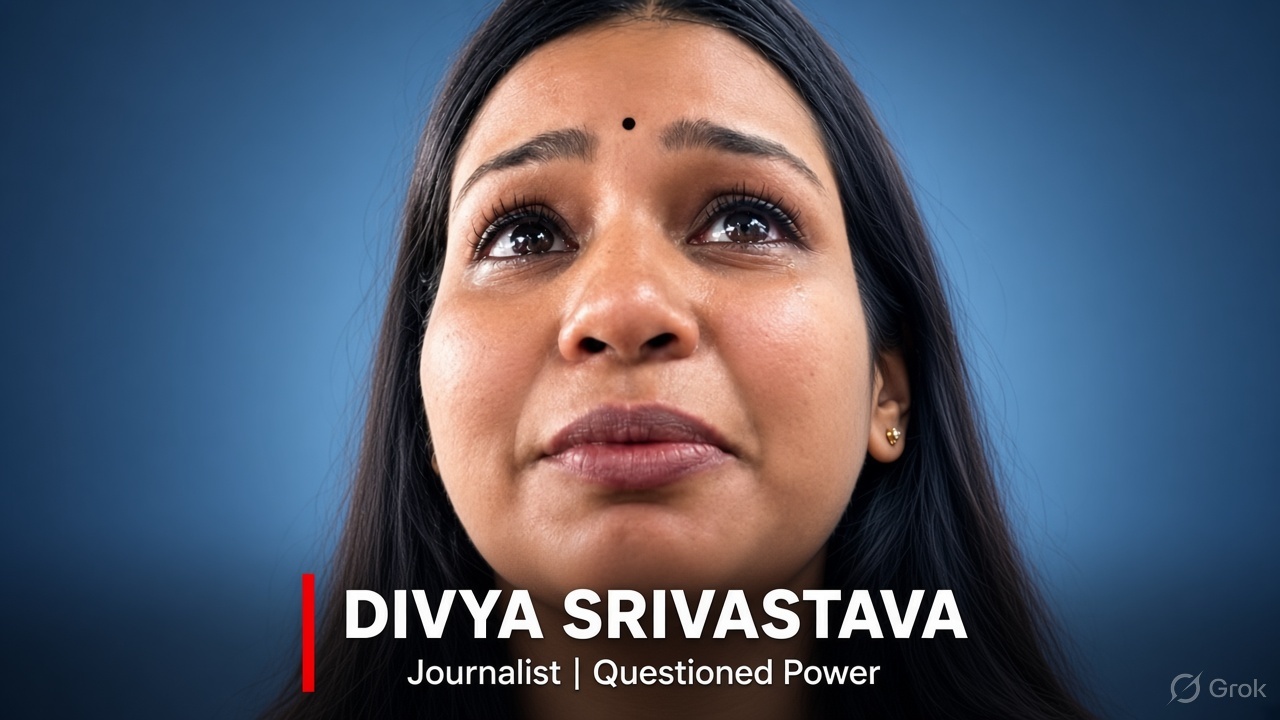
When a journalist asks a difficult question, the response from power can reveal more than the answer ever could.
On 12 September 2026, what appeared to be a routine press interaction involving Uttar Pradesh Chief Minister Yogi Adityanath in Lucknow turned into a wider debate over media access, accountability and the treatment of journalists.
Independent digital journalist Divya Srivastava attempted to question the Chief Minister about issues of public concern, including waterlogging following recent rains and problems on expressways. The Chief Minister left the venue without taking questions.
What followed, according to Srivastava's own account, has raised more serious questions about how political power responds when journalists refuse to remain silent.
Srivastava, a young independent journalist with a master's degree in journalism from IGNOU, later described the episode and its aftermath in an interview with journalist Abhishek Upadhyay. She alleged that people identifying themselves with the ruling party surrounded her, questioned which channel she represented and threatened her with possible "bulldozer" action against her home.
She said the experience left her intimidated and in tears. She also described being removed from an internal group of a channel she had recently joined, along with online abuse and a growing sense of isolation as a woman living alone in Lucknow.
These allegations are primarily based on Srivastava's testimony, and independent verification of every detail remains incomplete. That distinction matters. At the same time, the video showing her attempting to ask questions is available publicly, while the absence of a conventional question-and-answer session is not in dispute.
The episode therefore deserves scrutiny not simply as an individual confrontation but as a question about the relationship between political power and journalism.
When Questions Become Unwelcome
Supporters of the BJP have argued that the Lucknow event was not organised as a conventional press conference and that no formal question-and-answer session had been scheduled.
That may be factually correct.
But the larger democratic question goes beyond the format of a particular event.
Elected leaders regularly appear before journalists because public office carries an obligation to explain decisions, defend policies and respond to criticism. A press interaction need not always become an unrestricted press conference, but the broader culture surrounding political communication matters.
When difficult questions are consistently avoided, journalists learn to anticipate which subjects are welcome and which are not.
That is where the issue becomes larger than one event.
A government confident in its record should be able to withstand scrutiny, including questions about administrative failures, infrastructure, unemployment, public services and law and order. Avoiding questions may be politically convenient, but it does little to strengthen public confidence in accountability.
The Pressure Beyond the Podium
The more troubling part of Srivastava's account concerns what she says happened after the interaction.
If journalists can be subjected to intimidation simply for attempting to question a powerful political figure, the consequences extend far beyond the individual involved. Other journalists watching the episode may begin calculating the personal and professional risks of asking similar questions.
That is how self-censorship develops.
It does not always require an explicit order telling journalists what they cannot report. Sometimes the knowledge that criticism can bring online abuse, legal pressure, professional isolation or threats is enough to alter newsroom behaviour.
Uttar Pradesh has witnessed several contentious encounters between journalists and the state machinery in recent years, particularly around reporting on law and order, communal tensions and administrative failures. Critics of the BJP have also raised broader concerns about the environment facing critical journalism in several BJP-ruled states.
These concerns should not be converted into blanket claims that every journalist critical of the government is persecuted. Nor should every dispute between a reporter and the authorities be presented as proof of a coordinated political campaign.
The standard should instead be simple: allegations should be investigated, evidence should be examined and journalists should be allowed to work without intimidation.
The Bulldozer Question
The allegation involving a "bulldozer" threat is particularly serious because bulldozer demolitions have become one of the most recognisable features of political debate around governance in Uttar Pradesh.
Supporters describe such action as a response to illegal construction and encroachment. Critics have argued that demolitions can become a form of extra-legal punishment when due process is questioned.
In that context, even an alleged threat of bulldozer action against a journalist carries a significance that goes beyond an ordinary verbal confrontation.
If the threat was made, it should be investigated.
If it was not made, that should also be established clearly.
Either way, political parties and public authorities have a responsibility to ensure that journalists do not feel that asking questions could put their homes, careers or personal safety at risk.
The Larger Media Problem
The Divya Srivastava episode also comes against a broader debate about the changing relationship between Indian politics and the media.
Media ownership has become increasingly concentrated. Government advertising remains economically important for many news organisations. Independent digital journalists often operate without the institutional protection available to large media houses.
At the same time, political communication has increasingly moved towards controlled events, prepared statements and direct communication through social media.
None of these developments is unique to one political party. Previous governments have also faced serious criticism over their treatment of journalists and the press.
That is precisely why the issue should not be reduced to a BJP-versus-opposition argument.
The relevant question is whether elected governments are willing to tolerate scrutiny when the questions are uncomfortable.
A Test of Democratic Confidence
The contrast between political messaging and the experience described by Srivastava is difficult to ignore.
Governments frequently speak about empowering women, encouraging young Indians and creating a stronger democratic society. But democratic empowerment means little if a young woman journalist feels unsafe for simply attempting to question a public official.
The point is not that every journalist is entitled to an answer at every public event.
The point is that questioning power should never become an act of personal courage.
Political leaders have every right to disagree with journalists. They can challenge inaccurate reporting, reject allegations and defend their record. But the answer to scrutiny should be more scrutiny, not intimidation.
That principle applies equally to the BJP, the Congress, regional parties and every government that exercises public power.
The Voice That Refuses to Stay Silent
The Divya Srivastava episode may ultimately prove to be a relatively small incident in the vast landscape of Indian politics.
But small incidents can reveal larger realities.
A Chief Minister choosing not to take questions is, by itself, a political and procedural decision. Allegations that a journalist was subsequently surrounded, threatened or professionally isolated raise a different and more serious concern.
Those allegations deserve a fair investigation rather than immediate partisan dismissal.
More importantly, the political class needs to recognise that journalism is not public relations.
A journalist's job is not merely to record speeches, reproduce official statements or protect access. It is to ask questions that those in power may not want to answer.
In a healthy democracy, a difficult question should produce an answer, an argument or even a disagreement.
It should not produce fear.
The real test of political confidence is not how loudly a government speaks when nobody challenges it. It is how comfortably it responds when someone does.
For that reason, the Divya Srivastava episode deserves attention beyond Uttar Pradesh. It is a reminder that the space for scrutiny is sustained not by slogans, but by the willingness of those in power to face questions.
And when a journalist refuses to stay silent, the democratic response should be to answer her, not to make her afraid to ask.
On 12 September 2026, what appeared to be a routine press interaction involving Uttar Pradesh Chief Minister Yogi Adityanath in Lucknow turned into a wider debate over media access, accountability and the treatment of journalists.
Independent digital journalist Divya Srivastava attempted to question the Chief Minister about issues of public concern, including waterlogging following recent rains and problems on expressways. The Chief Minister left the venue without taking questions.
What followed, according to Srivastava's own account, has raised more serious questions about how political power responds when journalists refuse to remain silent.
Srivastava, a young independent journalist with a master's degree in journalism from IGNOU, later described the episode and its aftermath in an interview with journalist Abhishek Upadhyay. She alleged that people identifying themselves with the ruling party surrounded her, questioned which channel she represented and threatened her with possible "bulldozer" action against her home.
She said the experience left her intimidated and in tears. She also described being removed from an internal group of a channel she had recently joined, along with online abuse and a growing sense of isolation as a woman living alone in Lucknow.
These allegations are primarily based on Srivastava's testimony, and independent verification of every detail remains incomplete. That distinction matters. At the same time, the video showing her attempting to ask questions is available publicly, while the absence of a conventional question-and-answer session is not in dispute.
The episode therefore deserves scrutiny not simply as an individual confrontation but as a question about the relationship between political power and journalism.
When Questions Become Unwelcome
Supporters of the BJP have argued that the Lucknow event was not organised as a conventional press conference and that no formal question-and-answer session had been scheduled.
That may be factually correct.
But the larger democratic question goes beyond the format of a particular event.
Elected leaders regularly appear before journalists because public office carries an obligation to explain decisions, defend policies and respond to criticism. A press interaction need not always become an unrestricted press conference, but the broader culture surrounding political communication matters.
When difficult questions are consistently avoided, journalists learn to anticipate which subjects are welcome and which are not.
That is where the issue becomes larger than one event.
A government confident in its record should be able to withstand scrutiny, including questions about administrative failures, infrastructure, unemployment, public services and law and order. Avoiding questions may be politically convenient, but it does little to strengthen public confidence in accountability.
The Pressure Beyond the Podium
The more troubling part of Srivastava's account concerns what she says happened after the interaction.
If journalists can be subjected to intimidation simply for attempting to question a powerful political figure, the consequences extend far beyond the individual involved. Other journalists watching the episode may begin calculating the personal and professional risks of asking similar questions.
That is how self-censorship develops.
It does not always require an explicit order telling journalists what they cannot report. Sometimes the knowledge that criticism can bring online abuse, legal pressure, professional isolation or threats is enough to alter newsroom behaviour.
Uttar Pradesh has witnessed several contentious encounters between journalists and the state machinery in recent years, particularly around reporting on law and order, communal tensions and administrative failures. Critics of the BJP have also raised broader concerns about the environment facing critical journalism in several BJP-ruled states.
These concerns should not be converted into blanket claims that every journalist critical of the government is persecuted. Nor should every dispute between a reporter and the authorities be presented as proof of a coordinated political campaign.
The standard should instead be simple: allegations should be investigated, evidence should be examined and journalists should be allowed to work without intimidation.
The Bulldozer Question
The allegation involving a "bulldozer" threat is particularly serious because bulldozer demolitions have become one of the most recognisable features of political debate around governance in Uttar Pradesh.
Supporters describe such action as a response to illegal construction and encroachment. Critics have argued that demolitions can become a form of extra-legal punishment when due process is questioned.
In that context, even an alleged threat of bulldozer action against a journalist carries a significance that goes beyond an ordinary verbal confrontation.
If the threat was made, it should be investigated.
If it was not made, that should also be established clearly.
Either way, political parties and public authorities have a responsibility to ensure that journalists do not feel that asking questions could put their homes, careers or personal safety at risk.
The Larger Media Problem
The Divya Srivastava episode also comes against a broader debate about the changing relationship between Indian politics and the media.
Media ownership has become increasingly concentrated. Government advertising remains economically important for many news organisations. Independent digital journalists often operate without the institutional protection available to large media houses.
At the same time, political communication has increasingly moved towards controlled events, prepared statements and direct communication through social media.
None of these developments is unique to one political party. Previous governments have also faced serious criticism over their treatment of journalists and the press.
That is precisely why the issue should not be reduced to a BJP-versus-opposition argument.
The relevant question is whether elected governments are willing to tolerate scrutiny when the questions are uncomfortable.
A Test of Democratic Confidence
The contrast between political messaging and the experience described by Srivastava is difficult to ignore.
Governments frequently speak about empowering women, encouraging young Indians and creating a stronger democratic society. But democratic empowerment means little if a young woman journalist feels unsafe for simply attempting to question a public official.
The point is not that every journalist is entitled to an answer at every public event.
The point is that questioning power should never become an act of personal courage.
Political leaders have every right to disagree with journalists. They can challenge inaccurate reporting, reject allegations and defend their record. But the answer to scrutiny should be more scrutiny, not intimidation.
That principle applies equally to the BJP, the Congress, regional parties and every government that exercises public power.
The Voice That Refuses to Stay Silent
The Divya Srivastava episode may ultimately prove to be a relatively small incident in the vast landscape of Indian politics.
But small incidents can reveal larger realities.
A Chief Minister choosing not to take questions is, by itself, a political and procedural decision. Allegations that a journalist was subsequently surrounded, threatened or professionally isolated raise a different and more serious concern.
Those allegations deserve a fair investigation rather than immediate partisan dismissal.
More importantly, the political class needs to recognise that journalism is not public relations.
A journalist's job is not merely to record speeches, reproduce official statements or protect access. It is to ask questions that those in power may not want to answer.
In a healthy democracy, a difficult question should produce an answer, an argument or even a disagreement.
It should not produce fear.
The real test of political confidence is not how loudly a government speaks when nobody challenges it. It is how comfortably it responds when someone does.
For that reason, the Divya Srivastava episode deserves attention beyond Uttar Pradesh. It is a reminder that the space for scrutiny is sustained not by slogans, but by the willingness of those in power to face questions.
And when a journalist refuses to stay silent, the democratic response should be to answer her, not to make her afraid to ask.





Leave a Comment