
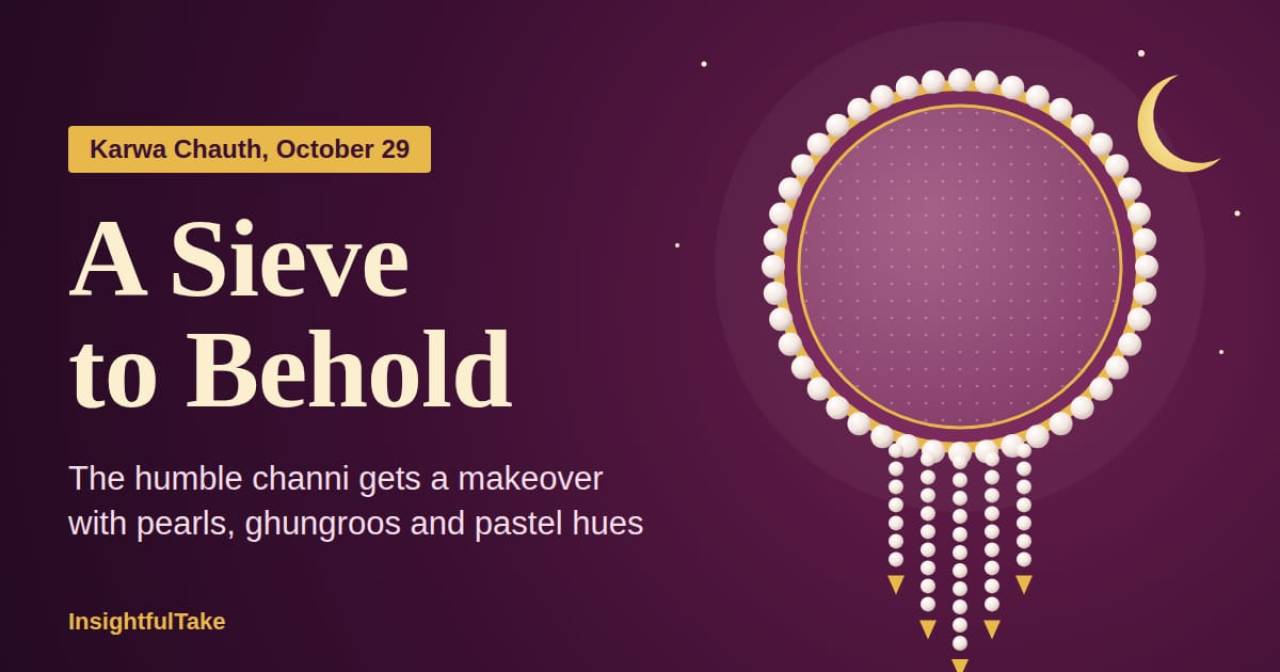
The humble Karwa Chauth channi is getting a glamorous makeover with pearls, pastel colours and personalised designs, turning a traditional ritual essential into a festive fashion statement.
From pearl-studded borders and delicate embroidery to pastel shades and personalised designs, the traditional Karwa Chauth channi is emerging as a fashionable festive accessory.
As Karwa Chauth arrives on October 29, markets, Instagram feeds and festive wardrobes are buzzing about an accessory that once rarely received a second glance: the channi.
The plain metal sieve, traditionally found in the kitchen, is now becoming a highlight of the celebration, decorated with pearls, ghungroos, colourful embellishments and intricate embroidery.
What was once a simple ritual object is increasingly being treated as a fashion accessory, carefully selected to complement festive attire.
Same Ritual, New Look
The role of the channi in the Karwa Chauth ritual remains unchanged. Married women observing the fast traditionally use it to look at the moon and then at their husband's face before breaking their fast.
What has changed is the way the object is presented.
Instead of a utilitarian sieve borrowed from the kitchen, the channi is now being treated as an extension of the festive outfit. It is colour-coordinated, accessorised and proudly displayed, much like a designer clutch or a statement piece of jewellery.
A Scroll Through the Latest Channi Trends
A browse through festive designs shared under #KarwaChauth2026 reveals the growing variety of decorative channis.
Some feature lustrous pearl borders, with strands of beads and delicate tassels hanging from the rim. Others embrace handcrafted elegance through floral embroidery, crochet detailing and softer colour palettes.
Crescent moon motifs have also found their way into channi designs, reflecting the importance of moon sighting in the ritual.
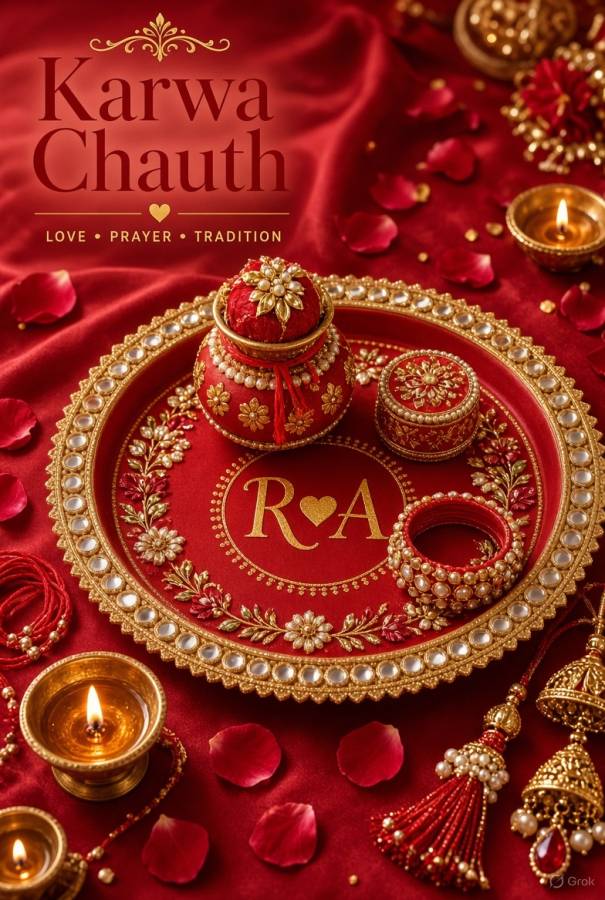
For those who prefer traditional festive colours, rich red-and-gold combinations remain popular. Some customised designs also feature matching covers, embroidered initials and personalised decorations.
What's Trending This Karwa Chauth?
Several design elements are drawing attention this festive season.
Velvet, Silk and Pastel Hues
Teal, lilac, baby pink and powder blue are offering alternatives to traditional red and maroon. Velvet and silk finishes add richness, making the channi look more like a carefully crafted festive accessory.
Statement Borders
Gota patti, lace and zardozi embroidery are bringing traditional Indian craftsmanship to the channi's rim. These decorative borders create an heirloom-inspired appearance while preserving the sieve's original function.
Pearls and Ghungroos
Hanging pearl strings, beads and tiny bells add movement, texture and sparkle. Such embellishments also photograph beautifully, making them appealing for festive reels, portraits and social media posts.
Where to Find Designer Channis
Social media has become an important marketplace for customised festive accessories, with independent designers and home-based businesses offering handmade pieces.
One such name is @artreebyvrinda, which offers channis in contemporary shades including teal, baby pink, purple and baby blue.
These handcrafted and customised designs allow buyers to coordinate their channi with their outfit, whether they are wearing a pastel suit, an embroidered lehenga or a classic red saree.
The growing interest in personalised festive accessories also creates opportunities for small artisans to reach customers directly through social media.
How to Style Your Karwa Chauth Channi
If the channi is becoming part of the festive look, choosing the right design can make a difference.
A pastel outfit pairs beautifully with a pearl-rimmed channi, while a bold red or maroon ensemble complements gota patti and zardozi borders.
Women who prefer understated elegance can experiment with teal, lilac or baby blue designs instead of conventional red-and-gold combinations.
The idea is to coordinate the channi with an element of the outfit, whether the dupatta, jewellery, embroidery or even the colour of the mehendi.
However, practicality remains important.
The channi must still serve its ritual purpose, and the mesh should remain sufficiently clear for viewing the moon. Designs that keep the centre uncluttered while concentrating decorations around the rim offer a balance between appearance and functionality.
Tradition, Reimagined Through Fashion
The transformation of the channi reflects a broader trend in Indian festive celebrations, where traditional objects are being personalised through fashion, craftsmanship and social media.
For many women, a beautifully decorated channi adds a personal touch to Karwa Chauth. It becomes more than a ritual accessory, serving as a keepsake associated with an occasion of fasting, devotion and celebration.
The trend also highlights the role of small artisans and independent designers, whose handmade products are finding audiences through Instagram and other digital platforms.
As the moon rises this Karwa Chauth and women across the country raise their sieves to complete the traditional ritual, the humble channi will be on full display.
Its purpose remains unchanged, but its appearance now carries pearls, embroidery, personalised initials and a generous touch of festive style.

















Leave a Comment