
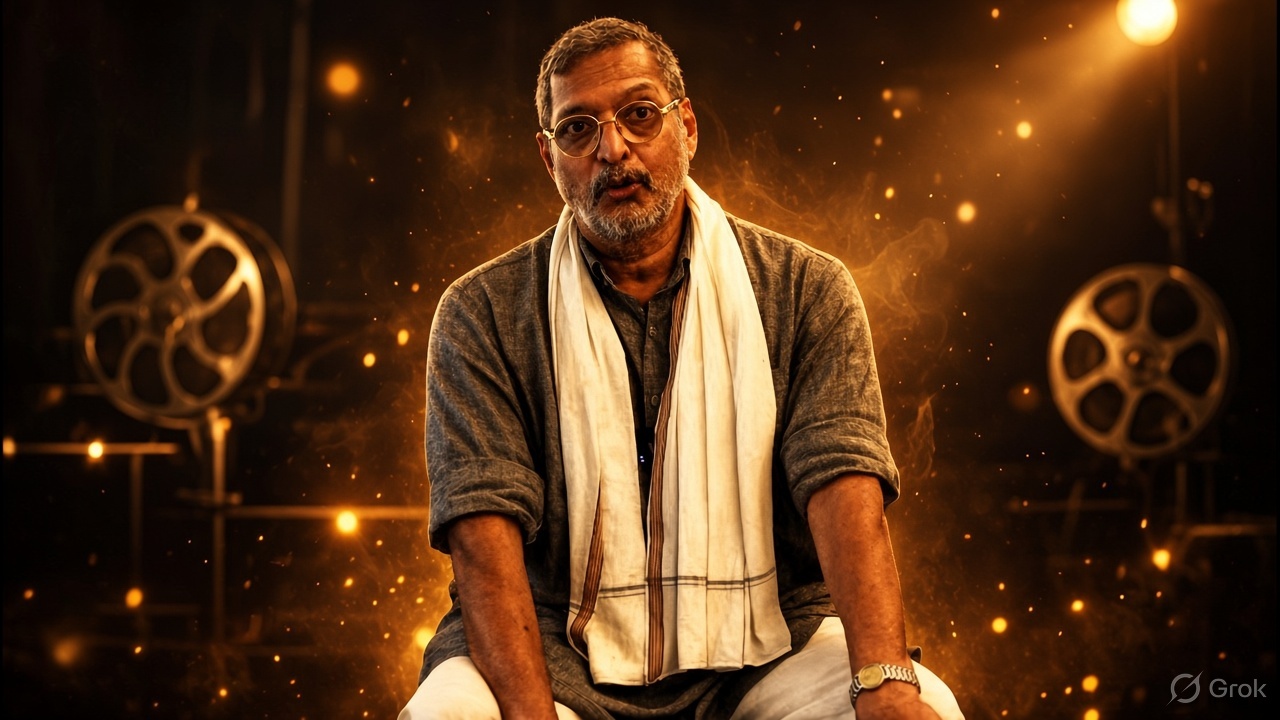
Nana Patekar brought anger, pain, humour and honesty to Indian cinema like few other actors. His legacy goes far beyond the characters he played.
Nana Patekar is gone. The man with the burning eyes, the sharp voice and the fearless presence left us on 8 October 2026 at the age of 75. He reportedly died at his home in Goa after a sudden heart attack. Doctors tried to revive him for 45 minutes, but the fire that had defined his life and work finally went quiet.
For nearly five decades, Nana Patekar did more than act in films. He inhabited his characters with an intensity few actors could match. He never seemed interested in playing safe or looking perfect. Instead, he brought anger, pain, humour, vulnerability and strength to the screen. His characters looked and sounded like real people, and that became his greatest strength.
Born Vishwanath Patekar on 1 January 1951 in Murud-Janjira, Maharashtra, Nana came from a modest Marathi family. He studied at the Sir J.J. Institute of Applied Art in Mumbai and began his career in theatre. The stage gave him the discipline to use his voice, expressions and body with precision.
He entered Hindi cinema in 1978 with Gaman. It was a relatively quiet beginning, but Nana was never destined to remain in the background for long.
His breakthrough came with Parinda in 1989, in which he played the ruthless gangster Anna. His performance was intense and unsettling. His eyes carried menace, while his voice could dominate a scene without effort. The role earned him the National Film Award for Best Supporting Actor as well as a Filmfare Award.
Then came Krantiveer in 1994. As Pratap Narayan Tilak, Nana played a man consumed by anger against corruption and injustice. The performance connected with audiences and earned him both the National Film Award for Best Actor and the Filmfare Award for Best Actor.
But Nana's range went far beyond anger.
In Agni Sakshi, he brought emotional depth to a difficult character. In Khamoshi: The Musical, he played a father who could neither hear nor speak, yet communicated enormous emotion through silence and expression. And in Welcome, he showed his comic timing as the eccentric gangster Uday Shetty, proving that the same actor who could intimidate audiences could also make them laugh.
He played cops, politicians, criminals, fathers and broken men. Whatever the role, he rarely disappeared completely into a conventional star persona. Instead, he made the character unmistakably his own.
Nana also stepped behind the camera. He directed Prahaar: The Final Attack, a film rooted in military life and discipline. His association with the armed forces went beyond cinema. He underwent extensive military training and later joined the Territorial Army. During the Kargil War in 1999, he expressed a desire to serve alongside soldiers and spent time with troops in areas including Dras and Kupwara.
He was later conferred the honorary rank of Lieutenant Colonel in the Territorial Army. For Nana, his connection with the armed forces was not simply another chapter in a celebrity career. It reflected a personal respect for discipline, duty and service.
His roots in Marathi theatre and cinema remained equally important. Natsamrat brought another memorable performance, with Nana playing a veteran stage actor confronting loneliness, ageing and the loss of his place in the world. The film allowed him to return to the theatre tradition that had shaped him as an actor.
Away from the screen, Nana also became associated with social work. During Maharashtra's drought crisis, he co-founded the Naam Foundation with actor Makarand Anaspure. The organisation worked with drought-hit villages, supporting water conservation, farming and rural communities.
His public life therefore extended beyond films. He could be outspoken, unconventional and blunt, but he also used his public position to draw attention to issues affecting ordinary people.
Nana Patekar received three National Film Awards, four Filmfare Awards and the Padma Shri in 2013. He also achieved the rare distinction of winning Filmfare recognition in acting categories covering Best Actor, Best Supporting Actor and Best Villain.
Yet awards were never the best way to understand Nana Patekar.
His real contribution was the space he created for a different kind of Hindi film actor. At a time when mainstream cinema often celebrated glamour and polished appearances, Nana brought rough edges to the screen. His face carried lived experience. His voice carried authority. His performances could be uncomfortable, angry or deeply moving.
That quality influenced generations of actors who came after him.
When Nana delivered a line, it rarely felt like dialogue being recited. It felt as though the character had something urgent to say. His performances often carried the tension of people who had been pushed to the edge and were no longer willing to remain silent.
That is why his work continues to matter.
Watch Parinda, and the menace remains. Watch Krantiveer, and the anger still feels immediate. Watch Natsamrat, and the loneliness of an ageing artist remains difficult to shake off. His strongest performances did not end when the credits rolled. They stayed with the audience.
Nana Patekar lived his career on his own terms. He did not build his legacy around glamour. He built it around performance, conviction and an unmistakable screen presence.
Indian cinema has lost an actor whose voice could fill a room and whose silence could carry an entire scene. But the characters he created will remain part of the country's cinematic memory.
The roar of his voice may have fallen silent, but the fire he brought to Indian cinema will not fade.
Rest well, Nana. Your work still speaks for you.
Nana Patekar is gone. The man with the burning eyes, the sharp voice and the fearless presence left us on 8 October 2026 at the age of 75. He reportedly died at his home in Goa after a sudden heart attack. Doctors tried to revive him for 45 minutes, but the fire that had defined his life and work finally went quiet.
For nearly five decades, Nana Patekar did more than act in films. He inhabited his characters with an intensity few actors could match. He never seemed interested in playing safe or looking perfect. Instead, he brought anger, pain, humour, vulnerability and strength to the screen. His characters looked and sounded like real people, and that became his greatest strength.
Born Vishwanath Patekar on 1 January 1951 in Murud-Janjira, Maharashtra, Nana came from a modest Marathi family. He studied at the Sir J.J. Institute of Applied Art in Mumbai and began his career in theatre. The stage gave him the discipline to use his voice, expressions and body with precision.
He entered Hindi cinema in 1978 with Gaman. It was a relatively quiet beginning, but Nana was never destined to remain in the background for long.
His breakthrough came with Parinda in 1989, in which he played the ruthless gangster Anna. His performance was intense and unsettling. His eyes carried menace, while his voice could dominate a scene without effort. The role earned him the National Film Award for Best Supporting Actor as well as a Filmfare Award.
Then came Krantiveer in 1994. As Pratap Narayan Tilak, Nana played a man consumed by anger against corruption and injustice. The performance connected with audiences and earned him both the National Film Award for Best Actor and the Filmfare Award for Best Actor.
But Nana's range went far beyond anger.
In Agni Sakshi, he brought emotional depth to a difficult character. In Khamoshi: The Musical, he played a father who could neither hear nor speak, yet communicated enormous emotion through silence and expression. And in Welcome, he showed his comic timing as the eccentric gangster Uday Shetty, proving that the same actor who could intimidate audiences could also make them laugh.
He played cops, politicians, criminals, fathers and broken men. Whatever the role, he rarely disappeared completely into a conventional star persona. Instead, he made the character unmistakably his own.
Nana also stepped behind the camera. He directed Prahaar: The Final Attack, a film rooted in military life and discipline. His association with the armed forces went beyond cinema. He underwent extensive military training and later joined the Territorial Army. During the Kargil War in 1999, he expressed a desire to serve alongside soldiers and spent time with troops in areas including Dras and Kupwara.
He was later conferred the honorary rank of Lieutenant Colonel in the Territorial Army. For Nana, his connection with the armed forces was not simply another chapter in a celebrity career. It reflected a personal respect for discipline, duty and service.
His roots in Marathi theatre and cinema remained equally important. Natsamrat brought another memorable performance, with Nana playing a veteran stage actor confronting loneliness, ageing and the loss of his place in the world. The film allowed him to return to the theatre tradition that had shaped him as an actor.
Away from the screen, Nana also became associated with social work. During Maharashtra's drought crisis, he co-founded the Naam Foundation with actor Makarand Anaspure. The organisation worked with drought-hit villages, supporting water conservation, farming and rural communities.
His public life therefore extended beyond films. He could be outspoken, unconventional and blunt, but he also used his public position to draw attention to issues affecting ordinary people.
Nana Patekar received three National Film Awards, four Filmfare Awards and the Padma Shri in 2013. He also achieved the rare distinction of winning Filmfare recognition in acting categories covering Best Actor, Best Supporting Actor and Best Villain.
Yet awards were never the best way to understand Nana Patekar.
His real contribution was the space he created for a different kind of Hindi film actor. At a time when mainstream cinema often celebrated glamour and polished appearances, Nana brought rough edges to the screen. His face carried lived experience. His voice carried authority. His performances could be uncomfortable, angry or deeply moving.
That quality influenced generations of actors who came after him.
When Nana delivered a line, it rarely felt like dialogue being recited. It felt as though the character had something urgent to say. His performances often carried the tension of people who had been pushed to the edge and were no longer willing to remain silent.
That is why his work continues to matter.
Watch Parinda, and the menace remains. Watch Krantiveer, and the anger still feels immediate. Watch Natsamrat, and the loneliness of an ageing artist remains difficult to shake off. His strongest performances did not end when the credits rolled. They stayed with the audience.
Nana Patekar lived his career on his own terms. He did not build his legacy around glamour. He built it around performance, conviction and an unmistakable screen presence.
Indian cinema has lost an actor whose voice could fill a room and whose silence could carry an entire scene. But the characters he created will remain part of the country's cinematic memory.
The roar of his voice may have fallen silent, but the fire he brought to Indian cinema will not fade.
Rest well, Nana. Your work still speaks for you.























Leave a Comment