
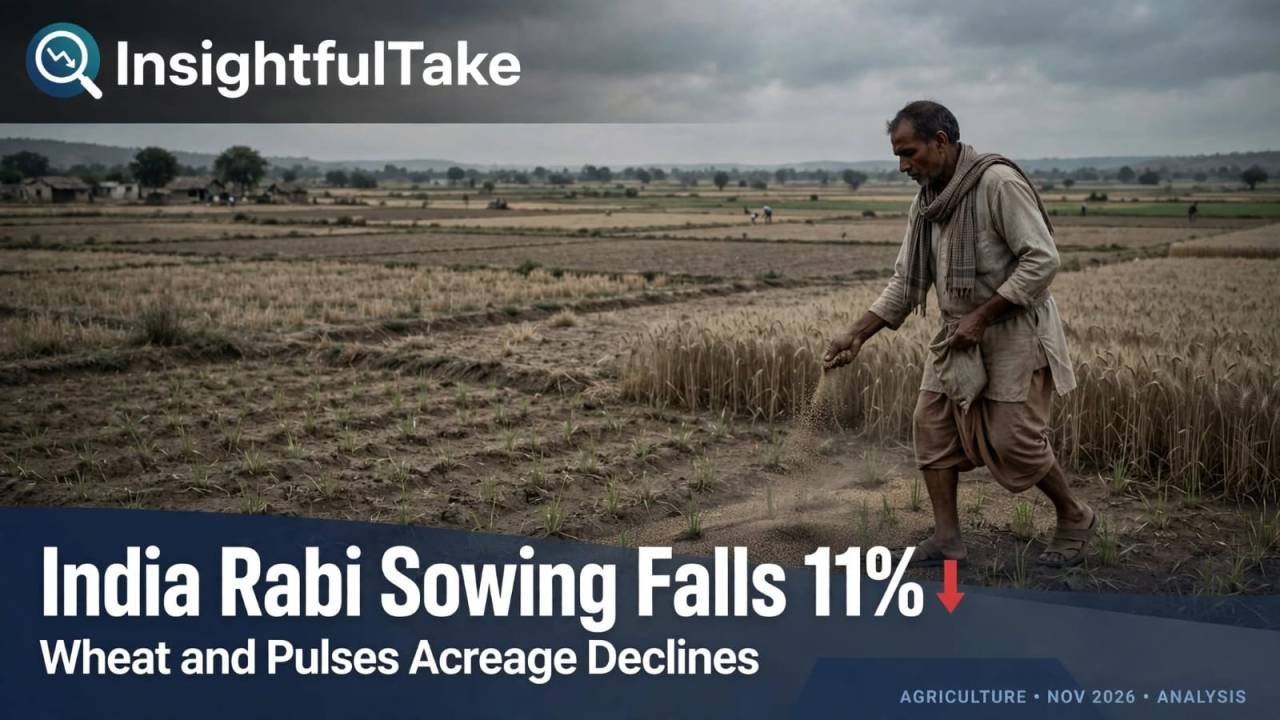
India's winter crop season faces a slow start as delayed harvesting, poor soil moisture and rainfall shortages threaten agricultural output and food price stability.
India’s winter cropping season is facing an uncertain start, with farmers sowing significantly fewer rabi crops than they did at the same time last year. Delayed harvesting of kharif crops, inadequate soil moisture and uneven post-monsoon rainfall have slowed agricultural activity across several parts of the country. The decline has raised concerns about winter food production, farm incomes and the possibility of further pressure on food prices in the coming months.
According to data released by the Union Agriculture Ministry, farmers had sown 17.83 million hectares under rabi crops as of November 13, 2026. During the corresponding period in 2025, the area covered was 20.10 million hectares. This represents an annual decline of approximately 11.3%.
The shortfall is particularly important because the rabi season contributes substantially to India's production of wheat, pulses, oilseeds and other essential food commodities. Any prolonged delay in sowing can affect crop development and eventually influence the country's agricultural output.
Wheat and Pulses Show a Noticeable Decline
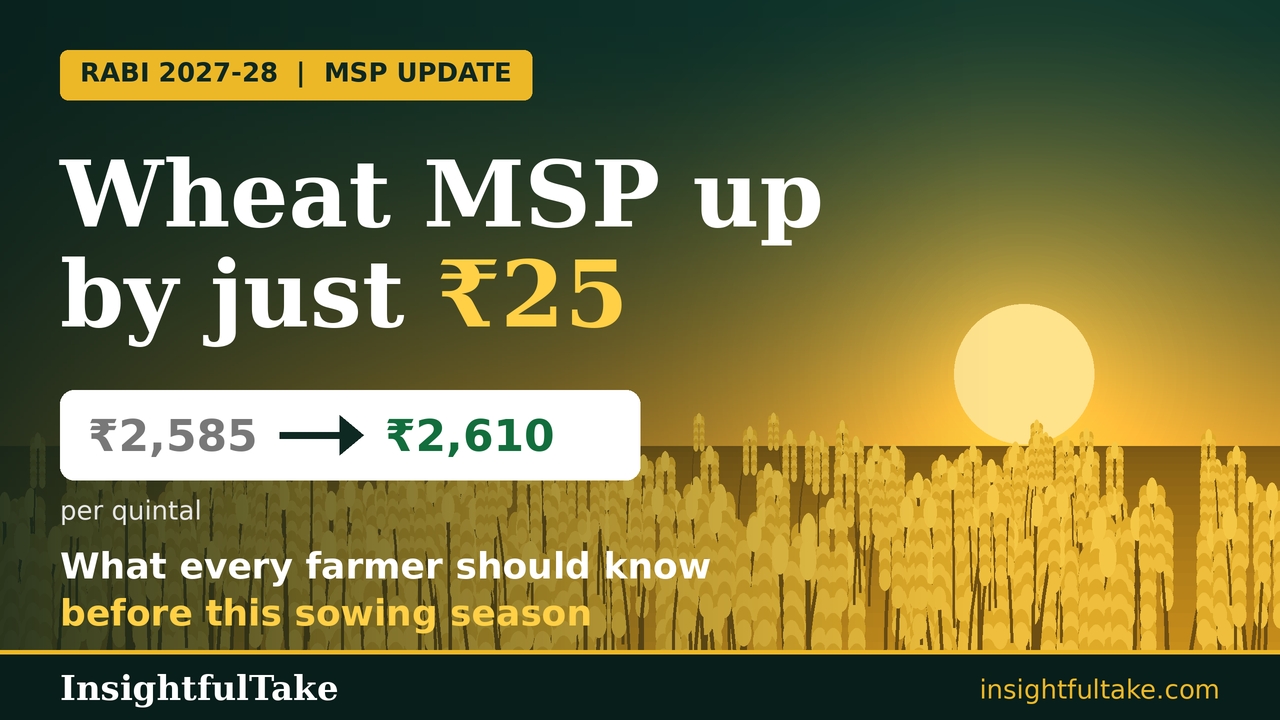
Wheat, India's principal winter crop, has recorded one of the sharpest reductions in sowing. The area under wheat cultivation stood at 5.01 million hectares on November 13, compared with 5.91 million hectares during the same period last year. This represents a decline of 15.28%.
The reduction is significant because wheat remains central to India's food security system. It is a major component of the Public Distribution System and an important source of affordable food for millions of households.
Pulses have also experienced a substantial decline. The total area under pulse cultivation fell by 14.34% to 4.7 million hectares. Gram, one of the most widely cultivated winter pulses, recorded a particularly sharp fall of 21.59%.
However, the picture is not uniform across all pulse varieties. Lentil sowing increased by 13.89%, while urad cultivation rose by 13.59%. These increases suggest that some farmers may be adjusting their crop choices in response to changing weather and cultivation conditions.
Oilseed sowing also declined by 7.37%, covering 6.17 million hectares. The reduction could have implications for domestic edible oil availability, although final production will depend on subsequent crop development and yields.
Delayed Kharif Harvest Compounds the Problem
The slowdown in rabi sowing is closely connected to difficulties faced during the kharif season. In several states, farmers have been unable to complete harvesting on schedule, delaying the preparation of fields for winter crops.
Punjab, Haryana, Delhi and western Uttar Pradesh are among the regions where delayed harvesting and inadequate soil moisture have affected the transition between the two agricultural seasons.
Kharif sowing itself recorded a 1.2% decline, adding to concerns about agricultural performance this year. Farmers who depend on timely harvesting of monsoon crops to prepare their land for winter cultivation are facing additional pressure.
Agricultural experts believe that the problem is not simply about farmers reducing the area under cultivation. Changing weather patterns are also forcing them to reconsider traditional crop calendars.
Anand Chandra, co-founder and executive director of Arya.ag, an integrated grain commerce and agritech platform, has attributed the decline partly to delays in kharif harvesting. He also pointed to changing weather conditions in western and central India, which are affecting established sowing schedules.
Inadequate rainfall has created another challenge. Farmers in rainfed regions are increasingly having to choose between waiting for favourable moisture conditions and shifting towards crops that require less water.
Rainfall Deficit Raises Climate Concerns
The rainfall situation has added another layer of uncertainty to the winter agricultural season.
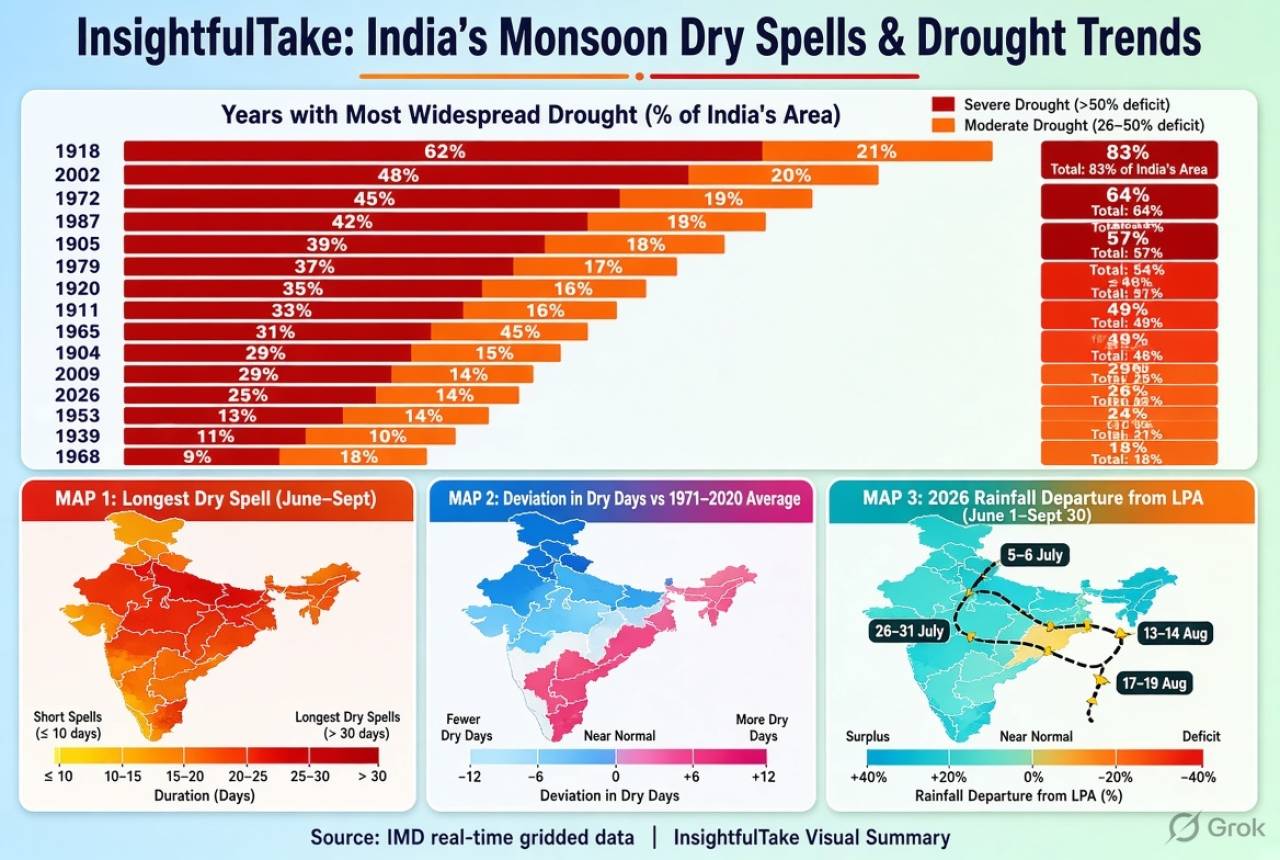
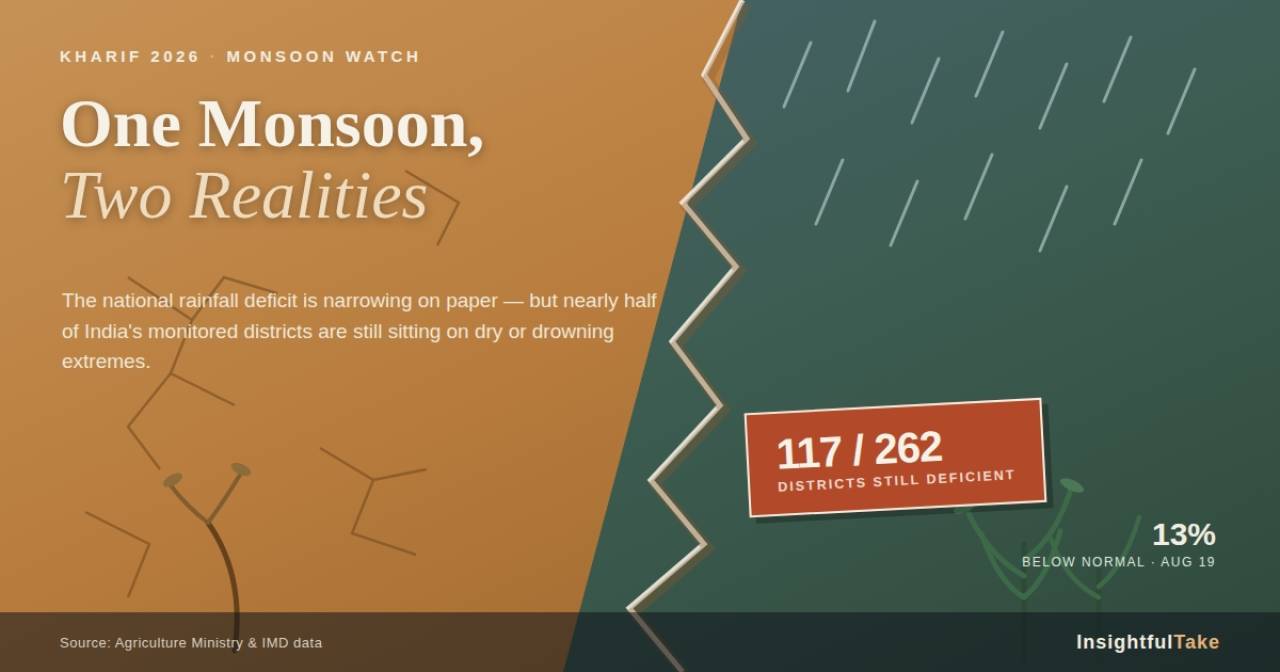
According to the India Meteorological Department (IMD), cumulative rainfall between October 1 and November 11 was 32% below the long-period average nationally.
Central India recorded a rainfall deficit of 48%, while eastern and northeastern India experienced a shortfall of 52%.
Such uneven rainfall distribution can have serious consequences for Indian agriculture, where a substantial number of farmers remain dependent on rainfall rather than assured irrigation.
The IMD has also indicated that very strong El Niño conditions are developing over the equatorial Pacific and could persist through November and December. El Niño refers to the periodic warming of sea surface temperatures in the central and eastern equatorial Pacific. The phenomenon can influence rainfall patterns in India.
Although its impact varies from one season to another, El Niño conditions are generally associated with a risk of weaker monsoon rainfall. The possibility of continuing moisture stress could affect crops that depend on adequate soil moisture during their early growth stages.
Nishant Vishwakarma, an agribusiness research analyst at Aglaia.ai, has also expressed concern over delayed sowing because of poor soil moisture and the significant post-monsoon rainfall deficit.
A developing weather system over the Bay of Bengal could bring rainfall to parts of the southern peninsula. The IMD's November 16 bulletin also forecast heavy to very heavy rainfall over coastal Andhra Pradesh on November 19 and 20 as the system intensified and moved towards the coast.
However, rainfall in selected regions may not compensate for the broader moisture deficit across the country.
Food Inflation Could Face Fresh Pressure
The agricultural slowdown comes at a time when food prices are already contributing to inflationary pressure.
India's retail inflation increased to 0.71% in October, crossing the Reserve Bank of India's lower tolerance limit of 2%?
Correction: The newspaper report states that retail inflation rose to 0.71%?
The reported figure in the supplied article is 6.09% in October, exceeding the RBI's upper tolerance limit of 6% under its 2%-6% inflation band. Food was identified as the biggest contributor to the pressure, with food inflation rising to 8.94% in October from 7.74% in September.
If delayed sowing eventually translates into lower production, food prices could face additional pressure in the coming months. Wheat, pulses and edible oils are particularly important in household consumption, making their availability and affordability a matter of national concern.
Nevertheless, the current decline in sown area should not automatically be interpreted as a corresponding fall in final production. Farmers may still increase coverage as weather conditions improve, and crop yields will depend on rainfall, irrigation, temperature and other conditions during the growing season.
Horticulture Offers a More Positive Picture
Interestingly, the broader agricultural outlook is not entirely negative. India's horticulture production is estimated to increase by 4.4% year-on-year to 369.6 million tonnes in the 2025-26 crop year, despite a reduction in the area under cultivation.
The government estimates that fruit production will increase by 4.6% to 123.1 million tonnes, supported by improved output of banana, mango, papaya, apple, pomegranate and jackfruit.
Farmers are also gradually diversifying beyond traditional crops towards fruits, vegetables, flowers, spices, plantation crops and medicinal plants.
This transition could create new opportunities for agricultural incomes and reduce dependence on a limited range of crops. However, diversification also requires better storage facilities, transportation, market access and investment in agricultural infrastructure.
The Road Ahead for Indian Agriculture
The November sowing figures underline the vulnerability of India's agricultural calendar to weather disruptions. Timely harvesting, adequate soil moisture and predictable rainfall remain essential for maintaining production levels.
For farmers, delayed sowing is not merely a statistical setback. It can mean higher cultivation costs, uncertainty over crop selection and the risk of lower returns.
The government and agricultural institutions will need to closely monitor sowing progress, improve access to irrigation and provide farmers with timely weather information. Crop insurance, quality seeds and region-specific agricultural advice can also help reduce the risks associated with changing climatic conditions.
India's agricultural challenge is no longer limited to increasing the area under cultivation. It increasingly involves making farming resilient to unpredictable weather while protecting farmers' incomes and keeping food affordable.
The coming weeks will be crucial in determining whether the current sowing deficit can be recovered before the winter cropping season advances further.




















Leave a Comment