
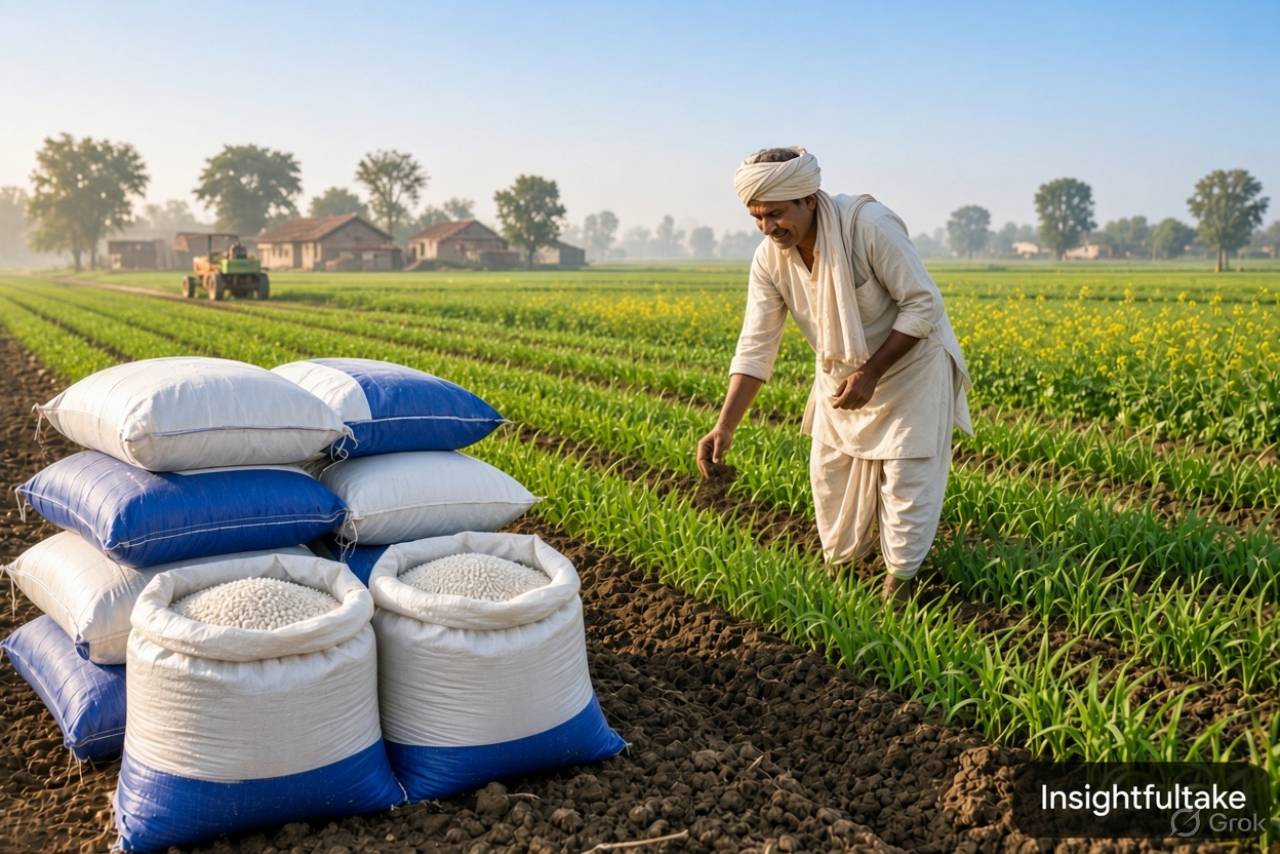
India’s rabi season begins with higher fertiliser stocks, stronger seed availability and a push for faster payments to farmers.
India has entered the 2026-27 rabi season with substantially higher fertiliser stocks than it had at the same stage last year. The opening stock is around 16.4 million tonnes, compared with 12.3 million tonnes a year earlier, giving the country an additional 4.1 million tonnes at the start of the winter sowing season.
For farmers, availability at this stage matters. Fertiliser shortages during peak sowing can disrupt crop planning, raise concerns about prices and leave farmers scrambling for supplies.
Union Agriculture Minister Shivraj Singh Chouhan shared the figures at a press conference following the National Agriculture Conference. According to the government’s assessment, the country will require about 38.1 million tonnes of fertiliser during the rabi season.
The requirement includes around 19.9 million tonnes of urea, 5.5 million tonnes of DAP, 7.9 million tonnes of NPK fertilisers, 3.1 million tonnes of single super phosphate and 1.6 million tonnes of muriate of potash.
The higher opening stock gives the supply system a larger cushion as demand rises across wheat, mustard, gram, pulses and other rabi crops.
Fertiliser sales were lower during kharif
The stronger opening position comes after fertiliser sales during the 2026 kharif season remained below the government’s assessed requirement.
Urea sales stood at 17.8 million tonnes against a requirement of 19 million tonnes. DAP sales were 4.5 million tonnes compared with a requirement of 5.6 million tonnes. Overall fertiliser sales were around 32.3 million tonnes against an estimated requirement of 38.4 million tonnes.
The government has linked part of the decline to tighter monitoring through the digital fertiliser sales system. Sales were around 27 percent lower than the previous year, with a sharper decline reported in border districts.
At the same time, nearly 88 percent of fertiliser purchases took place within the recommended fertiliser-use framework. The figure points to a greater emphasis on monitoring how different nutrients are being used rather than simply tracking total sales.
Seed availability adds another layer of preparation
Fertiliser is only one part of the equation. The availability of quality seed will also influence how smoothly the rabi season progresses.
The government says around 30.7 million quintals of certified seed are required for the season, while an additional 4.9 million quintals are available. Supplies are reported to be adequate for major crop groups, including cereals, potato, pulses and oilseeds.
The challenge now is distribution. Seed available at the national or state level is of little use to farmers if it does not reach local markets before sowing. States and agencies have therefore been asked to coordinate to ensure timely movement of stocks.
The Centre is also encouraging states to join the SATHI portal, a digital system intended to improve seed traceability from production to the farmer. The objective is to make it easier to track the movement of seed and reduce the circulation of counterfeit or poor-quality varieties.
For farmers, better traceability can make a practical difference. Knowing where seed has come from and whether it has passed the required certification process can reduce the risk of investing an entire crop cycle in unreliable planting material.
Faster payments for pulse farmers
Another measure concerns farmers selling pulses through government procurement agencies.
States have been asked to maintain revolving funds with procurement agencies so that payments can reach farmers within 72 hours of the sale of their produce.
Timely payment is particularly important for small farmers, who may have to borrow money or sell produce quickly to meet household and cultivation expenses. A delay in receiving procurement payments can increase that financial pressure.
The 72-hour target, if implemented effectively, could shorten the gap between selling the crop and receiving the money.
The real test will be delivery
Higher fertiliser stocks provide a stronger starting position, but the numbers alone do not guarantee a trouble-free rabi season.
Fertiliser and seed have to reach the districts and villages where demand is highest. Distribution, transport, local availability and monitoring will determine whether the additional stocks translate into an easier sowing season for farmers.
The wider agricultural environment also remains uncertain. Weather conditions, input costs, irrigation availability and market prices will continue to affect farm decisions.
For millions of farmers, however, having fertiliser and certified seed available at the beginning of the season removes one important source of uncertainty.
Rabi crops such as wheat, mustard, gram, pulses and oilseeds are central to both food supplies and farm incomes across large parts of India. A disruption at the beginning of the season can have consequences well beyond the farm, affecting rural markets, food prices and household incomes.
The 2026-27 season therefore begins with a relatively stronger supply position for two basic agricultural inputs. Whether that advantage is sustained will depend on how effectively the Centre, states and local agencies manage distribution in the weeks ahead.
For farmers preparing their fields, the most important question is not how large the national stock is, but whether the fertiliser and seed they need are available when they need them. That is where the government’s preparedness will ultimately be tested.
India has entered the 2026-27 rabi season with substantially higher fertiliser stocks than it had at the same stage last year. The opening stock is around 16.4 million tonnes, compared with 12.3 million tonnes a year earlier, giving the country an additional 4.1 million tonnes at the start of the winter sowing season.
For farmers, availability at this stage matters. Fertiliser shortages during peak sowing can disrupt crop planning, raise concerns about prices and leave farmers scrambling for supplies.
Union Agriculture Minister Shivraj Singh Chouhan shared the figures at a press conference following the National Agriculture Conference. According to the government’s assessment, the country will require about 38.1 million tonnes of fertiliser during the rabi season.
The requirement includes around 19.9 million tonnes of urea, 5.5 million tonnes of DAP, 7.9 million tonnes of NPK fertilisers, 3.1 million tonnes of single super phosphate and 1.6 million tonnes of muriate of potash.
The higher opening stock gives the supply system a larger cushion as demand rises across wheat, mustard, gram, pulses and other rabi crops.
Fertiliser sales were lower during kharif
The stronger opening position comes after fertiliser sales during the 2026 kharif season remained below the government’s assessed requirement.
Urea sales stood at 17.8 million tonnes against a requirement of 19 million tonnes. DAP sales were 4.5 million tonnes compared with a requirement of 5.6 million tonnes. Overall fertiliser sales were around 32.3 million tonnes against an estimated requirement of 38.4 million tonnes.
The government has linked part of the decline to tighter monitoring through the digital fertiliser sales system. Sales were around 27 percent lower than the previous year, with a sharper decline reported in border districts.
At the same time, nearly 88 percent of fertiliser purchases took place within the recommended fertiliser-use framework. The figure points to a greater emphasis on monitoring how different nutrients are being used rather than simply tracking total sales.
Seed availability adds another layer of preparation
Fertiliser is only one part of the equation. The availability of quality seed will also influence how smoothly the rabi season progresses.
The government says around 30.7 million quintals of certified seed are required for the season, while an additional 4.9 million quintals are available. Supplies are reported to be adequate for major crop groups, including cereals, potato, pulses and oilseeds.
The challenge now is distribution. Seed available at the national or state level is of little use to farmers if it does not reach local markets before sowing. States and agencies have therefore been asked to coordinate to ensure timely movement of stocks.
The Centre is also encouraging states to join the SATHI portal, a digital system intended to improve seed traceability from production to the farmer. The objective is to make it easier to track the movement of seed and reduce the circulation of counterfeit or poor-quality varieties.
For farmers, better traceability can make a practical difference. Knowing where seed has come from and whether it has passed the required certification process can reduce the risk of investing an entire crop cycle in unreliable planting material.
Faster payments for pulse farmers
Another measure concerns farmers selling pulses through government procurement agencies.
States have been asked to maintain revolving funds with procurement agencies so that payments can reach farmers within 72 hours of the sale of their produce.
Timely payment is particularly important for small farmers, who may have to borrow money or sell produce quickly to meet household and cultivation expenses. A delay in receiving procurement payments can increase that financial pressure.
The 72-hour target, if implemented effectively, could shorten the gap between selling the crop and receiving the money.
The real test will be delivery
Higher fertiliser stocks provide a stronger starting position, but the numbers alone do not guarantee a trouble-free rabi season.
Fertiliser and seed have to reach the districts and villages where demand is highest. Distribution, transport, local availability and monitoring will determine whether the additional stocks translate into an easier sowing season for farmers.
The wider agricultural environment also remains uncertain. Weather conditions, input costs, irrigation availability and market prices will continue to affect farm decisions.
For millions of farmers, however, having fertiliser and certified seed available at the beginning of the season removes one important source of uncertainty.
Rabi crops such as wheat, mustard, gram, pulses and oilseeds are central to both food supplies and farm incomes across large parts of India. A disruption at the beginning of the season can have consequences well beyond the farm, affecting rural markets, food prices and household incomes.
The 2026-27 season therefore begins with a relatively stronger supply position for two basic agricultural inputs. Whether that advantage is sustained will depend on how effectively the Centre, states and local agencies manage distribution in the weeks ahead.
For farmers preparing their fields, the most important question is not how large the national stock is, but whether the fertiliser and seed they need are available when they need them. That is where the government’s preparedness will ultimately be tested.






















Leave a Comment