
India's shrinking rice reserves are no longer just about weather or exports. A major shift towards ethanol production is transforming how the country's food stocks are used, raising fresh questions about the balance between energy security and food securit
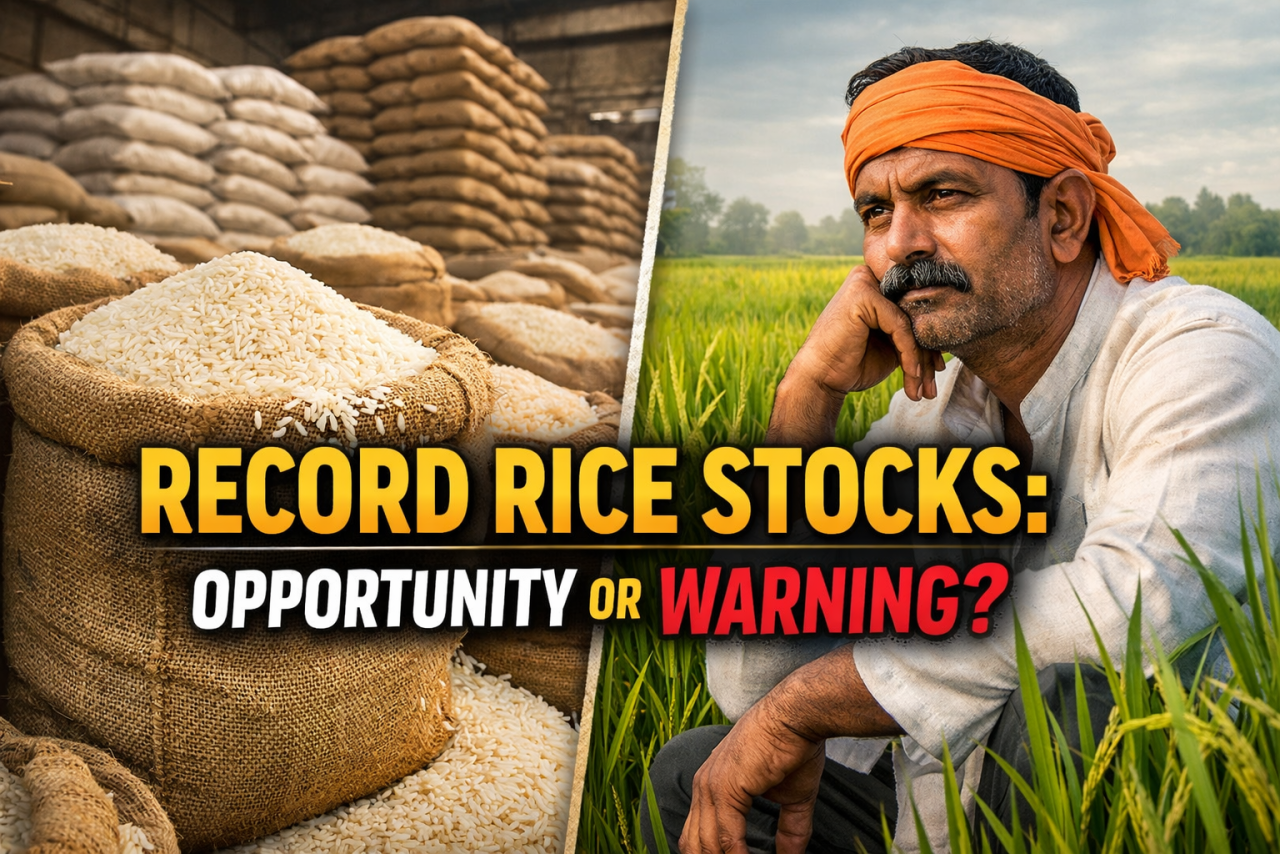
India's central rice stockpile has fallen sharply over the past year, and this time the cause is neither a weak monsoon nor a surge in exports. Instead, it reflects a deliberate policy choice to channel millions of tonnes of surplus rice into ethanol production rather than food distribution.
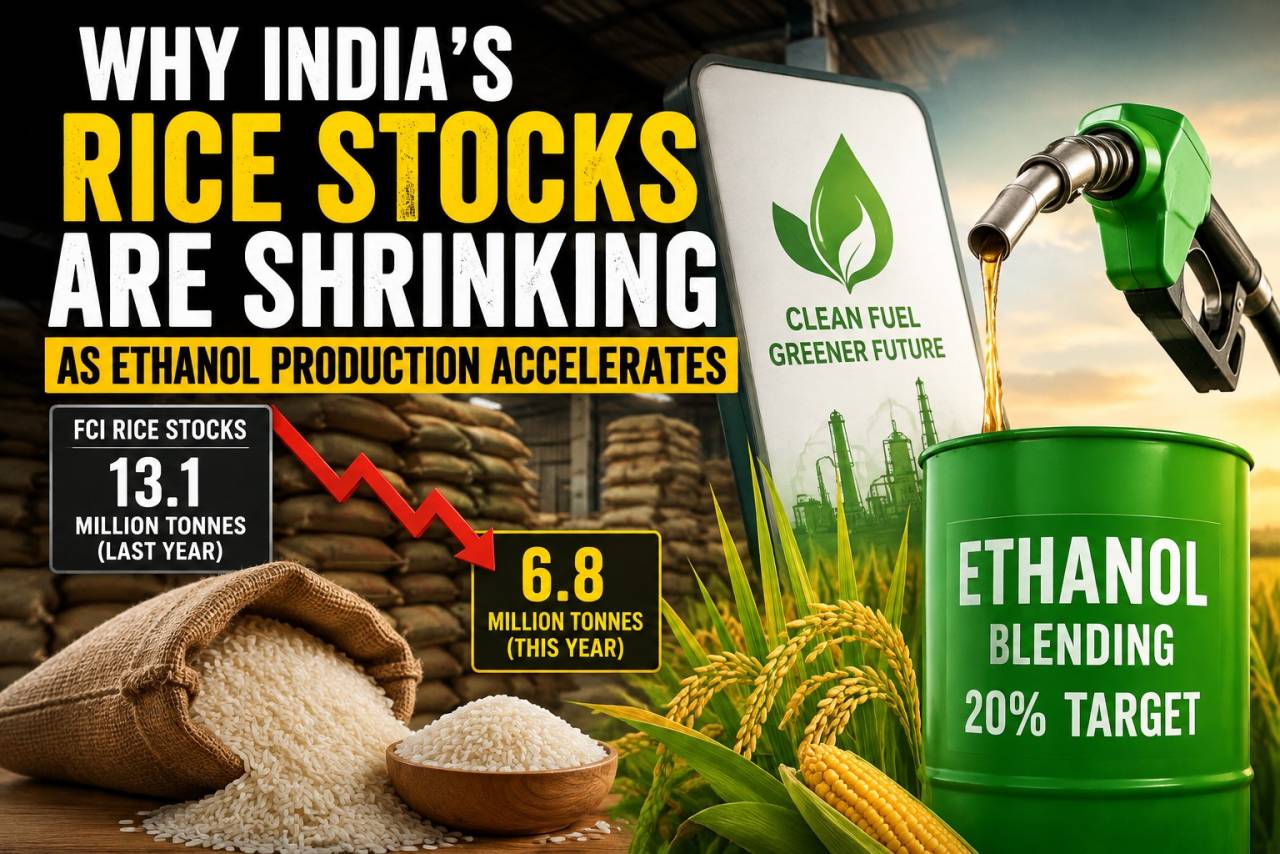
Rice stocks held by the Food Corporation of India (FCI) currently stand at around 6.8 million tonnes, less than half of the 13.1 million tonnes recorded during the same period last year. Maize stocks have followed a similar trend, with the grain increasingly feeding India's expanding ethanol industry. Together, rice and maize now form the backbone of the country's grain-based ethanol production, a segment that barely existed at scale just five years ago.
The Blending Target Behind the Shift
The transformation is rooted in India's ethanol blending programme, which seeks to mix 20 per cent ethanol with petrol nationwide. When the target was announced for 2021-22, ethanol blending stood at roughly 10 per cent and relied almost entirely on sugarcane-based feedstock such as molasses and cane juice.
Achieving the 20 per cent target within a few years exposed the limitations of sugarcane. Crushing is seasonal, storage is expensive, and diverting more cane juice to ethanol directly affects sugar production and food security. Grain therefore emerged as the practical alternative.
Oil marketing companies purchasing ethanol from distilleries now require grain-based producers to source at least 40 per cent of their feedstock from FCI rice, a condition included in recent procurement tenders. This single policy change has significantly altered sourcing patterns across the ethanol industry.
According to industry data, FCI rice supplied to distilleries increased from 3.2 million tonnes in the previous ethanol supply year to 4.4 million tonnes in the current one. Stocks of broken rice, once primarily used in poultry feed and low-value food products, have also declined sharply as larger quantities are diverted to ethanol production.
This is not the first time India has experimented with grain-based ethanol. In 2023, rice was temporarily removed from the programme after an El Niño-induced weak monsoon raised concerns over food security. The government suspended rice allocation for ethanol before restoring it once procurement improved and buffer stocks stabilised. The current expansion builds on that reversal but on a much larger scale and under stricter sourcing requirements.
Why Sugarcane Alone Cannot Meet Demand
Industry experts point to a structural limitation in relying solely on sugarcane. Ethanol production from sugarcane generally supports operations for only about five months each year because crushing is tied to the harvest season. Long-term storage of molasses is also costly and logistically challenging.
Grain offers a more dependable solution. Rice and maize can be stored throughout the year, providing distilleries with a steady supply while allowing the government to utilise surplus foodgrain that would otherwise occupy warehouse space.
Economics also favours grain-based ethanol. Surplus FCI rice is supplied to distilleries at lower prices than grain purchased from the open market, making it an attractive option for ethanol producers. Sugar industry representatives, however, argue that the rapid expansion of grain-based ethanol has reduced the market share they built over the past decade. Sugarcane, which once accounted for nearly two-thirds of ethanol feedstock, now contributes closer to one-third as grain-based production continues to grow.
Food Security Safeguards Remain
The government maintains that food security is not being compromised. Officials note that rice allocations under the National Food Security Act have increased in recent years, while open market sales have resumed to moderate retail prices.
According to the government, only surplus grain exceeding prescribed buffer norms is diverted to ethanol production. Officials also point out that maize now supports a growing share of ethanol output, reducing dependence on rice alone.
Nevertheless, official data presented in Parliament illustrates how rapidly the policy has expanded. Foodgrain allocated for ethanol production has risen from around 0.05 million tonnes in 2020-21 to well over one million tonnes in the current year. In just a few years, ethanol has evolved from a supplementary agricultural initiative into a central pillar of India's energy transition.
Final Take
With the 20 per cent ethanol blending target already achieved ahead of schedule during several months, attention is now turning to the long-term sustainability of grain-based production.
A weak harvest, rising domestic demand, or renewed export opportunities could quickly challenge the surplus assumptions underpinning the programme. Balancing energy security with food security will therefore become increasingly important as India deepens its commitment to biofuels.
For now, one reality is unmistakable. India's fuel tanks and its food warehouses are more closely connected than ever before, and the decisions made today will shape both agricultural policy and the country's clean energy ambitions for years to come.
India's central rice stockpile has fallen sharply over the past year, and this time the cause is neither a weak monsoon nor a surge in exports. Instead, it reflects a deliberate policy choice to channel millions of tonnes of surplus rice into ethanol production rather than food distribution.
Rice stocks held by the Food Corporation of India (FCI) currently stand at around 6.8 million tonnes, less than half of the 13.1 million tonnes recorded during the same period last year. Maize stocks have followed a similar trend, with the grain increasingly feeding India's expanding ethanol industry. Together, rice and maize now form the backbone of the country's grain-based ethanol production, a segment that barely existed at scale just five years ago.
The Blending Target Behind the Shift
The transformation is rooted in India's ethanol blending programme, which seeks to mix 20 per cent ethanol with petrol nationwide. When the target was announced for 2021-22, ethanol blending stood at roughly 10 per cent and relied almost entirely on sugarcane-based feedstock such as molasses and cane juice.
Achieving the 20 per cent target within a few years exposed the limitations of sugarcane. Crushing is seasonal, storage is expensive, and diverting more cane juice to ethanol directly affects sugar production and food security. Grain therefore emerged as the practical alternative.
Oil marketing companies purchasing ethanol from distilleries now require grain-based producers to source at least 40 per cent of their feedstock from FCI rice, a condition included in recent procurement tenders. This single policy change has significantly altered sourcing patterns across the ethanol industry.
According to industry data, FCI rice supplied to distilleries increased from 3.2 million tonnes in the previous ethanol supply year to 4.4 million tonnes in the current one. Stocks of broken rice, once primarily used in poultry feed and low-value food products, have also declined sharply as larger quantities are diverted to ethanol production.
This is not the first time India has experimented with grain-based ethanol. In 2023, rice was temporarily removed from the programme after an El Niño-induced weak monsoon raised concerns over food security. The government suspended rice allocation for ethanol before restoring it once procurement improved and buffer stocks stabilised. The current expansion builds on that reversal but on a much larger scale and under stricter sourcing requirements.
Why Sugarcane Alone Cannot Meet Demand
Industry experts point to a structural limitation in relying solely on sugarcane. Ethanol production from sugarcane generally supports operations for only about five months each year because crushing is tied to the harvest season. Long-term storage of molasses is also costly and logistically challenging.
Grain offers a more dependable solution. Rice and maize can be stored throughout the year, providing distilleries with a steady supply while allowing the government to utilise surplus foodgrain that would otherwise occupy warehouse space.
Economics also favours grain-based ethanol. Surplus FCI rice is supplied to distilleries at lower prices than grain purchased from the open market, making it an attractive option for ethanol producers. Sugar industry representatives, however, argue that the rapid expansion of grain-based ethanol has reduced the market share they built over the past decade. Sugarcane, which once accounted for nearly two-thirds of ethanol feedstock, now contributes closer to one-third as grain-based production continues to grow.
Food Security Safeguards Remain
The government maintains that food security is not being compromised. Officials note that rice allocations under the National Food Security Act have increased in recent years, while open market sales have resumed to moderate retail prices.
According to the government, only surplus grain exceeding prescribed buffer norms is diverted to ethanol production. Officials also point out that maize now supports a growing share of ethanol output, reducing dependence on rice alone.
Nevertheless, official data presented in Parliament illustrates how rapidly the policy has expanded. Foodgrain allocated for ethanol production has risen from around 0.05 million tonnes in 2020-21 to well over one million tonnes in the current year. In just a few years, ethanol has evolved from a supplementary agricultural initiative into a central pillar of India's energy transition.
Final Take
With the 20 per cent ethanol blending target already achieved ahead of schedule during several months, attention is now turning to the long-term sustainability of grain-based production.
A weak harvest, rising domestic demand, or renewed export opportunities could quickly challenge the surplus assumptions underpinning the programme. Balancing energy security with food security will therefore become increasingly important as India deepens its commitment to biofuels.
For now, one reality is unmistakable. India's fuel tanks and its food warehouses are more closely connected than ever before, and the decisions made today will shape both agricultural policy and the country's clean energy ambitions for years to come.


















Leave a Comment