
India’s sugar sector is undergoing its biggest transformation in 60 years—and this time, farmers could be the biggest winners.
For nearly sixty years, India’s sugar sector has operated under rules that belonged to another era. The Sugarcane (Control) Order of 1966 guided how farmers sold their crop and how mills purchased it. Over time, farming practices changed, irrigation improved, and mills adopted better technology. But the legal structure remained slow to evolve. This gap often created stress for farmers, especially when payments were delayed or prices fluctuated.
The draft Sugarcane (Control) Order, 2026 signals a long-awaited shift. It is not just a policy update. It is an attempt to align the sugar sector with today’s economic realities. For millions of sugarcane farmers in states like Uttar Pradesh, Maharashtra, and Karnataka, the reforms promise more stability, better price security, and timely payments.
Ethanol Brings a New Direction
One of the most important changes is the recognition of ethanol as a main product of the sugar industry. Earlier, ethanol was treated as a secondary output. Mills focused mainly on sugar production, and ethanol was seen as an extra stream of income. The new policy changes that thinking.
The government has introduced a fixed conversion formula. It states that 600 liters of ethanol will be treated as equal to one tonne of sugar. This may sound technical, but its impact is practical. It connects the value of sugarcane not only to sugar prices but also to the growing ethanol market.
This shift matters because sugar prices are not always stable. They depend on global demand and supply. When prices fall, mills often struggle financially, and farmers are the first to feel the impact through delayed payments. Ethanol offers a cushion. India’s push for blending ethanol with fuel, especially under the E20 target, creates steady demand. With two strong revenue streams, mills are in a better position to manage cash flow and clear dues on time.
Stronger Focus on Timely Payments
Delayed payments have been a long-standing issue in the sugar sector. Farmers often wait weeks or even months to receive money after delivering their crop. The 2026 draft tries to address this concern with clearer enforcement.
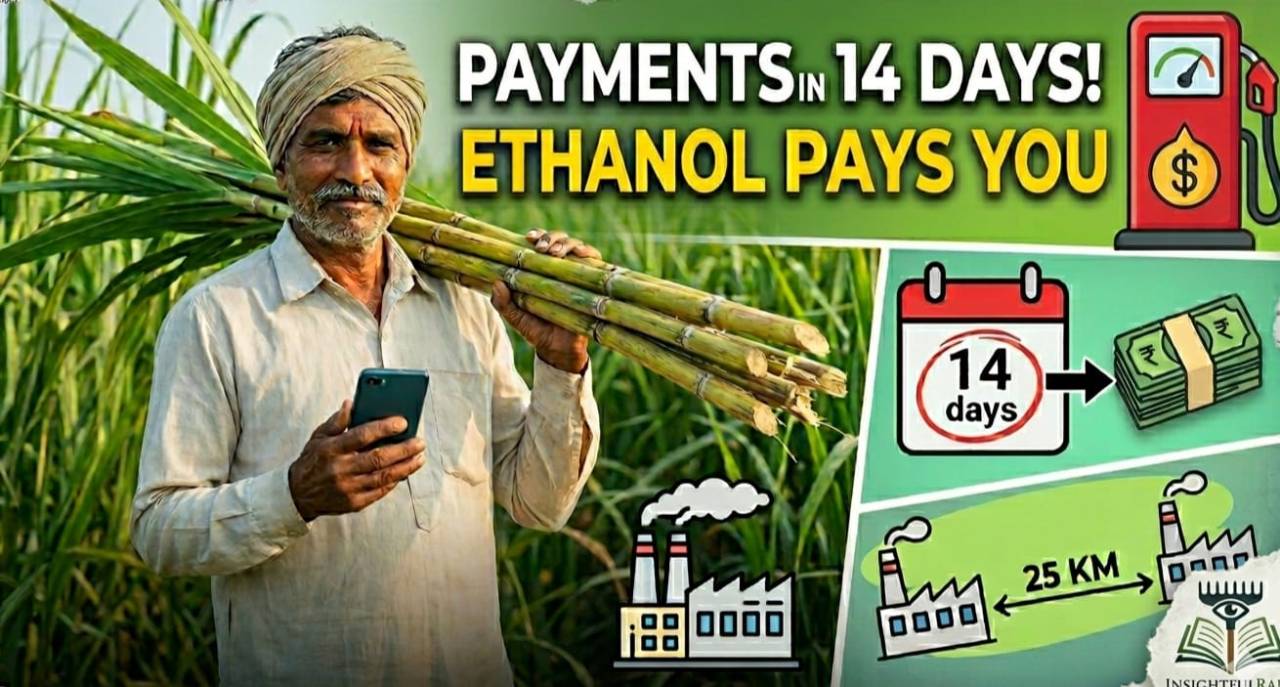
The rule remains simple. Mills must pay farmers within 14 days of cane delivery. If they fail to do so, they must pay interest at 15 percent per year on the pending amount. While this rule existed earlier, it was not always followed strictly.
The new framework aims to close that gap. It brings more buyers, including ethanol producers and khandsari units, under the same rule. This reduces chances of delay and creates a more disciplined system. For farmers, it means predictable income and less financial pressure during the cropping cycle.
A Wider Command Area for Stability
Another important proposal is increasing the minimum distance between two sugar mills from 15 km to 25 km. This rule defines the command area of each mill. It decides which farmers supply cane to which mill.
In the past, shorter distances led to intense competition among mills. Some tried to attract farmers from nearby areas, which created confusion and disrupted supply chains. In some cases, farmers faced uncertainty about where to sell their crop.
By increasing the distance, the government wants to create a more organized system. Each mill will have a clearer and larger area to source cane. This helps in building stable relationships between farmers and mills. It also reduces sudden changes in pricing or procurement practices.
Bringing Khandsari Units into the System
Khandsari units, which produce unrefined sugar, have often worked outside strict regulation. Many farmers sell to these units because they are local and accessible. However, the lack of clear rules sometimes meant weaker price protection.
The new policy changes this by bringing khandsari units under a licensing system. More importantly, these units will now have to pay the Fair and Remunerative Price (FRP) to farmers. This ensures a minimum guaranteed price, no matter where the farmer sells the crop.
This step creates a level playing field. Farmers can choose between large mills and smaller units without worrying about price differences or payment risks.
Moving Toward a Bio-Energy Economy
The broader message of the 2026 reforms is clear. India’s sugar sector is no longer limited to food production. It is becoming part of the country’s energy strategy.
For farmers, this shift is significant. Sugarcane is no longer just a crop for sugar. It is also a source of clean fuel. This dual role reduces dependence on a single market and opens new opportunities for income growth.
At the same time, the policy is still in draft form. The government has invited feedback from stakeholders until May 20, 2026. This gives farmers, cooperatives, and industry players a chance to shape the final outcome.
Final Take
India’s Sugar Reforms 2026 aim to solve long-standing issues in the sector. By promoting ethanol, enforcing timely payments, regulating all buyers, and improving market structure, the policy tries to bring balance and transparency.
If implemented properly, these reforms can reduce payment delays, improve farmer confidence, and strengthen the rural economy. The real success of this change will depend on how effectively it protects farmers while supporting industry growth.
For nearly sixty years, India’s sugar sector has operated under rules that belonged to another era. The Sugarcane (Control) Order of 1966 guided how farmers sold their crop and how mills purchased it. Over time, farming practices changed, irrigation improved, and mills adopted better technology. But the legal structure remained slow to evolve. This gap often created stress for farmers, especially when payments were delayed or prices fluctuated.
The draft Sugarcane (Control) Order, 2026 signals a long-awaited shift. It is not just a policy update. It is an attempt to align the sugar sector with today’s economic realities. For millions of sugarcane farmers in states like Uttar Pradesh, Maharashtra, and Karnataka, the reforms promise more stability, better price security, and timely payments.
Ethanol Brings a New Direction
One of the most important changes is the recognition of ethanol as a main product of the sugar industry. Earlier, ethanol was treated as a secondary output. Mills focused mainly on sugar production, and ethanol was seen as an extra stream of income. The new policy changes that thinking.
The government has introduced a fixed conversion formula. It states that 600 liters of ethanol will be treated as equal to one tonne of sugar. This may sound technical, but its impact is practical. It connects the value of sugarcane not only to sugar prices but also to the growing ethanol market.
This shift matters because sugar prices are not always stable. They depend on global demand and supply. When prices fall, mills often struggle financially, and farmers are the first to feel the impact through delayed payments. Ethanol offers a cushion. India’s push for blending ethanol with fuel, especially under the E20 target, creates steady demand. With two strong revenue streams, mills are in a better position to manage cash flow and clear dues on time.
Stronger Focus on Timely Payments
Delayed payments have been a long-standing issue in the sugar sector. Farmers often wait weeks or even months to receive money after delivering their crop. The 2026 draft tries to address this concern with clearer enforcement.
The rule remains simple. Mills must pay farmers within 14 days of cane delivery. If they fail to do so, they must pay interest at 15 percent per year on the pending amount. While this rule existed earlier, it was not always followed strictly.
The new framework aims to close that gap. It brings more buyers, including ethanol producers and khandsari units, under the same rule. This reduces chances of delay and creates a more disciplined system. For farmers, it means predictable income and less financial pressure during the cropping cycle.
A Wider Command Area for Stability
Another important proposal is increasing the minimum distance between two sugar mills from 15 km to 25 km. This rule defines the command area of each mill. It decides which farmers supply cane to which mill.
In the past, shorter distances led to intense competition among mills. Some tried to attract farmers from nearby areas, which created confusion and disrupted supply chains. In some cases, farmers faced uncertainty about where to sell their crop.
By increasing the distance, the government wants to create a more organized system. Each mill will have a clearer and larger area to source cane. This helps in building stable relationships between farmers and mills. It also reduces sudden changes in pricing or procurement practices.
Bringing Khandsari Units into the System
Khandsari units, which produce unrefined sugar, have often worked outside strict regulation. Many farmers sell to these units because they are local and accessible. However, the lack of clear rules sometimes meant weaker price protection.
The new policy changes this by bringing khandsari units under a licensing system. More importantly, these units will now have to pay the Fair and Remunerative Price (FRP) to farmers. This ensures a minimum guaranteed price, no matter where the farmer sells the crop.
This step creates a level playing field. Farmers can choose between large mills and smaller units without worrying about price differences or payment risks.
Moving Toward a Bio-Energy Economy
The broader message of the 2026 reforms is clear. India’s sugar sector is no longer limited to food production. It is becoming part of the country’s energy strategy.
For farmers, this shift is significant. Sugarcane is no longer just a crop for sugar. It is also a source of clean fuel. This dual role reduces dependence on a single market and opens new opportunities for income growth.
At the same time, the policy is still in draft form. The government has invited feedback from stakeholders until May 20, 2026. This gives farmers, cooperatives, and industry players a chance to shape the final outcome.
Final Take
India’s Sugar Reforms 2026 aim to solve long-standing issues in the sector. By promoting ethanol, enforcing timely payments, regulating all buyers, and improving market structure, the policy tries to bring balance and transparency.
If implemented properly, these reforms can reduce payment delays, improve farmer confidence, and strengthen the rural economy. The real success of this change will depend on how effectively it protects farmers while supporting industry growth.


















Leave a Comment