
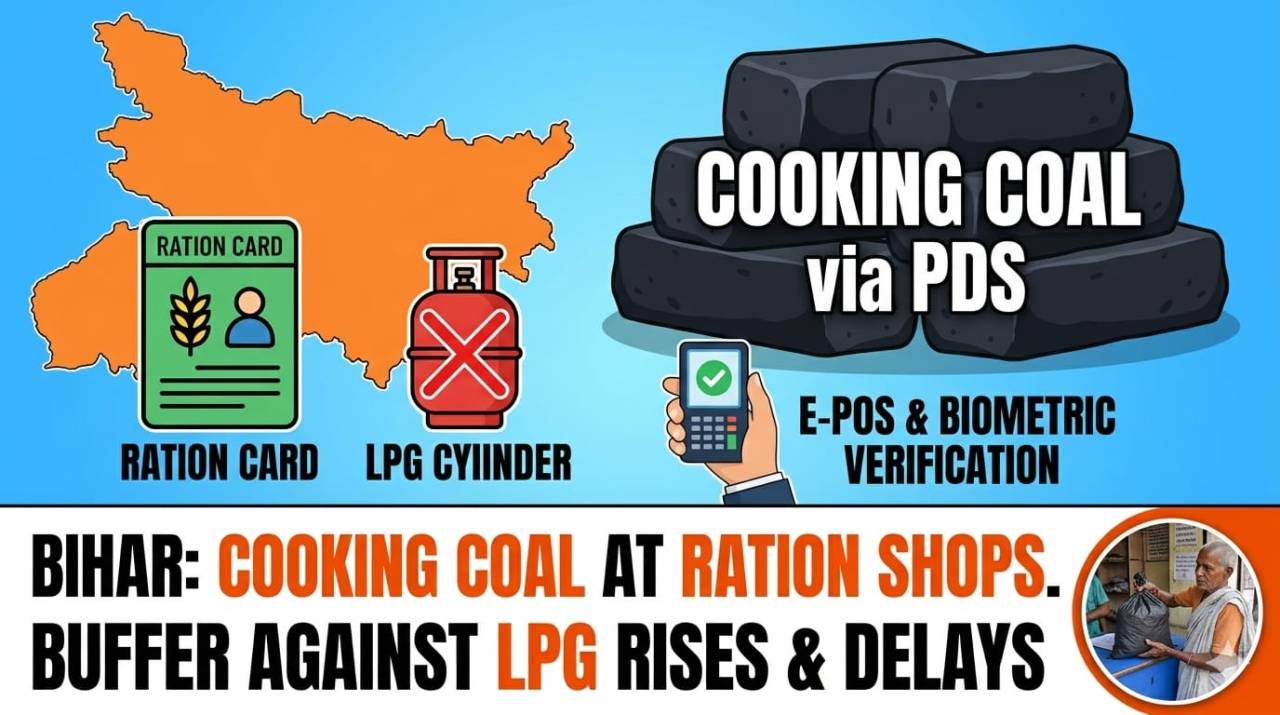
When LPG cylinders fail to arrive on time, Bihar turns to coal—can this solve the state’s rural cooking fuel crisis?
In a significant move to tackle rising fuel costs and supply gaps, the Bihar government has launched a first-of-its-kind initiative. The state will now distribute coal for domestic cooking through the Public Distribution System (PDS). This policy aims to protect low-income households from the volatile prices of Liquefied Petroleum Gas (LPG) and the logistical hurdles often found in rural energy supply chains.
The decision comes at a time when global energy markets are facing pressure due to conflicts in West Asia. By providing an alternative fuel source, the Bihar government is prioritizing energy security for its most vulnerable citizens.
Scope and Scale of the Project
The sheer scale of this initiative is massive. According to government officials, the scheme is set to cover approximately 21 million ration card holders. This equates to an estimated 85.1 million people who are already registered under the National Food Security Act (NFSA).
To ensure the fuel reaches the grassroots level, the government will utilize its existing network of 52,055 fair price shops. While the scheme is broad, the primary focus remains on rural areas where LPG availability is often inconsistent or where the “refill gap” creates significant hardship for daily cooking needs.
How the Distribution Will Work
The logistics of moving coal from mines to kitchen stoves involve several key state and national agencies. Here is the breakdown of the operational plan:
- Sourcing: The Bihar State Mining Corporation Ltd will source the coal directly from Coal India Ltd.
- Pricing: Retail prices will not be uniform across the state. Instead, district-level committees will determine the final price based on specific transport costs to that region.
- Quantity: In the initial phase, a single household can access up to 100 kg of coal per month. This limit may be revised later based on actual demand and feedback.
- Technology: To prevent leakage and ensure the fuel reaches the intended hands, the supply will be integrated with the e-POS (electronic point of sale) system. Beneficiaries will need to use biometric authentication, just as they do for food grains.
Solving the LPG Crisis
While India has made great strides in LPG coverage, rural Bihar still faces “structural issues.” The state currently grapples with an average refill backlog of nearly five days, with over a dozen districts reporting even longer delays. In many rural sectors, there is a mandatory 45-day gap between cylinder refills, leaving families without a reliable way to cook for weeks at a time.
Abhay Kumar Singh, Secretary of the Food and Consumer Protection Department, noted that this move is a direct response to these domestic LPG concerns. By providing coal at PDS shops, the government offers a “buffer” fuel that ensures no kitchen goes cold due to a delayed truck or a price hike.
Timeline and Implementation
The proposal was first discussed during a crisis management meeting on March 30, chaired by Chief Secretary Pratyaya Amrit. Since then, the plan has been formalized through intense inter-departmental coordination.
While the policy is official, the physical roll-out is expected to take more than a month. This time is needed to finalize the logistics of procurement, transport routes, and the final pricing structures for each district.
What This Means for the Consumer
For the average ration card holder in Bihar, this means more choices and better security.
- Cost Stability: Coal provides a cheaper alternative when LPG prices spike.
- Accessibility: Instead of waiting for a delivery van, families can collect fuel from their local fair price shop.
- Reliability: It reduces the total dependence on a single fuel source.
As Bihar transitions into this new energy model, it sets a potential precedent for other states facing similar rural energy challenges. For now, the focus remains on getting the first 100 kg of coal into the hands of those who need it most.
In a significant move to tackle rising fuel costs and supply gaps, the Bihar government has launched a first-of-its-kind initiative. The state will now distribute coal for domestic cooking through the Public Distribution System (PDS). This policy aims to protect low-income households from the volatile prices of Liquefied Petroleum Gas (LPG) and the logistical hurdles often found in rural energy supply chains.
The decision comes at a time when global energy markets are facing pressure due to conflicts in West Asia. By providing an alternative fuel source, the Bihar government is prioritizing energy security for its most vulnerable citizens.
Scope and Scale of the Project
The sheer scale of this initiative is massive. According to government officials, the scheme is set to cover approximately 21 million ration card holders. This equates to an estimated 85.1 million people who are already registered under the National Food Security Act (NFSA).
To ensure the fuel reaches the grassroots level, the government will utilize its existing network of 52,055 fair price shops. While the scheme is broad, the primary focus remains on rural areas where LPG availability is often inconsistent or where the “refill gap” creates significant hardship for daily cooking needs.
How the Distribution Will Work
The logistics of moving coal from mines to kitchen stoves involve several key state and national agencies. Here is the breakdown of the operational plan:
- Sourcing: The Bihar State Mining Corporation Ltd will source the coal directly from Coal India Ltd.
- Pricing: Retail prices will not be uniform across the state. Instead, district-level committees will determine the final price based on specific transport costs to that region.
- Quantity: In the initial phase, a single household can access up to 100 kg of coal per month. This limit may be revised later based on actual demand and feedback.
- Technology: To prevent leakage and ensure the fuel reaches the intended hands, the supply will be integrated with the e-POS (electronic point of sale) system. Beneficiaries will need to use biometric authentication, just as they do for food grains.
Solving the LPG Crisis
While India has made great strides in LPG coverage, rural Bihar still faces “structural issues.” The state currently grapples with an average refill backlog of nearly five days, with over a dozen districts reporting even longer delays. In many rural sectors, there is a mandatory 45-day gap between cylinder refills, leaving families without a reliable way to cook for weeks at a time.
Abhay Kumar Singh, Secretary of the Food and Consumer Protection Department, noted that this move is a direct response to these domestic LPG concerns. By providing coal at PDS shops, the government offers a “buffer” fuel that ensures no kitchen goes cold due to a delayed truck or a price hike.
Timeline and Implementation
The proposal was first discussed during a crisis management meeting on March 30, chaired by Chief Secretary Pratyaya Amrit. Since then, the plan has been formalized through intense inter-departmental coordination.
While the policy is official, the physical roll-out is expected to take more than a month. This time is needed to finalize the logistics of procurement, transport routes, and the final pricing structures for each district.
What This Means for the Consumer
For the average ration card holder in Bihar, this means more choices and better security.
- Cost Stability: Coal provides a cheaper alternative when LPG prices spike.
- Accessibility: Instead of waiting for a delivery van, families can collect fuel from their local fair price shop.
- Reliability: It reduces the total dependence on a single fuel source.
As Bihar transitions into this new energy model, it sets a potential precedent for other states facing similar rural energy challenges. For now, the focus remains on getting the first 100 kg of coal into the hands of those who need it most.















Leave a Comment