
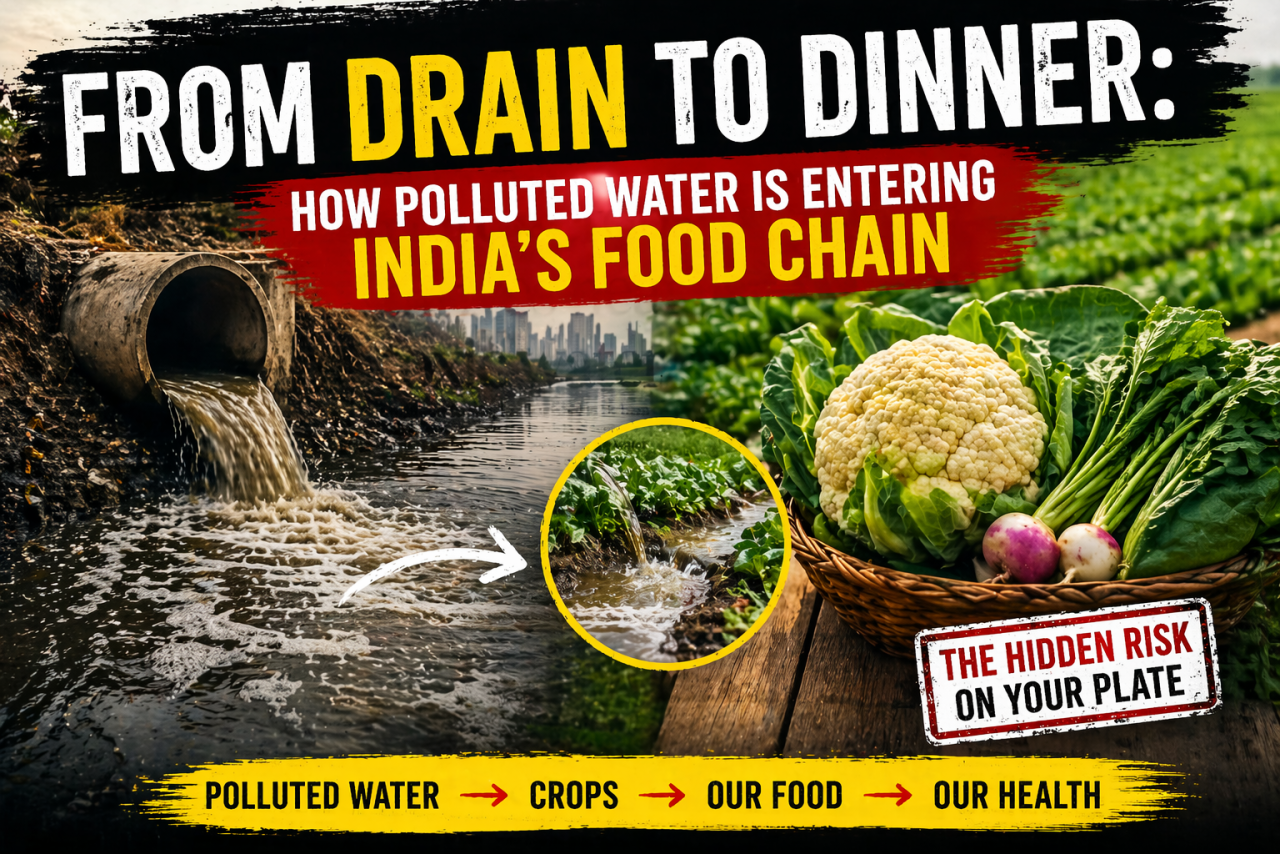
Across India’s urban fringes, crops irrigated with polluted water are making their way to markets, exposing a largely unregulated threat to public health.
India’s environmental crisis is often discussed through the lens of toxic air and polluted rivers. But there is another, quieter problem growing right in front of us—on our farms and eventually on our plates. In several regions, especially around expanding cities, vegetables are being cultivated using water drawn from polluted drains. What looks like a story of agricultural resilience is, in reality, a complex and worrying intersection of survival, scarcity, and public health.
Across peri-urban belts, farmers are dealing with a harsh truth: clean water is not always available. As cities expand, freshwater resources are increasingly diverted for domestic and industrial use. This leaves farmers with limited options. In many cases, the only consistent source of irrigation is wastewater flowing through nearby drains—often a mix of untreated sewage and industrial discharge.
Surprisingly, crops do not just survive in these conditions—they often grow well. Vegetables like cauliflower, spinach, and other greens appear healthy, sometimes even yielding better due to the nutrients present in wastewater. For farmers struggling with rising costs and uncertain incomes, this can feel like a practical solution. A good harvest means financial stability, and when options are limited, immediate survival takes priority over long-term concerns.
But this is where the story takes a troubling turn. The same water that helps crops grow may also carry harmful substances—heavy metals, toxic chemicals, and disease-causing pathogens. These contaminants can accumulate in the soil over time and be absorbed by the crops. Unlike visible damage, this kind of contamination is silent. The vegetables may look fresh and nutritious, but they can carry risks that are not easily detected.
For consumers, this creates an invisible chain of exposure. Most people have little information about how their food is grown or the quality of water used in irrigation. Produce from such farms enters local markets without any distinction. There are no labels, no warnings—just rows of green vegetables that appear no different from those grown under safer conditions. The journey from drain to dinner is seamless, and largely unnoticed.
The issue is not entirely new. Wastewater has been used in agriculture in many parts of the world, particularly in water-scarce regions. When properly treated, it can be a valuable resource, providing both water and nutrients to crops. However, the situation in many Indian farming clusters is different. The water used is often untreated or only partially treated, increasing the likelihood of harmful contamination.
Over time, the impact of such practices can be serious. Continuous exposure to polluted irrigation can degrade soil quality and reduce its long-term productivity. More importantly, it raises concerns about food safety. Scientific studies have linked the presence of heavy metals and harmful bacteria in food to various health issues, ranging from gastrointestinal problems to more severe chronic conditions. The risks may not be immediate, but they build gradually, making them harder to trace and address.
At the heart of the problem lies a difficult balance between necessity and safety. Farmers are not unaware of the risks, but their choices are constrained. Accessing clean water often requires infrastructure, investment, and policy support that are not always available. In the absence of reliable alternatives, wastewater becomes the default option rather than a deliberate choice.
This is where policy intervention becomes crucial. Addressing the issue requires more than just regulation—it demands a coordinated effort. Expanding wastewater treatment facilities, ensuring safe reuse of water, and creating affordable irrigation solutions for farmers can make a significant difference. At the same time, monitoring systems need to be strengthened to track contamination levels in both water and soil.
Awareness is equally important. Farmers need guidance on safer practices and access to technologies that reduce risk. Consumers, too, must become more informed. While it may not be practical to trace every vegetable back to its source, increased awareness can drive demand for better standards and greater transparency in the food supply chain.
It is also important to recognize that this situation reflects a larger environmental challenge. Water pollution does not remain confined to rivers or drains—it seeps into the very systems that sustain life. Agriculture, which depends heavily on natural resources, becomes both a victim and a carrier of this pollution. The result is a cycle that connects environmental degradation directly to human health.
Yet, there is a paradox in all this. The ability of crops to grow in such conditions highlights the adaptability of both nature and farmers. It shows how agriculture continues to function despite increasing pressure on resources. But resilience should not be mistaken for sustainability. Just because something works today does not mean it is safe for the future.
India stands at a critical point where environmental concerns can no longer be treated in isolation. Clean air, safe water, and healthy food are all interconnected. Ignoring one weakens the others. The image of lush green fields nourished by polluted drains may seem like a symbol of survival, but it is also a warning signal.
The path forward lies in acknowledging this uncomfortable reality and acting on it. Ensuring that farmers have access to clean irrigation sources is not just an agricultural priority—it is a public health necessity. Strengthening infrastructure, enforcing standards, and promoting awareness can gradually reduce the risks.
Because in the end, the question is not just about how crops are grown. It is about what reaches our plates, and what it means for the health of millions.
India’s environmental crisis is often discussed through the lens of toxic air and polluted rivers. But there is another, quieter problem growing right in front of us—on our farms and eventually on our plates. In several regions, especially around expanding cities, vegetables are being cultivated using water drawn from polluted drains. What looks like a story of agricultural resilience is, in reality, a complex and worrying intersection of survival, scarcity, and public health.
Across peri-urban belts, farmers are dealing with a harsh truth: clean water is not always available. As cities expand, freshwater resources are increasingly diverted for domestic and industrial use. This leaves farmers with limited options. In many cases, the only consistent source of irrigation is wastewater flowing through nearby drains—often a mix of untreated sewage and industrial discharge.
Surprisingly, crops do not just survive in these conditions—they often grow well. Vegetables like cauliflower, spinach, and other greens appear healthy, sometimes even yielding better due to the nutrients present in wastewater. For farmers struggling with rising costs and uncertain incomes, this can feel like a practical solution. A good harvest means financial stability, and when options are limited, immediate survival takes priority over long-term concerns.
But this is where the story takes a troubling turn. The same water that helps crops grow may also carry harmful substances—heavy metals, toxic chemicals, and disease-causing pathogens. These contaminants can accumulate in the soil over time and be absorbed by the crops. Unlike visible damage, this kind of contamination is silent. The vegetables may look fresh and nutritious, but they can carry risks that are not easily detected.
For consumers, this creates an invisible chain of exposure. Most people have little information about how their food is grown or the quality of water used in irrigation. Produce from such farms enters local markets without any distinction. There are no labels, no warnings—just rows of green vegetables that appear no different from those grown under safer conditions. The journey from drain to dinner is seamless, and largely unnoticed.
The issue is not entirely new. Wastewater has been used in agriculture in many parts of the world, particularly in water-scarce regions. When properly treated, it can be a valuable resource, providing both water and nutrients to crops. However, the situation in many Indian farming clusters is different. The water used is often untreated or only partially treated, increasing the likelihood of harmful contamination.
Over time, the impact of such practices can be serious. Continuous exposure to polluted irrigation can degrade soil quality and reduce its long-term productivity. More importantly, it raises concerns about food safety. Scientific studies have linked the presence of heavy metals and harmful bacteria in food to various health issues, ranging from gastrointestinal problems to more severe chronic conditions. The risks may not be immediate, but they build gradually, making them harder to trace and address.
At the heart of the problem lies a difficult balance between necessity and safety. Farmers are not unaware of the risks, but their choices are constrained. Accessing clean water often requires infrastructure, investment, and policy support that are not always available. In the absence of reliable alternatives, wastewater becomes the default option rather than a deliberate choice.
This is where policy intervention becomes crucial. Addressing the issue requires more than just regulation—it demands a coordinated effort. Expanding wastewater treatment facilities, ensuring safe reuse of water, and creating affordable irrigation solutions for farmers can make a significant difference. At the same time, monitoring systems need to be strengthened to track contamination levels in both water and soil.
Awareness is equally important. Farmers need guidance on safer practices and access to technologies that reduce risk. Consumers, too, must become more informed. While it may not be practical to trace every vegetable back to its source, increased awareness can drive demand for better standards and greater transparency in the food supply chain.
It is also important to recognize that this situation reflects a larger environmental challenge. Water pollution does not remain confined to rivers or drains—it seeps into the very systems that sustain life. Agriculture, which depends heavily on natural resources, becomes both a victim and a carrier of this pollution. The result is a cycle that connects environmental degradation directly to human health.
Yet, there is a paradox in all this. The ability of crops to grow in such conditions highlights the adaptability of both nature and farmers. It shows how agriculture continues to function despite increasing pressure on resources. But resilience should not be mistaken for sustainability. Just because something works today does not mean it is safe for the future.
India stands at a critical point where environmental concerns can no longer be treated in isolation. Clean air, safe water, and healthy food are all interconnected. Ignoring one weakens the others. The image of lush green fields nourished by polluted drains may seem like a symbol of survival, but it is also a warning signal.
The path forward lies in acknowledging this uncomfortable reality and acting on it. Ensuring that farmers have access to clean irrigation sources is not just an agricultural priority—it is a public health necessity. Strengthening infrastructure, enforcing standards, and promoting awareness can gradually reduce the risks.
Because in the end, the question is not just about how crops are grown. It is about what reaches our plates, and what it means for the health of millions.























Leave a Comment