
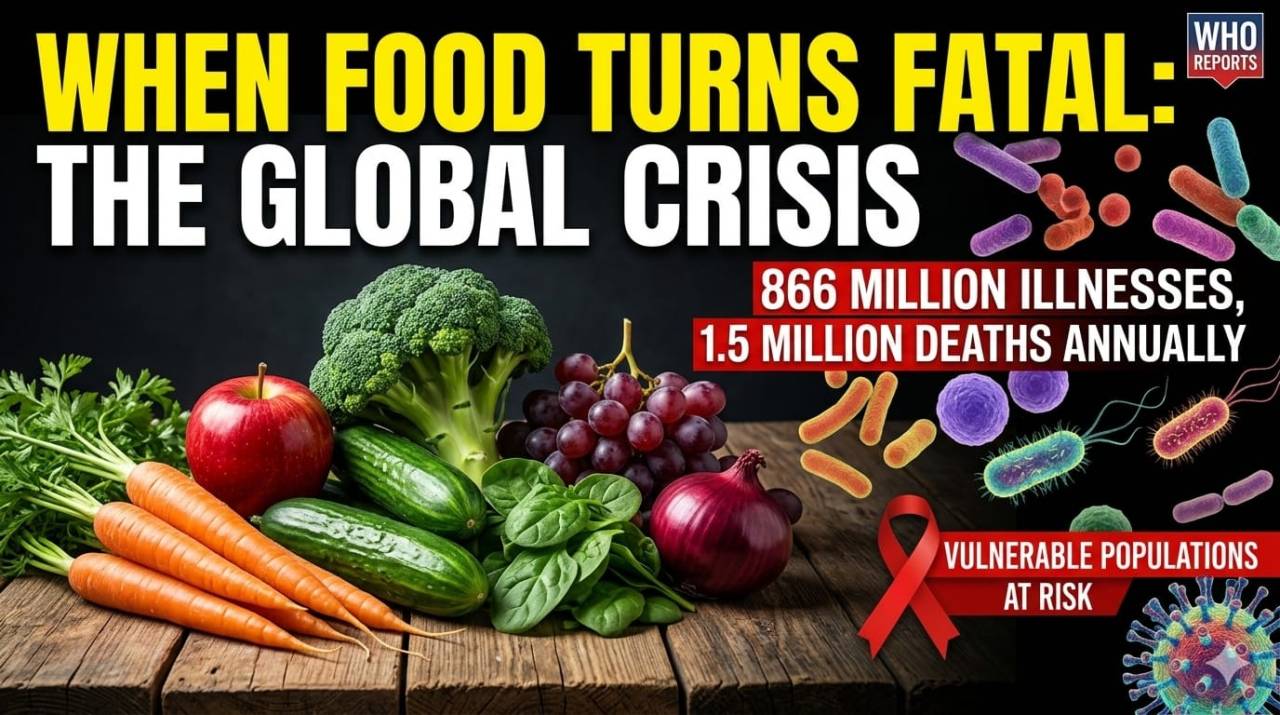
According to a major WHO assessment, contaminated food is causing 866 million illnesses and 1.5 million deaths every year—making food safety one of the world's most overlooked public health challenges.
Food is meant to sustain life, yet for hundreds of millions of people around the world, it has become a source of disease and death. A major new assessment by the World Health Organization (WHO) has revealed the staggering scale of the global food safety crisis, estimating that contaminated food causes 866 million illnesses and 1.5 million deaths every year.
The findings, published in The Lancet, draw on data from 194 countries and examine 42 different foodborne hazards—including bacteria, viruses, parasites, heavy metals, and chemical contaminants. Covering the period from 2000 to 2021, the study provides the most comprehensive picture yet of the health burden caused by unsafe food.
Children Face the Greatest Risk
One of the report’s most alarming findings is the disproportionate impact on young children.
Although children under the age of five account for only about 9% of the global population, they suffer nearly one-third of all foodborne illnesses worldwide. Their rate of infection is almost three times higher than that of older children and adults.
For many of these children, the danger comes from diarrhoeal diseases caused by bacteria, viruses, and parasites such as rotavirus and Cryptosporidium. These infections can quickly become life-threatening because young children are especially vulnerable to severe dehydration.
The report highlights how food safety is not merely a matter of public health but also one of equity. The youngest members of society, often with the least access to healthcare and safe nutrition, continue to bear the heaviest burden.
Africa and South-East Asia Carry Most of the Burden
The crisis is far from evenly distributed across the globe.
According to the WHO assessment, Africa and South-East Asia together account for nearly three-quarters of all foodborne illnesses and around 60% of food-related deaths worldwide. While the overall global burden of foodborne diseases has declined since 2000, the gap between high-income countries and low- and middle-income nations remains significant.
In many developing regions, limited access to clean water, inadequate food storage infrastructure, weak regulatory systems, and insufficient healthcare services continue to increase the risk of contamination and disease.
Two Different Threats: Biological and Chemical
When people think of food poisoning, they often imagine bacterial infections or stomach illnesses. The report, however, shows that foodborne risks fall into two distinct categories: biological hazards and chemical hazards.
Biological Hazards
Biological contamination includes bacteria, viruses, and parasites that enter food during production, processing, transportation, or preparation.
Common pathogens such as Salmonella, norovirus, and Vibrio cholerae caused an estimated 410 million illnesses globally in 2021 alone. These infections can trigger symptoms ranging from mild stomach discomfort to severe dehydration, organ failure, and death.
Chemical Hazards
While biological hazards cause more illnesses, chemical contaminants are responsible for the majority of deaths.
The WHO estimates that chemical hazards accounted for 73% of all foodborne deaths in 2021. Inorganic arsenic alone was linked to 42% of these fatalities, while lead and methylmercury contributed another 31%.
The consequences extend beyond immediate illness. Exposure to heavy metals can permanently damage the developing brains of children, leading to lifelong cognitive and developmental challenges. In adults, long-term exposure is associated with cardiovascular diseases, cancers, and other chronic health conditions.
Climate Change and Drug Resistance Are Making the Problem Worse
Public health experts warn that food safety challenges could intensify in the coming years.
Climate change is altering environmental conditions in ways that increase contamination risks across food production and supply chains. Rising temperatures, changing rainfall patterns, and more frequent extreme weather events can create favorable conditions for pathogens and harmful contaminants to spread.
At the same time, antimicrobial resistance is emerging as a serious threat. As disease-causing bacteria become increasingly resistant to commonly used medicines, foodborne infections are becoming more difficult—and in some cases impossible—to treat effectively.
These trends raise concerns that progress achieved over the past two decades could slow or even reverse without stronger preventive measures.
A Roadmap for Prevention
Despite the scale of the challenge, the report offers an important reason for optimism.
For the first time, the WHO's estimates provide detailed country-level data showing where the health and economic burden of foodborne diseases is greatest. This information can help governments identify the most pressing risks and design targeted interventions to improve food safety.
Rather than responding only after outbreaks occur, policymakers now have better tools to prevent contamination before food reaches consumers. Investments in food monitoring systems, stronger regulations, public awareness campaigns, safer agricultural practices, and improved sanitation could significantly reduce the global burden.
Final Take
The WHO’s latest findings serve as a reminder that food safety is not a niche concern but a global public health priority. Every meal should nourish, not harm. Yet millions continue to face preventable illness and death because of contaminated food.
As populations grow, supply chains become more complex, and environmental pressures increase, ensuring food safety will require coordinated action from governments, industries, and consumers alike. The challenge is immense, but so is the opportunity to save lives by making the food on our plates safer for everyone.
Food is meant to sustain life, yet for hundreds of millions of people around the world, it has become a source of disease and death. A major new assessment by the World Health Organization (WHO) has revealed the staggering scale of the global food safety crisis, estimating that contaminated food causes 866 million illnesses and 1.5 million deaths every year.
The findings, published in The Lancet, draw on data from 194 countries and examine 42 different foodborne hazards—including bacteria, viruses, parasites, heavy metals, and chemical contaminants. Covering the period from 2000 to 2021, the study provides the most comprehensive picture yet of the health burden caused by unsafe food.
Children Face the Greatest Risk
One of the report’s most alarming findings is the disproportionate impact on young children.
Although children under the age of five account for only about 9% of the global population, they suffer nearly one-third of all foodborne illnesses worldwide. Their rate of infection is almost three times higher than that of older children and adults.
For many of these children, the danger comes from diarrhoeal diseases caused by bacteria, viruses, and parasites such as rotavirus and Cryptosporidium. These infections can quickly become life-threatening because young children are especially vulnerable to severe dehydration.
The report highlights how food safety is not merely a matter of public health but also one of equity. The youngest members of society, often with the least access to healthcare and safe nutrition, continue to bear the heaviest burden.
Africa and South-East Asia Carry Most of the Burden
The crisis is far from evenly distributed across the globe.
According to the WHO assessment, Africa and South-East Asia together account for nearly three-quarters of all foodborne illnesses and around 60% of food-related deaths worldwide. While the overall global burden of foodborne diseases has declined since 2000, the gap between high-income countries and low- and middle-income nations remains significant.
In many developing regions, limited access to clean water, inadequate food storage infrastructure, weak regulatory systems, and insufficient healthcare services continue to increase the risk of contamination and disease.
Two Different Threats: Biological and Chemical
When people think of food poisoning, they often imagine bacterial infections or stomach illnesses. The report, however, shows that foodborne risks fall into two distinct categories: biological hazards and chemical hazards.
Biological Hazards
Biological contamination includes bacteria, viruses, and parasites that enter food during production, processing, transportation, or preparation.
Common pathogens such as Salmonella, norovirus, and Vibrio cholerae caused an estimated 410 million illnesses globally in 2021 alone. These infections can trigger symptoms ranging from mild stomach discomfort to severe dehydration, organ failure, and death.
Chemical Hazards
While biological hazards cause more illnesses, chemical contaminants are responsible for the majority of deaths.
The WHO estimates that chemical hazards accounted for 73% of all foodborne deaths in 2021. Inorganic arsenic alone was linked to 42% of these fatalities, while lead and methylmercury contributed another 31%.
The consequences extend beyond immediate illness. Exposure to heavy metals can permanently damage the developing brains of children, leading to lifelong cognitive and developmental challenges. In adults, long-term exposure is associated with cardiovascular diseases, cancers, and other chronic health conditions.
Climate Change and Drug Resistance Are Making the Problem Worse
Public health experts warn that food safety challenges could intensify in the coming years.
Climate change is altering environmental conditions in ways that increase contamination risks across food production and supply chains. Rising temperatures, changing rainfall patterns, and more frequent extreme weather events can create favorable conditions for pathogens and harmful contaminants to spread.
At the same time, antimicrobial resistance is emerging as a serious threat. As disease-causing bacteria become increasingly resistant to commonly used medicines, foodborne infections are becoming more difficult—and in some cases impossible—to treat effectively.
These trends raise concerns that progress achieved over the past two decades could slow or even reverse without stronger preventive measures.
A Roadmap for Prevention
Despite the scale of the challenge, the report offers an important reason for optimism.
For the first time, the WHO's estimates provide detailed country-level data showing where the health and economic burden of foodborne diseases is greatest. This information can help governments identify the most pressing risks and design targeted interventions to improve food safety.
Rather than responding only after outbreaks occur, policymakers now have better tools to prevent contamination before food reaches consumers. Investments in food monitoring systems, stronger regulations, public awareness campaigns, safer agricultural practices, and improved sanitation could significantly reduce the global burden.
Final Take
The WHO’s latest findings serve as a reminder that food safety is not a niche concern but a global public health priority. Every meal should nourish, not harm. Yet millions continue to face preventable illness and death because of contaminated food.
As populations grow, supply chains become more complex, and environmental pressures increase, ensuring food safety will require coordinated action from governments, industries, and consumers alike. The challenge is immense, but so is the opportunity to save lives by making the food on our plates safer for everyone.























Leave a Comment