
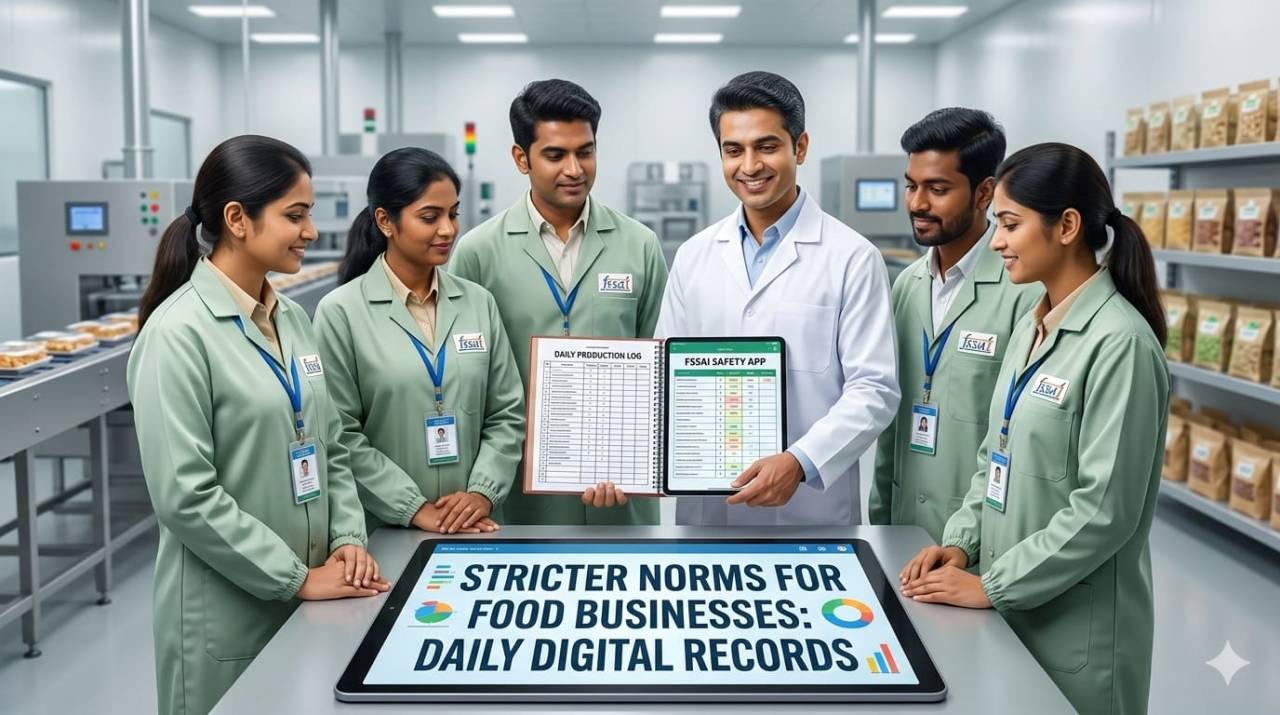
India’s food industry is set for a major shake-up—stricter safety rules and real-time tracking could change how every meal reaches your plate
The Food Safety and Standards Authority of India (FSSAI) is introducing stricter record-keeping rules for food businesses across the country. These changes, part of a proposal recently shared with the World Trade Organization (WTO), aim to improve the safety and traceability of food products for millions of consumers.
Major Changes for Manufacturers
Under the proposed Food Safety and Standards (Licensing and Registration of Food Business) Amendment Regulations, 2026, food manufacturers must now maintain daily records of their operations. This includes detailed logs for:
- Raw materials and ingredients used.
- Work-in-progress items.
- Finished food products and production volumes.
While large companies often already use digital tracking, this will be a significant shift for smaller units. These new rules are designed to give regulators real-time visibility into how food is handled, making it easier to track and resolve safety issues like contamination.
Better Storage Standards
The amendment also introduces mandatory stock management rules. Businesses must follow two key principles:
- FIFO (First-In, First-Out): Using older stock before newer arrivals.
- FEFO (First-Expire, First-Out): Ensuring products closest to their expiry date are sold or used first.
These practices help prevent expired or spoiled food from reaching the market. While manufacturers and wholesalers must follow these, small retail shops are currently exempt from this specific requirement.
Impact on India’s Growing Market
The Indian food processing sector is a vital part of the economy, contributing 13% of the country’s manufacturing value. Experts project the market will reach $535 billion by the end of 2026 and could grow to over $2.1 trillion by 2047.
Tightening these safety norms is seen as a necessary step to align India with international standards. This is especially important for exporters who often face strict scrutiny in overseas markets. Better documentation reduces disputes during inspections and builds global trust in Indian food products.
Timeline for Feedback
The FSSAI has invited public and industry feedback on these proposals until April 5, 2026. Smaller businesses have expressed concerns regarding the administrative costs of daily reporting, but the regulator maintains that these steps are essential for long-term consumer safety and industry growth.





















Leave a Comment